- 1. What is a cell?
- 2. Cell theory
- 3. What is inside a cell?
- 4. How big is a cell?
- 5. Bacteria: prokaryotic cells
- 6. Plant and animal cells
- 7. The cell membrane and cell wall
- 8. The endomembrane system
- 9. Mitochondria and plastids
- 10. Ribosomes, cytoskeleton, cilia and centrioles
- 11. The nucleus
- Review
4 of 11·NCERT §8.3·pp. 88–89·4 min
How big is a cell?
The big ideaMost cells are far too small to see, a few are huge, and a cell's shape fits its job.
In simple words
Line up a thousand of the smallest cells and they still would not cover the dot on this "i". But one bird's egg yolk is a single cell you can hold in your hand. Cells can be round, flat, long or any shape, depending on what they need to do.
We measure cells in micrometres (µm). One micrometre is a thousandth of a millimetre.
- The smallest cells are mycoplasmas, about 0.3 µm.
- Typical bacteria: about 1 to 5 µm.
- A human red blood cell: about 7 µm across.
- The biggest single cell: the yolk of an ostrich egg.
- Some nerve cells are longer than your arm.
Textbook check · §8.3Mycoplasma is 0.3 µm, not 0.3 mm
- The textbook says
- Mycoplasmas, the smallest cells, are only 0.3 mm in length.
- What we know now
- They are about 0.3 µm (0.2 to 0.4 µm), a thousand times smaller. A 0.3 mm cell would be visible to the naked eye. This is a typo for µm.Source: BioNumbers, BNID 104717
- In the exam
- Write 0.3 µm.
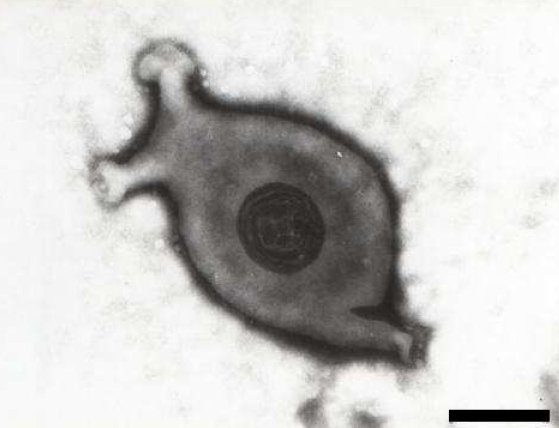 whole cell, no wallattachment tip140 nm
Textbook check · §8.3Red blood cells are closer to 8 µm
- The textbook says
- Human red blood cells are about 7.0 µm in diameter; typical bacteria are 3 to 5 µm (text) or 1 to 2 µm (Figure 8.2).
- What we know now
- Measured in fresh blood, a red cell averages about 7.5 to 8 µm across; dried, stained smears shrink toward 7 µm, where the textbook figure comes from. The textbook also contradicts itself on bacteria: a typical E. coli is about 2 µm long.Source: BioNumbers: E. coli size
- In the exam
- Write 7 µm for a red blood cell. For bacteria, NEET has used the 3 to 5 µm line from the text.
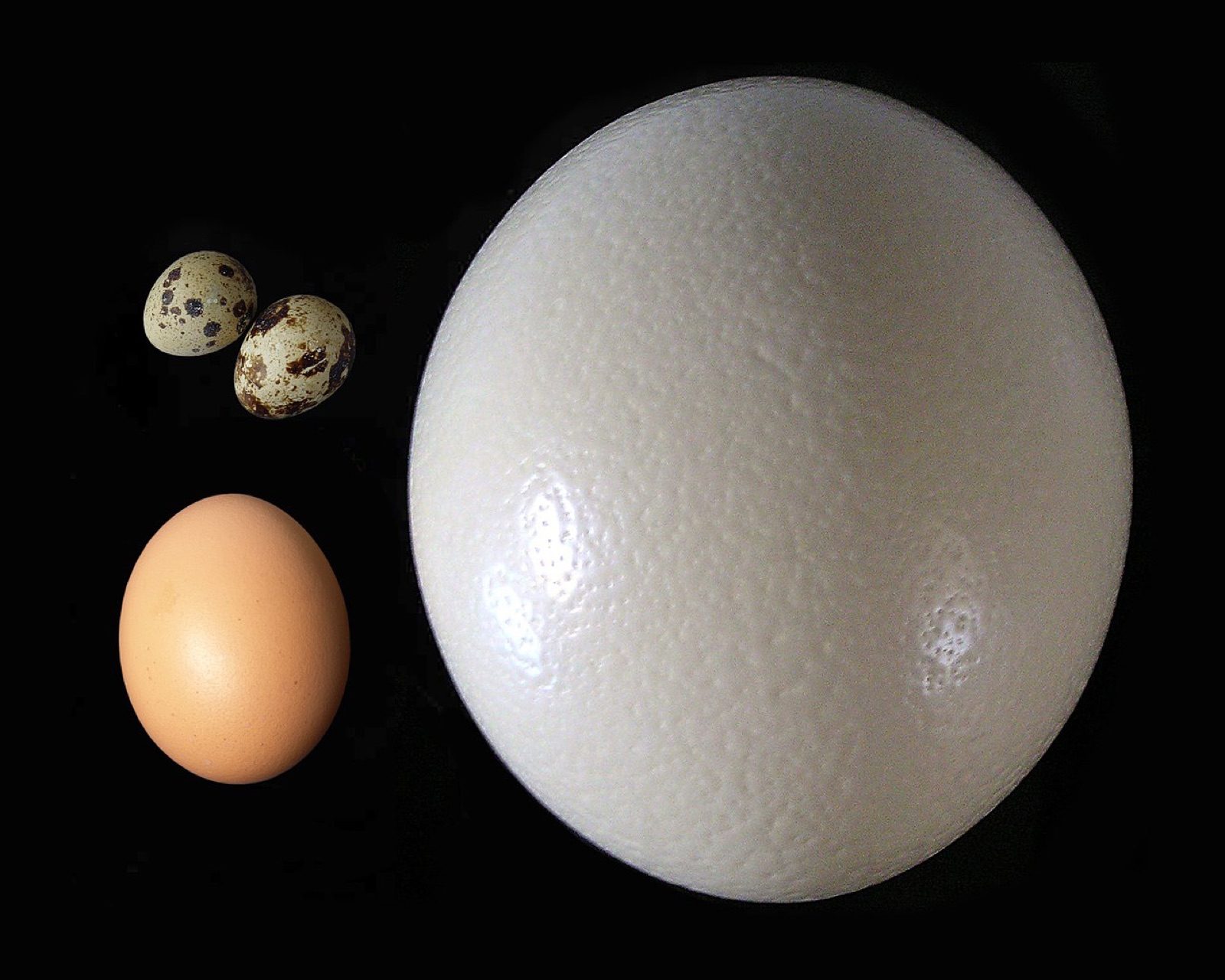 quail egghen eggostrich egg
Textbook check · §8.3Only the yolk is the cell
- The textbook says
- The largest isolated single cell is the egg of an ostrich.
- What we know now
- Only the yolk is the cell (the egg cell, or ovum). The white, the membranes and the shell are made around it by the mother's oviduct and are not part of the cell.Source: Egg cell
- In the exam
- Write "the egg of an ostrich".
Shape fits the job
A red blood cell is a flat round disc, so it can squeeze through thin blood vessels. A nerve cell is long and branched, to carry messages far. A white blood cell keeps changing shape as it crawls. In plants, a tracheid that carries water is a long empty tube.
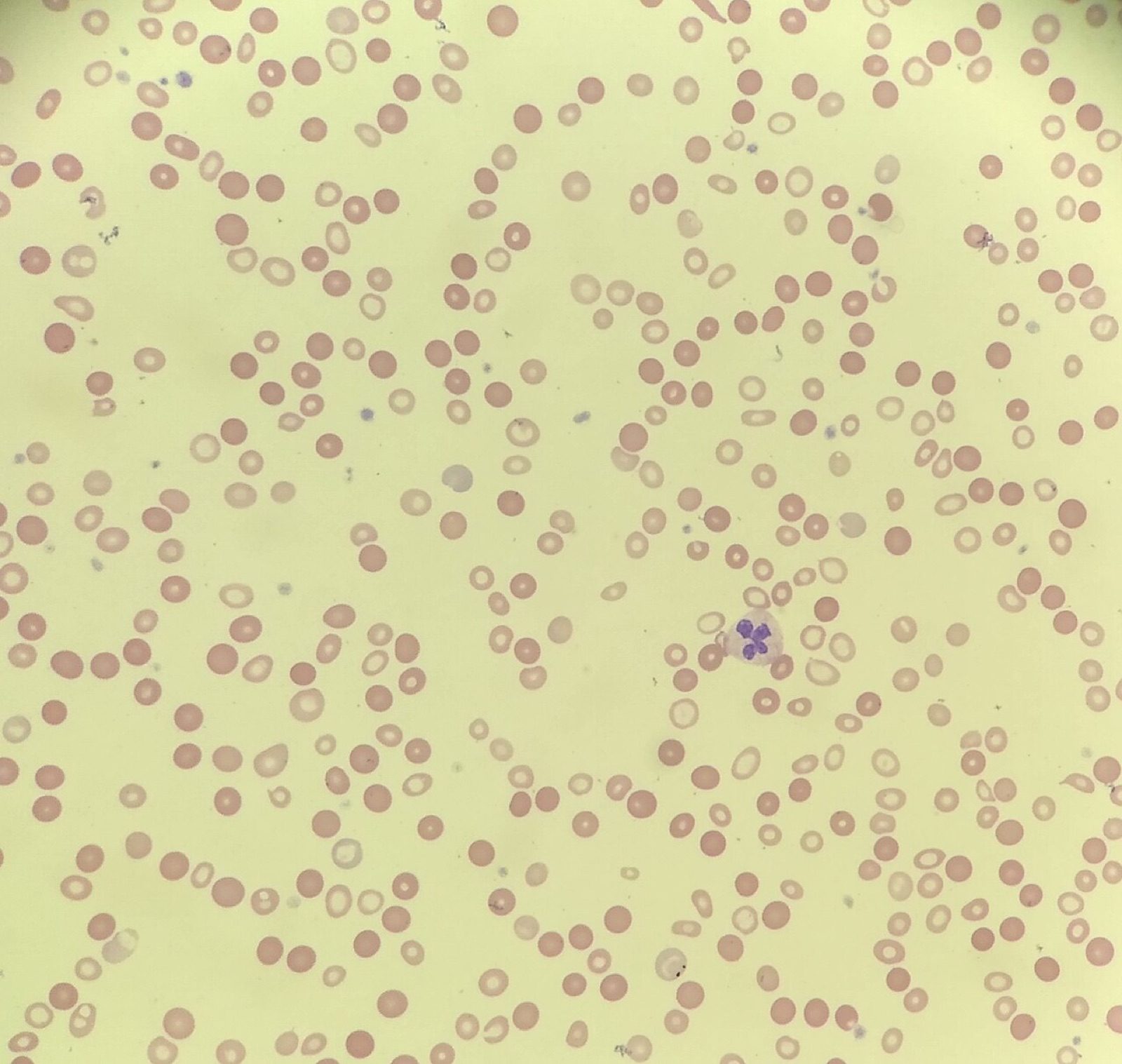 red blood cellwhite blood cellplatelet
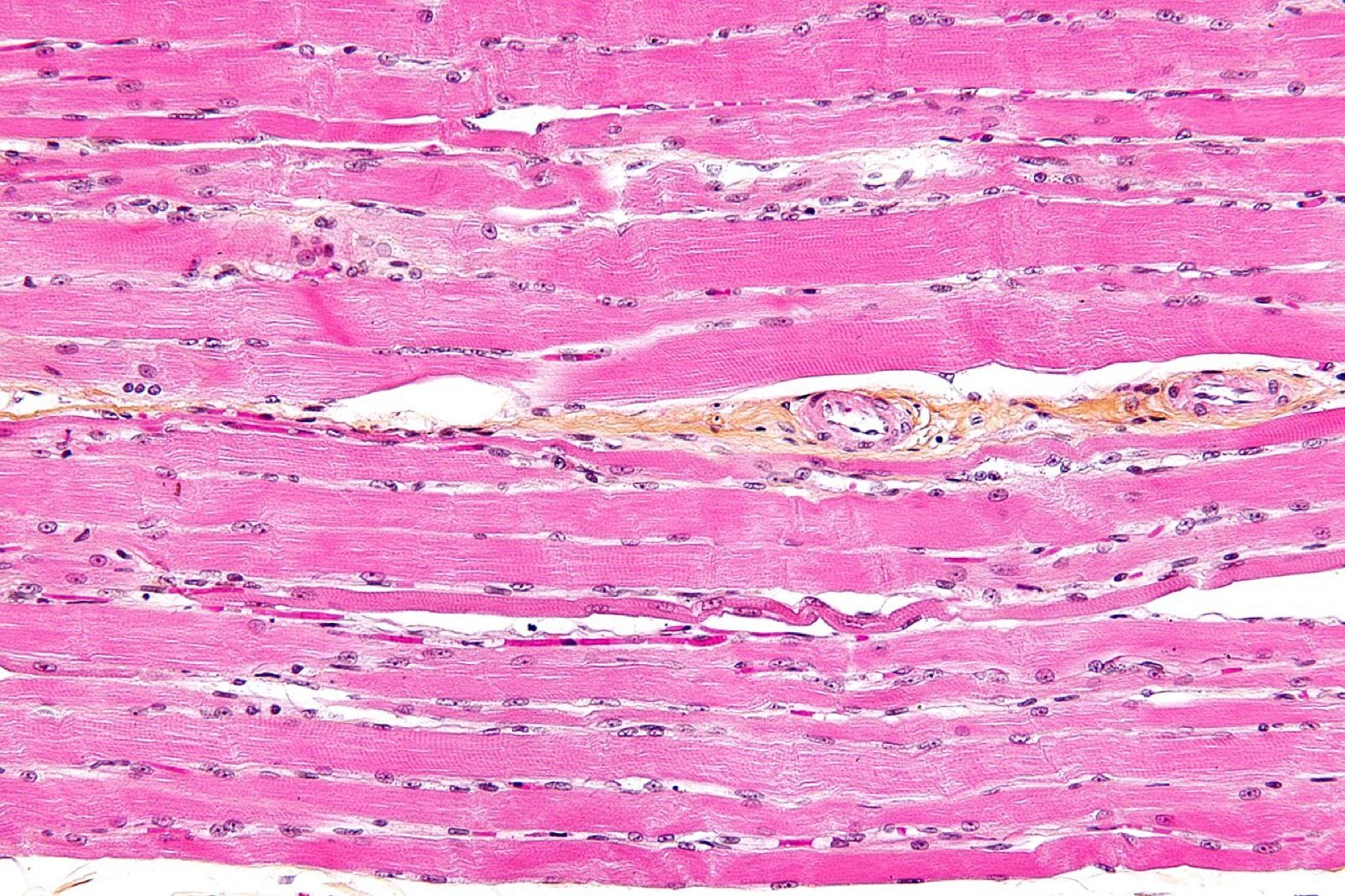 muscle fibreblood vessel
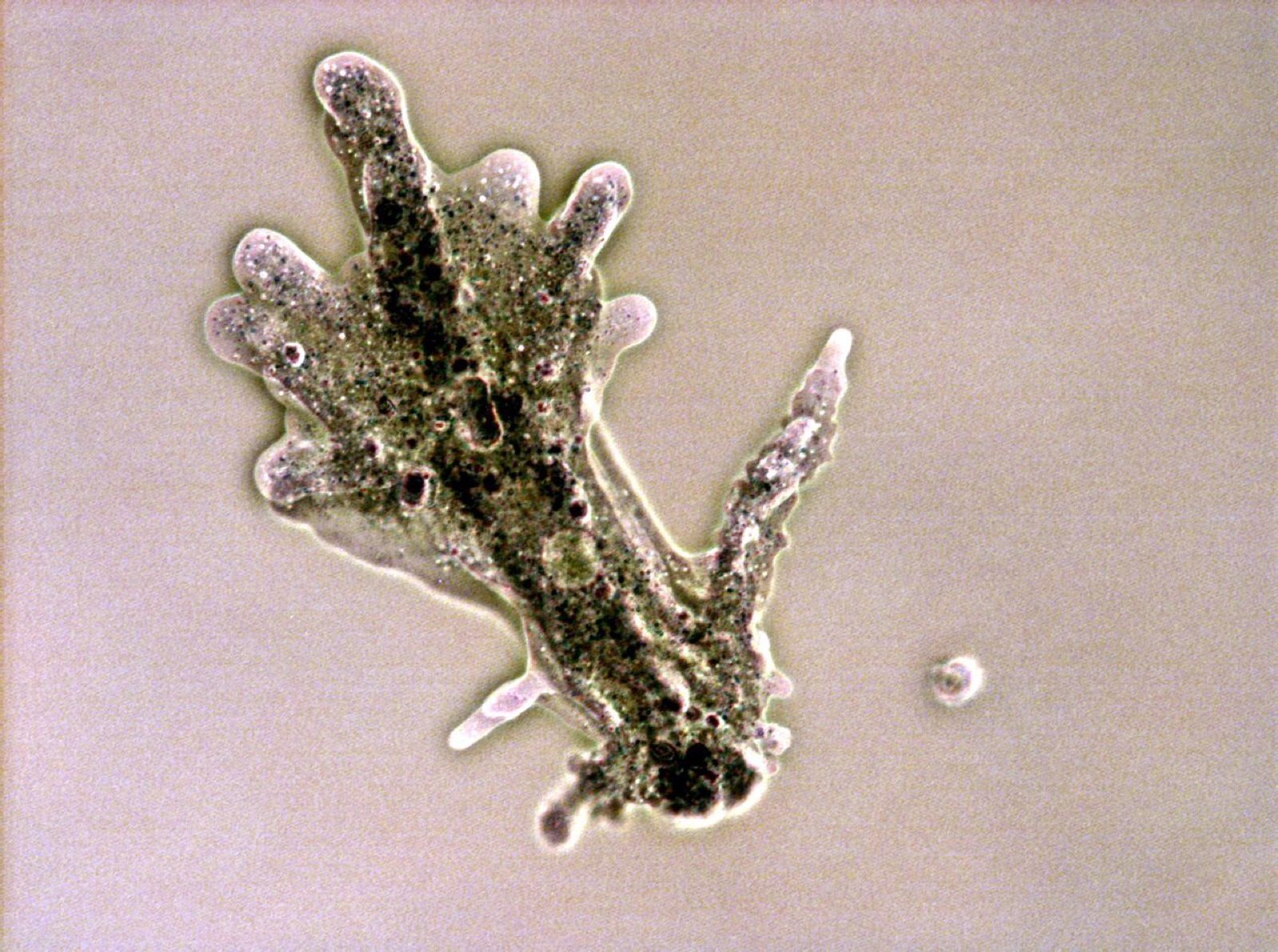 pseudopodiumpseudopodium
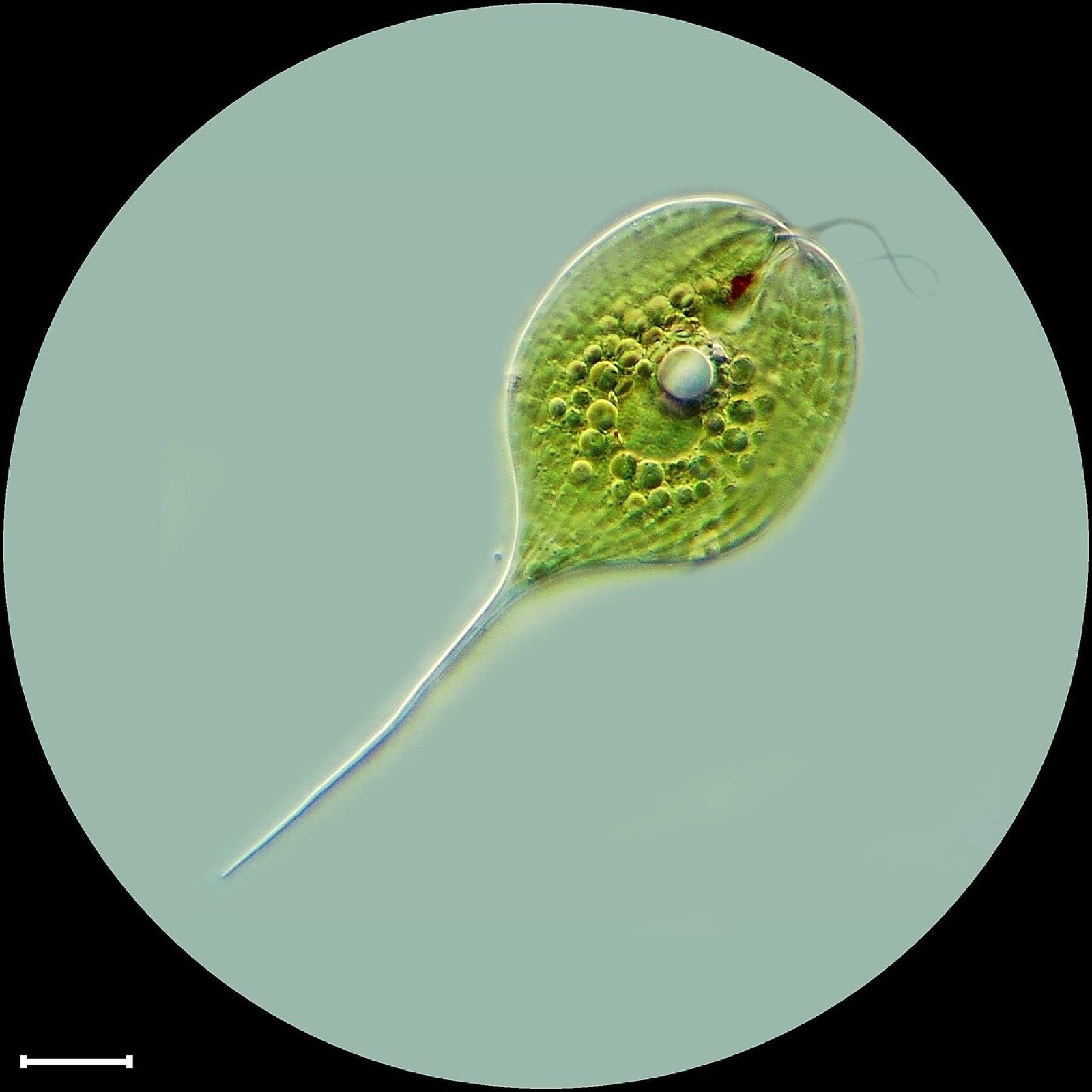 flagellumeyespotchloroplasts
Three more jobs, three more shapes: a nerve cell spreads long thin branches, a tracheid is a long tube with nothing living left inside, and a white blood cell wraps itself round the bacteria it eats.
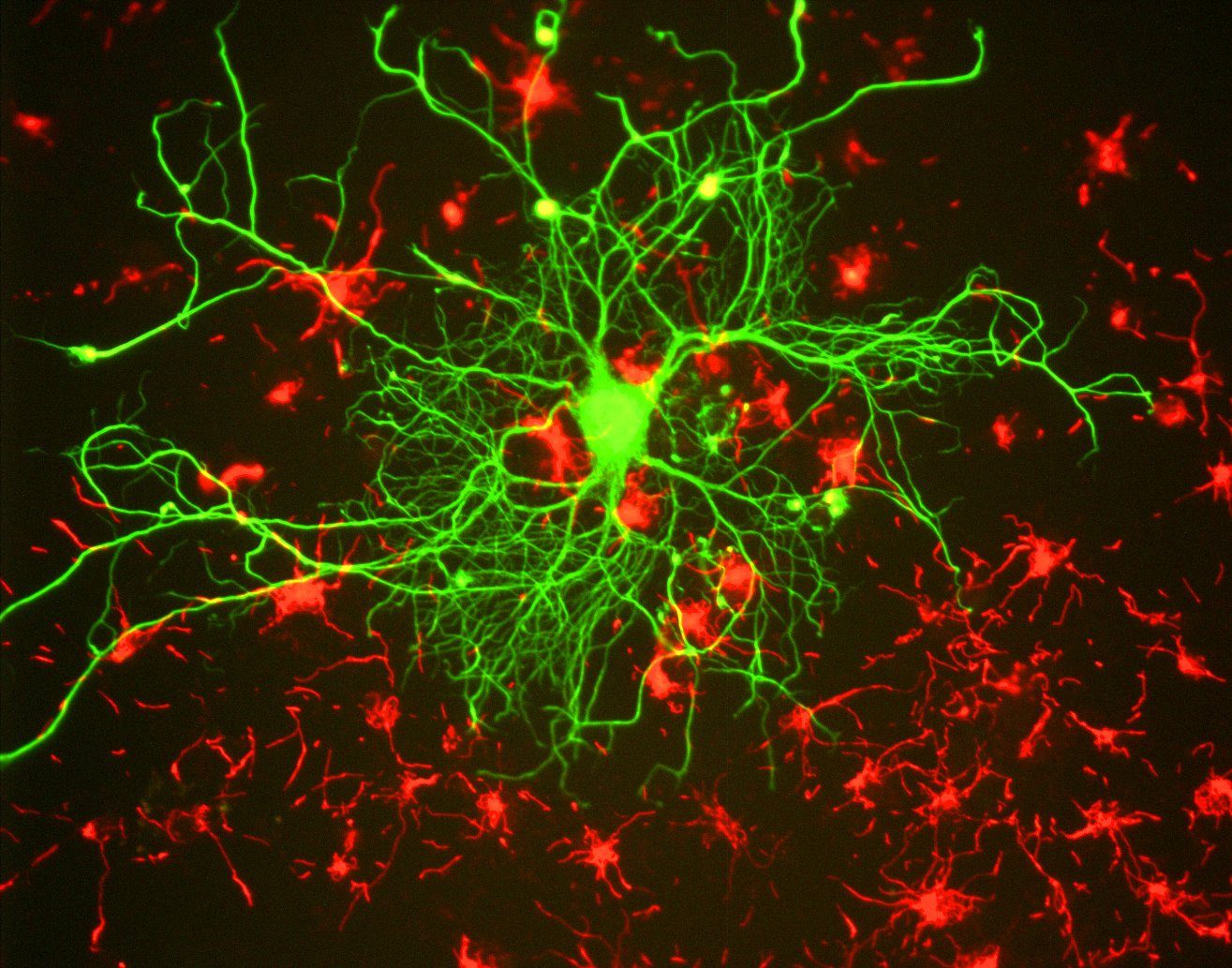 cell bodylong thin branches
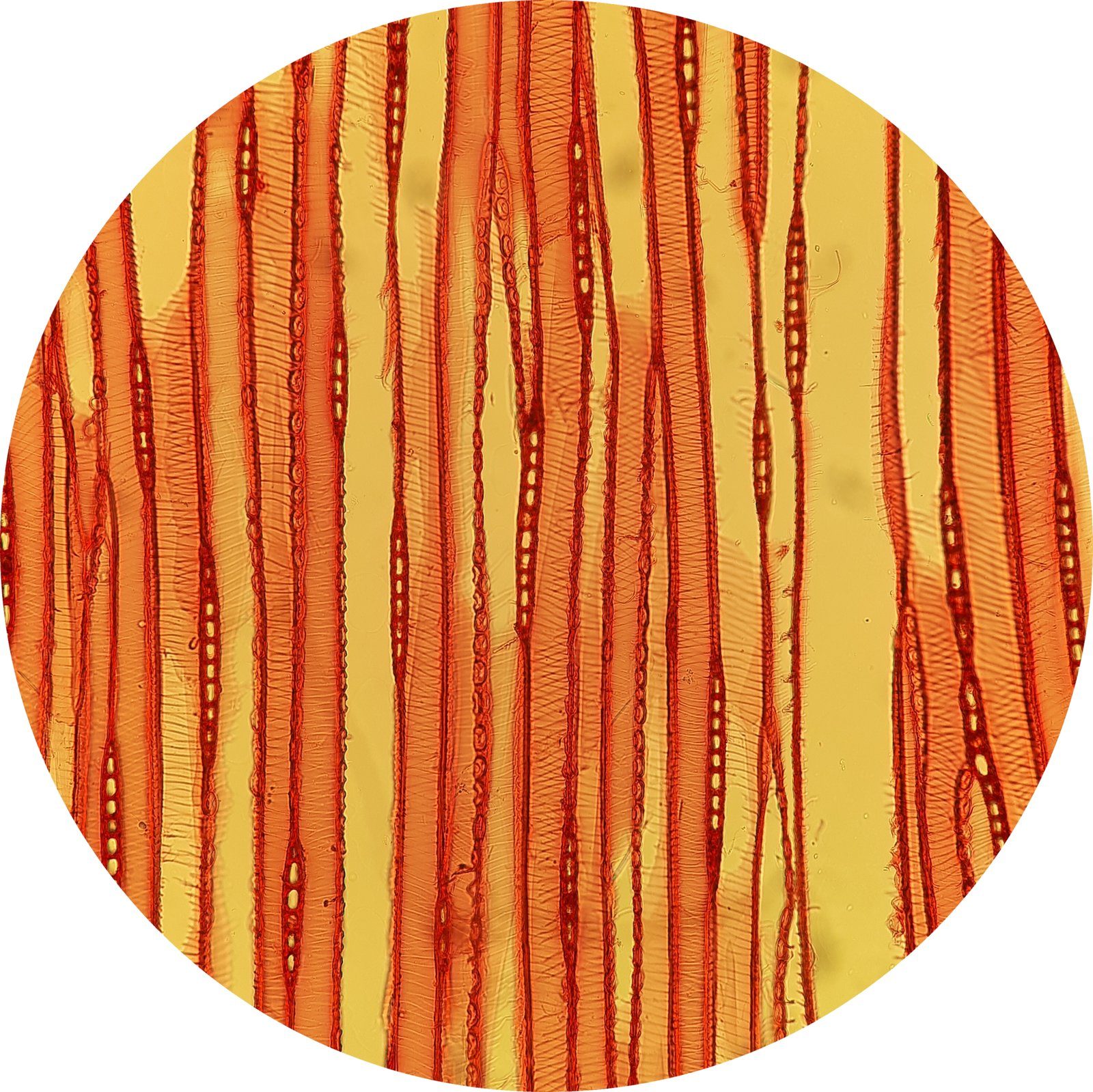 one tracheid: a long empty tuberay
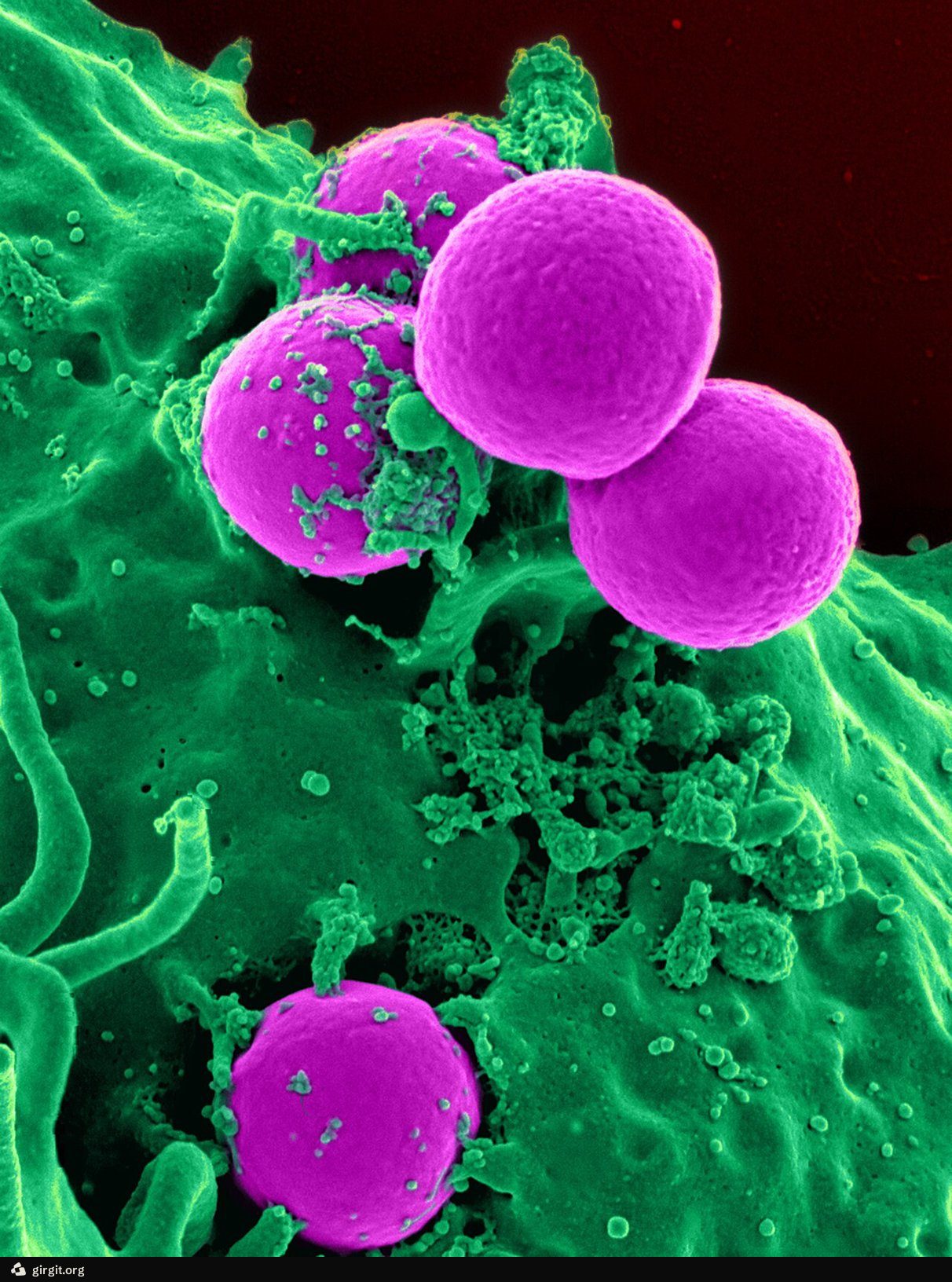 white blood cellbacteria being swallowed
Why most cells stay small
Food and oxygen get into a cell only through its skin, its surface. But every bit of its inside, its volume, needs feeding. When a cell grows bigger, its inside grows faster than its skin, so the middle starts to go hungry. Staying small keeps every part close to the skin.
Just remember
No deeper reason for these: they are records and the textbook's numbers. Use the hooks.
- 1 µm = one thousandth of a millimetre
- Same as metres in a kilometre: a thousand micrometres make one millimetre, the smallest mark on your scale.
- Smallest cell: Mycoplasma, 0.3 µm
- Myco-plasma has nothing but its plasma membrane, no wall at all, so it can be the tiniest: three-tenths of a micrometre.
- Bacteria 3 to 5 µm, human red blood cell 7 µm
- Count the odd numbers: 3, 5 for bacteria, then 7 for the red cell.
- Largest isolated single cell: the ostrich egg
- Biggest bird, biggest egg, biggest cell: the ostrich wins all three. (Only the yolk is the cell.)
- Longest cells: nerve cells
- Nerves are the body's telephone wires: long, thin and branched. Longest is the nerve; largest is the egg.
- Micrometre (µm)
- A thousandth of a millimetre.
- Mycoplasma
- The smallest known cells, about 0.3 µm; bacteria with no cell wall.
- Surface area to volume
- How much skin a cell has for each bit of inside; it falls as a cell grows.
Words to know
What is the largest isolated single cell?
- A nerve cell
- The egg of an ostrich
- A red blood cell
About how big is a mycoplasma?
- 0.3 mm
- 0.3 µm
- 30 µm
Deep dive · optional
Why are almost all cells so small?
Why a cell's inside, not just its skin, sets a size limit; the three tricks giant cells use to cheat; a bacterium you can see without a microscope; and the scientist who wrote about being the right size and then made India his home. The exam won't ask, but it makes the page stick.
The roots: molecules wander, they don't march
- Why can't a cell simply grow as big as a football?Because everything it needs, food, oxygen, water, comes in through its skin, and then has to reach the spot inside where it is used. Waste has to make the same trip the other way.
- Why is the skin a problem?Grow a cell twice as wide and its skin grows four times, but its inside grows eight times. Each bit of inside gets half as much skin to feed it as before. That is the surface-to-volume idea from the widget above.
- Why is distance inside a problem too?A cell has no pump pushing its jelly about. A molecule inside gets there by diffusion: it is knocked about by the jostling of water and other molecules, one random bump after another. It wanders; it does not march.
- Why is wandering so slow over long distances?Each bump sends the molecule a random way, so most bumps undo earlier ones. Toss a coin a hundred times, stepping left for heads and right for tails, and you usually end only about ten steps from where you began. To get ten times farther, you need a hundred times more steps. The time to wander a distance grows with the square of the distance: roughly \( t \approx x^2 / D \), where \( D \), the diffusion coefficient, says how nimble the molecule is.
- So what does that mean for a cell?A protein inside a cell has \( D \approx 10 \) µm²/s. It wanders across a 1 µm bacterium in about 0.1 s, across a 20 µm human cell in about 40 s, but across 1 mm in about a day. A cell much bigger than a few tens of micrometres would wait too long for its own supplies. This is the bedrock: random bumping, the same thing that spreads a drop of ink in a glass of still water.
So size is limited twice over: by too little skin, and by too much distance. Yet there are cells a metre long and cells you can hold in your hand. Every one of them cheats in one of three ways.
- Stay thin. A nerve cell can run about a metre, from the bottom of your spinal cord to your big toe, but most axons are only about 1 µm wide, so nothing is far from the membrane. Along the length, the cell does not wait for diffusion: motor proteins walk cargo down tracks of microtubules, the fast ones at 50 to 400 mm a day.
- Stir. The giant cells of the green alga Chara grow up to 10 cm long. Their cytoplasm streams round and round the cell like a conveyor belt (cytoplasm can stream at up to 100 µm every second), carrying everything with it.
- Fill up with something that isn't alive. A plant cell pushes its living cytoplasm into a thin layer round a big water-filled vacuole. An egg cell is mostly yolk: stored food, not living cell material. In a bird's egg the nucleus and the working cytoplasm sit in a small patch on the yolk's surface. The ostrich egg is the biggest single cell because most of it is a lunch box.
The stories
See it
Here is the smallest kind of cell, drawn molecule by molecule at true scale by the scientist-artist David Goodsell: a Mycoplasma about 300 nm across. There is no room to spare, and no molecule is more than about 150 nm from the edge. In 2016 scientists built a Mycoplasma whose genes they had pared down as far as they could: to 473. For 149 of those, nobody yet knew what they did.
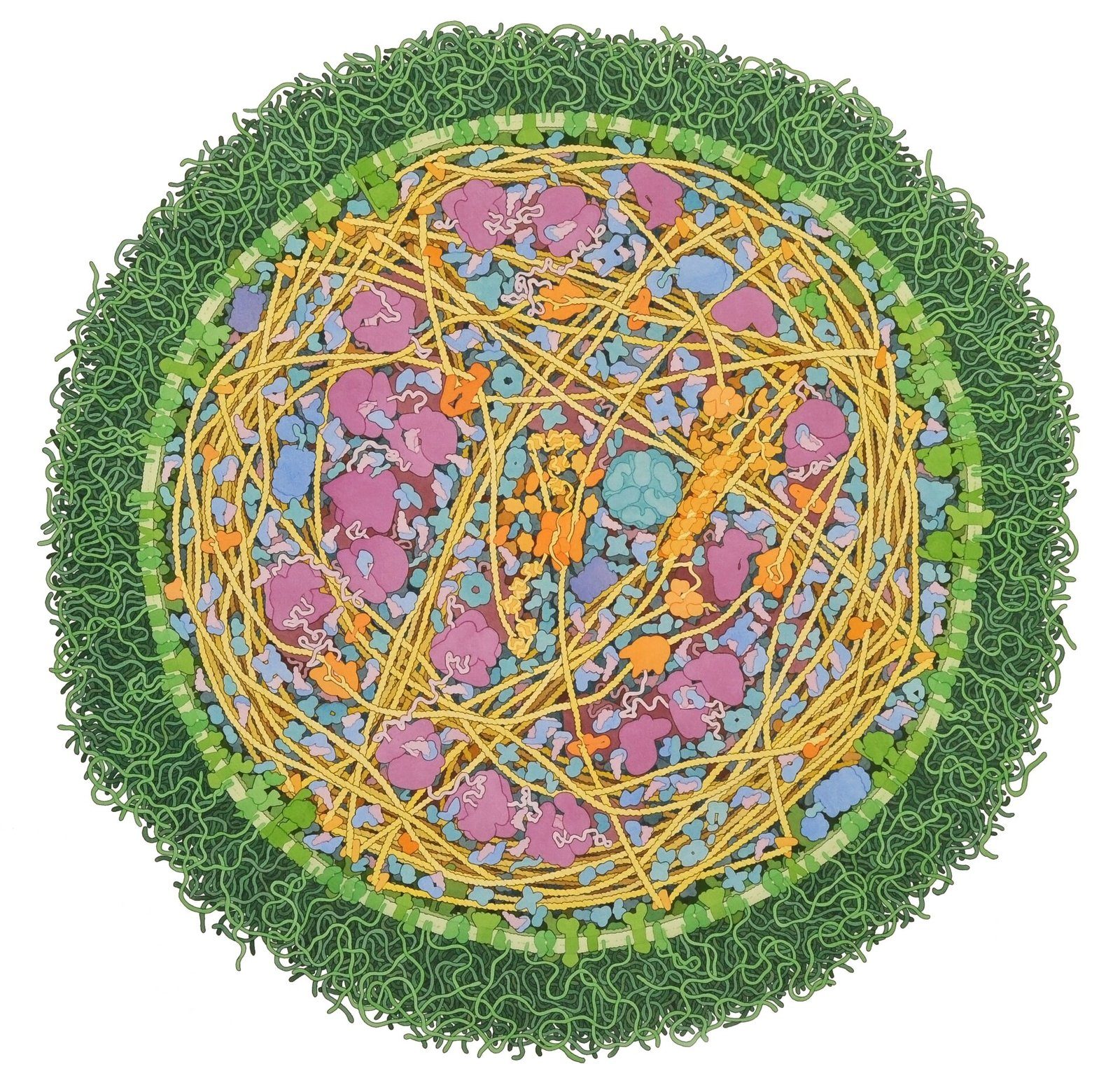 DNAribosomecell membrane
Now race the two ways of getting somewhere inside a cell: wandering (diffusion) and walking (a motor protein). Guess first.
The giant that cheats by being hollow, beside a tardigrade for scale, and the eggs that cheat by being mostly food:
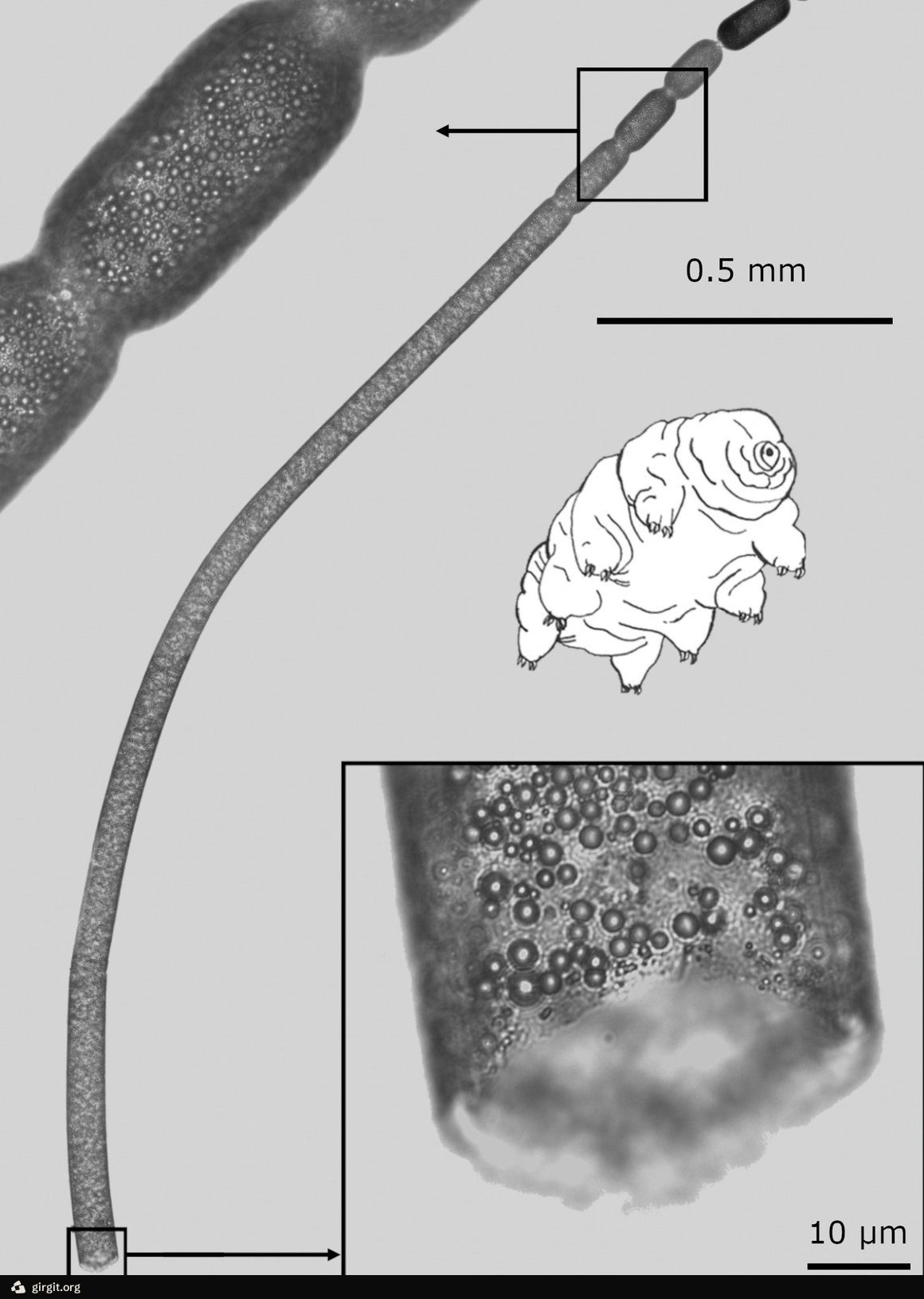 one bacterial celltardigrade, for scalesulphur granulesbroken end: a hollow tube
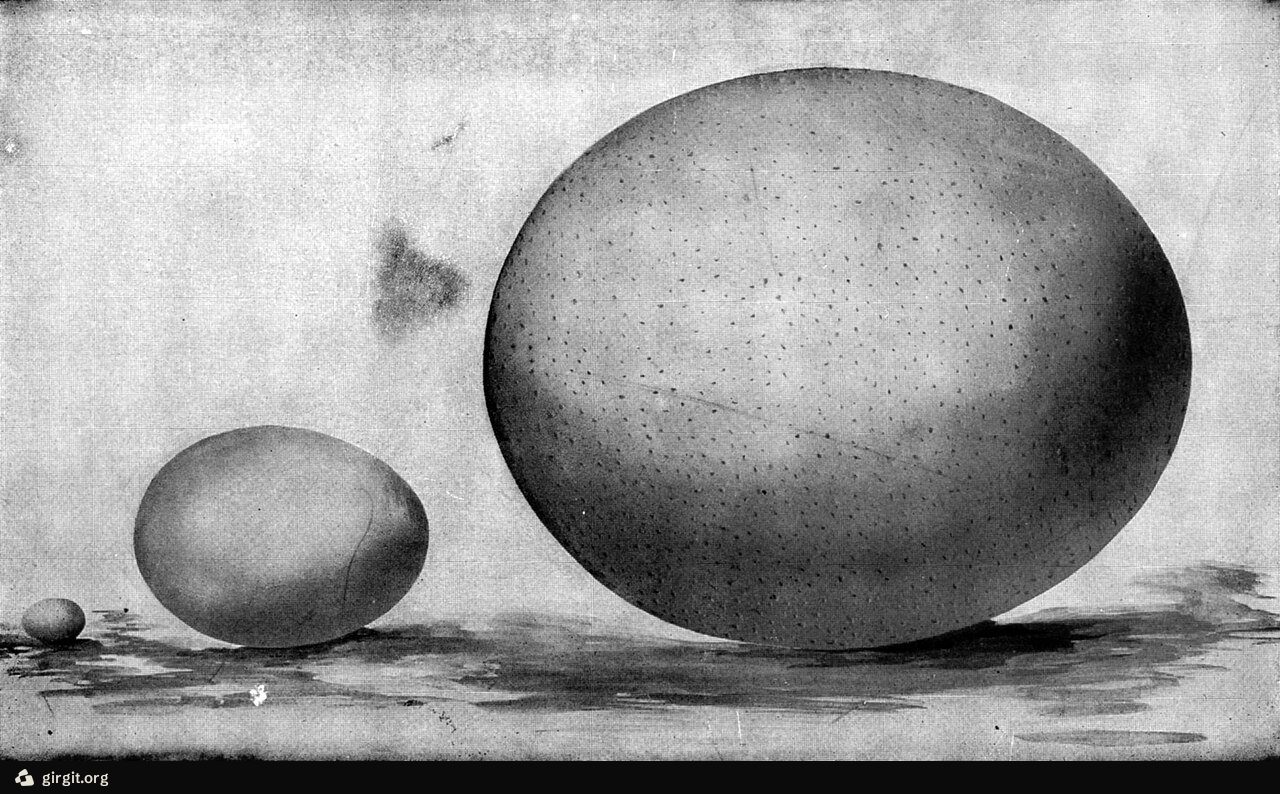 hummingbirdhenostrich
Solve it
Solve it
A motor neuron in your lower spinal cord makes a new protein in its cell body. The protein is needed at the nerve ending in your big toe, about 1 m away. Estimate how long it would take to get there by wandering (\( D = 10 \) µm²/s), and by fast transport along the axon at 400 mm a day. What does this tell you about why fast transport exists?
Hint
Answer
Solve it
An ostrich egg is about 13 cm wide. Pretend the whole yolk were busy living cytoplasm that needs oxygen, and that oxygen wanders through it with \( D = 2000 \) µm²/s (its value in water). Roughly how long would oxygen take to wander from the edge to the centre? What does the answer tell you about where the living part of the egg cell must sit?
Answer
Two cells are cubes, one 2 µm on each side and one 20 µm. For every cubic micrometre of inside, the big cell has
- the same amount of surface
- one tenth as much surface
- one hundredth as much surface
- ten times as much surface
Connect it
Connect it
- The membrane, concept 7. Every molecule in the race above first had to get through the cell membrane, which is why its area matters so much.
- The vacuole, concept 8. A plant cell's vacuole can fill 90% of the cell: the same hollow-tube trick as Thiomargarita, keeping the living layer thin.
- Motor proteins, concept 10. The "walking" line is the cytoskeleton at work: motors carrying loads along microtubules.
- Nerve cells, Class 11 Ch 18. The longest cells in your body, and how they carry signals: structure of a neuron.
- Insects and lungs. Haldane's insects breathe through air tubes (arthropods); you need a huge, thin breathing surface and blood to carry oxygen: exchange of gases.
Still confused?
If cells must be small, how can an ostrich egg be one cell?
Because most of it is not living material. The yolk is stored fat and protein, a packed lunch for the chick. The nucleus and the cytoplasm that actually does the work sit in a small patch on the yolk's surface, close to the outside. The rule is about the living, working part of a cell, and that part stays small or thin.
A nerve cell can be a metre long. Doesn't that break the rule?
Only in one direction. Its axon is thin, typically about 1 µm across, so nothing inside is far from the membrane sideways. Along its length it does not rely on wandering at all: motor proteins carry cargo, up to 400 mm a day. Long, thin and with its own transport system: that is how it obeys the rule.
Surface-to-volume and diffusion time: are they the same idea?
They are two sides of one problem. Surface-to-volume is about the supply: how much can come in through the skin for each bit of inside. Diffusion time is about the delivery: how long it takes to get from the skin to the middle. A big round cell loses on both counts at once, which is why giant cells cheat by being thin, stirred or mostly hollow.
Sources
- Milo and Phillips, Cell Biology by the Numbers: what are the time scales for diffusion in cells? (t ≈ x²/D, D ≈ 10 µm²/s for a protein in a cell, motors ≈ 1 µm/s)
- Axonal transport: fast 50 to 400 mm a day and Axon: up to a metre, sciatic nerve, about 1 µm wide
- Mass diffusivity: oxygen in water, D = 2.1 × 10⁻⁵ cm²/s at 25 °C (about 2,000 µm²/s)
- Cytoplasmic streaming: Chara cells up to 10 cm, streaming up to 100 µm/s
- Volland et al. (2022), A centimeter-long bacterium with DNA contained in metabolically active, membrane-bound organelles, Science 376 and Thiomargarita magnifica
- On Being the Right Size (Haldane, 1926) and J. B. S. Haldane: India, citizenship 1961, Bhubaneswar
- Yolk: passive stored material, not living protoplasm and Common ostrich: egg 15 × 13 cm, 1.4 kg
- JCVI-syn3.0 (2016): 473 genes, 149 of unknown function and Mycoplasma: 0.2 to 0.3 µm, no cell wall
Picture and video credits
Show 9 picture and video credits
- mycoplasma-gallisepticum-tem.jpg: M.H.B. Catroxo and A.M.C.R.P.F. Martins, CC BY 3.0
- egg-sizes.jpg: Rainer Zenz, CC BY-SA 2.5
- rbc-smear.jpg: Spicy, CC BY-SA 4.0
- skeletal-muscle.jpg: Nephron, CC BY-SA 3.0
- amoeba-proteus.jpg: Cymothoa exigua, CC BY-SA 3.0
- phacus.jpg: Sándor Bancsó, CC BY 4.0
- neuron-tissue-culture-nfl.jpg: GerryShaw, CC BY-SA 3.0
- douglas-fir-tracheids.jpg: Eriklo 01, CC BY-SA 4.0
- mycoplasma-mycoides-goodsell.jpg: David Goodsell, CC BY 4.0


