Morphology of Flowering Plants
- 1. Roots: what holds a plant in the ground?
- 2. The stem: how is it different from a root?
- 3. The leaf: base, stalk and blade
- 4. How are leaves and flowers arranged?
- 5. What is a flower?
- 6. Sepals, petals and aestivation
- 7. Stamens, carpels and placentation
- 8. The fruit: what does an ovary become?
- 9. Inside a seed: gram and maize
- 10. How to read a floral formula
- 11. Three families: Solanaceae, Fabaceae, Liliaceae
- Review
7 of 11·NCERT §5.5.1.3 · §5.5.1.4·pp. 64–65·8 min
Stamens, carpels and placentation
The big ideaStamens make pollen and carpels hold ovules, and botanists name them by how they are joined and by where the ovules sit inside the ovary.
In simple words
The male parts of a flower are thin stalks with a little bag of yellow dust on top. Sometimes the stalks are all separate, sometimes they are joined into one or more bunches, and sometimes they stick to the petals. The female part sits in the middle. Its swollen base is a small box full of tiny eggs-to-be, which later become seeds. Cut the box across and you can see where the eggs are fixed: along one edge, on a centre pillar, on the outer wall, or on the floor.
Androecium: the stamens
The androecium is made of stamens. Each stamen is a male reproductive organ with a stalk, the filament, and a head, the anther. An anther usually has two lobes, and each lobe has two chambers called pollen sacs, where pollen grains are made. A stamen that makes no pollen is a staminode.
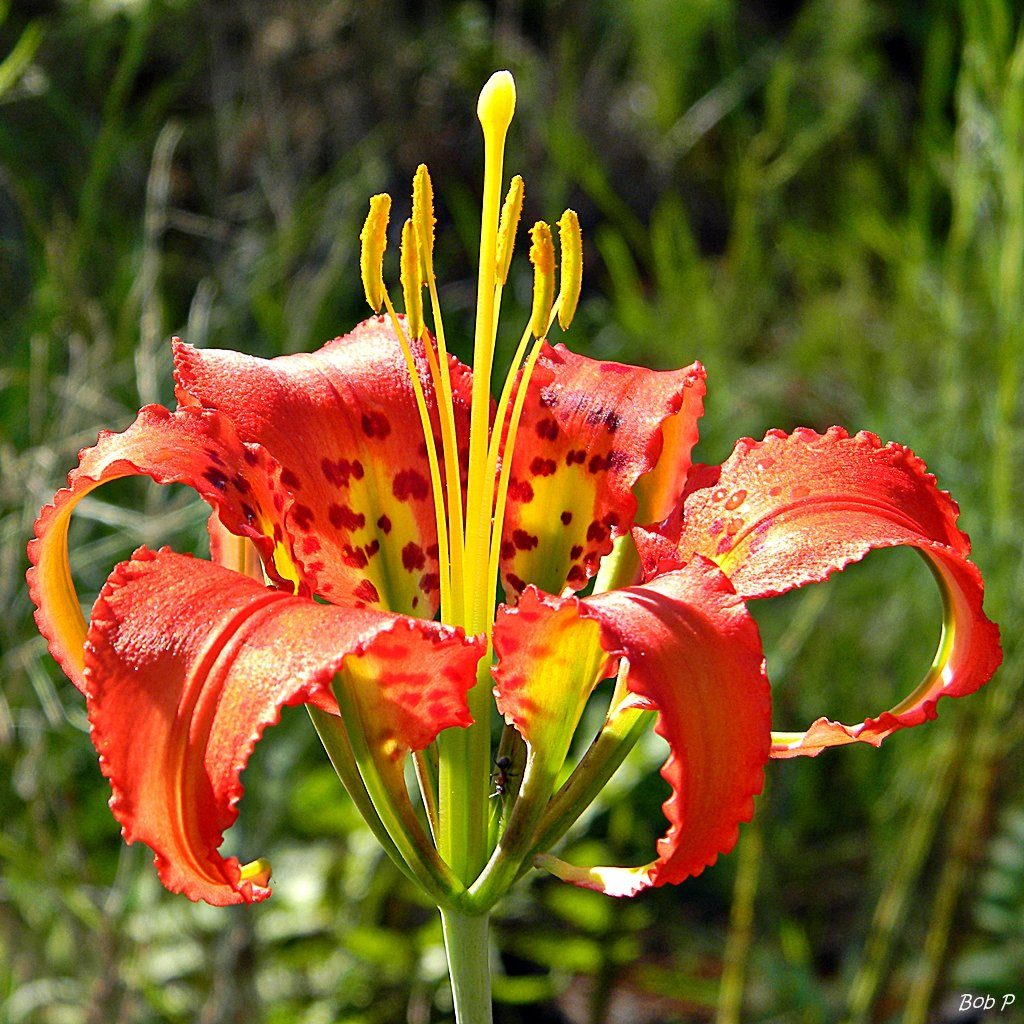 stigmaantherstylefilamenttepal
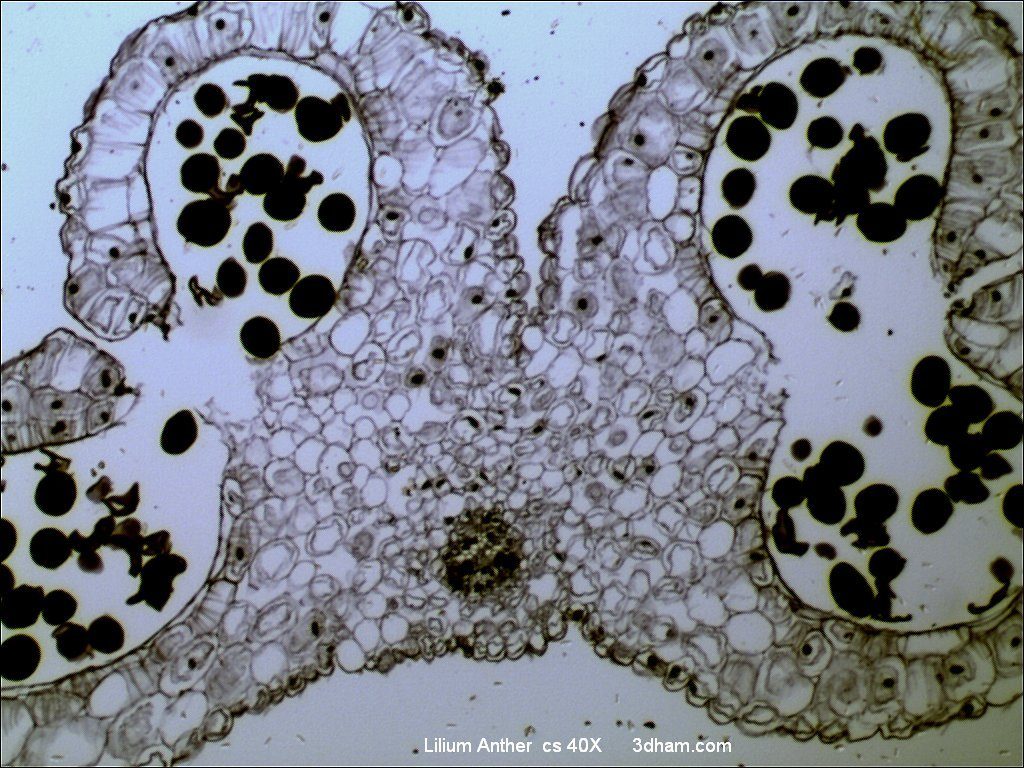 pollen sacpollen sacpollen grains
Staminodes are easy to miss because they look like stamens that never finished. In the dayflower (Commelina, a common weed of Indian fields in the rains) the three showy yellow ones at the top make no pollen at all; the plain ones below do the work.
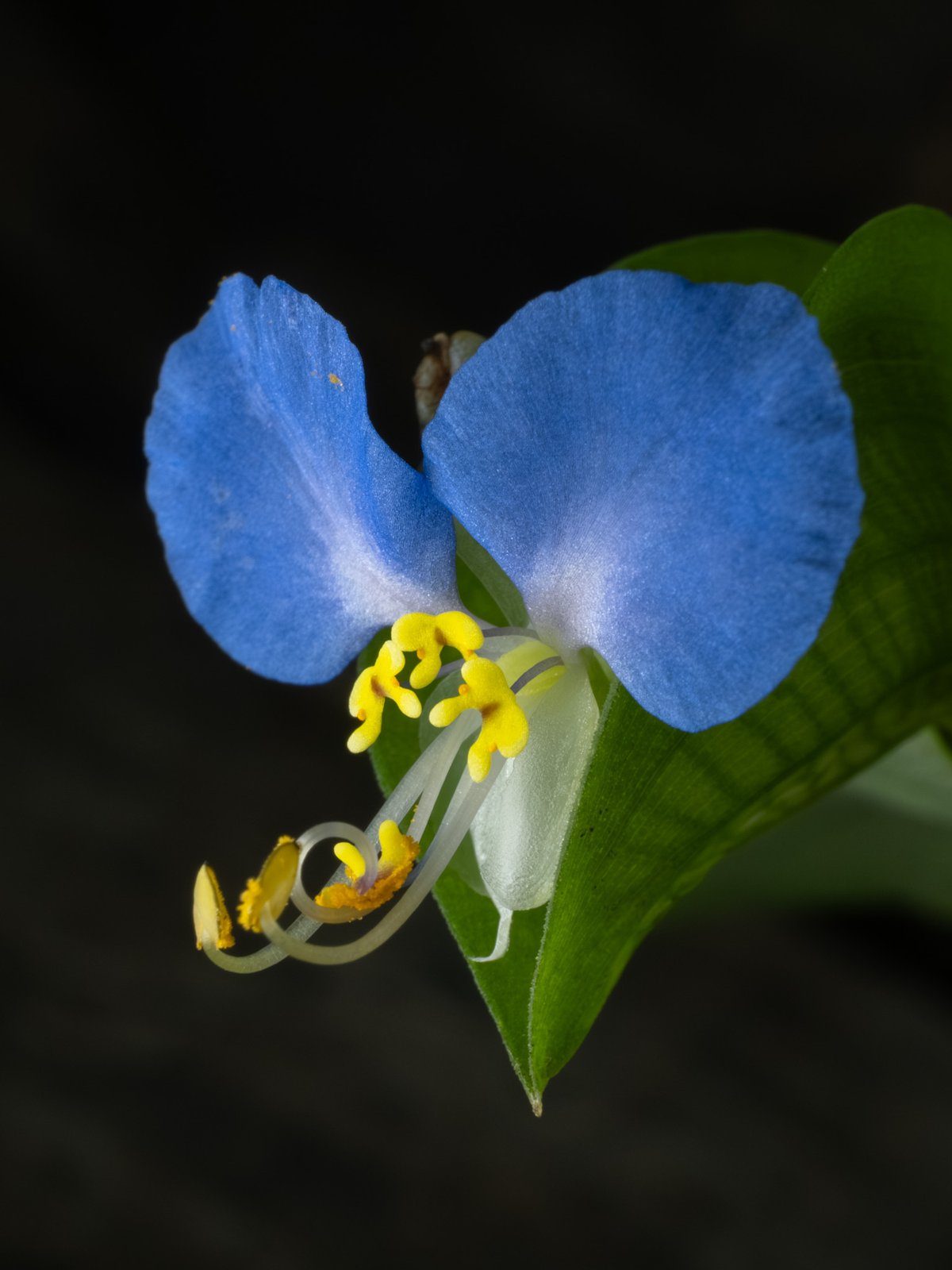 staminodes: no pollenfertile stamens
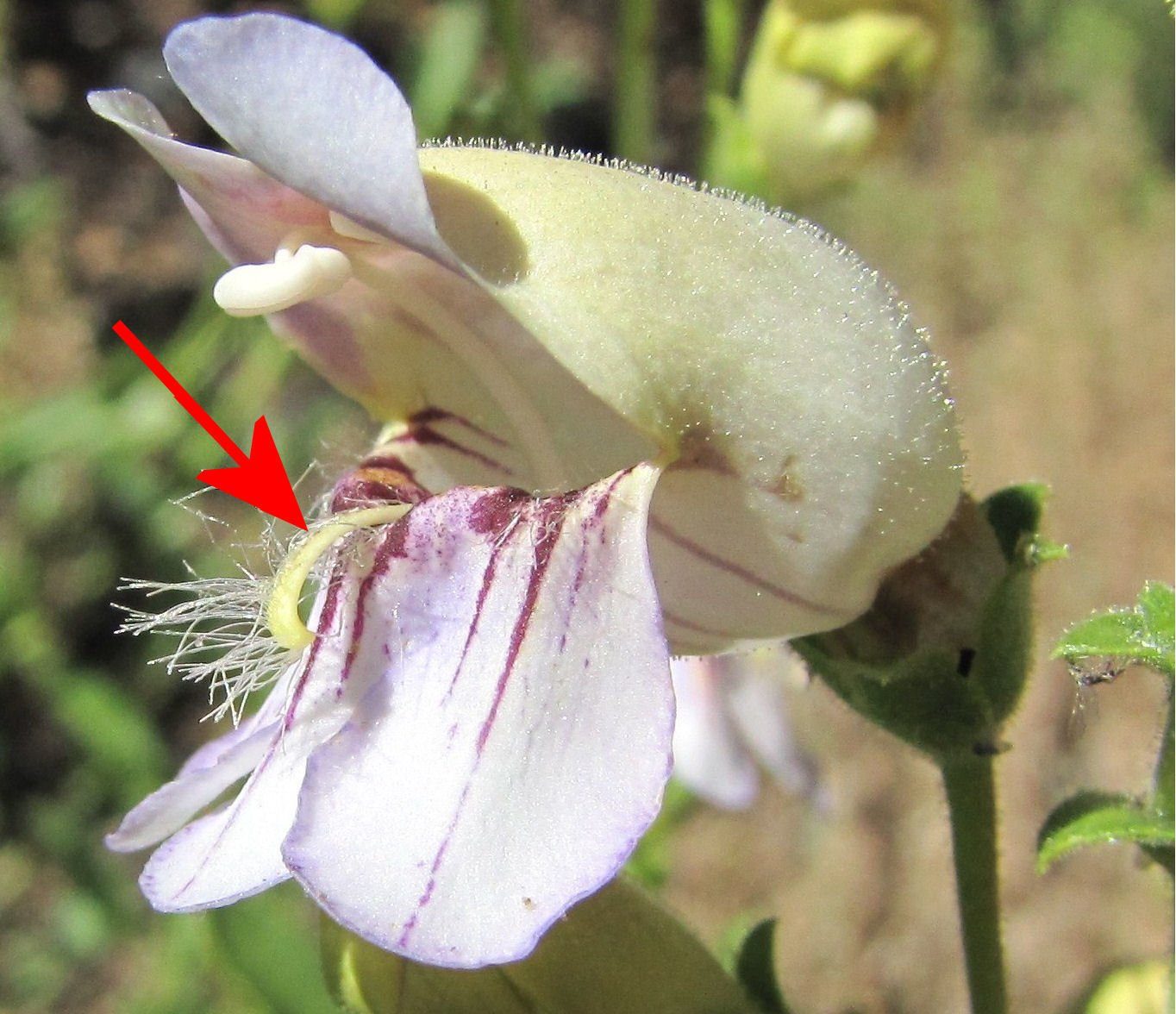 staminode
Stamens may join other parts of the flower, or each other.
| Term | Meaning | Example |
|---|---|---|
| Epipetalous | Stamens attached to the petals | Brinjal |
| Epiphyllous | Stamens attached to the perianth (tepals) | Lily |
| Polyandrous | Stamens all free | Mustard |
| Monadelphous | Filaments joined into one bundle | China rose (the tube round the style) |
| Diadelphous | Two bundles | Pea |
| Polyadelphous | More than two bundles | Citrus (lemon) |
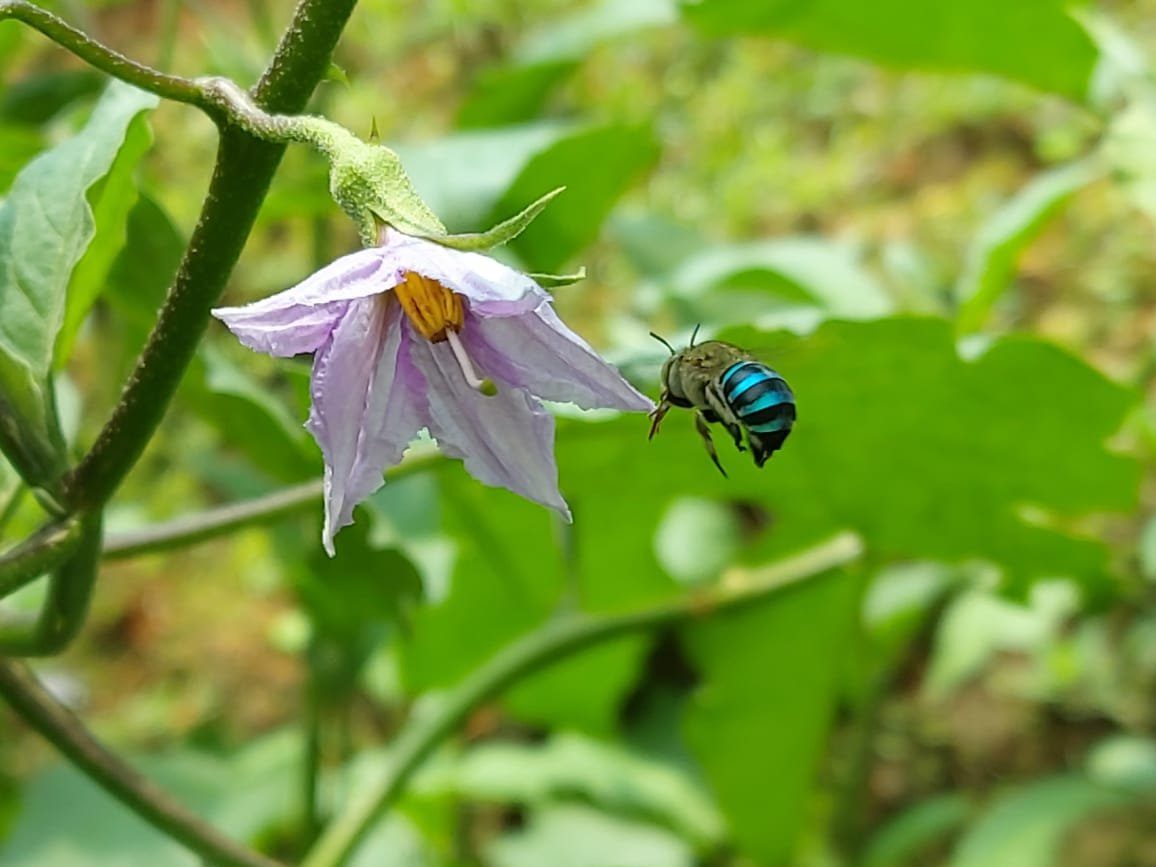 anthersblue-banded bee
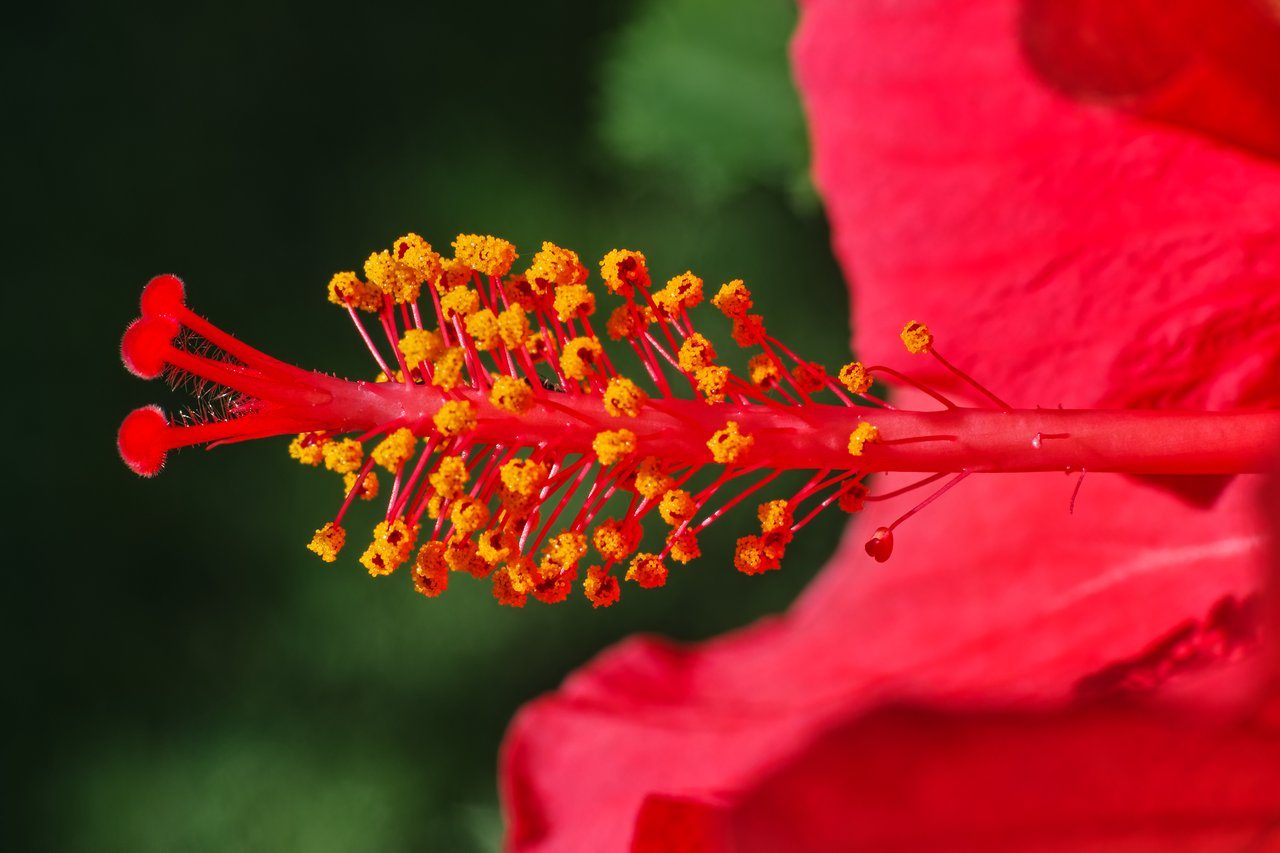 stigmasanthersfilaments joined in one tube
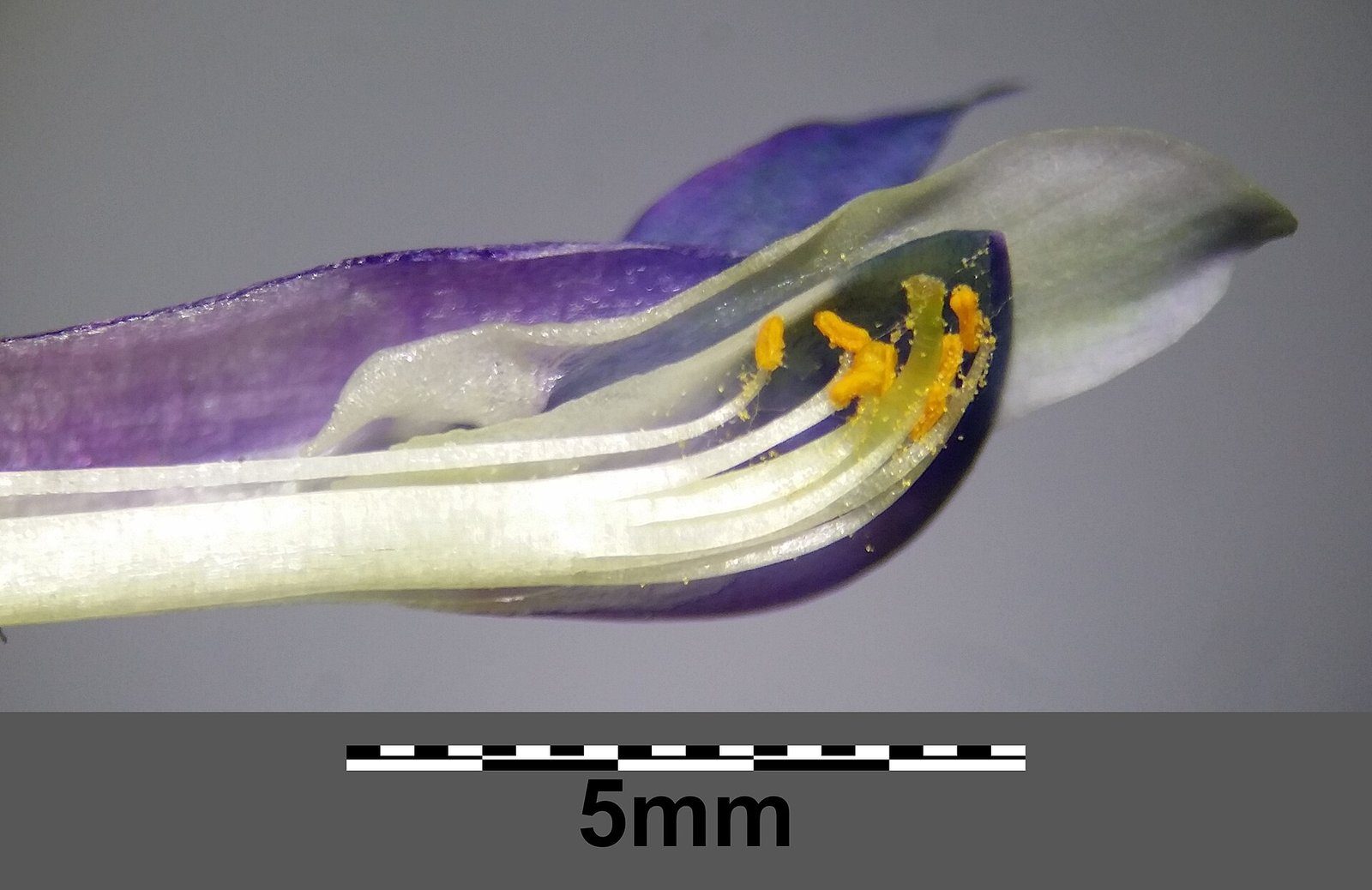 filaments joined in a sheathanthers
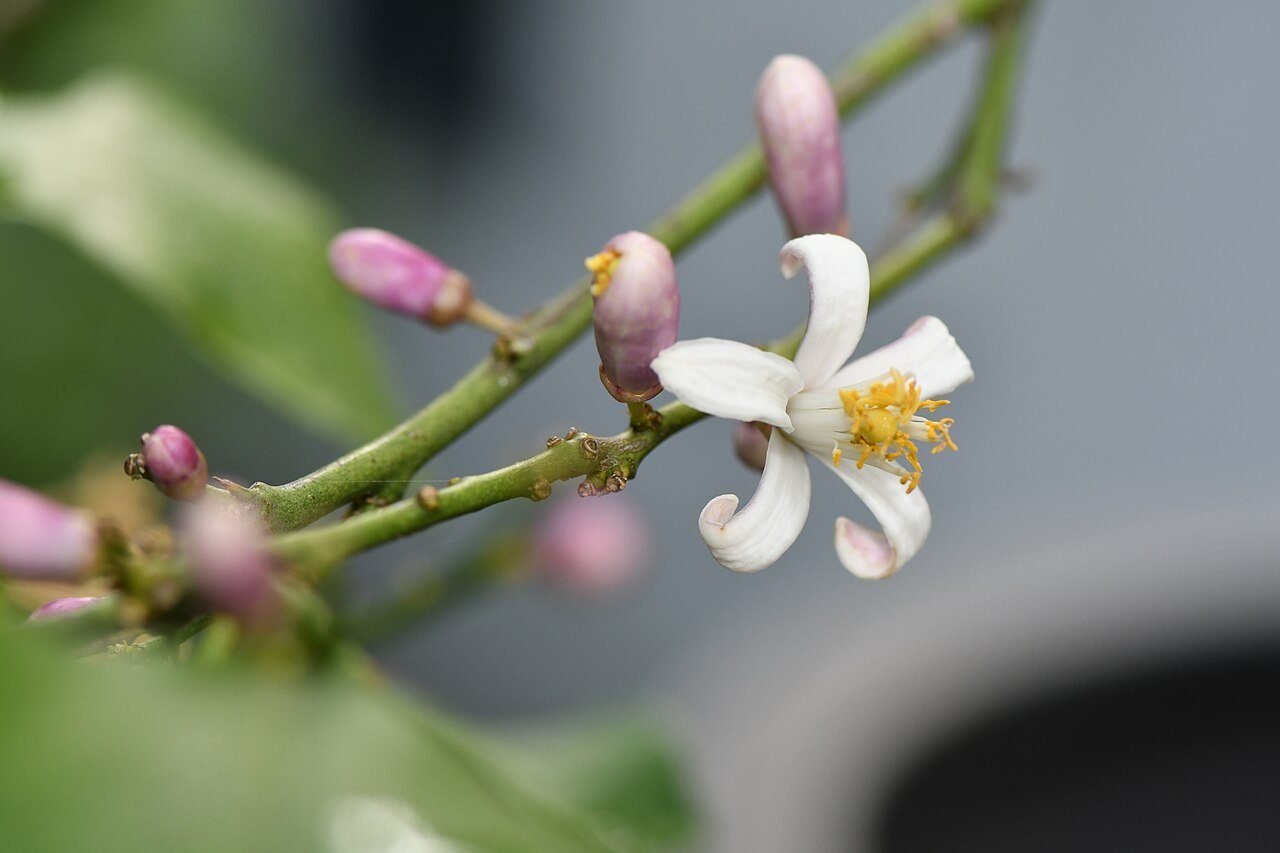 stamens in bunches
A brinjal's anthers do not split open like a lily's: pollen leaves through a small hole at the tip of each. A bee grabs the cone of anthers and vibrates its flight muscles, and the shaking pours the pollen out. It is called buzz pollination.
The word part -adelphous means "brothers": mon- (one), di- (two), poly- (many) groups of brothers. Filaments can also differ in length within one flower, as in Salvia and mustard (mustard has four long and two short stamens).
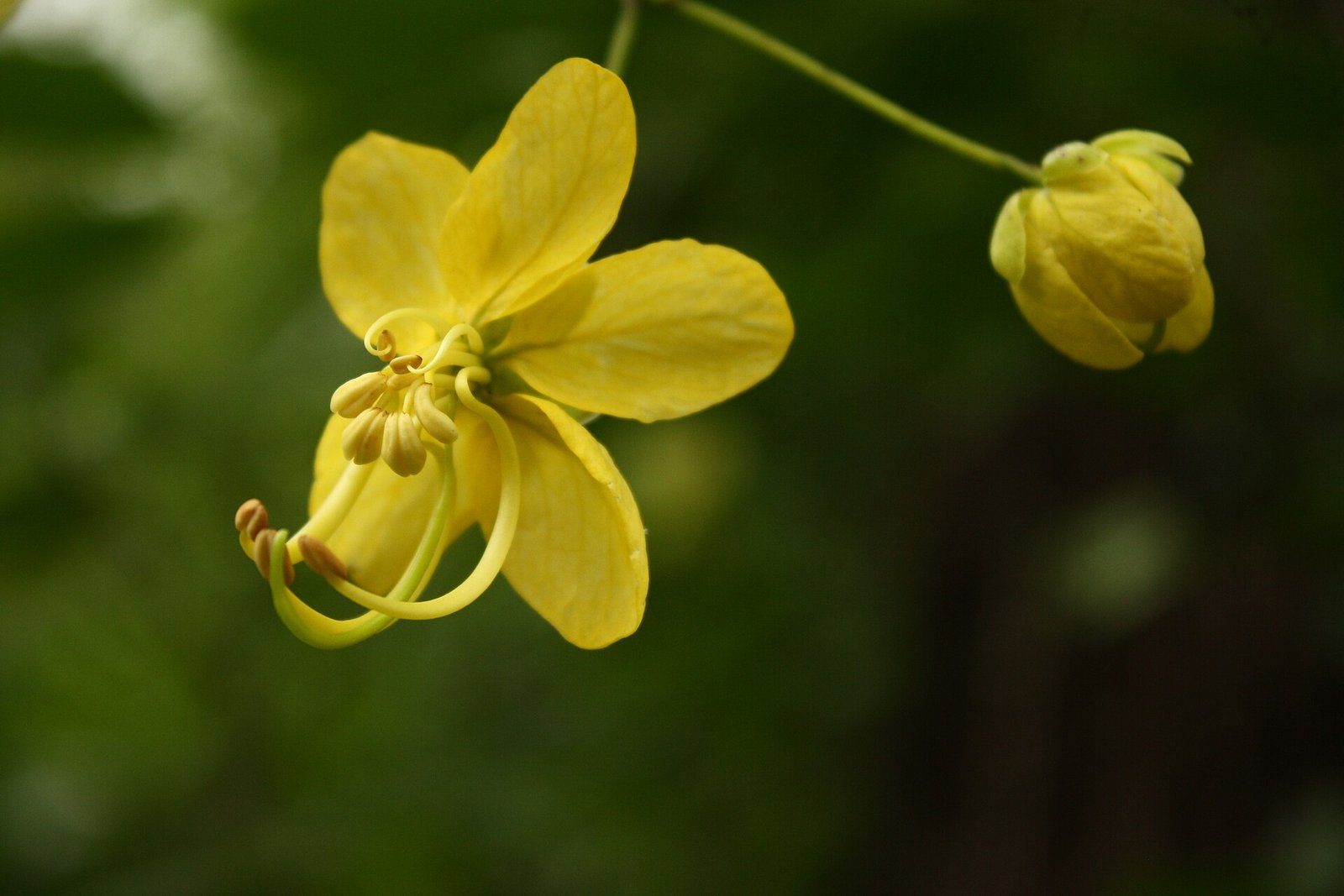 free petalbudlong curved stamens
Gynoecium: the carpels
The gynoecium is the female part, made of one or more carpels. Each carpel has three parts:
- Ovary: the swollen base. Inside it are ovules, attached to a flat, cushion-like placenta.
- Style: the long tube that joins the ovary to the stigma.
- Stigma: the tip, usually on top of the style, the surface that receives pollen.
If a flower has more than one carpel, they can be free (apocarpous, as in lotus and rose) or fused (syncarpous, as in mustard and tomato). Once fertilisation has happened, the ovules become seeds and the ovary becomes the fruit.
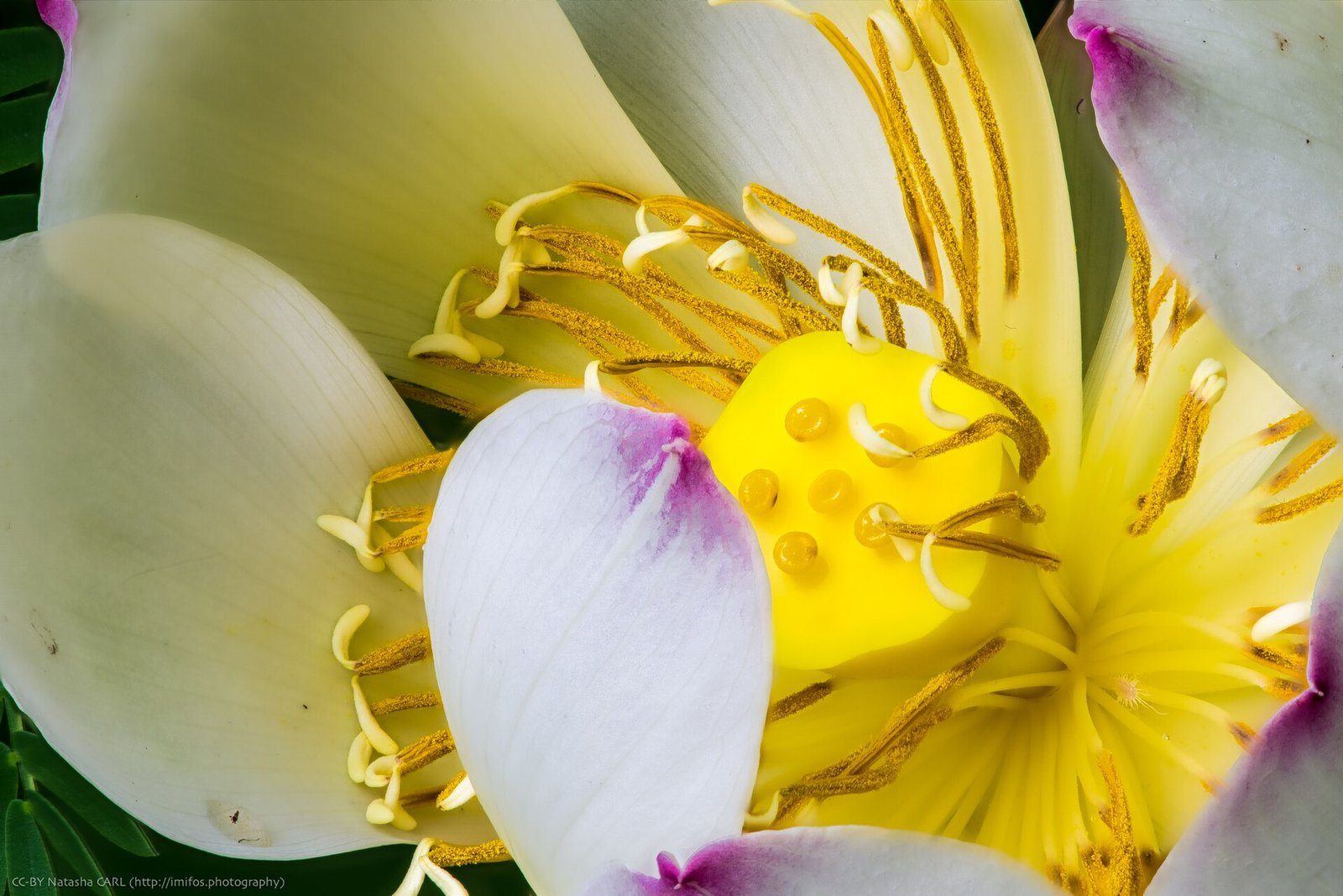 free carpelsstamens
Sort these by how the parts are joined.
Placentation: where the ovules sit
Placentation is the arrangement of ovules inside the ovary. The easiest way to learn it is with a kitchen knife.
| Type | Where the ovules are | Examples |
|---|---|---|
| Marginal | On a ridge along one edge (the ventral suture) of a one-chambered ovary, in two rows | Pea (open a pod: seeds hang along one seam) |
| Axile | On a central axis, in an ovary divided into several chambers | China rose, tomato, lemon |
| Parietal | On the inner wall of the ovary; one chamber becomes two because of a false septum | Mustard, Argemone |
| Free central | On a central axis, with no partitions (septa) at all | Dianthus, primrose |
| Basal | On a placenta at the base of the ovary, with a single ovule | Sunflower, marigold |
Your kitchen shows three of the five. Free central and basal ovaries are too small to cut at home; the widget below draws them.
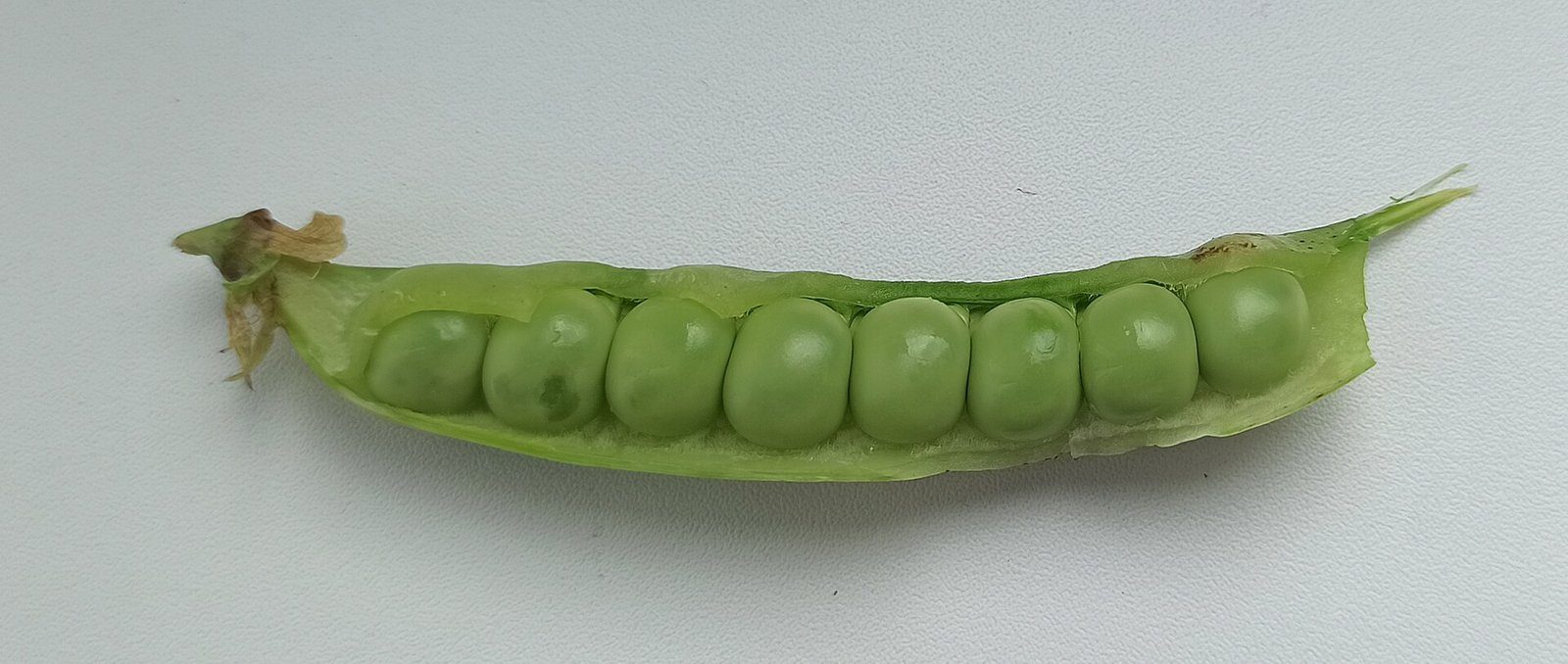 ovules became peaspod: one carpel
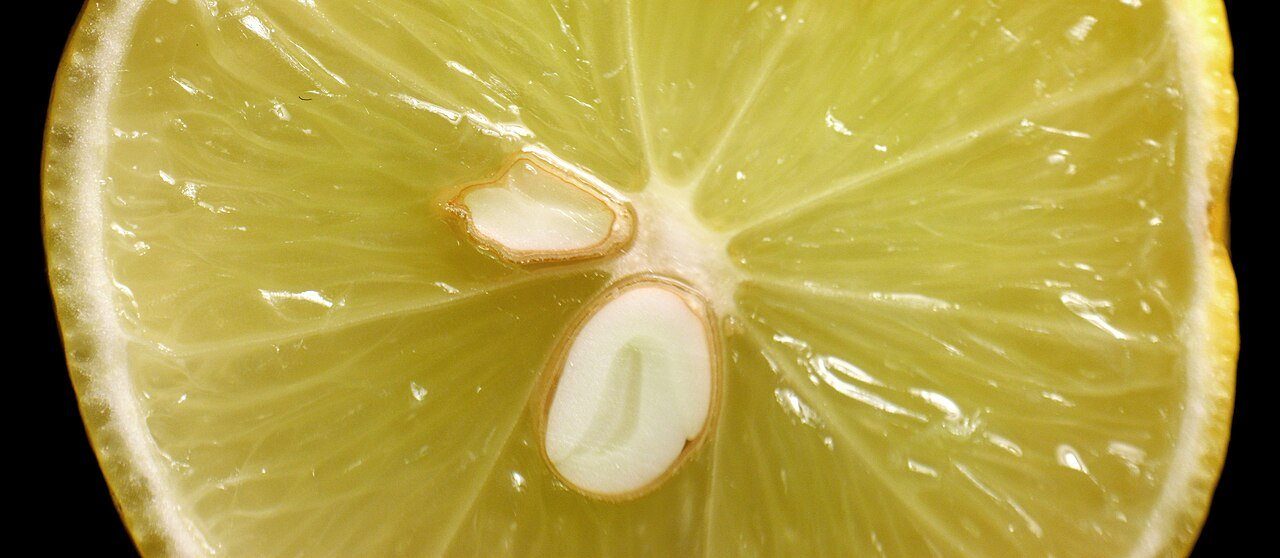 seed at the centre
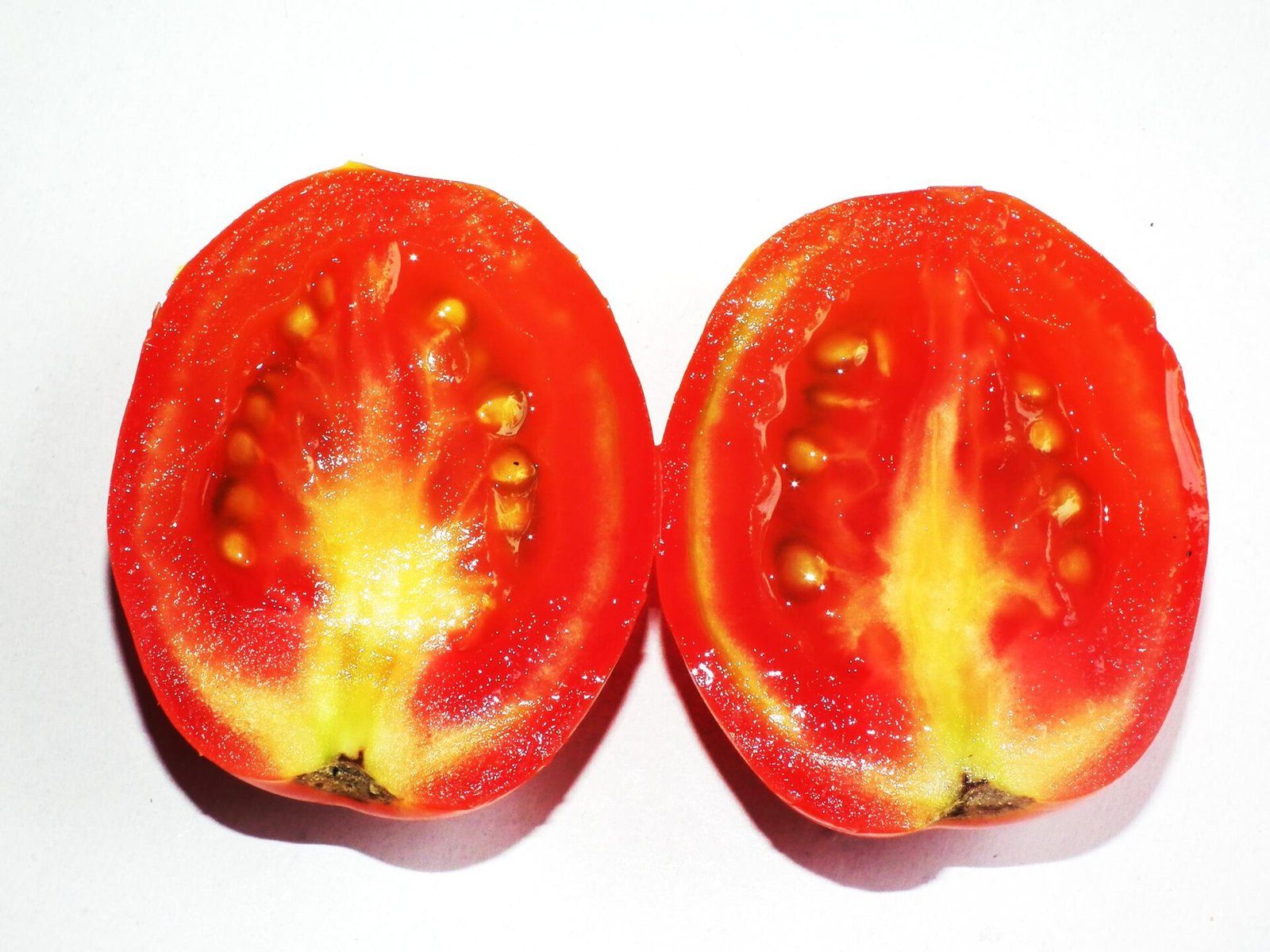 seedsplacenta in the middle
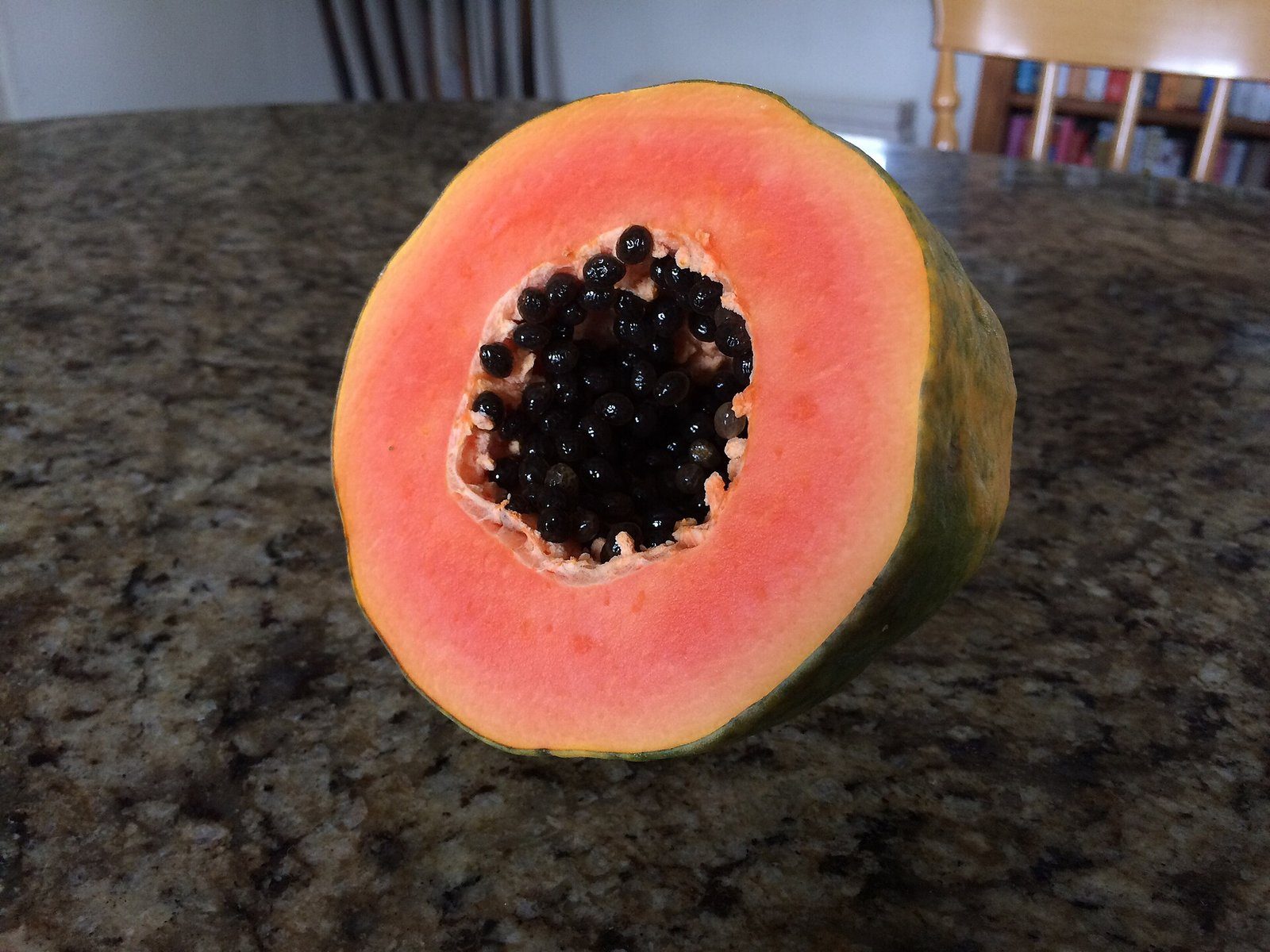 seeds on the inner wall
Try it: build an ovary from carpels. One number, how far the carpel edges grow in, turns parietal into axile.
Cut a tomato or a lemon across the middle: you see chambers with seeds fixed to the centre, which is axile placentation.
Don't mix these up
- Axile has partitions; free central has none. Both have ovules on a central axis.
- Diadelphous: pea. Monadelphous: china rose. Polyadelphous: Citrus. Epiphyllous: lily. Epipetalous: brinjal.
- Apocarpous (free carpels): lotus, rose. Syncarpous (fused): mustard, tomato.
Just remember
The joining and placentation types make sense once you know the roots (deep dive), but which plant has which is a list. Hooks:
- -adelphous = brothers
- Greek adelphos, brother (as in Philadelphia, "brotherly love"). Mon-, di-, poly-adelphous: one, two or many groups of brothers.
- Monadelphous: china rose. Diadelphous: pea. Polyadelphous: Citrus.
- One long tube in a gudhal (look at its staminal column above); in a matar flower nine brothers live together and one lives alone (9 + 1 = two groups); a nimbu flower has many small bunches.
- Epipetalous: brinjal. Epiphyllous: lily.
- Epi means on. Brinjal stamens sit on the petals. Lily stamens sit on the tepals, its leaf-like perianth: phyllon is leaf, and "L for lily, L for leaf".
- Apocarpous: lotus, rose. Syncarpous: mustard, tomato.
- Apo means apart: look at the lotus centre above, each carpel sunk in its own hole. Syn means together, as in "sync": a tomato's carpels are fused into one fruit.
- Marginal: pea. Axile: china rose, tomato, lemon.
- Marginal is the margin of a pea pod, where the peas hang. Axile has an axis: the things you slice into wedges in the kitchen, lemon and tomato.
- Parietal: mustard, Argemone
- Paries is Latin for wall. Mustard and Argemone (satyanashi, the prickly poppy) go together in real life too: Argemone seeds look so like mustard seeds that they get mixed into mustard oil, and poisoned oil caused an outbreak of epidemic dropsy in Delhi in 1998.
- Free central: Dianthus, primrose. Basal: sunflower, marigold.
- Dianthus is Greek for "flower of the gods": picture its ovules on a pillar standing free in the middle of a temple with no walls. Sunflower and marigold are both daisy-family heads; each tiny floret's ovary holds one ovule sitting on the floor.
- Anther
- The head of a stamen; two lobes with two pollen sacs each.
- Staminode
- A sterile stamen that makes no pollen.
- Diadelphous
- Stamens joined in two bundles (pea).
- Stigma
- The tip of the carpel that receives pollen.
- Syncarpous
- Carpels fused together (mustard, tomato).
- Placenta
- The cushion inside the ovary that holds the ovules.
- Placentation
- The arrangement of ovules inside the ovary.
Words to know
You slice a lemon across and see several chambers, with seeds fixed near the centre. The placentation is
- marginal
- axile
- free central
- parietal
The stamens of a china rose form a single tube around the style. They are
- monadelphous
- diadelphous
- polyadelphous
- epiphyllous
After fertilisation, which part of the flower becomes the fruit?
- The ovules
- The ovary
- The petals
Deep dive · optional
Why do ovules sit where they do, and who named the stamen groups?
A carpel is a leaf that folded around its seeds, and the five placentation types are five ways of folding and joining such leaves. Then the story behind the words on this page: a Swedish doctor who sorted every plant by counting its stamens, and the scandal it caused. Not for the exam, but it makes the list make sense.
The roots: a carpel is a folded leaf
- Why do peas hang along just one seam of the pod?Because the pod is one carpel, and a carpel is best understood as a leaf folded in half along its midrib, with its two edges joined. The ovules grow from the carpel's edges. Where the two edges meet is the seam (the ventral suture), so that is where the peas hang: marginal placentation.
- Why would a carpel be a leaf?Because flowers are shoots with changed leaves (concept 5), and carpels are thought to come from leaves that carried ovules on them, like the seed-bearing leaves of some of the earliest seed plants. In a young flower, the carpel starts as a flat lobe that curls round and seals along its edges; the band of dividing cells along those edges makes the ovules.
- Then where do the other types come from?From joining several folded carpels. Fuse three folded carpels side by side like the segments of an orange, and all their edges meet in the middle: the ovules sit on a central axis and the carpel walls become the walls between chambers. That is axile. Join carpels edge to edge without folding them in, and you get one big chamber with ovules in lines on its wall where the edges meet: parietal.
- And free central and basal?Free central: one chamber with no walls, and the ovules on a column that grows straight up from the tip of the flower stalk in the middle. Basal: the number of ovules is cut down to one, sitting on the floor of the ovary, which is all a tiny sunflower floret needs to make its single seed.
- How can we see the folded leaf for ourselves?Open a pea pod. It splits along two lines: one is the joined edges (with the peas), the other is the midrib of the old leaf, opposite. Lay the open pod flat and it looks like a leaf with a row of seeds along each edge.
The mustard pod is the twist in the story. Two carpels join edge to edge, so the ovary is one chamber with parietal placentas. Then a thin wall grows across from one placenta to the other and divides it in two. Because this wall did not come from carpel walls, it is called a false septum. You can see it as the thin, papery screen left standing when a dry mustard or radish pod splits open. Use the placentation widget above with this in mind: the one number it lets you change, how far the carpel edges grow in, is the whole difference between a parietal and an axile ovary.
The stories
See it
Run Linnaeus's key yourself. It asks only about stamens, in his order: are both sexes in one flower, are stamens fused to the pistil, are the anthers joined, are the filaments in bundles, are some longer than others, and finally, how many?
Now look inside the anther. A lily flower cut across at the level of its anthers: six anthers around a three-sided style, and in each anther, four pollen sacs.
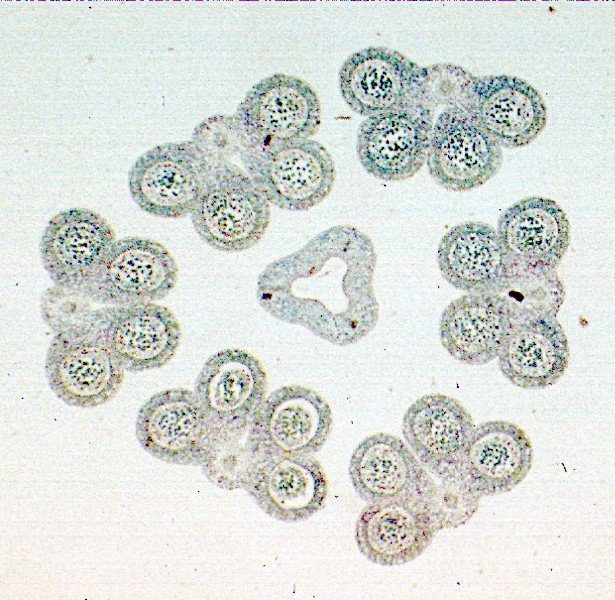 one anther: 4 sacsstyle
Solve it
Solve it
Count from the cross-section above. A lily flower has six stamens. How many pollen sacs does one flower have? If each pollen sac makes about 5,000 pollen grains (a made-up round number to work with), roughly how many grains does one lily flower make?
Answer
Solve it
A flower has an ovary of three fused carpels. Predict the placentation in each case, and give one plant for each: (a) the carpel edges grow right in and meet in the middle; (b) the edges stay at the wall; (c) the edges stay at the wall, but a thin wall later grows across the ovary from one placenta to the other (with two carpels).
Hint
Answer
By Linnaeus's rules, which two plants on this page would land in the same class?
- Pea and china rose
- Mustard and lily
- China rose and cotton
Connect it
Connect it
- A flower is a shoot, concept 5. The folded-leaf carpel is the strongest piece of evidence for the flower as a changed shoot.
- Ovary to fruit, concept 8. The placentation you see in a cut tomato or a pea pod is still there in the fruit, because the fruit is the ripened ovary.
- Two-part names, Class 11 Ch 1. Species Plantarum (1753) is where binomial nomenclature for plants officially begins.
- Inside the anther, Class 12 Ch 1. The four pollen sacs, and how pollen grains form in them, are the start of sexual reproduction in flowering plants.
- Mustard oil in your kitchen. The mustard and Argemone pair from the Just remember box is why food-safety rules test mustard oil for Argemone oil.
Still confused?
Axile and free central both have ovules on a central axis. What really is the difference?
Walls. In axile placentation the carpel walls run from the centre to the outside, dividing the ovary into chambers (lemon, tomato). In free central there are no walls at all: one chamber with a column standing free in the middle (Dianthus, primrose).
Mustard has two chambers. Why isn't it axile?
Because the wall between the chambers is not made of carpel walls. The ovules are on the outer wall where the two carpels' edges meet (parietal), and the dividing wall grew in later from those placentas. That is why it is called a false septum.
Is monadelphous the same as syncarpous?
No. Monadelphous is about stamens (filaments joined in one bundle, china rose). Syncarpous is about carpels (fused into one ovary, tomato). A china rose is both: one staminal tube around a style that ends in five stigmas, from five fused carpels.
Sources
- Gynoecium: carpels as modified leaves, placentation, free central column
- Linnaean taxonomy: the 24 classes of the sexual system
- Uppsala University, Linnaeus Garden: the sexual system
- UC Museum of Paleontology: Carl Linnaeus (Siegesbeck, Species Plantarum)
- Carl Linnaeus (Systema Naturae 1735, Species Plantarum 1753) and Sigesbeckia
- University of Otago Library: Linnaeus, the sexual system
- Hortus Malabaricus; Carl Linnaeus and Hortus Malabaricus, Rheedea (2003)
- Flora Malesiana: Cassia fistula stamens
- Buzz pollination
- Argemone mexicana; Down to Earth: the 1998 dropsy outbreak
Picture and video credits
Show 17 picture and video credits
- lily-stamens-pistil.jpg: Bob Peterson from North Palm Beach, Florida, Planet Earth!, CC BY-SA 2.0
- lily-anther-cross-section.jpg: John Alan Elson, CC BY-SA 4.0
- commelina-staminodes.jpg: Alex Abair, CC BY 4.0
- penstemon-staminode.jpg: Davefoc, CC BY-SA 3.0
- brinjal-flower-blue-banded-bee.jpg: Deoxyribose12, CC BY-SA 4.0
- china-rose-staminal-tube.jpg: Robert F. Tobler, CC BY-SA 4.0
- diadelphous-stamens-legume.jpg: Stefan.lefnaer, CC BY-SA 4.0
- lemon-flower-stamens.jpg: Juan Manuel Gomez Ruano, CC BY-SA 4.0
- bumblebee-buzz-pollination.mp4: Pharaoh han, CC BY-SA 4.0
- cassia-fistula-bud-flower.jpg: Swati Sidhu, CC BY-SA 4.0
- lotus-free-carpels.jpg: Tasha Carl, CC BY 3.0
- pea-pod-marginal.jpg: Sokolikmawwer0, CC BY-SA 3.0
- lemon-half-axile.jpg: Jorgebarrios, CC BY-SA 3.0
- tomato-halves-axile.jpg: Ramesh NG, CC BY-SA 2.0
- papaya-half-parietal.jpg: AWOLish, CC BY-SA 4.0
- sigesbeckia-orientalis-india.jpg: Dinesh Valke from Thane, India, CC BY-SA 2.0
- lily-six-anthers-style-section.jpg: Curtis Clark, CC BY-SA 3.0


