Morphology of Flowering Plants
- 1. Roots: what holds a plant in the ground?
- 2. The stem: how is it different from a root?
- 3. The leaf: base, stalk and blade
- 4. How are leaves and flowers arranged?
- 5. What is a flower?
- 6. Sepals, petals and aestivation
- 7. Stamens, carpels and placentation
- 8. The fruit: what does an ovary become?
- 9. Inside a seed: gram and maize
- 10. How to read a floral formula
- 11. Three families: Solanaceae, Fabaceae, Liliaceae
- Review
2 of 11·NCERT §5.2·p. 59·7 min
The stem: how is it different from a root?
The big ideaA stem is the part of the plant that carries leaves, buds, flowers and fruits, and the sure sign of a stem is nodes and internodes.
In simple words
The stem is the plant's main pole. It grows up towards the light and holds the leaves out where the sun can reach them. Along it are rings or bumps where leaves and buds sprout. Water goes up through it from the roots, and food made in the leaves travels through it to the rest of the plant. Some stems hide under the ground and fill up with food.
The stem is the ascending (upward-growing) part of the plant's main axis. It carries branches, leaves, flowers and fruits. It grows from the plumule, the baby shoot inside a sprouting seed, just as the root grows from the radicle.
Nodes, internodes and buds
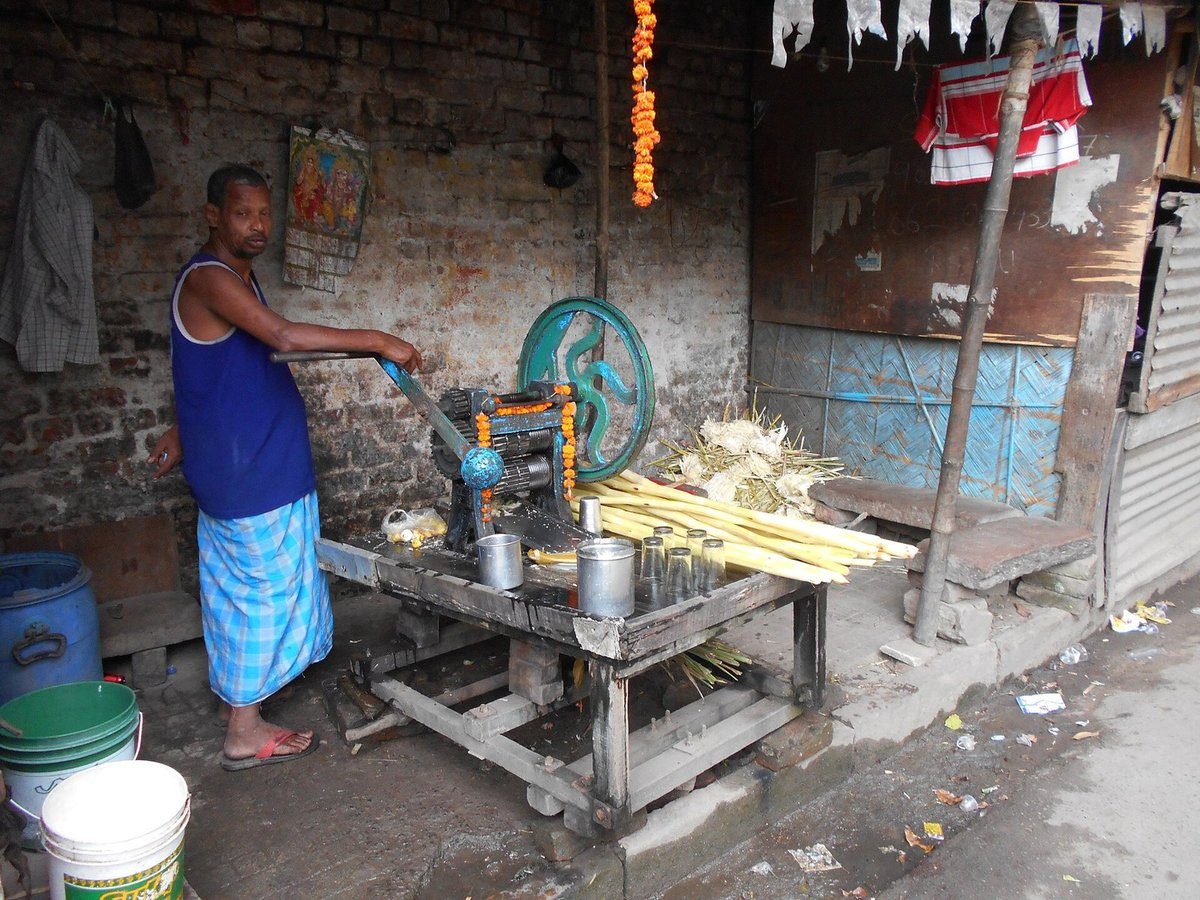
Look at a piece of sugarcane. It has hard rings at regular gaps, with smooth pieces in between.
- A node is a point on the stem where leaves grow. On sugarcane, each ring is a node.
- An internode is the length of stem between two nodes: the sweet, juicy piece you chew.
- Stems carry buds, small undeveloped shoots. A terminal bud sits at the tip of the stem; an axillary bud sits in the angle (the axil) between a leaf and the stem.
A young stem is usually green. As it ages it often becomes woody and dark brown, like the trunk of a mango tree.
Look along a sugarcane stalk. At every ring there is a scar where a leaf once sat, and a small bud hiding just above it. Plant a piece with one ring in moist soil and that bud grows into a new cane.
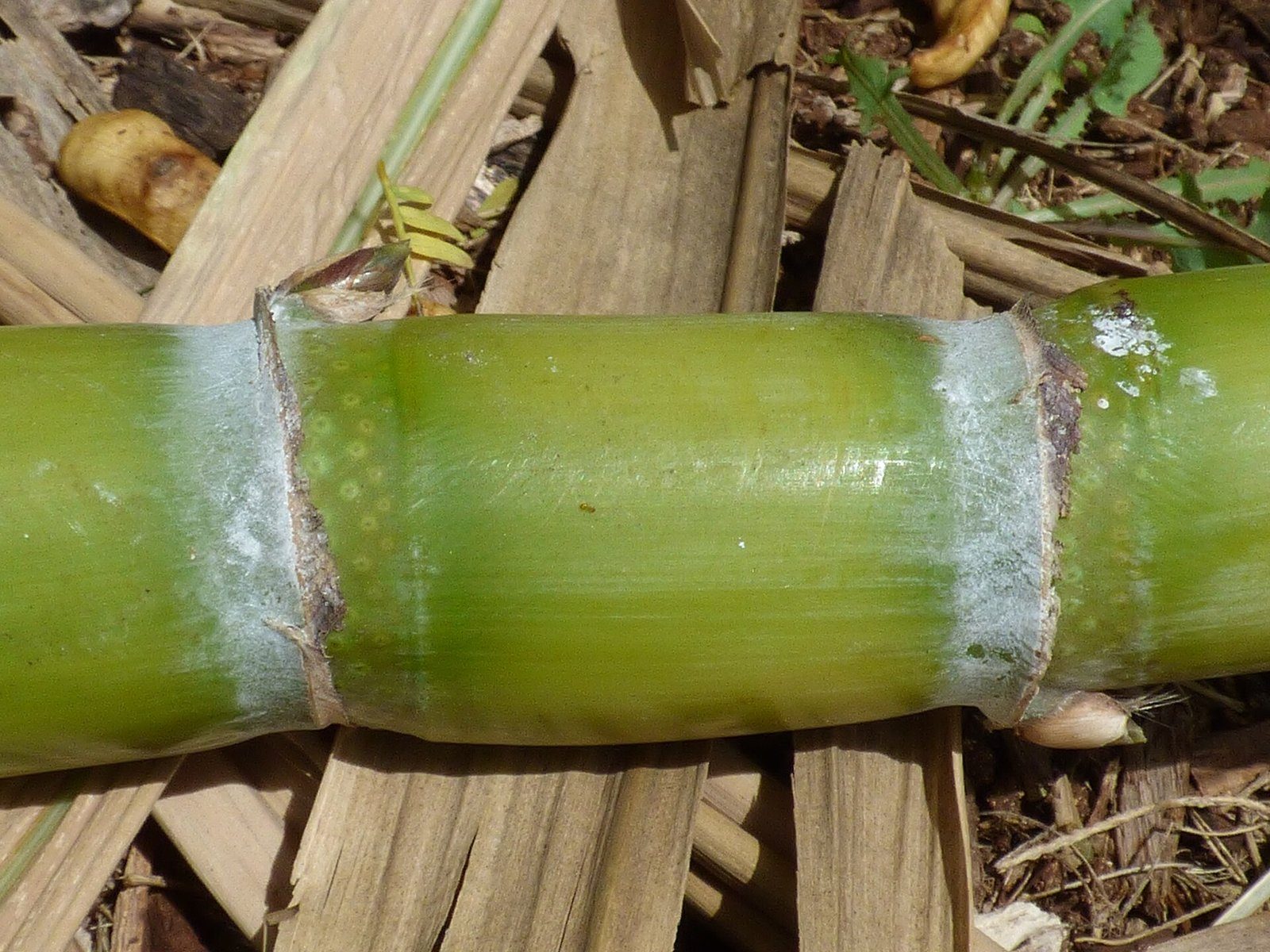 nodenodeinternode
What a stem does
- It spreads out branches so that leaves, flowers and fruits are held in good positions.
- It conducts water and minerals up from the roots, and carries photosynthates (food made by the leaves in photosynthesis) to other parts.
- Some stems also store food, give support, offer protection, or help in vegetative propagation: growing a new plant from a piece of the old one, without seeds. That is how farmers grow sugarcane from stem cuttings and potatoes from pieces of potato.
Stem or root?
| Feature | Stem | Root |
|---|---|---|
| Grows from | Plumule | Radicle |
| Nodes and internodes | Present | Absent |
| Leaves and buds | Present | Absent |
| Grows towards | Light (positively phototropic) | Gravity, into the soil |
| Hairs | Many-celled hairs, if any | Single-celled root hairs |
| Colour when young | Usually green | Not green |
Try it: tip the pot over and move the lamp. The stem chases the light; the root goes its own way.
Stems in disguise
Not in the current textbook, but NEET has asked it: many stems change their shape for a special job. You can still spot them as stems, because they grow from buds or carry nodes.
| Job | What it looks like | Examples |
|---|---|---|
| Storing food under the ground (also helps the plant survive bad seasons) | Swollen underground stem | Potato (its "eyes" are nodes with buds), ginger, turmeric, zaminkand (elephant-foot yam), Colocasia (arbi) |
| Climbing | Thin, spirally coiled stem tendrils grown from axillary buds | Cucumber, pumpkin, watermelon, grapevine |
| Defence | Woody, straight, pointed thorns grown from axillary buds | Citrus (lemon), Bougainvillea |
| Making food in dry places | Flattened green stem (Opuntia) or fleshy round green stem (Euphorbia), doing the job of leaves | Opuntia (prickly pear cactus), Euphorbia |
| Spreading to make new plants | Side branches that run along or under the ground and root at nodes | Grass and strawberry; mint and jasmine (branches arch down to the soil); Pistia and Eichhornia (water hyacinth) in water; banana, pineapple and Chrysanthemum (branches from underground parts of the stem) |
Here is each disguise in real life. Look for the clue that gives it away as a stem.
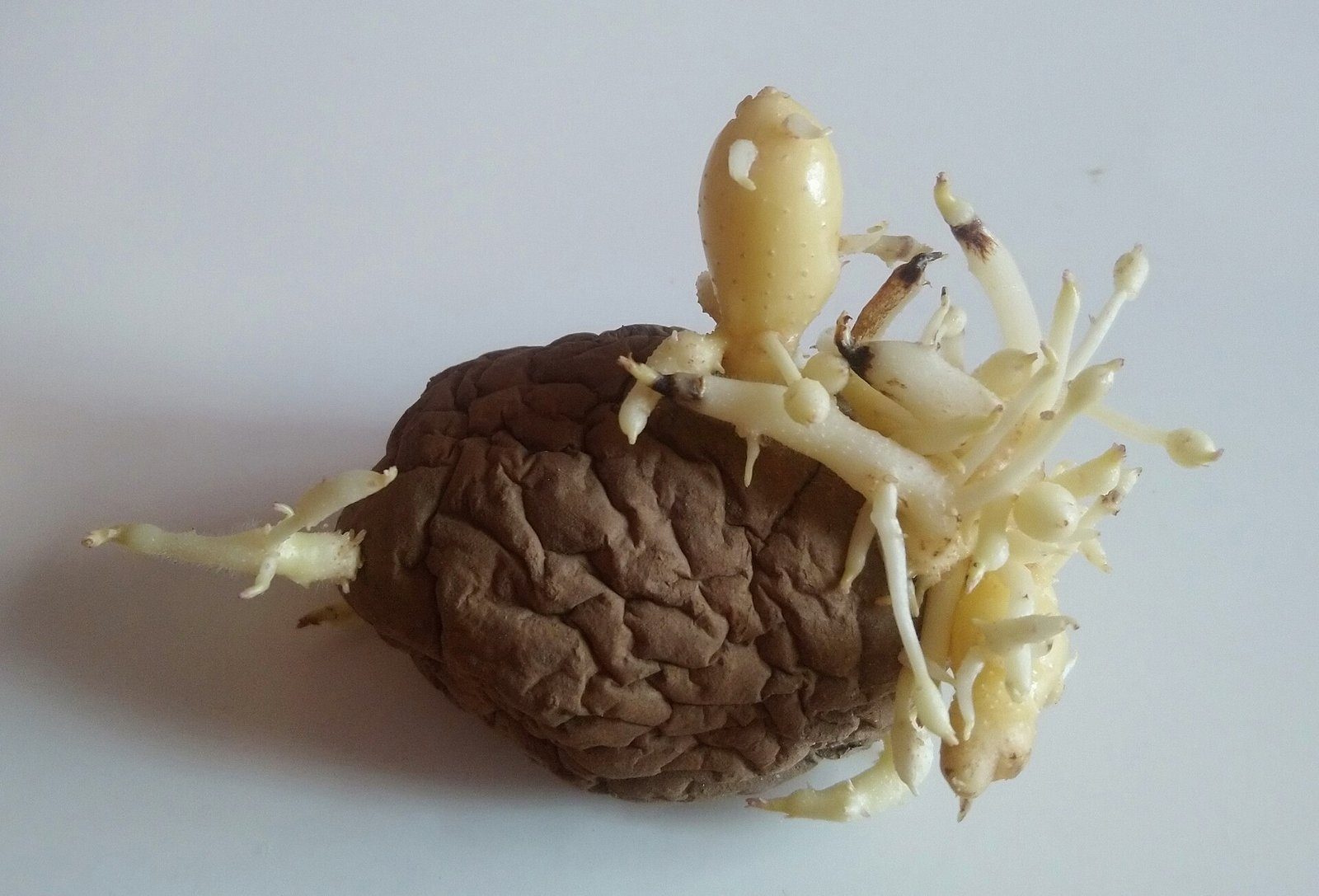 sprouts from the eyesold tuber
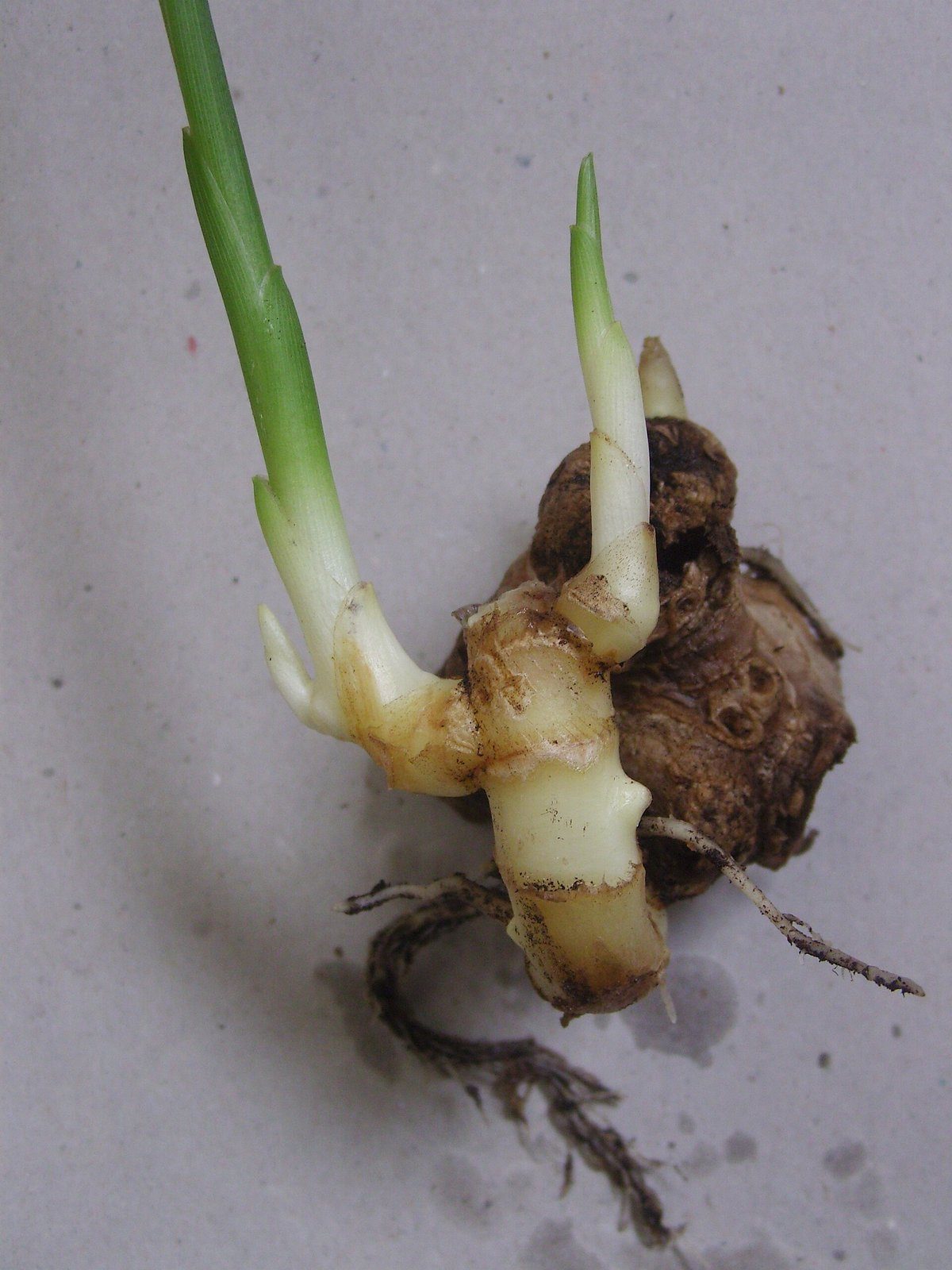 new shoot from a budrhizomeroots
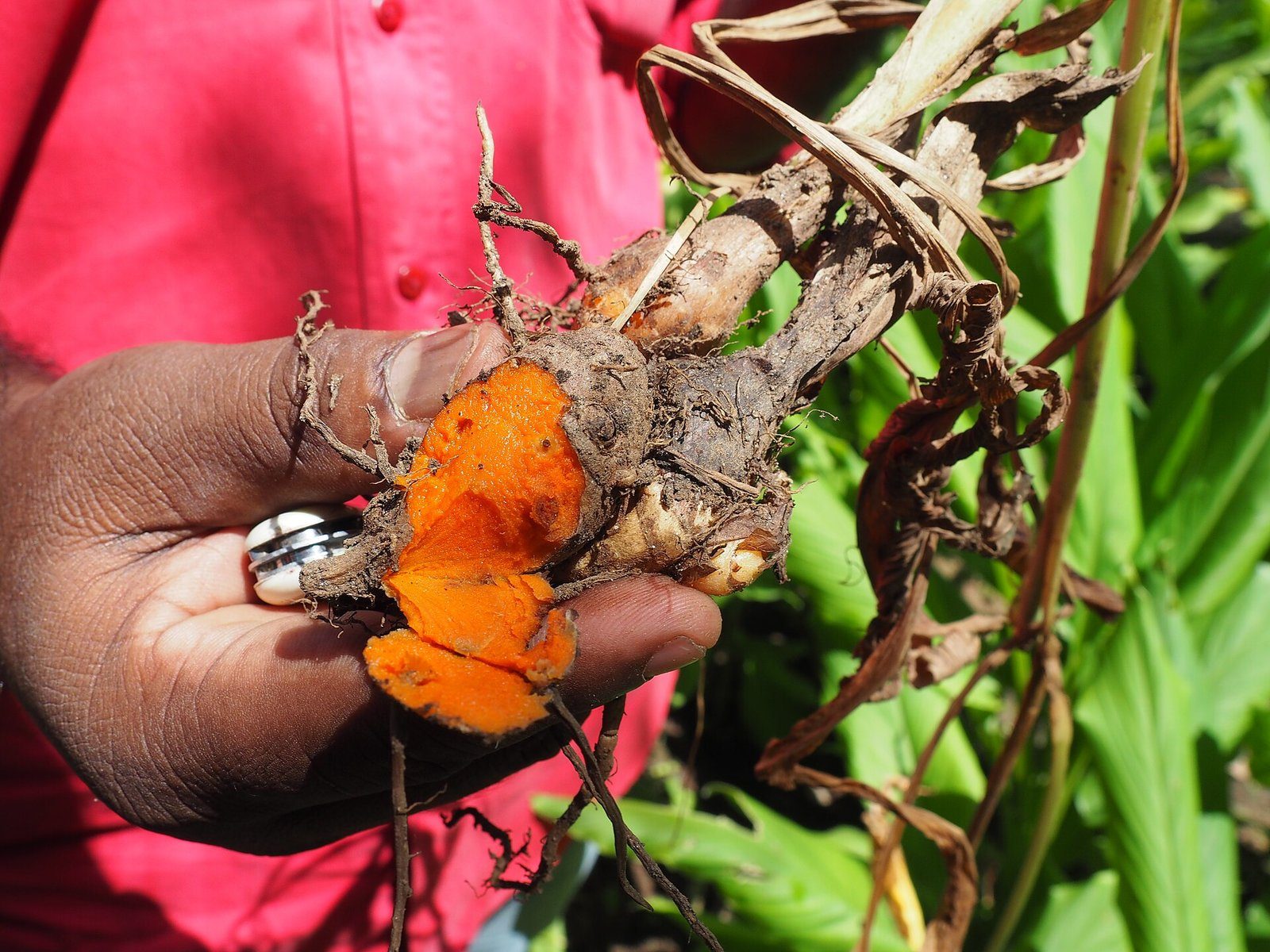 rhizome, cut openleaves
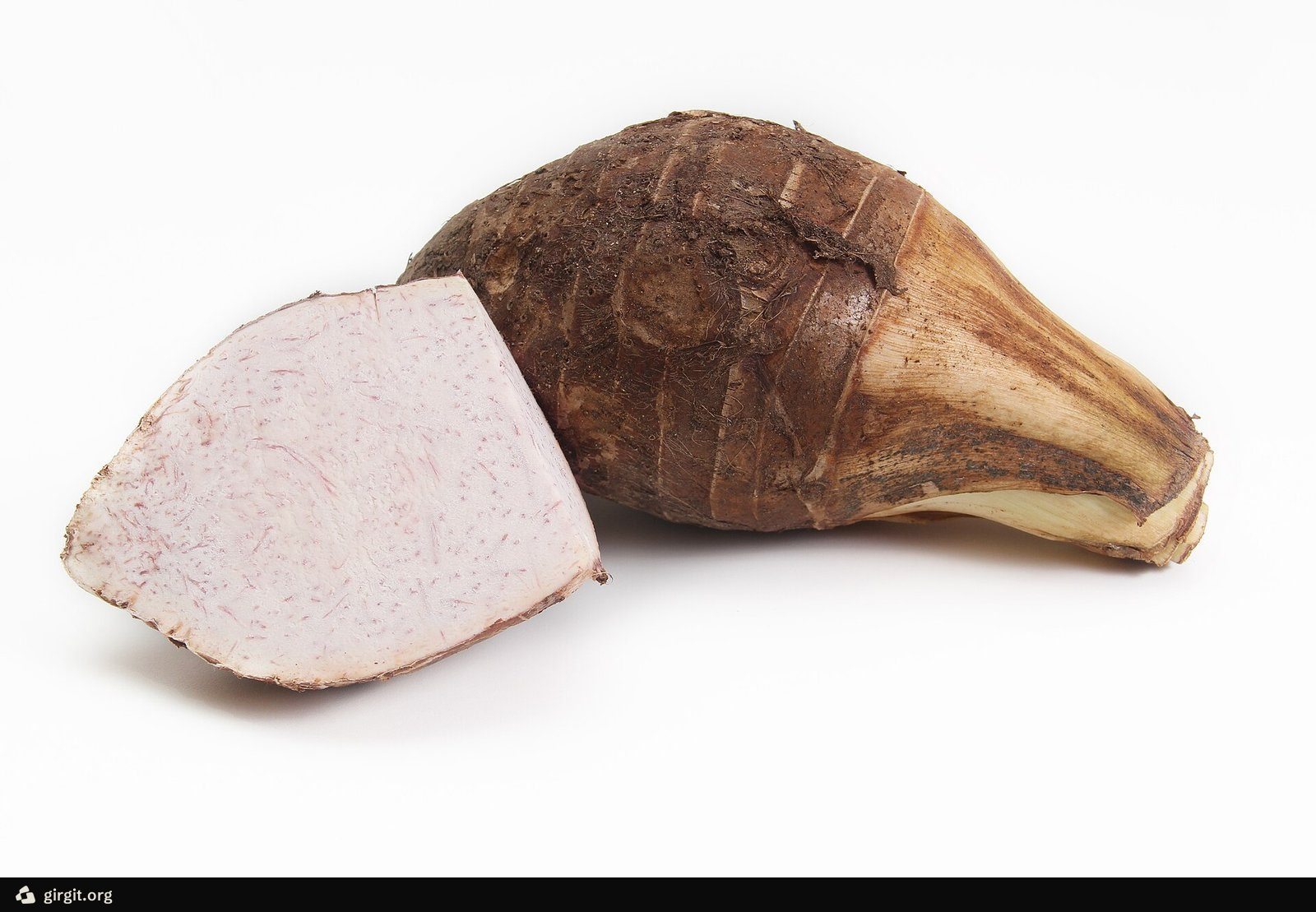 cormscale leavesstarchy flesh
A stem tendril does not wait to be blown onto a support. It swings its tip round in slow circles, and as soon as it touches something it quickly curls round it. Then the free part between plant and support twists into a spring that pulls the plant up (try it in the deep dive below).
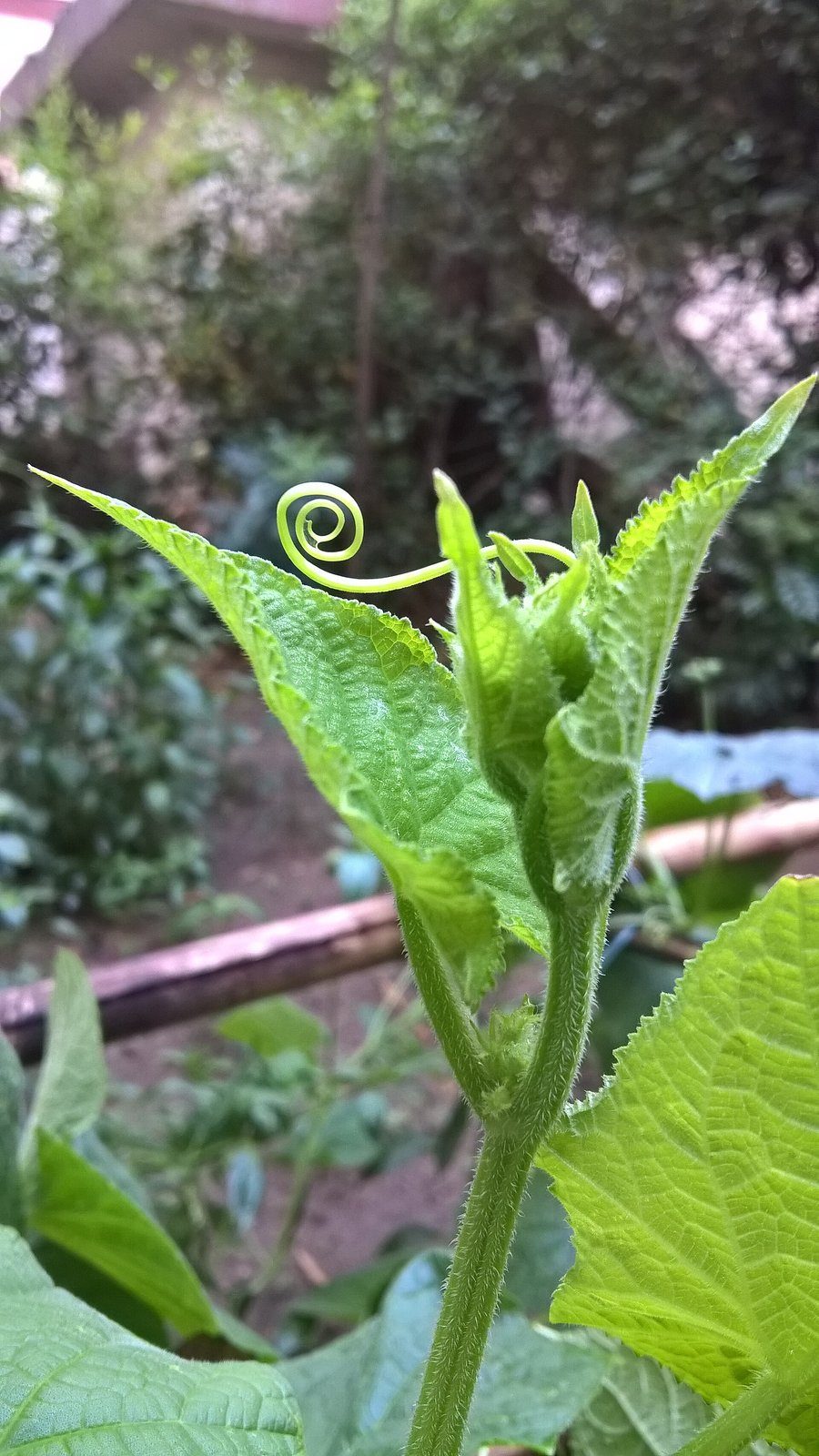 stem tendrilfrom the axil
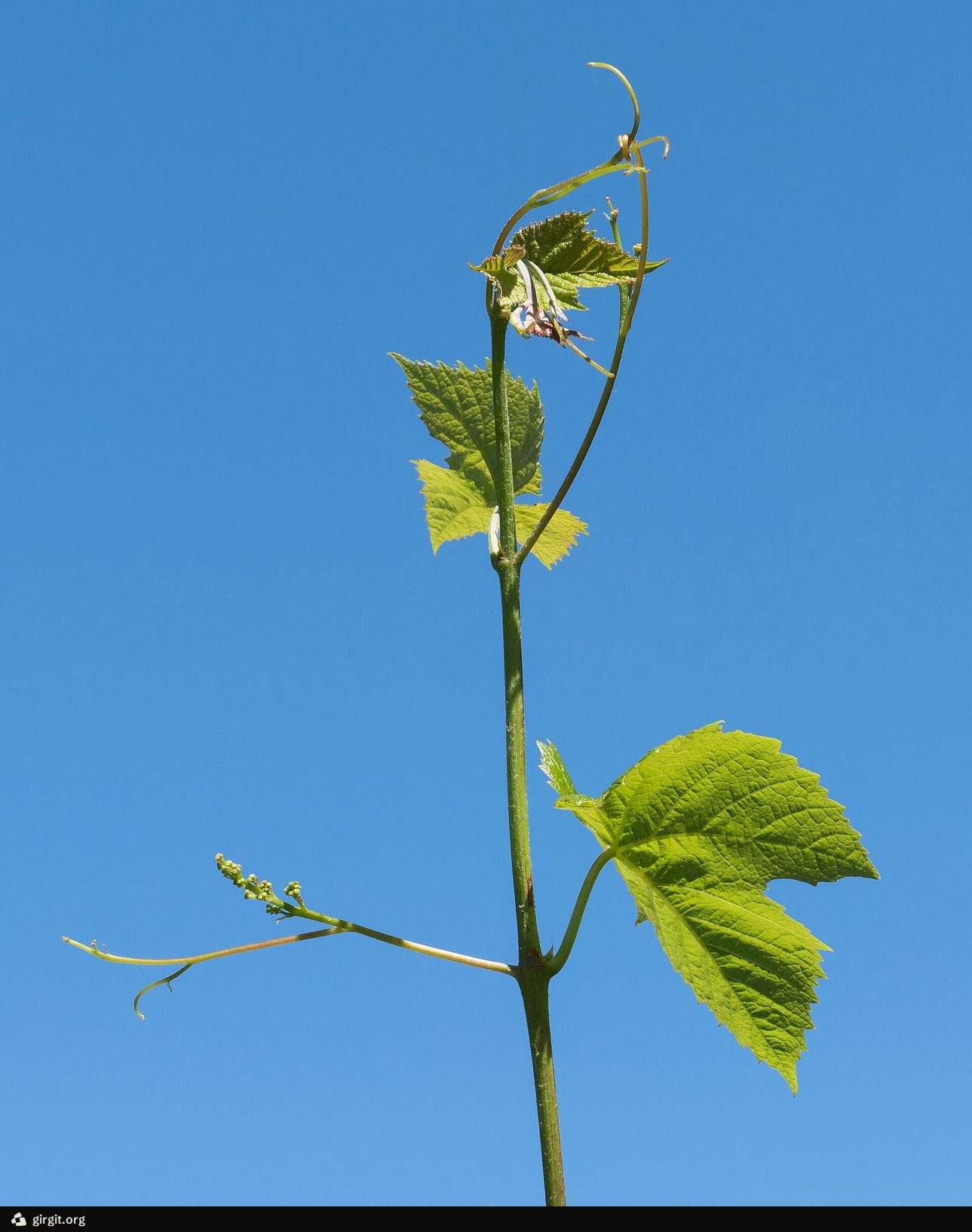 tendriltendrilleaf
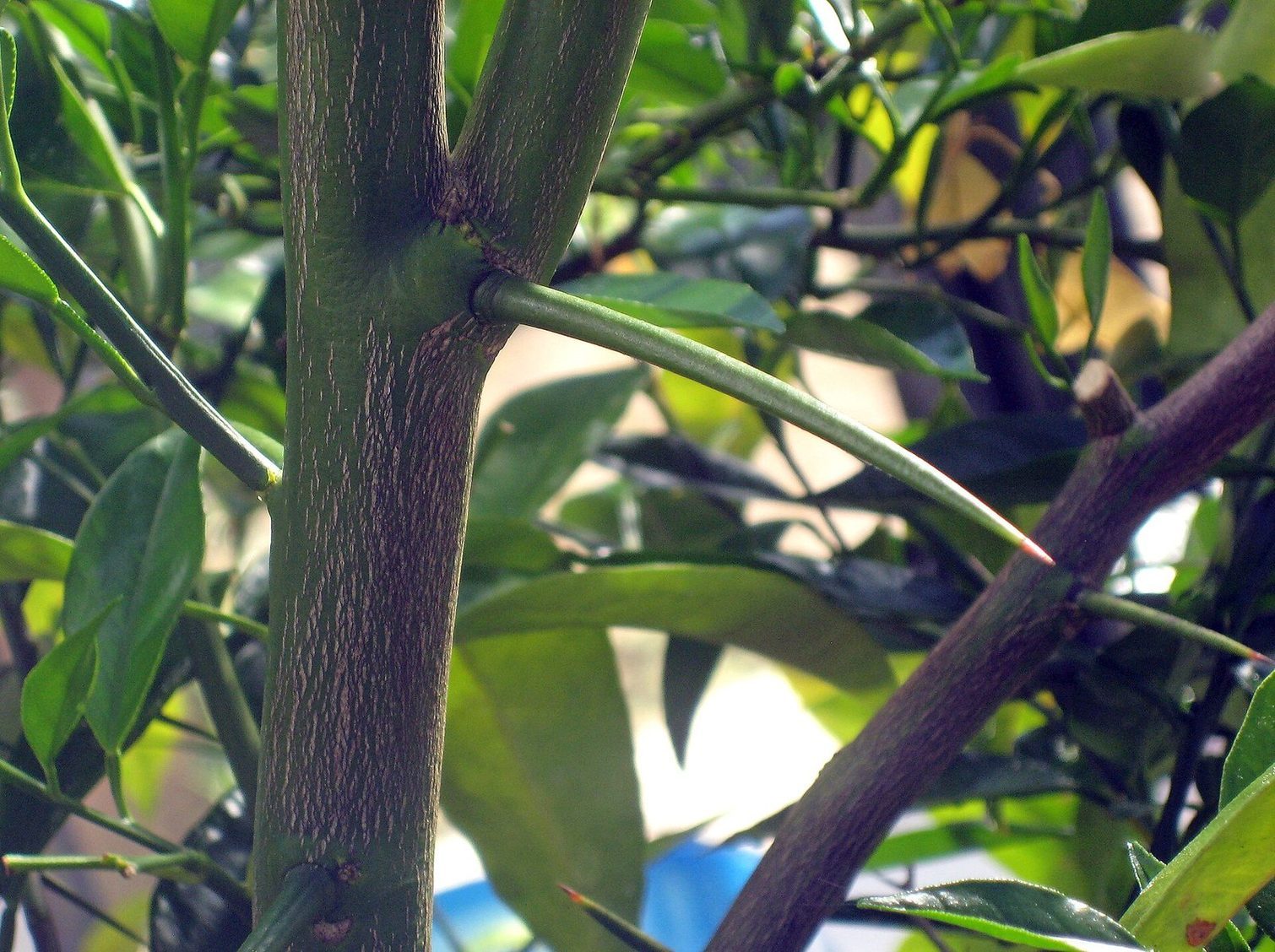 thornnode
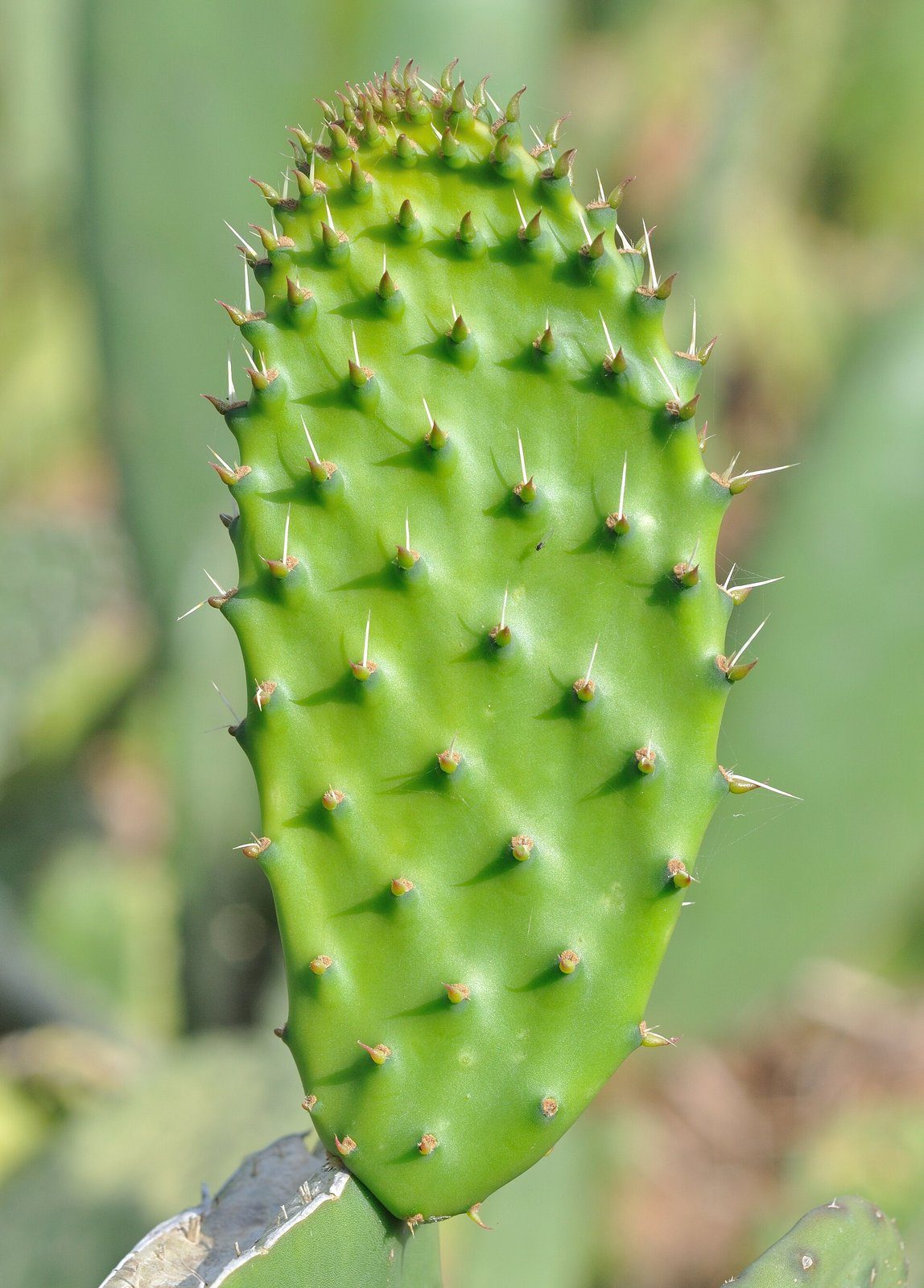 flat green stem (pad)spines
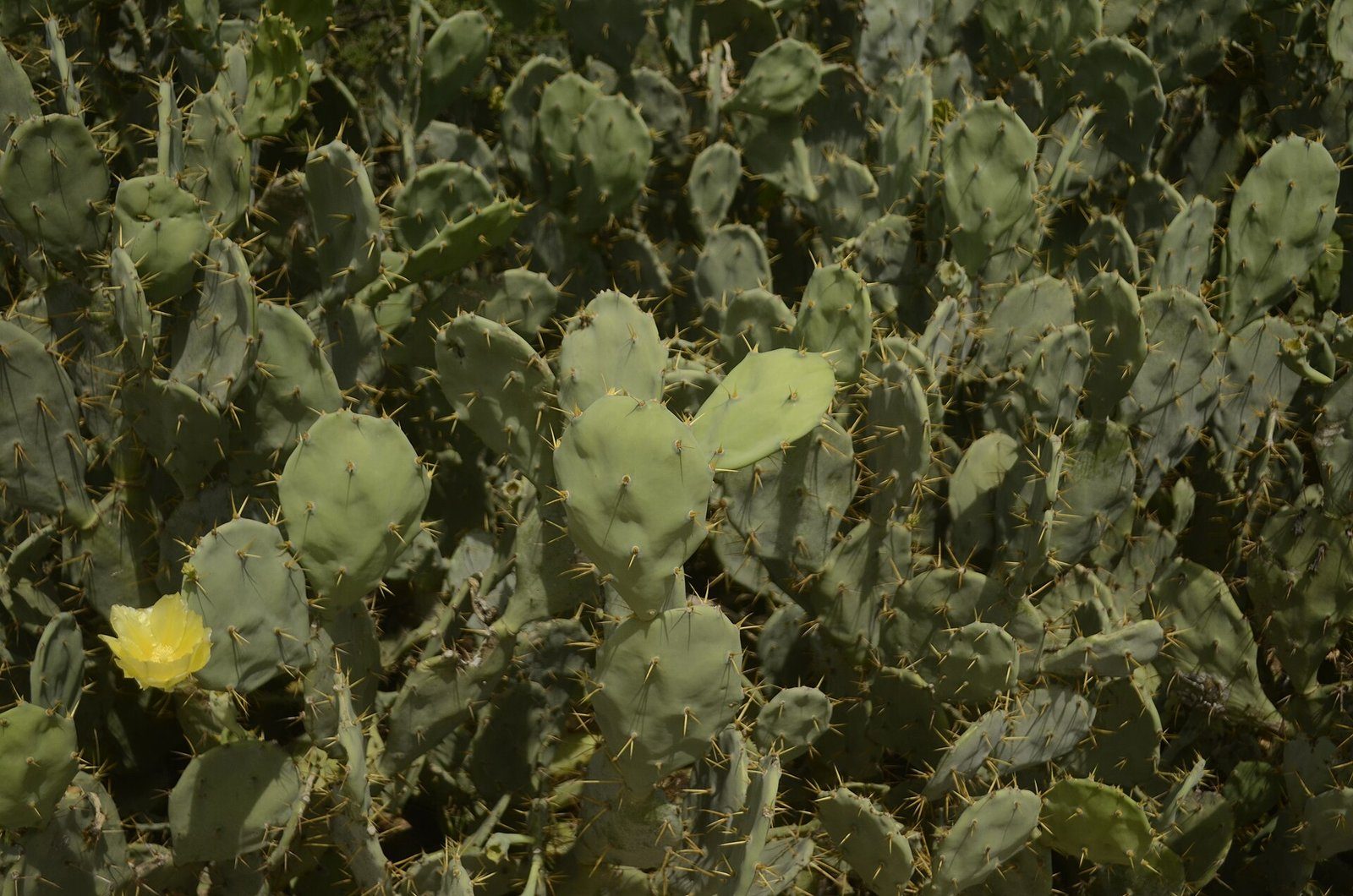 flat pads: stemsflower
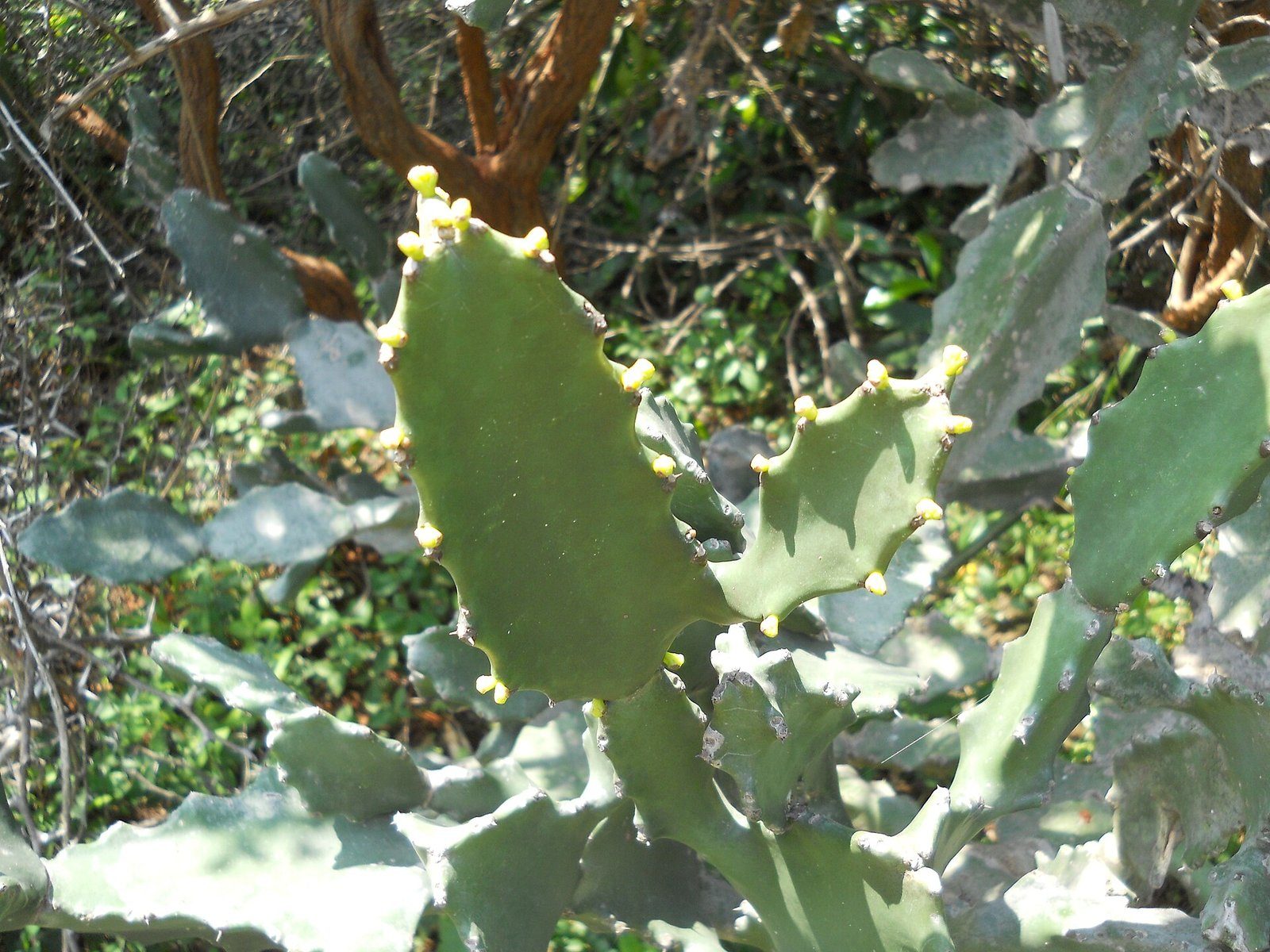 fleshy green stem
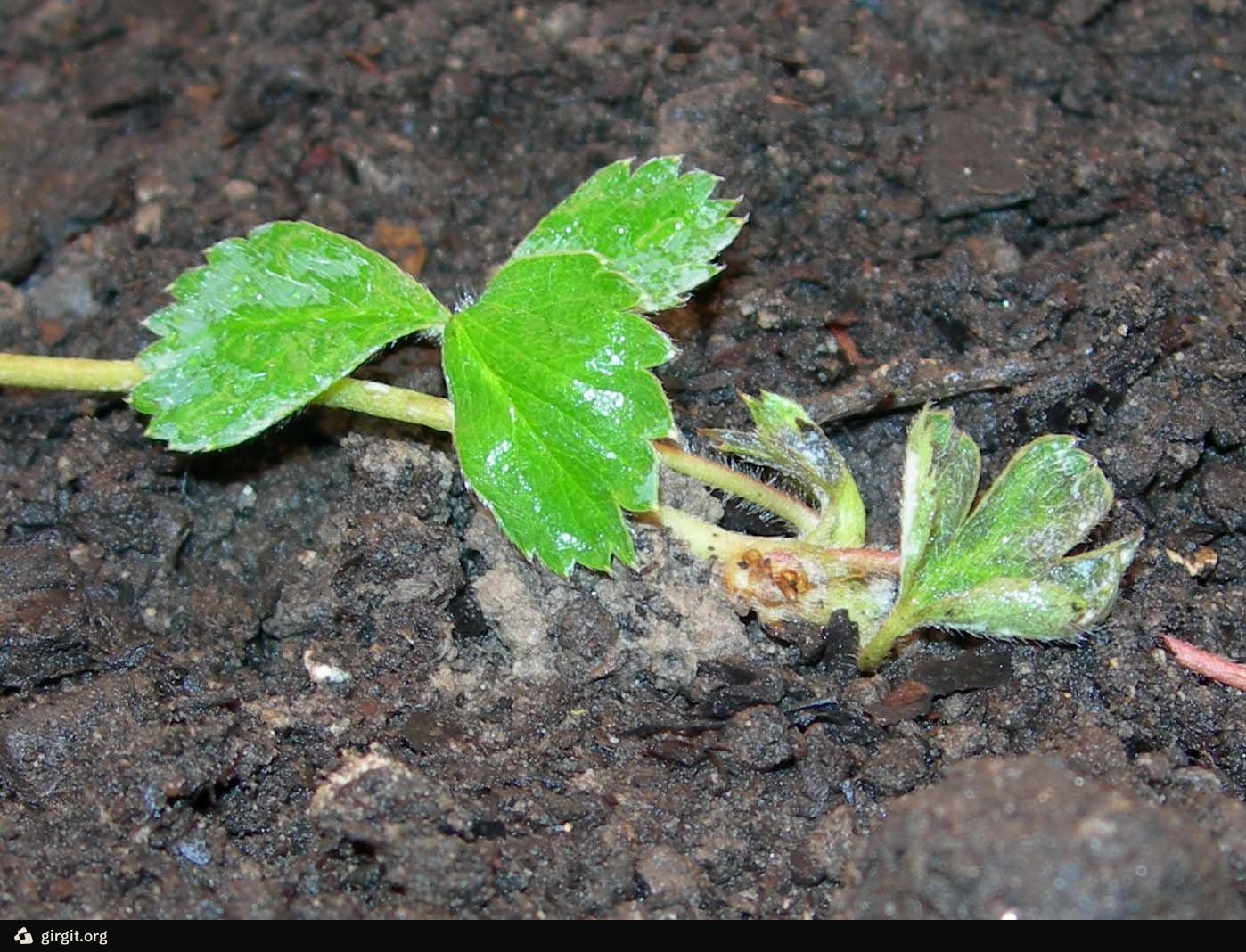 runnernew plant at a node
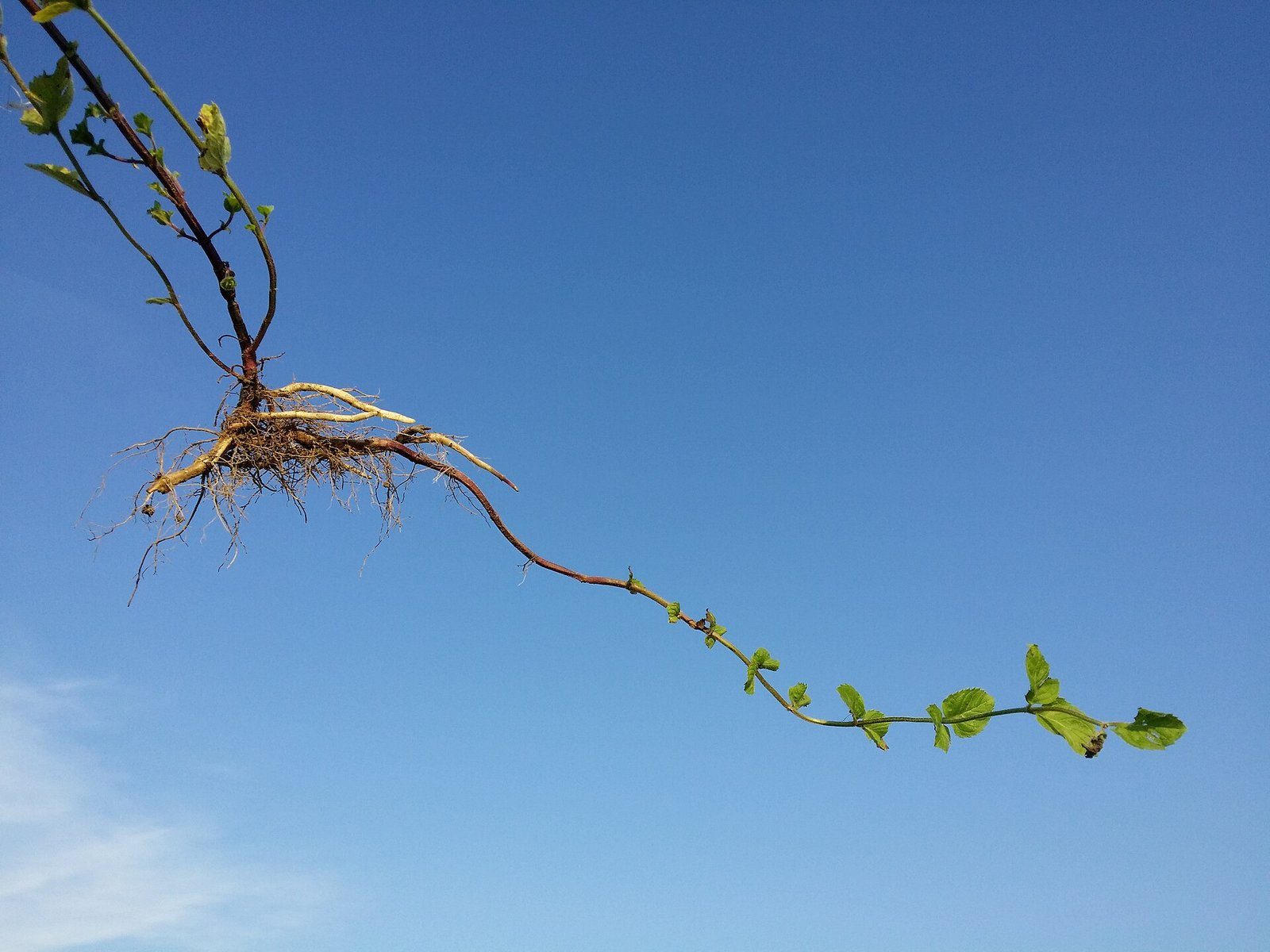 parent plantstolonleaves at nodes
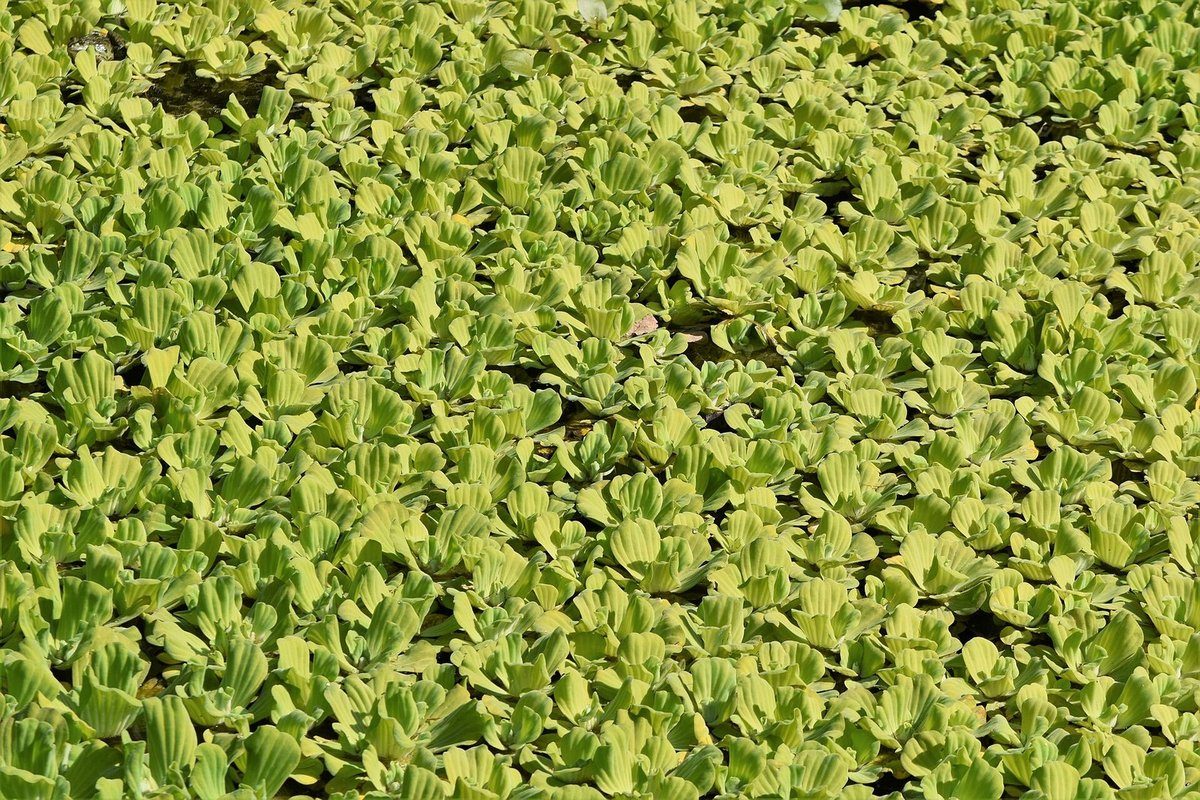 each rosette is one plant
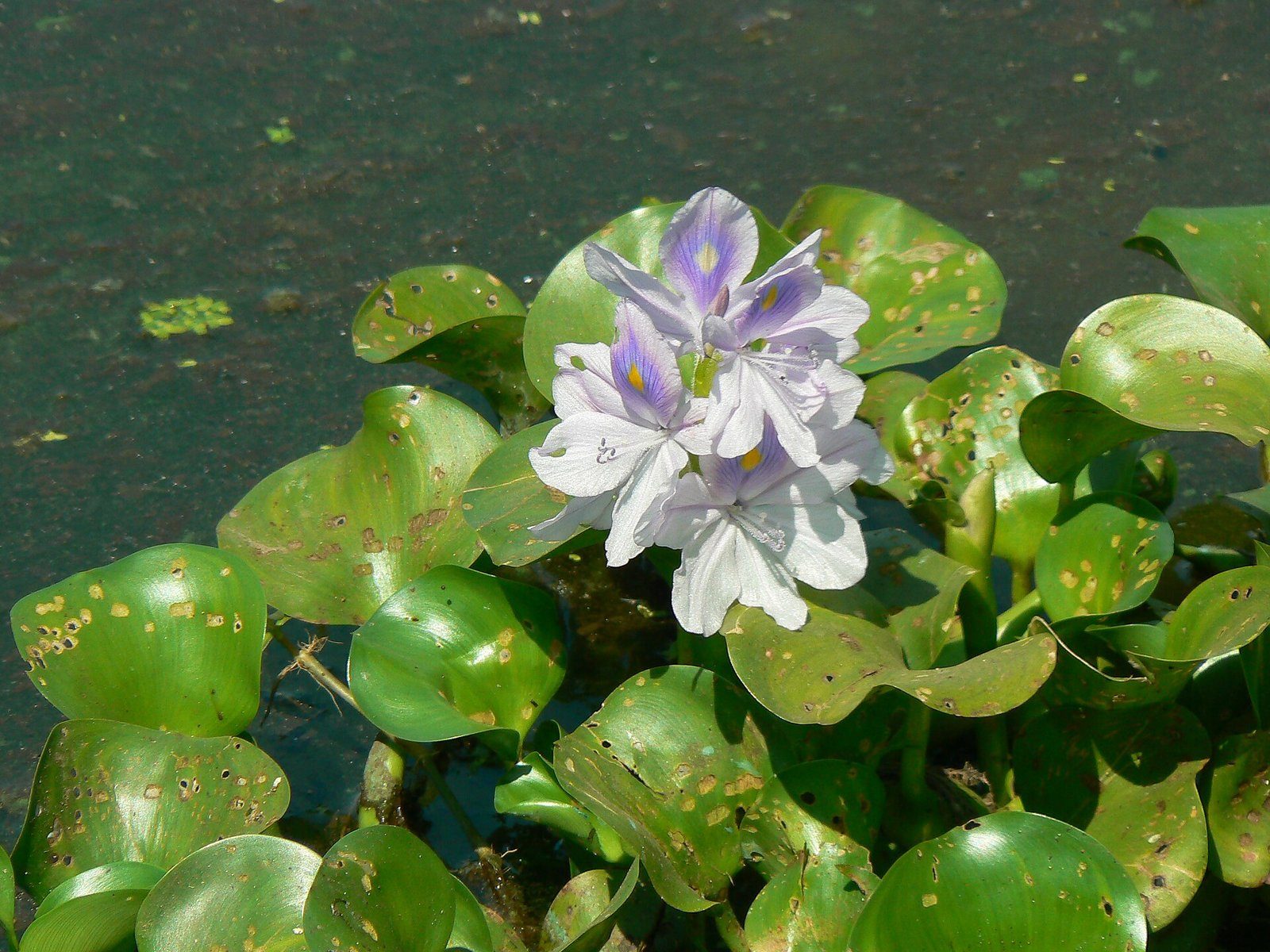 flower spikefloating leaves
Spot the disguise. The test is always the same: nodes and buds mean stem.
Don't mix these up
- Potato: stem (has nodes and buds). Sweet potato: root (no eyes with buds).
- Thorns of Bougainvillea and Citrus are modified axillary buds (stem). Spines of a cactus are modified leaves.
- Tendrils of cucumber and pumpkin are stem tendrils. Tendrils of pea are modified leaflets.
Just remember
No deeper reason for these lists: they are the examples the exam uses. Learn them with the hooks.
- Underground food stores: potato, ginger, turmeric, zaminkand, Colocasia (arbi)
- Three A's and two more from the sabzi basket: aloo, adrak, arbi, plus haldi and zaminkand. All five have eyes or rings (nodes), so all five are stems. A shakarkandi (sweet potato) and a gajar (carrot) have none.
- Stem tendrils: cucumber, pumpkin, watermelon, grapevine
- The "bel" plants: kheera, kaddu, tarbooz, angoor all climb a bamboo frame on curly springs that grow from axillary buds. Pea is the odd one out: its tendrils are leaflets.
- Thorns: Citrus and Bougainvillea
- Nimbu and bougainvillea both grow by the gate: a thorn sits exactly where a bud should be, in the axil of a leaf. A cactus spine sits where a leaf should be.
- Green stems doing a leaf's job: Opuntia (flat) and Euphorbia (fleshy, round)
- Opuntia is flat like a cobra's hood: in Hindi it is "nagphani". Euphorbia is round like a pencil: one kind is even called the pencil tree.
- Spreading stems: grass, strawberry (runners along the ground); mint, jasmine (arch down to the soil); Pistia, Eichhornia (in water); banana, pineapple, Chrysanthemum (from underground stem)
- Think of where each one walks: on the lawn (grass, strawberry), bending down from a pot (pudina, chameli), floating on a pond (jalkumbhi, water hyacinth), or popping up from below the ground (the baby plants round a banana).
- Plumule
- The baby shoot in a seed; it grows into the stem.
- Node
- The point on a stem where a leaf grows.
- Internode
- The piece of stem between two nodes.
- Axillary bud
- A bud in the angle between a leaf and the stem.
- Photosynthates
- Food made by leaves in photosynthesis.
- Vegetative propagation
- Growing new plants from a stem, root or leaf, without seeds.
Words to know
A potato is a stem, not a root. Which feature proves it?
- It stores starch
- Its "eyes" are nodes with buds that sprout into shoots
- It grows under the ground
On a sugarcane stalk, the hard rings and the smooth juicy pieces between them are
- nodes and internodes
- internodes and nodes
- buds and leaves
The thorns of Bougainvillea are modified
- leaves
- stems (axillary buds)
- roots
Deep dive · optional
Why does a stem come in rings?
Why every stem is built from repeating units, why that makes a potato a stem, how a tendril climbs, and two true stories: Darwin timing tendrils by the clock, and a famine caused by a field full of clones. The exam won't ask, but it makes the page stick.
The roots: a stem is a stack of spare parts
- Why is a potato a stem and not a root?Because it is built like the stem above the ground. Each eye is a node: it has a bud, and next to it a small scar where a tiny leaf once grew. The eyes even wind round the potato in a spiral, the way leaves wind round a stem, and there is a tip bud at the end farthest from where the potato was joined to the plant.
- Why does every stem have nodes?Because the shoot tip builds the stem as a stack of the same unit, again and again: a short piece of stem, a node, a leaf at the node, and a bud in the leaf's axil. Botanists call one such unit a phytomer. A root tip works differently: it makes no leaves, so it has no nodes, and its side roots start from deep inside the root, not at fixed spots on the surface.
- Why build a stem from repeating units?Because every axillary bud is a spare shoot tip. A goat bites off the top, a storm snaps a branch, a farmer cuts the cane: the buds lower down take over. A plant cannot run away from danger, so it grows in parts that can be lost and replaced.
- Then why don't all the buds grow at once?The growing tip sends down a hormone, auxin, that keeps the buds below it asleep. This is apical dominance. Pinch off the tip and the buds wake up: that is why gardeners nip the tops of tulsi and mehendi hedges to make them bushy.
- So where do tendrils, thorns and potatoes come from?From the same spare parts. Evolution can only reshape what is already there. A bud can grow into a branch, or stay small and sharp (a thorn), or grow long and touch-sensitive (a tendril). An underground side shoot, a stolon, can swell at its tip into a store of starch (a potato). That is the bedrock: every stem disguise is a bud or a node doing a new job, which is why "look for nodes and buds" always works.
The same logic explains the stem-root table at the top of the page. A stem carries leaves, so it needs nodes to hold them and buds to replace them, and it grows towards light because that is where its leaves can work. A root carries no leaves, so it needs neither. When you are not sure what a strange underground lump is, you are really asking: was it built by a shoot tip, in units, or by a root tip, without them?
The stories
See it
A tendril has caught a pole. Coil it, and see why the coils must turn both ways and how much closer the stem is pulled. Then sweep the chart: the first few turns barely move the stem, the last few pull hard.
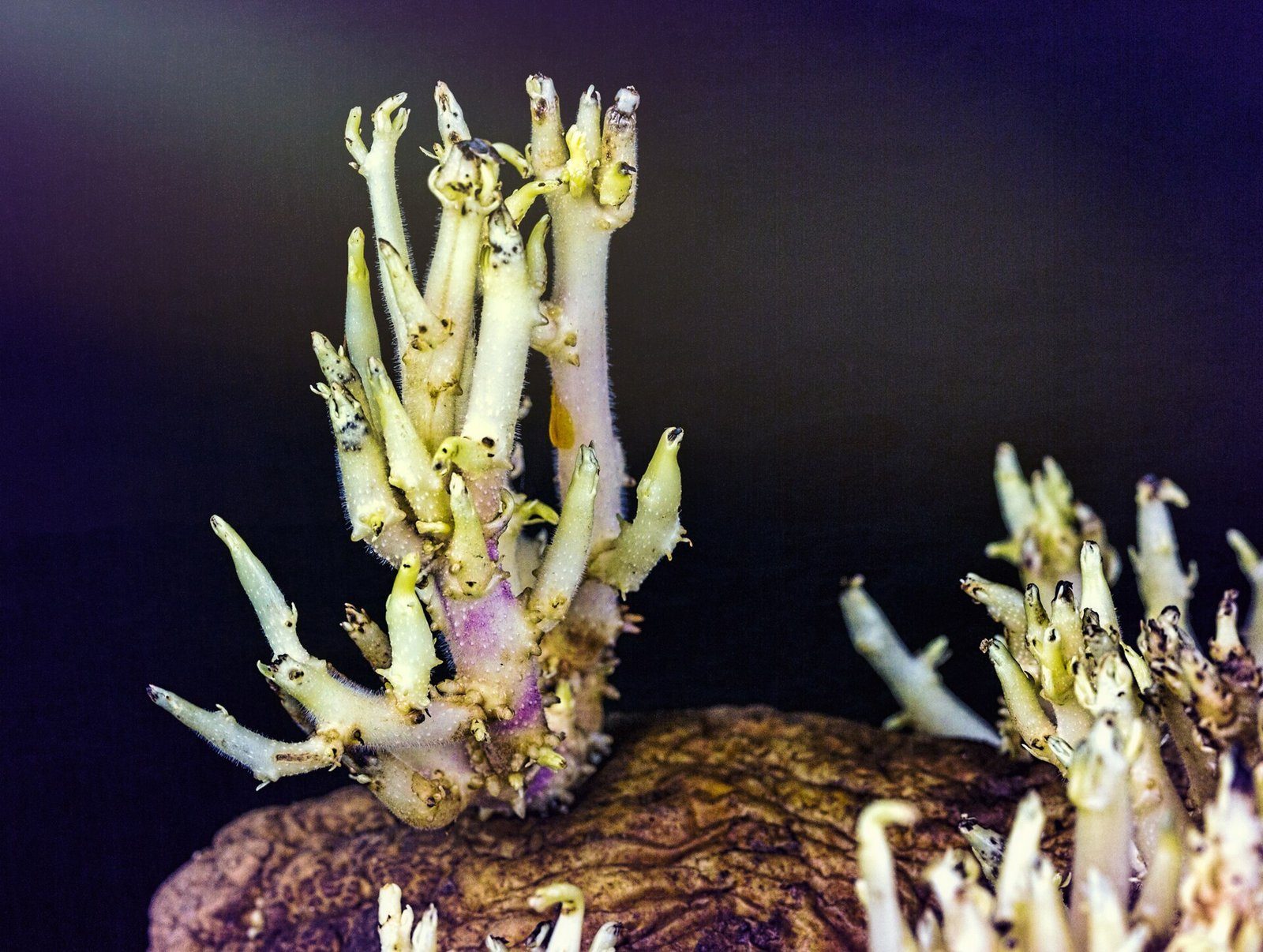 shoots from one eye (a bud)old potato
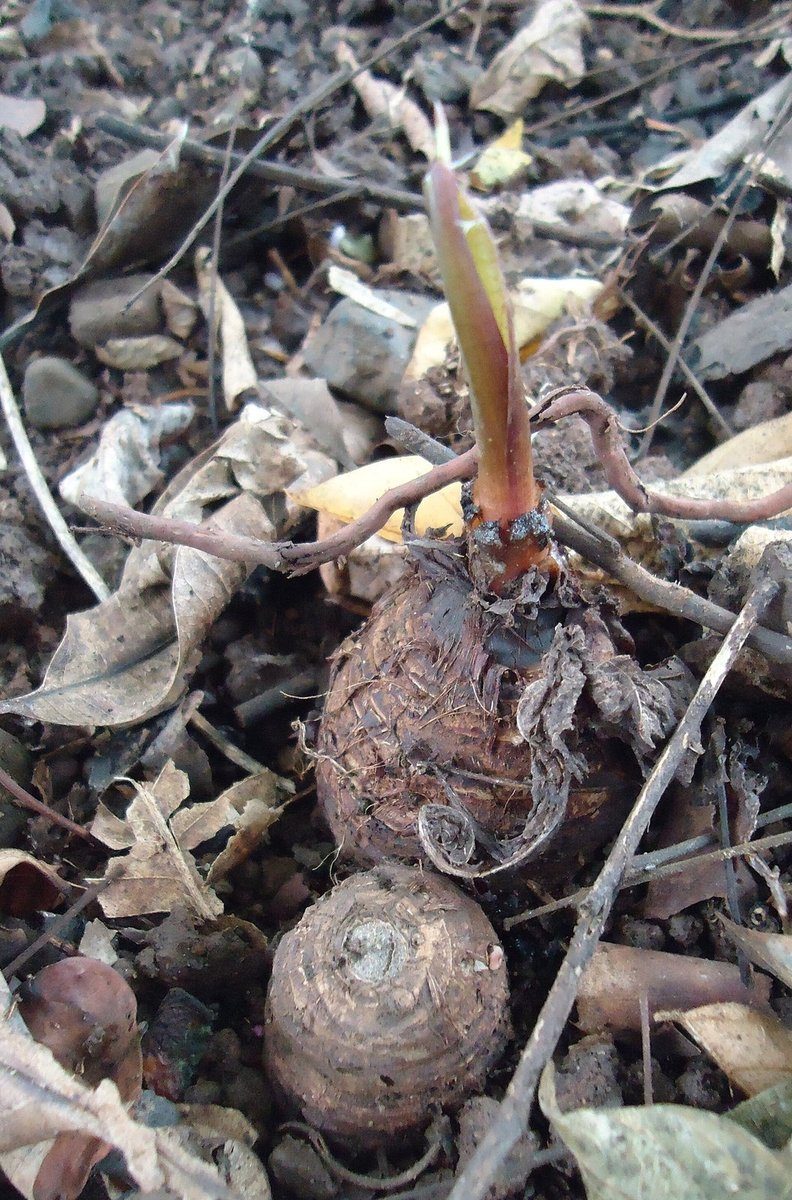 shoot from the top budcormring scars of old leaves
Solve it
Solve it
A cucumber tendril 12 cm long has gripped a pole. It coils into 6 turns, each of radius 2 mm. How far is the stem from the pole now? How many turns would it need to halve the gap to 6 cm?
Hint
Answer
Solve it
Darwin saw a climbing shoot sweep a circle about 30 cm across every 1½ to 2 hours. Roughly how far does its tip travel in a 12-hour day, searching for a support?
Answer
A gardener cuts off the top 5 cm of a tall, thin tulsi plant. A month later the plant is
- exactly the same shape, just shorter
- bushier, with several new branches from the buds below the cut
- dead, because it lost its growing tip
A student says: "A sweet potato kept in a glass of water sprouts green shoots, so it must be a stem." What is wrong?
- Sweet potatoes cannot sprout
- Sprouting does not prove it is a stem; only nodes and leaf scars do, and it has none
- It is a rhizome, not a stem
Connect it
Connect it
- Homology, Class 12 Ch 6. The thorn of Bougainvillea and the tendril of a cucurbit both grow from an axillary bud: same origin, different job. Your Evolution chapter uses exactly this pair as an example of homologous organs: see the evidence for evolution.
- Auxin, Class 11 Ch 13. Apical dominance, the reason pinching makes a plant bushy, is one of the jobs of auxins. The same hormone makes stems bend towards light, as in the widget above.
- Inside the stem, Ch 6. Cut the sugarcane across at an internode and you see the scattered bundles of a monocot stem; a sunflower stem shows the ring of a dicot stem.
- Roots, concept 1, and leaves, concept 3. A sweet potato is a swollen adventitious root; a pea tendril is a leaflet. Same job as a stem tendril, different origin.
- On the farm. Sugarcane, potato, banana, ginger and turmeric are all grown from stem pieces, not seeds. Every field is a crowd of clones: fast and uniform, but open to the same disease all at once, as Ireland learned.
Still confused?
If ginger is a stem, why do shops call it "ginger root"?
Only because it grows underground. Look closely at a fresh piece of adrak: it has rings (nodes) with thin scales on them, which are reduced leaves, and buds that sprout green shoots. Roots never have nodes or scale leaves. Botanists call this kind of underground stem a rhizome.
Are rose thorns stems too?
No, and botanists are fussy here. A true thorn grows from a bud and is joined to the wood inside, so it is hard to break off (Bougainvillea, Citrus). A spine is a changed leaf or part of one (cactus). A rose "thorn" is neither: it is a prickle, a hard outgrowth of the skin that snaps off cleanly, sitting anywhere on the stem, not at a node.
Are potato and sweet potato close relatives?
No. Potato belongs to the potato family, Solanaceae, with brinjal, tomato and chilli (see plant families). Sweet potato belongs to the morning-glory family. They store food in different organs, a stem and a root, and only share a name because both are sweetish lumps of starch dug out of the soil.
Sources
- Darwin Correspondence Project: Climbing plants (Darwin's letters to Hooker, 1863; Asa Gray's 1858 note)
- The Movements and Habits of Climbing Plants (Linnean Society paper and 1875 book)
- Harvard Gazette (30 August 2012): Clues in the cucumber's climb; Gerbode, Puzey, McCormick and Mahadevan, "How the cucumber tendril coils and overwinds", Science 337: 1087 (2012)
- Tuber (potato eyes as nodes with leaf scars, spiral arrangement, root tubers without nodes)
- Apical dominance (auxin from the tip keeps axillary buds dormant)
- Great Famine (Ireland) (dates, deaths, emigration, the Lumper, Phytophthora infestans)
- Potato (stem tubers on stolons, seed potatoes, lack of genetic diversity)
- Thorns, spines and prickles
Picture and video credits
Show 16 picture and video credits
- sugarcane-nodes-internodes.jpg: Forest and Kim Starr, CC BY 3.0
- sugarcane-juice-kolkata.jpg: Indrajit Das, CC BY-SA 3.0
- potato-tubers-sprouting.jpg: Spiritia, CC BY-SA 4.0
- ginger-rhizome-shoot.jpg: Olli Salmela, (Dacnoh), CC BY-SA 3.0
- turmeric-rhizome-kerala.jpg: Schlawensko, CC BY-SA 4.0
- cucumber-tendril-axil.jpg: Abhinaya venkatesan, CC BY-SA 4.0
- citrus-thorn-axil.jpg: Edgovan22, CC BY-SA 3.0
- opuntia-cladode.jpg: Quartl, CC BY-SA 3.0
- opuntia-stricta-thoothukudi.jpg: PJeganathan, CC BY-SA 4.0
- euphorbia-antiquorum-nellore.jpg: YVSREDDY, CC BY-SA 3.0
- mint-stolons.jpg: Stefan.lefnaer, CC BY-SA 4.0
- pistia-water-lettuce.jpg: Krzysztof Ziarnek, Kenraiz, CC BY-SA 4.0
- water-hyacinth-thane.jpg: Dinesh Valke from Thane, India, CC BY-SA 2.0
- cucumber-tendril-spiral.jpg: Friedrich Haag, CC BY-SA 4.0
- potato-sprouting-eyes.jpg: Sheila Sund from Salem, United States, CC BY 2.0
- colocasia-corm-sprouting.jpg: Obsidian Soul, CC BY-SA 3.0


