Morphology of Flowering Plants
- 1. Roots: what holds a plant in the ground?
- 2. The stem: how is it different from a root?
- 3. The leaf: base, stalk and blade
- 4. How are leaves and flowers arranged?
- 5. What is a flower?
- 6. Sepals, petals and aestivation
- 7. Stamens, carpels and placentation
- 8. The fruit: what does an ovary become?
- 9. Inside a seed: gram and maize
- 10. How to read a floral formula
- 11. Three families: Solanaceae, Fabaceae, Liliaceae
- Review
8 of 11·NCERT §5.6·pp. 65–66·6 min
The fruit: what does an ovary become?
The big ideaA fruit is a ripened ovary: a wall called the pericarp wrapped around the seeds, and in a mango or a coconut that wall has three layers.
In simple words
Once a flower has been fed with pollen, its middle box swells up and becomes the fruit. The tiny eggs-to-be inside become seeds. The wall of the box becomes the skin and flesh of the fruit. In a mango, that wall has a thin skin outside, sweet flesh in the middle and a hard stone inside, with the seed hidden in the stone.
Only flowering plants make fruits, so the fruit is a special mark of the angiosperms. A fruit is a mature or ripened ovary, formed after fertilisation. Sometimes a fruit forms without fertilisation; it is then a parthenocarpic fruit, and it is usually seedless, like the bananas we buy.
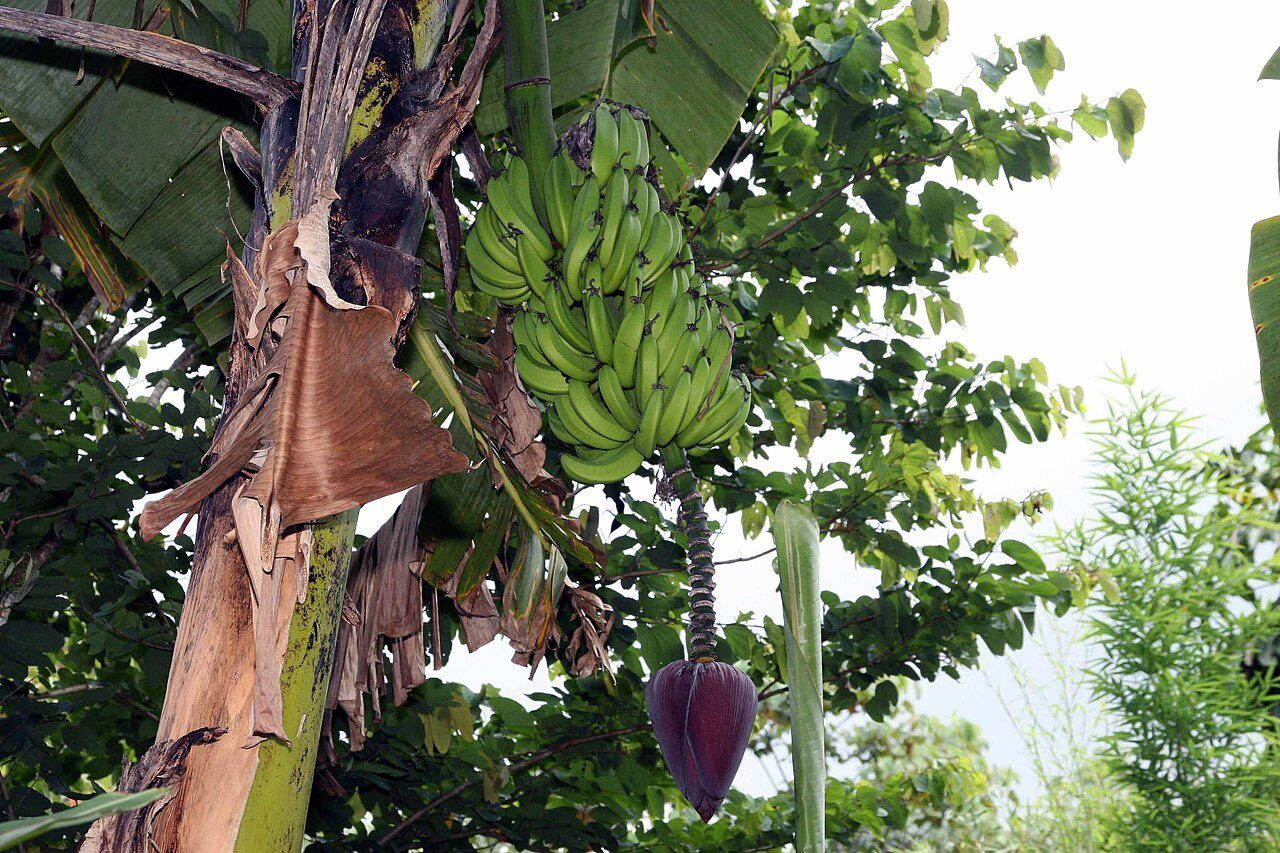 seedless fruitsflower bud
The fruit wall
A fruit has two parts: a wall, the pericarp, and the seeds inside it. The pericarp grows from the wall of the ovary. It may be dry (as in a pea pod) or fleshy (as in a mango).
A thick, fleshy pericarp is divided into three layers:
- Epicarp: the outer layer, the skin.
- Mesocarp: the middle layer.
- Endocarp: the inner layer, next to the seed.
Put a mango next to a pea pod. Both are fruits, both are ovaries grown up, but one wall is juicy and the other dries into a papery case that splits open.
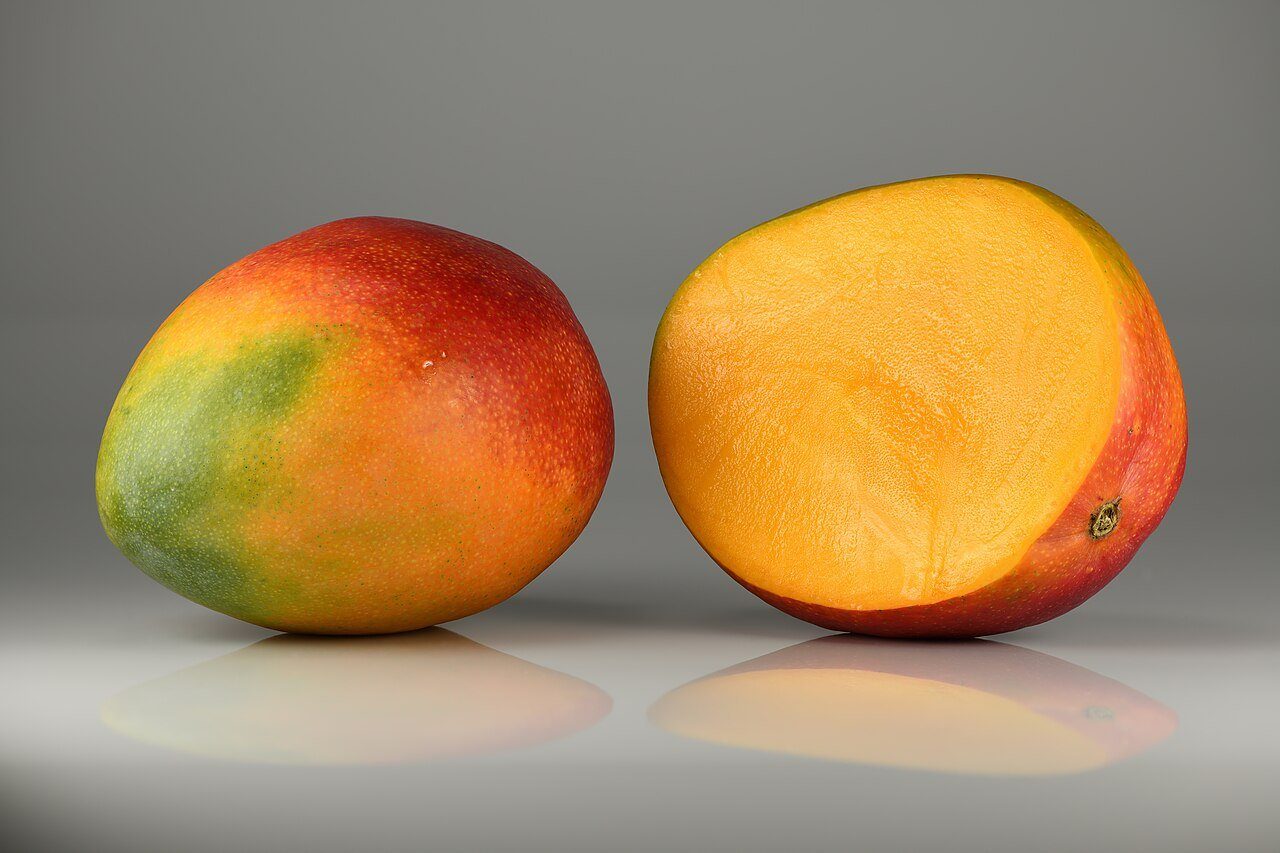 epicarp (skin)mesocarp (flesh)
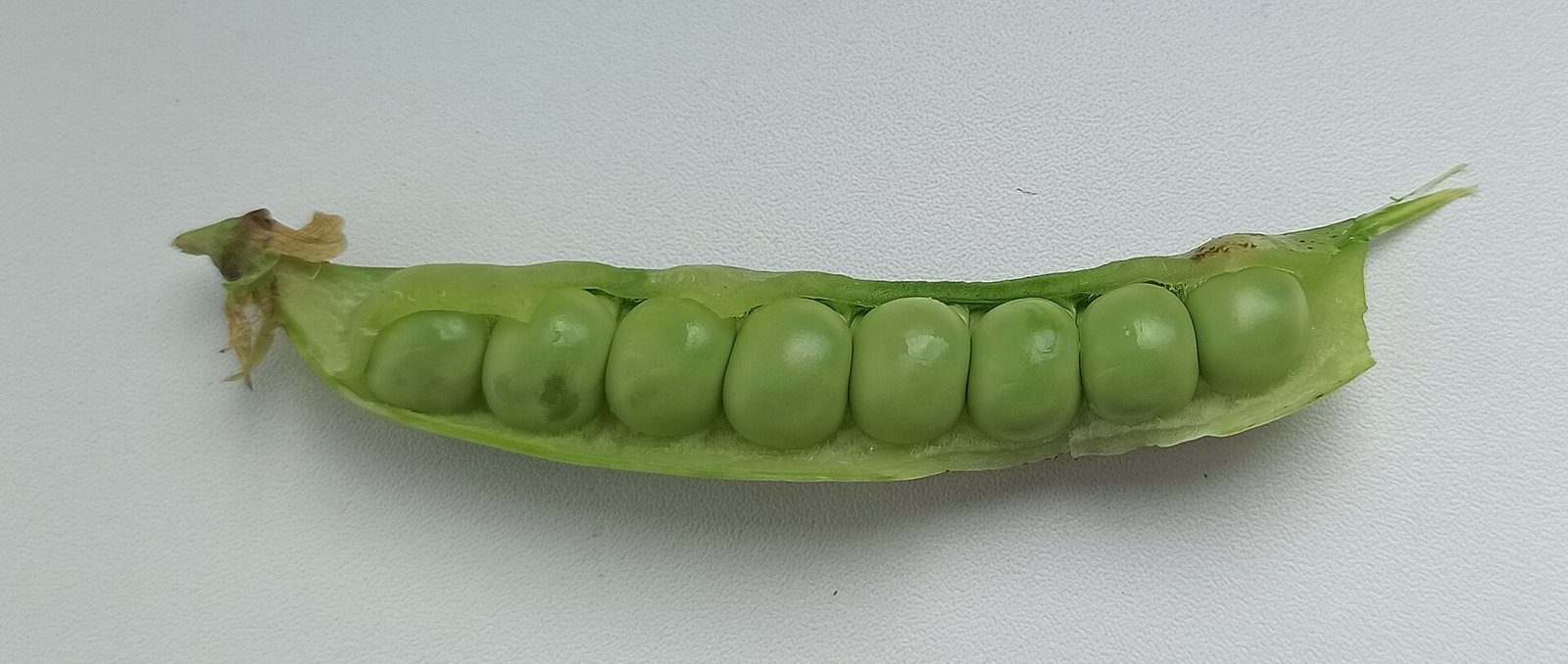 pod: the fruit wallpea: a seed
Mango and coconut: two drupes
A drupe is a fruit that grows from a monocarpellary (one-carpel) superior ovary and has one seed. Its endocarp is hard and stony. Mango and coconut look completely different, but both are drupes.
| Layer | Mango | Coconut |
|---|---|---|
| Epicarp | Thin skin you peel off | Smooth outer skin, green or brown |
| Mesocarp | Thick, fleshy and sweet: the part you eat | Fibrous: the coir used for ropes and doormats |
| Endocarp | The hard stone (the guthli) | The hard brown shell |
| Seed | Inside the stone | Inside the shell; the white kernel and coconut water |
Cut a ripe mango lengthwise and all three layers are there: the thin skin, the flesh, and the flat stone in the middle with fibres running out of it into the flesh. The seed is not the stone. Pry the stone open and the real seed lies inside it, like a kernel in a shell.
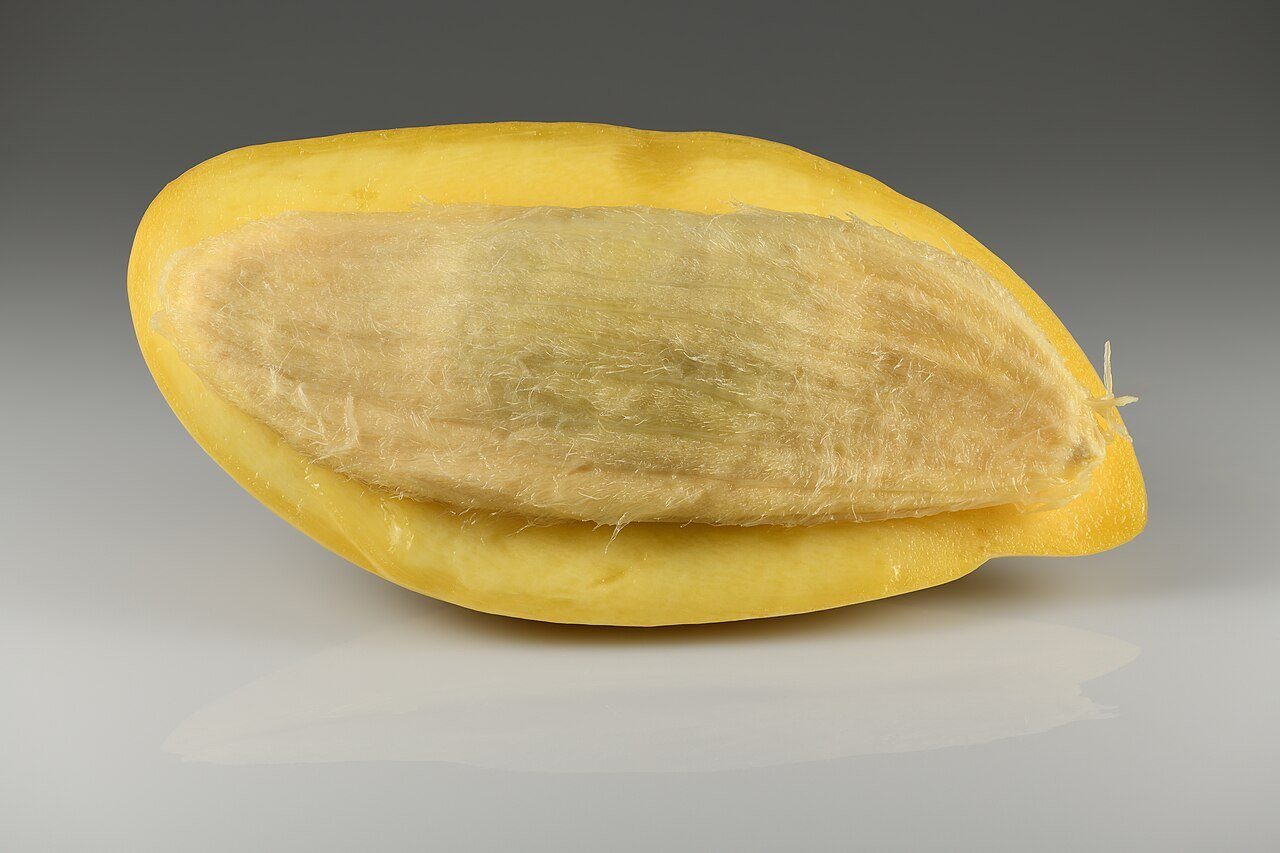 epicarp (skin)mesocarp (flesh)endocarp (stone)
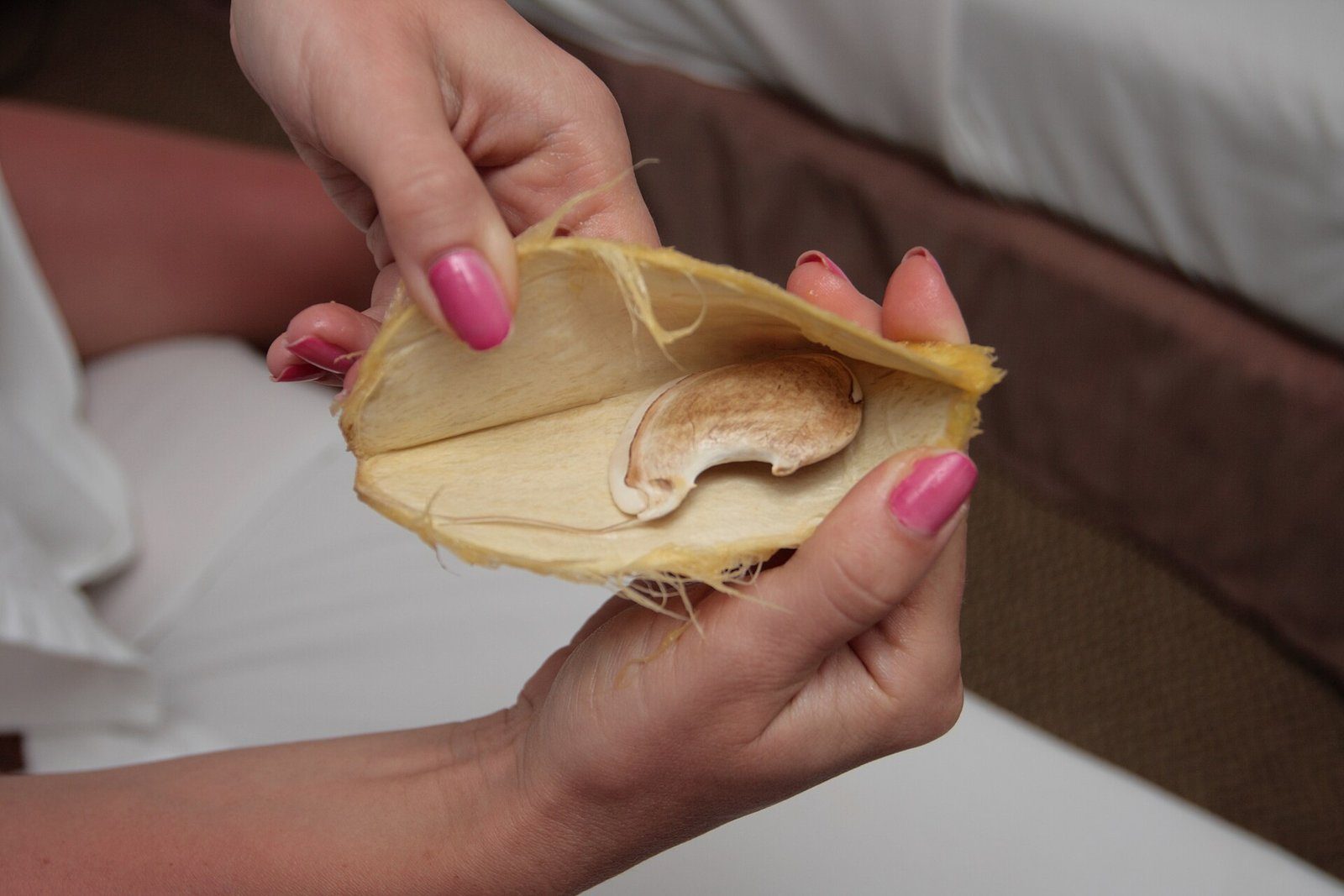 endocarp, split openseed
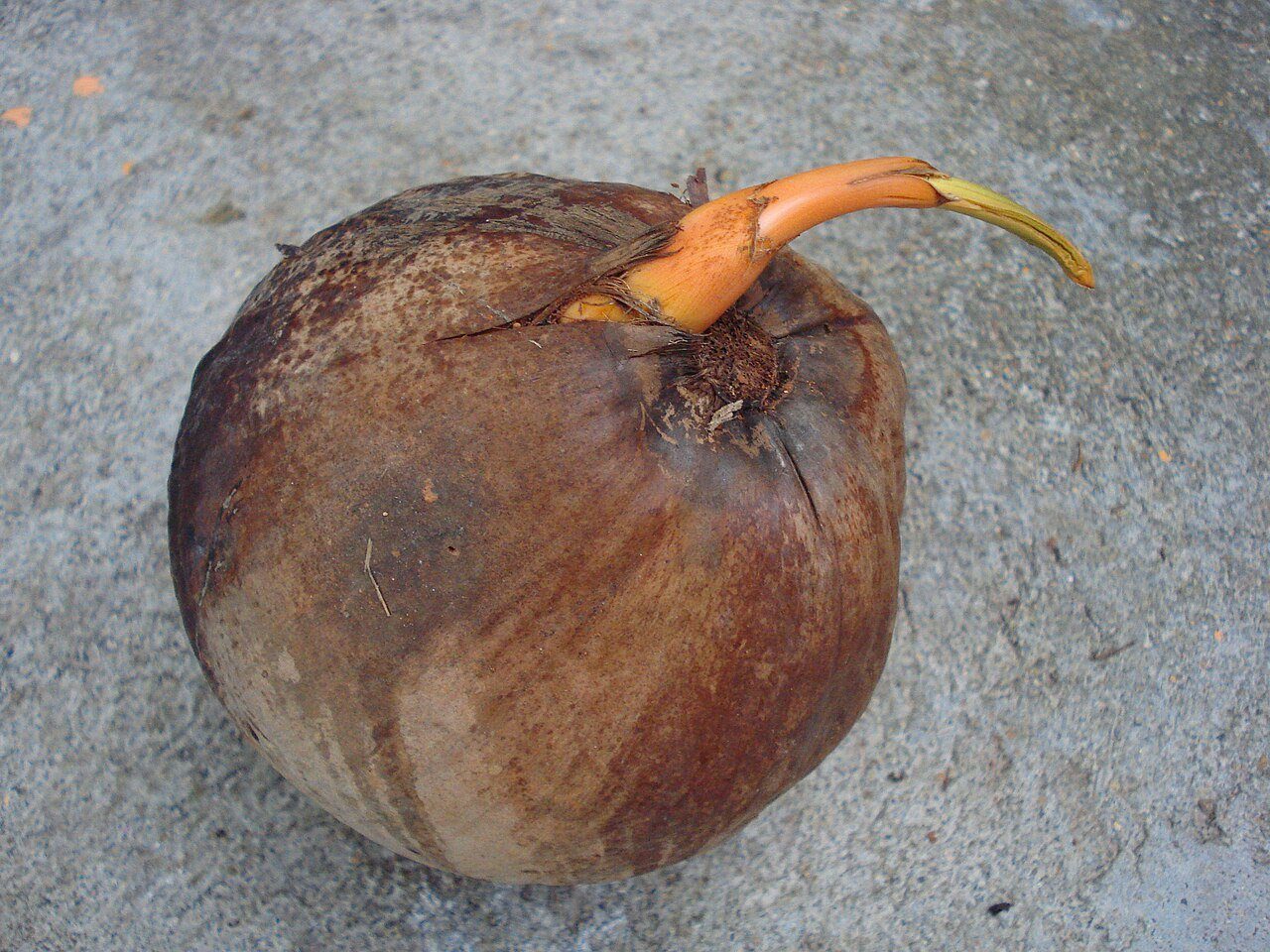
A coconut is the same plan with a different middle. Under the smooth skin is a thick, dry husk of fibres; under that, the hard brown shell; inside the shell, the seed with its white kernel and water. Leave a whole coconut on the ground and the shoot pushes out through the husk.
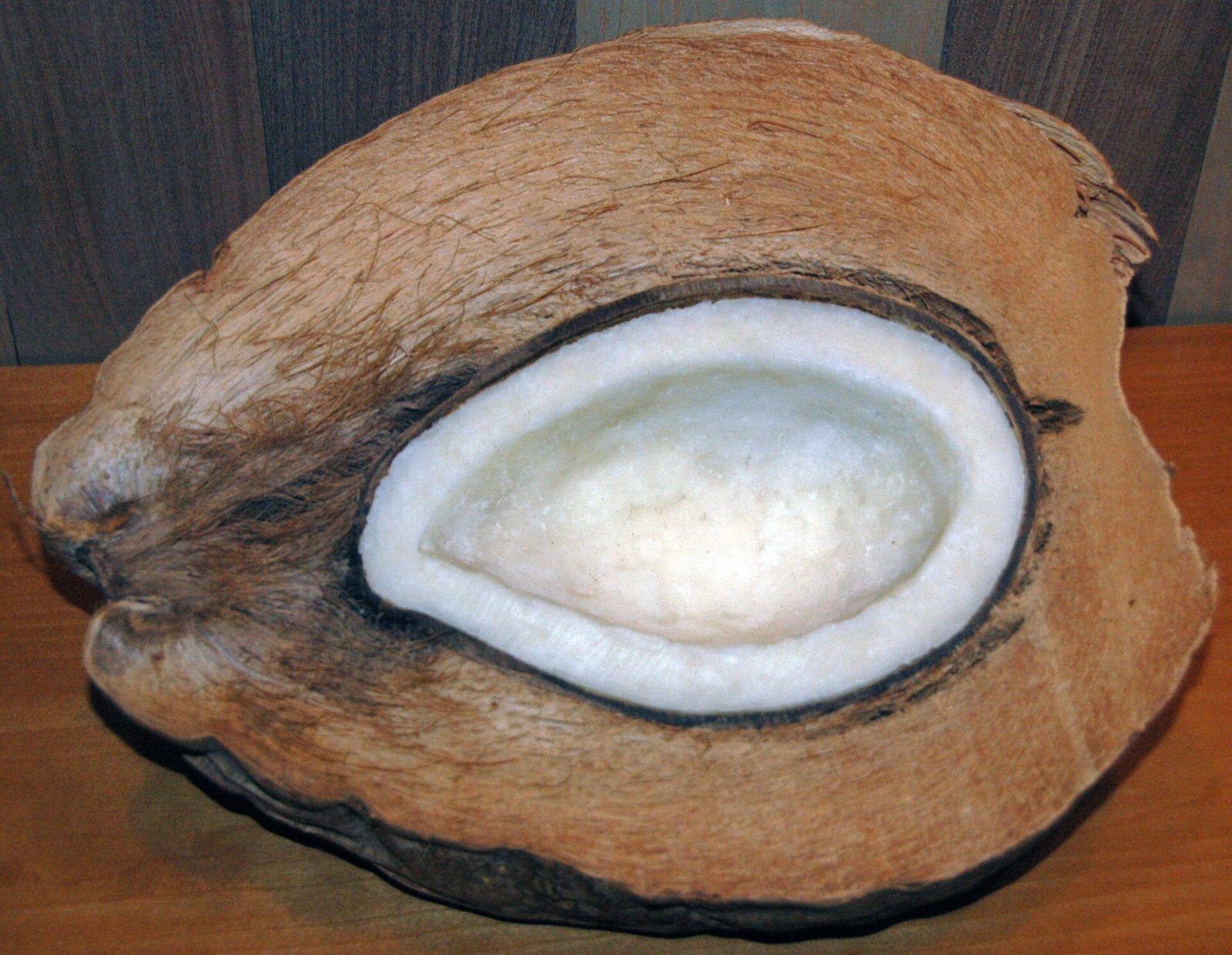 mesocarp: coir huskendocarp: hard shellkernel (endosperm)epicarp (skin)
Try it: grow a mango and a coconut from the ovary, and find the same layer in both.
Fruits in the vegetable basket
To a botanist, anything that grew from an ovary is a fruit, whatever the cook calls it. Tomato, brinjal, lady's finger, cucumber and chilli are all fruits: cut one open and you find seeds inside. A pea pod is a fruit too, and the peas inside are its seeds. A potato, though, is a stem and a carrot is a root: they have no seeds because they never were ovaries.
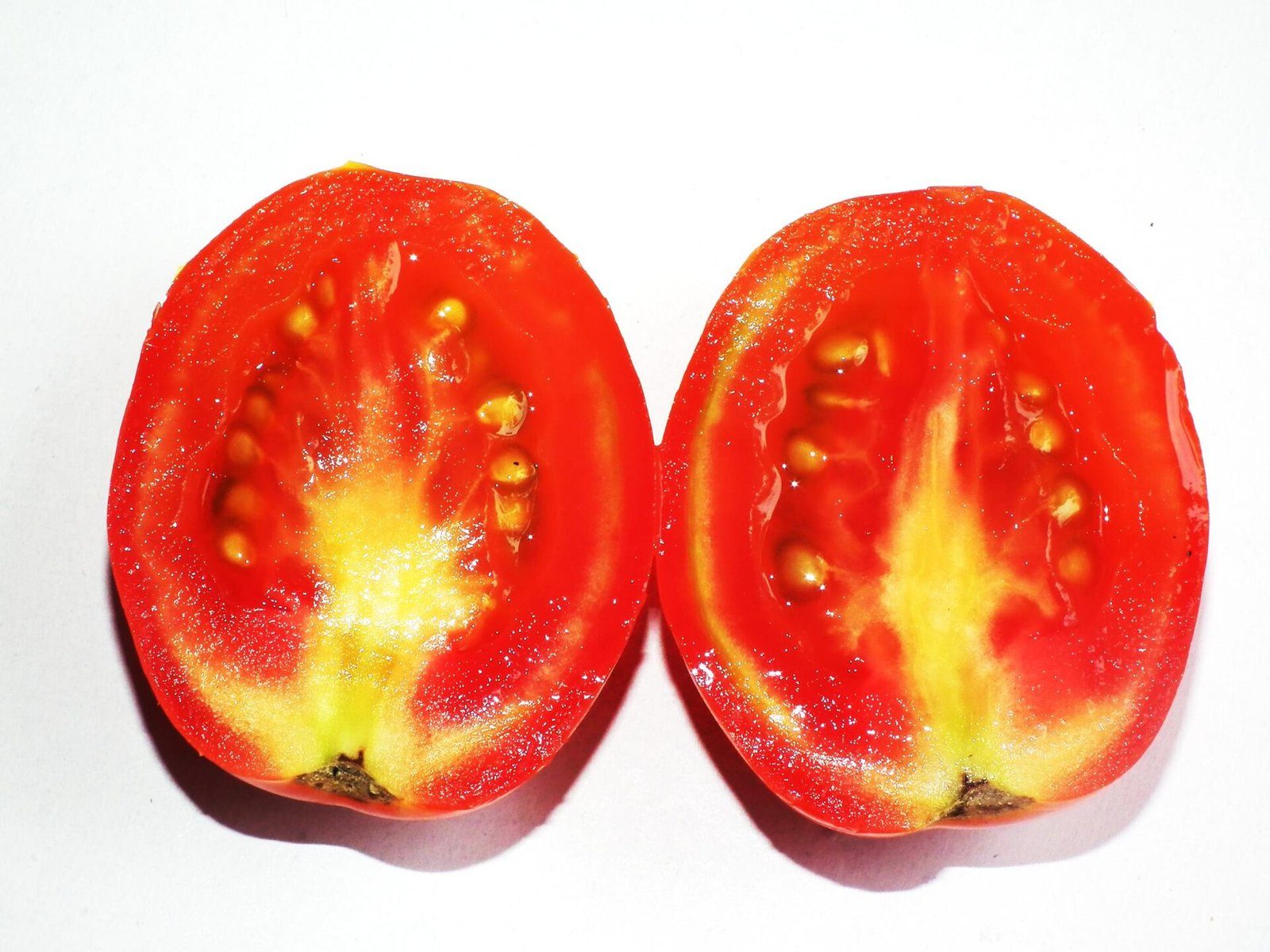 fruit wallseeds
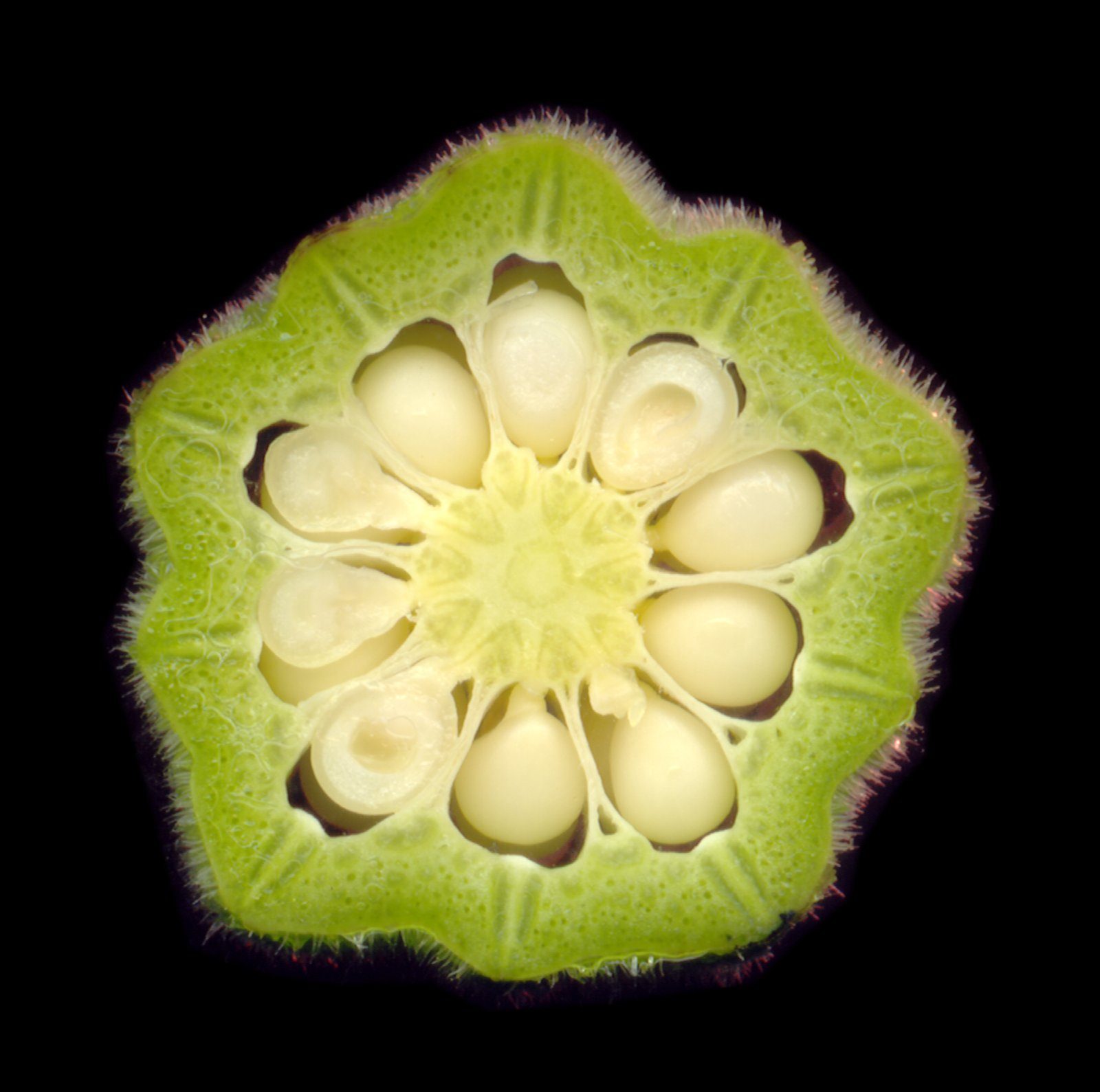 seedsfruit wall
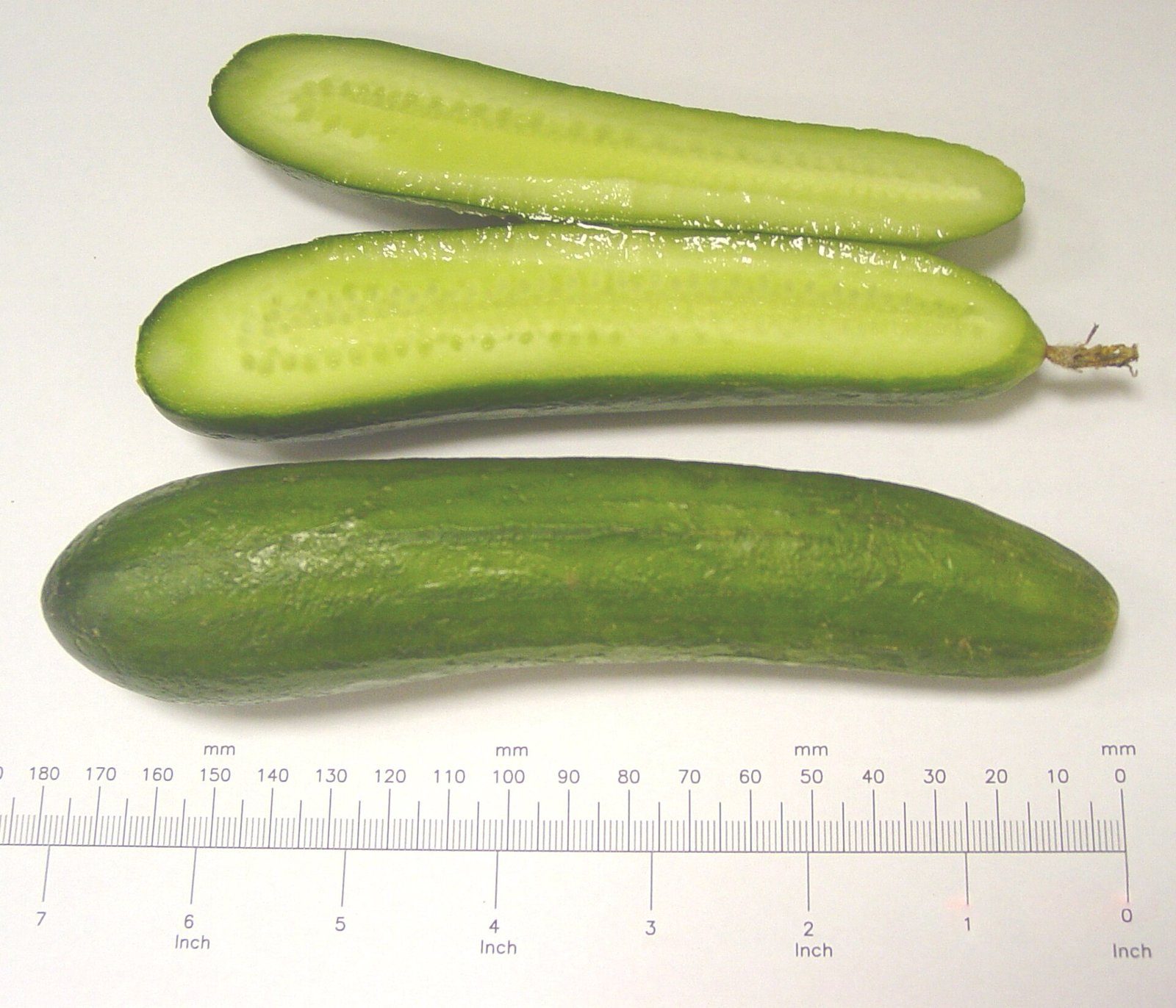 seeds
Sort the vegetable basket the botanist's way.
Don't mix these up
- Ovary becomes the fruit; ovules become seeds; ovary wall becomes the pericarp.
- Edible part of mango: mesocarp. Coir of coconut: mesocarp (fibrous). Shell of coconut and stone of mango: endocarp.
- Coconut is a drupe, not a nut or a berry.
Just remember
No deeper reason for these: they are names and textbook examples. The Greek roots do most of the work.
- Epicarp, mesocarp, endocarp
- Epi = upon, meso = middle, endo = within; carp (karpos) = fruit. Same order as epidermis, Mesopotamia and endoscope: outside, middle, inside.
- Edible part of mango: mesocarp. Coir: mesocarp. Stone and shell: endocarp
- "Mango, middle, mouth": the mango's middle goes in your mouth. The coconut's middle is the coir, so in both the middle layer is the big one. The hard bit next to the seed is always the endocarp.
- Edible part of coconut: the seed's endosperm (white kernel and water)
- Not a fruit layer at all. The shell is the last fruit layer; break it and you are eating the seed's packed lunch.
- Drupe: one seed in a stony endocarp, from a one-carpel superior ovary (mango, coconut)
- The word comes from the Latin for an olive, itself a drupe. Hook: "a drupe has a stone you can drop".
- Parthenocarpic fruit: no fertilisation, usually seedless (banana)
- Parthenos = virgin in Greek (the Parthenon was Athena the virgin goddess's temple) + karpos = fruit: a fruit made without a father.
- Fruit
- A ripened ovary, usually formed after fertilisation.
- Parthenocarpic fruit
- A fruit formed without fertilisation, often seedless.
- Pericarp
- The fruit wall.
- Epicarp, mesocarp, endocarp
- The outer, middle and inner layers of a fleshy pericarp.
- Drupe
- A one-seeded fruit with a stony endocarp, from a one-carpel superior ovary.
Words to know
Which layer of a mango do you eat?
- Epicarp
- Mesocarp
- Endocarp
Coconut and mango are both drupes because each
- has a sweet fleshy mesocarp
- grows from a one-carpel superior ovary and has one seed in a hard endocarp
- forms without fertilisation
Botanically, which of these is NOT a fruit?
- Tomato
- Lady's finger
- Potato
- Chilli
Deep dive · optional
Why does a mango wrap its seed in sweet flesh?
What a fruit is for, why a raw mango is green and sour, how a coconut crosses the sea, and the day the US Supreme Court ruled that a tomato is a vegetable. The exam won't ask, but it makes the page stick.
The roots: a fruit is a ticket for the seed
- Why does a mango wrap its seed in sweet flesh?To pay someone to carry it. A bat, a monkey, a cow or a child eats the flesh and drops the stone somewhere else. The mesocarp is the fare.
- Why must the seed travel at all?A seed that falls under its parent grows in its parent's shade, fights it and its own brothers and sisters for water and light, and meets every pest already living on the old tree. A plant cannot walk. The fruit is the one chance its children get to move.
- Then why doesn't the animal eat the seed too?Because of the endocarp. The stone is too hard and too big to chew, so the courier eats the pay and throws the parcel away. Soft flesh outside, a safe inside: that is exactly what a drupe is.
- Why is a raw mango green, hard and sour?A courier that comes too early would carry off a seed that cannot grow yet. So while the seed fills up, the fruit hides: green among green leaves, hard, sour, and laced with bitter tannins that put animals off. Its food is stored as starch, which has no taste.
- And why does it change so fast at the end?Ripening is a switch. In a mango a burst of the gas ethylene sets it off: enzymes cut the starch into sugar, the acids are used up, the green chlorophyll in the skin breaks down so the yellow and red pigments show, and the glue (pectin) between cells loosens so the flesh goes soft. The colour is an advertisement: "ready now".
- Who designed all this?Nobody. Over millions of years, plants whose fruits got their seeds carried to good places left more young plants, and those young plants inherited the same kind of fruit. That is natural selection, the bedrock under every "why" in biology.
The numbers fit the story. In a growing Alphonso mango the starch in the flesh climbs from about 1% to about 14%; by the time it is ripe, the starch is mostly gone and the flesh holds about 15% sugars. The green in the skin falls to about a third, while its yellow-orange pigments rise about fivefold. Mango is a climacteric fruit: once its ethylene burst has started, it ripens off the tree. That is why mangoes are picked hard and green and ripen in a box of straw at home.
Try it: run a mango's whole life and watch every layer change.
The coconut takes a different courier: the sea. Its mesocarp is not food but a life jacket. The dry, fibrous husk is full of air, so the fruit floats; the skin keeps water out; the shell guards the seed. Inside, the seed carries its own water and food, so it can start growing on a bare beach where there is no fresh water and no soil. Same three layers as the mango, rebuilt for a different trip.
The stories
See it
The mango's stone, cleaned: a Himsagar mango from West Bengal. Those fibres ran out into the flesh, which is why the flesh clings to the stone. Beside it, a husked coconut split in two: shell, white kernel, and the space where the water was.
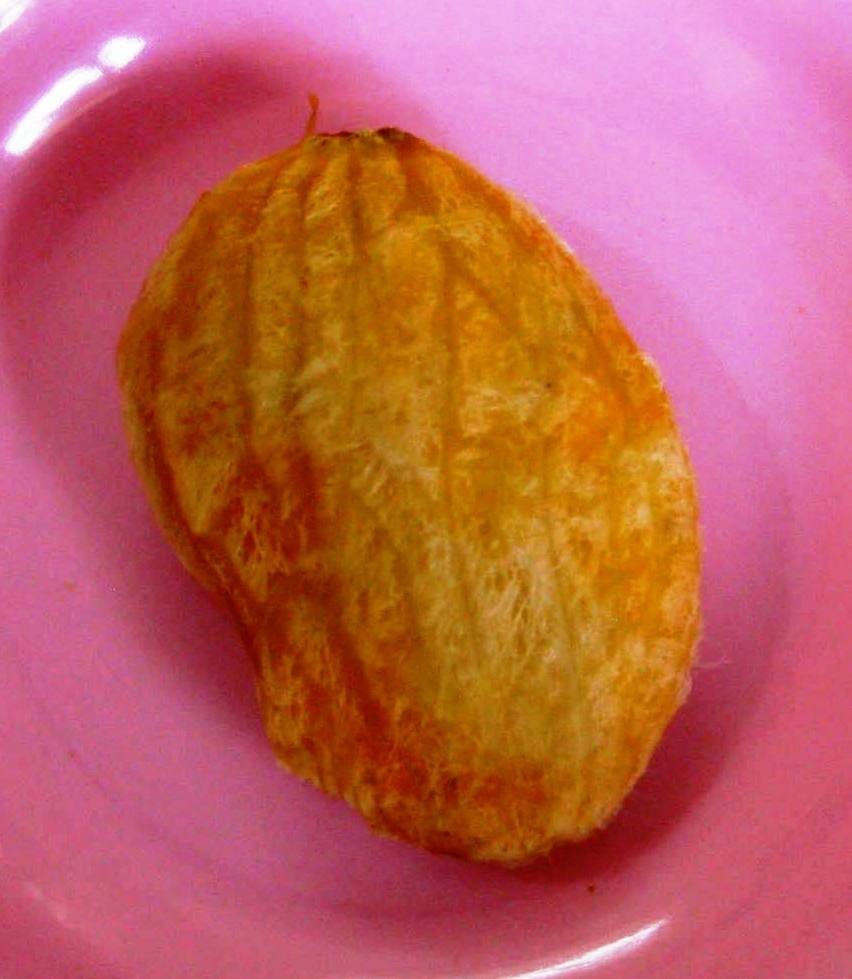 endocarp (stone)fibres
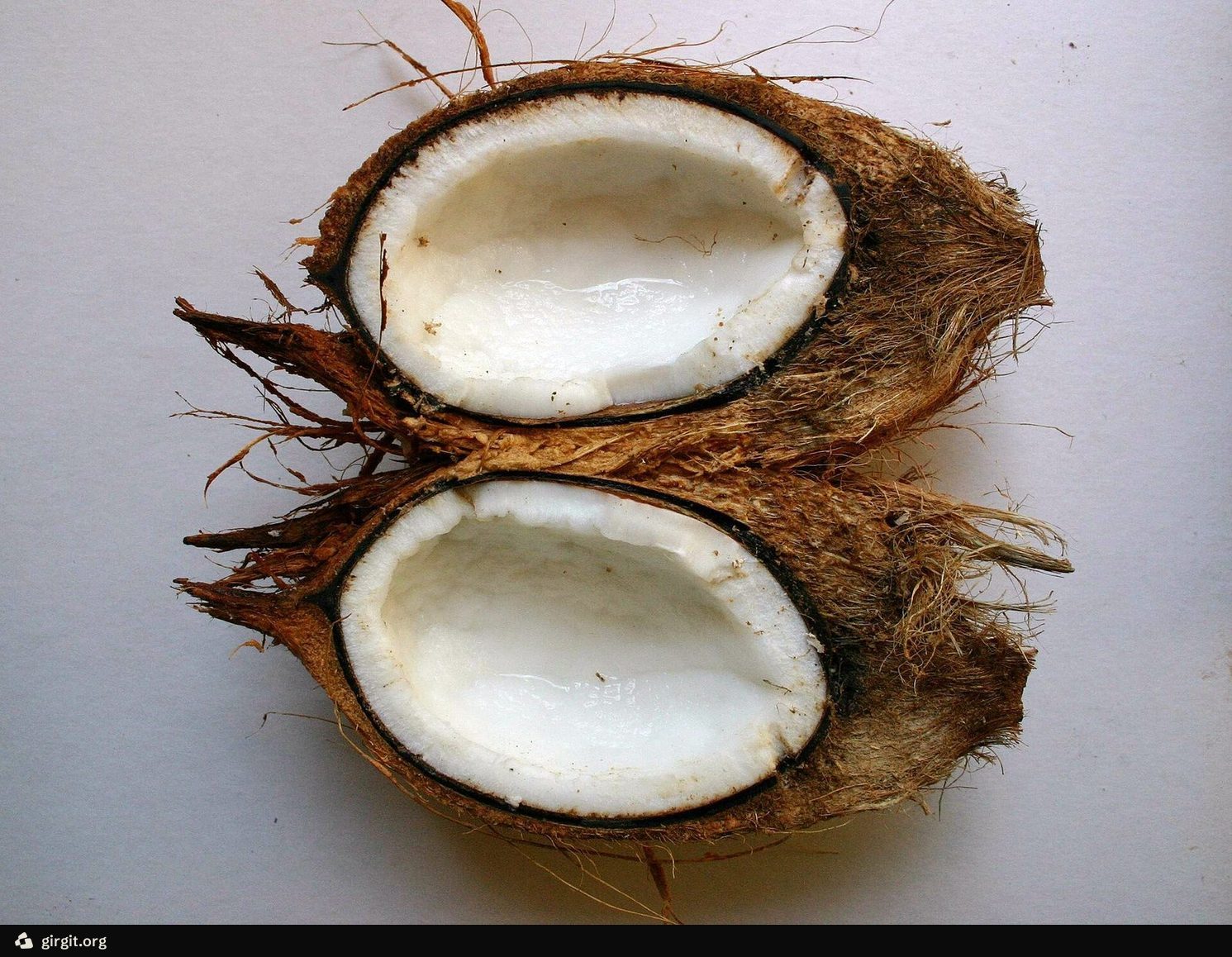 white kernel (endosperm)shell (endocarp)husk fibres
The mango as Kerala's healers knew it, engraved in Amsterdam for Hortus Malabaricus, the twelve-volume book of the plants of the Malabar coast put together at Kochi in the 1670s. The Ezhava physician Itty Achuden dictated what he knew in Malayalam; it was translated into Latin. The engraver drew the fruit and, separately, the fibrous stone and the seed out of it.
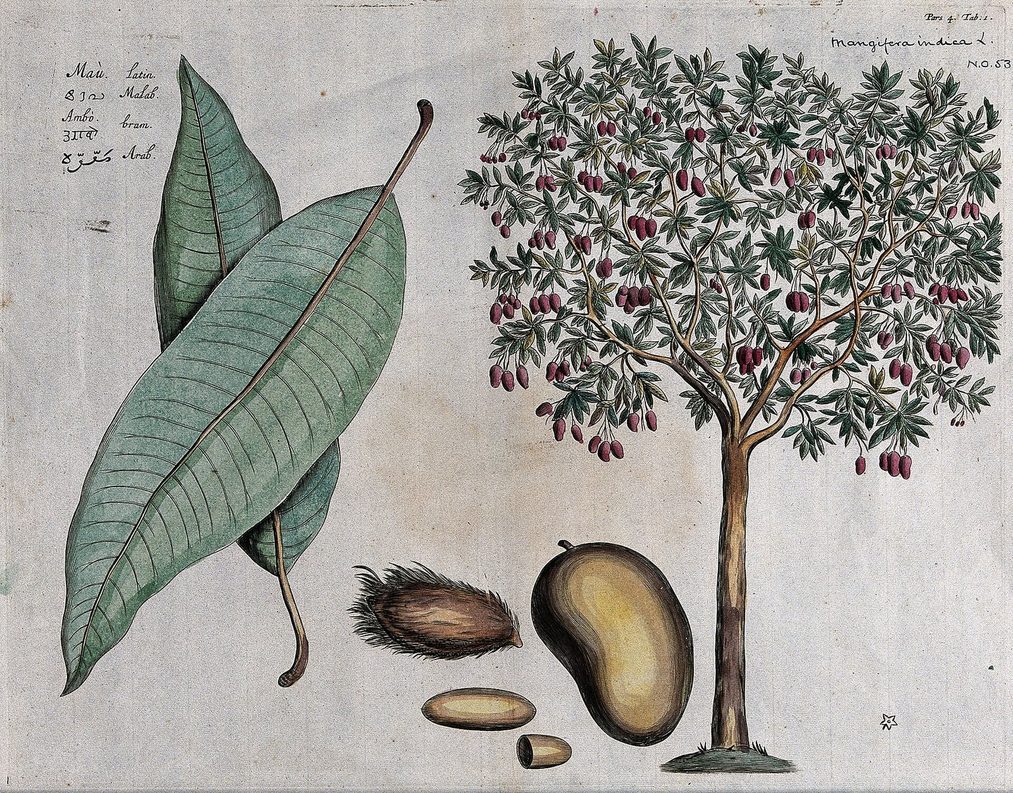 fruitstone, with fibresseed
Solve it
Solve it
A coconut can float and still grow for about 110 days. Suppose an ocean current carries it at about 40 km a day the whole time, always in the right direction. From Kochi, the Lakshadweep island of Kavaratti is about 400 km away, Malé in the Maldives about 710 km, and northern Madagascar about 3,900 km. Which could a coconut reach on its own? What does that suggest about Madagascar's coconuts?
Hint
Answer
Solve it
A mango picked hard and green ripens on your kitchen shelf in a few days. A bunch of sour grapes picked too early stays sour for ever. Use the roots above to explain the difference.
Answer
A fruit seller ripens mangoes overnight with calcium carbide ("masala"). Why does the food regulator FSSAI ban it but allow ethylene gas?
- Carbide does not actually ripen fruit
- Carbide's gas only imitates the fruit's own hormone and carries poisonous impurities; ethylene is the hormone itself
- Ethylene is a liquid and cannot reach the fruit
Connect it
Connect it
- Ovary position, concept 5. Whether the ovary is superior or inferior decides what else can become part of the fruit. A drupe comes from a superior ovary; cucumber's fruit grows from an inferior one.
- The seed inside, next page. The coconut kernel and water are endosperm, the food store described on the seed page.
- Fruit without a father, Class 12. How a fruit forms from a fertilised ovary, and how parthenocarpy is used to grow seedless fruit, comes in seeds and fruits in sexual reproduction.
- The ripening hormone, Class 11 Ch 13. Ethylene is one of the five main plant growth regulators in plant growth and development, where its job in ripening is examined.
- India's fruit. The mango probably first grew wild between north-east India, Bangladesh and north-west Myanmar. It is India's national fruit, and India grows a large share of the world's mangoes. India is also the world's second-largest coconut producer, after Indonesia.
Still confused?
Is the mango "stone" the seed?
No. The stone is the endocarp, the innermost layer of the fruit wall, made by the mother plant. The seed is inside it. Crack a dried stone (or see the photo above) and you find a seed with its own thin brown coat. In the exam: stone = endocarp.
Is a coconut a nut?
Not in the botanist's sense. A true nut has a hard wall made from the whole ovary wall and does not split open. A coconut has three distinct layers, with only the inside one hard: it is a drupe. The name is older than botany.
Which part of a coconut do we eat, then?
The seed's endosperm. Coconut water is the endosperm while it is still liquid; the white kernel is endosperm that has set into a solid layer on the inside of the shell. None of the three fruit-wall layers is eaten.
Sources
- Nix v. Hedden, 149 U.S. 304 (1893), full opinion (Cornell LII) and Wikipedia: Nix v. Hedden
- Maldonado-Celis et al. (2019), Chemical composition of mango fruit, Frontiers in Plant Science 10: 1073
- Wikipedia: Ripening (chlorophyll, starch, acids, pectin, tannins, ethylene; climacteric and non-climacteric fruits)
- University of Oxford, Plants400: Cocos nucifera (viability at sea; Edmondson 1941)
- Gunn, Baudouin and Olsen (2011), Independent origins of cultivated coconut in the Old World tropics, PLoS ONE
- Wikipedia: Coconut (drupe, germination pores, endosperm, drift models, production)
- Wikipedia: Mango (origin, national fruit, stone)
- Wikipedia: Hortus Malabaricus
- Vikaspedia: FSSAI on the calcium carbide ban and ethylene ripening
- Wiktionary: drupe; Wikipedia: Malagasy language (Austronesian)
Picture and video credits
Show 13 picture and video credits
- banana-bunch-flower.jpg: Photo by David J. Stang, CC BY-SA 4.0
- mango-whole-and-halved.jpg: Ivar Leidus, CC BY-SA 4.0
- pea-pod-opened.jpg: Sokolikmawwer0, CC BY-SA 3.0
- mango-halved-stone.jpg: Ivar Leidus, CC BY-SA 4.0
- mango-stone-opened-seed.jpg: Sergey S. Dukachev, CC BY 3.0
- coconut-lengthwise-section.jpg: James St. John, CC BY 2.0
- coconut-sprouting.jpg: Aruna at Malayalam Wikipedia., CC BY-SA 3.0
- tomato-cut-seeds.jpg: Ramesh NG, CC BY-SA 2.0
- okra-cross-section.jpg: Jmprouty., CC BY-SA 3.0
- cucumber-cut-seeds.jpg: Caduser2003 at Malayalam Wikipedia, CC BY-SA 2.5
- banana-ripening-timelapse.mp4: mauiwowialoha, CC BY 3.0
- mango-stone-himsagar.jpg: Salil Kumar Mukherjee, CC BY-SA 4.0
- mango-hortus-malabaricus.jpg: Hendrik van Rheede, Hortus Malabaricus (Wellcome Collection), CC BY 4.0


