Motion in a Straight LineFull experience
- 1. What does it mean to move?
- 2. How fast, on average?
- 3. How fast right now?
- 4. What is acceleration?
- 5. Reading velocity-time graphs
- 6. The three equations of motion
- 7. Why does a ball fall faster and faster?
- 8. Stopping distance and reaction time
- 9. Relative velocity
- Review
6 of 9·NCERT §2.4·pp. 17–21·6 min
The three equations of motion
The big ideaWhen acceleration is constant, three short equations connect the five quantities of motion, so knowing any three gives you the other two.
In simple words
If something speeds up by the same amount every second, its motion is very tidy. You only need to know a few things, like how fast it started and how hard it speeds up, and you can work out everything else: how fast it is going later, and how far it has gone.
For motion along a line with constant acceleration, we use five quantities:
- \( v_0 \): the initial velocity, at \( t = 0 \) (many books write \( u \));
- \( v \): the final velocity, at time \( t \);
- \( a \): the constant acceleration;
- \( t \): the time taken;
- \( x \): the displacement in that time (many books write \( s \)).
Getting the equations from the v-t graph
First equation. From the definition of constant acceleration (concept 4):
\[ v = v_0 + at \]On a v-t graph this is a straight line starting at height \( v_0 \) with slope \( a \).
Second equation. The displacement is the area under this line from 0 to \( t \). Split it into a rectangle of height \( v_0 \) and width \( t \), with a triangle on top whose height is \( v - v_0 \):
\[ x = v_0 t + \tfrac12 (v - v_0)\,t \]Since \( v - v_0 = at \), the triangle's area is \( \tfrac12 at^2 \), giving
\[ x = v_0 t + \tfrac12 a t^2 \]Try it: see the rectangle and the triangle as stretches of road.
The same area can be written as \( x = \dfrac{v_0 + v}{2}\,t \). This says the object moved as if it had gone the whole time at the plain average of the starting and ending velocities, \( \bar v = (v_0 + v)/2 \). This shortcut is true only for constant acceleration.
Third equation. Put \( t = (v - v_0)/a \) into \( x = \tfrac12(v_0 + v)\,t \):
\[ x = \frac{(v + v_0)(v - v_0)}{2a} = \frac{v^2 - v_0^2}{2a} \]Multiply both sides by \( 2a \) and rearrange:
\[ v^2 = v_0^2 + 2ax \]The kinematic equations (constant a)
- \( v = v_0 + at \)
- \( x = v_0 t + \tfrac12 a t^2 \)
- \( v^2 = v_0^2 + 2ax \)
- If the object starts at \( x_0 \) instead of 0, replace \( x \) by \( x - x_0 \): for example \( x = x_0 + v_0 t + \tfrac12 at^2 \).
These are the kinematic equations of rectilinear motion for constant acceleration (the "equations of motion").
Getting them with calculus
The same results come from integrating. Start from \( a = dv/dt \), with \( a \) constant:
\[ \int_{v_0}^{v} dv = \int_0^t a\,dt \;\Rightarrow\; v - v_0 = at \]Then \( v = dx/dt \), so \( dx = (v_0 + at)\,dt \):
\[ \int_{x_0}^{x} dx = \int_0^t (v_0 + at)\,dt \;\Rightarrow\; x - x_0 = v_0 t + \tfrac12 at^2 \]Finally, \( a = \dfrac{dv}{dt} = \dfrac{dv}{dx}\dfrac{dx}{dt} = v\dfrac{dv}{dx} \), so \( v\,dv = a\,dx \):
\[ \int_{v_0}^{v} v\,dv = \int_{x_0}^{x} a\,dx \;\Rightarrow\; \tfrac12(v^2 - v_0^2) = a(x - x_0) \]The calculus method has one big advantage: it still works when the acceleration is not constant, as long as you can integrate it.
Choosing the right equation
Each equation leaves out one of the five quantities. Pick the one that leaves out the quantity you neither know nor need.
| Equation | Leaves out |
|---|---|
| \( v = v_0 + at \) | \( x \) |
| \( x = v_0 t + \tfrac12 at^2 \) | \( v \) |
| \( v^2 = v_0^2 + 2ax \) | \( t \) |
| \( x = \tfrac12(v_0 + v)\,t \) | \( a \) |
Try it: pick the right key for five doors.
Worked example
A local train leaves a station from rest with a constant acceleration of 0.5 m s−2 for 40 s. Find its speed and the distance it covers.
- Known: \( v_0 = 0 \), \( a = 0.5 \) m s−2, \( t = 40 \) s.
- \( v = 0 + 0.5 \times 40 = \) 20 m s−1 (72 km/h).
- \( x = 0 + \tfrac12 \times 0.5 \times 40^2 = \) 400 m.
- Check with the third equation: \( v^2 = 2ax = 2 \times 0.5 \times 400 = 400 \), so \( v = 20 \) m s−1. It agrees.
Worked example
A car moving at 72 km/h brakes with constant deceleration and stops in 50 m. Find the deceleration and the time it takes to stop.
- Convert: 72 km/h = \( 72 \times \tfrac{1000}{3600} = 20 \) m s−1. So \( v_0 = 20 \), \( v = 0 \), \( x = 50 \) m. Time is not given, so use the equation without \( t \).
- \( 0 = 20^2 + 2a(50) \Rightarrow a = -4 \) m s−2. The minus sign means the acceleration opposes the motion.
- \( 0 = 20 + (-4)t \Rightarrow t = \) 5 s.
Distance in the nth second
Not in the current textbook, but NEET has asked it: the displacement during the \( n \)th second alone (from \( t = n-1 \) to \( t = n \)) is the displacement in \( n \) seconds minus that in \( n - 1 \) seconds:
\[ s_n = v_0 + \frac{a}{2}(2n - 1) \]From rest (\( v_0 = 0 \)), the distances in the 1st, 2nd, 3rd seconds are in the ratio 1 : 3 : 5 : …, and the ratio of two neighbouring seconds is \( s_n : s_{n+1} = (2n - 1) : (2n + 1) \). This is Galileo's odd-number rule, which we meet again with free fall.
Try it: step through the seconds.
Try it
A motorbike moving at 5 m s−1 accelerates at 2 m s−2 for 5 s. How fast is it then, and how far did it go?
Answer
Just remember
Letters and numbering are habits of textbooks, not physics. Use the hooks.
- \( u \) or \( v_0 \) = initial velocity; \( v \) = final; \( s \) or \( x \) = displacement
- u comes just before v in the alphabet, as the start comes before the end. Same equations, different letters: check which book's letters a question uses.
- 1st equation has no x, 2nd has no v, 3rd has no t
- Read the word-equation "x = v t": its letters, in order, are the ones the 1st, 2nd and 3rd equations leave out.
- nth second: \( s_n = u + \tfrac{a}{2}(2n-1) \)
- "Start speed, plus half a times the n-th odd number." From rest, the odd numbers 1, 3, 5, 7 are all that is left.
- Kinematic equations
- The three equations linking v₀, v, a, t and x when a is constant.
- Initial velocity, v₀ or u
- The velocity when we start the clock.
- Final velocity, v
- The velocity at time t.
- Deceleration
- Acceleration opposite to the velocity; it slows the object.
- Integration
- The calculus way of adding up tiny pieces; the reverse of differentiation.
Words to know
You know v₀, v and x, and you need a. Which equation goes straight there?
- v = v₀ + at
- x = v₀t + ½at²
- v² = v₀² + 2ax
A car speeds up steadily from 10 m/s to 30 m/s in 5 s. How far does it go in those 5 s?
- 150 m
- 100 m
- 50 m
When is x = ½(v₀ + v)t true?
- For any motion at all
- Only when the acceleration is constant
- Only when there is no acceleration
Deep dive · optional
Why only three equations, and why the average works
Five quantities, three equations, and knowing any three numbers gives the other two. Why exactly that many, why the plain average of two speeds can give a distance, and the Oxford scholars who found it three centuries before Galileo. The exam doesn't need this; it makes the page stick.
The roots: two facts, dressed three ways
- Why does knowing three of v₀, v, a, t, x always give the other two?Because only two of the equations are independent. Two equations can fix two unknowns.
- Why only two?Constant acceleration fixes the shape of the motion completely; what is left free is where it starts and how fast. Going from a to v needs one starting value (v₀), and going from v to x needs one more (x₀). Two "undo a rate" steps, two equations.
- Then where does the third come from?It is the first two with t removed: put \( t = (v - v_0)/a \) into the second and you get \( v^2 = v_0^2 + 2ax \). It says nothing new; it just saves a step when t is not given.
- Why does \( x = \tfrac12(v_0 + v)\,t \) work?Because with constant acceleration the velocity grows evenly with time, so for every moment a little above the middle velocity there is a matching moment the same amount below it. The excesses and the shortfalls cancel, and the trip is exactly as long as one at the middle velocity throughout.
- And the bedrock?The definition of constant acceleration: equal gains of velocity in equal times. A straight v-t line is symmetric about its midpoint, and that symmetry is the whole proof.
Take the symmetry away and the rule breaks. If a car does most of its speeding up early, it spends more of the time near its top speed, and it goes further than \( \tfrac12(v_0+v)t \). If it speeds up late, it goes less far. Only a straight v-t line balances exactly. That is why every equation on this page carries the warning "constant a only", and why the calculus method, which needs no such symmetry, is the one that survives when the acceleration changes.
The second equation is quadratic in t, so it can give two times. Often both are real: a ball thrown upward passes the same height once going up and once coming down. A negative root means the moment the motion would have been there if it had been running before you started the clock.
The story
See it
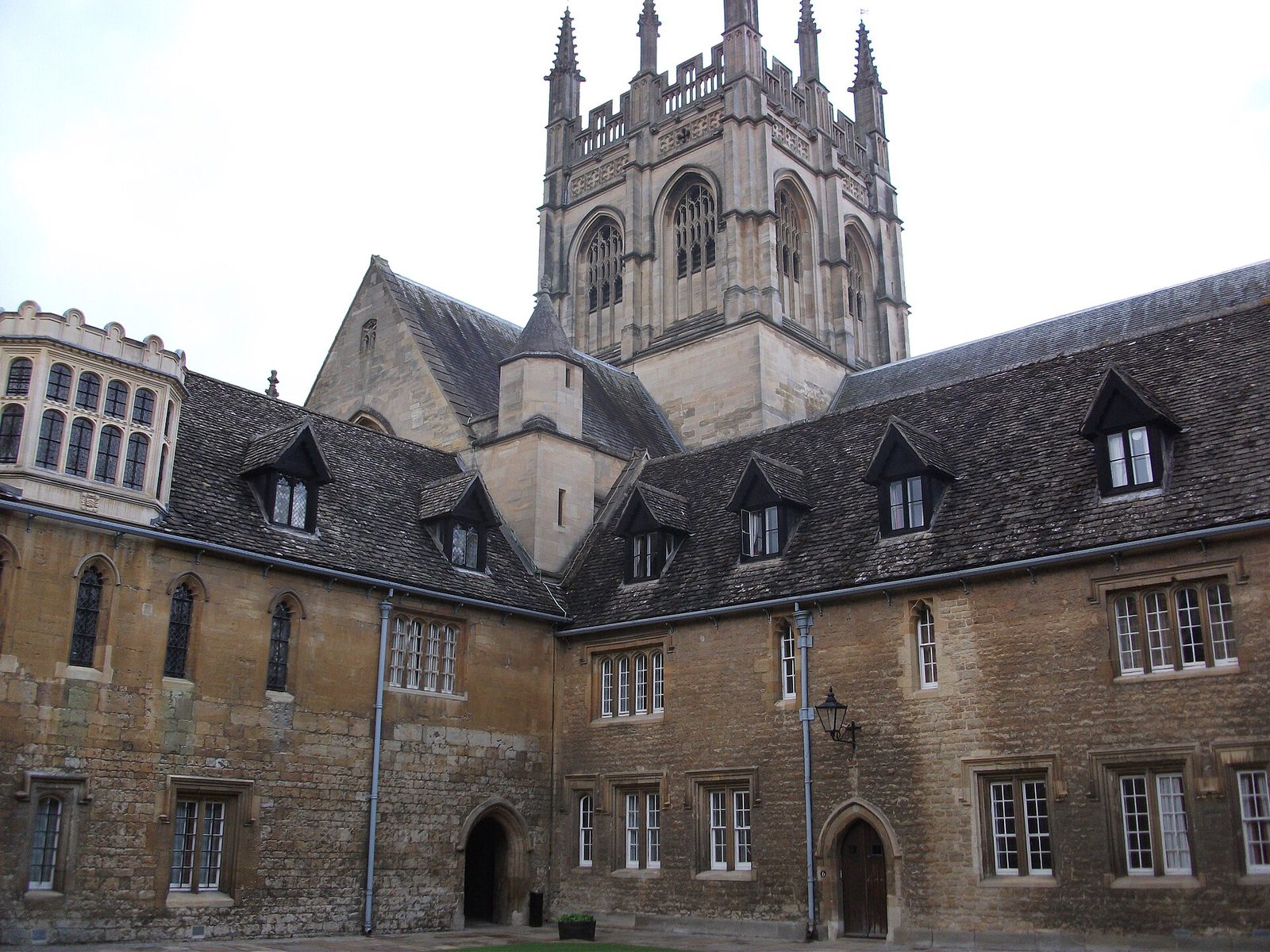
Why does the plain average of the start and end speeds give the distance? Spin the triangle and see, then bend the line and watch the rule fail.
Solve it
Solve it
A body moving with uniform acceleration covers 10 m in the 2nd second and 20 m in the 4th second. Find its initial velocity and acceleration.
Hint
Answer
Solve it
A ball is thrown straight up at 20 m s−1 (take g = 10 m s−2). When is it 15 m above the hand? Why are there two answers?
Answer
Solve it
Spot the error. A car goes from rest to 20 m s−1 in 10 s. A student writes "distance = ½(0 + 20) × 10 = 100 m". The car's speedometer showed 18 m s−1 after only 4 s. Is 100 m right, too big or too small?
Answer
Connect it
Connect it
- Free fall, next. The same three equations with a = −g: why does a ball fall faster and faster?
- Motion in a plane, Chapter 3. The equations come back as vectors, one set for each direction: constant acceleration in a plane.
- Energy, Chapter 5. Multiply \( v^2 = v_0^2 + 2ax \) by ½m and it becomes the work-energy theorem: the work-energy theorem.
- Rotation, Chapter 6. Swap x for an angle and you get the same three equations for spinning wheels: rotational kinematics.
Still confused?
If two equations are enough, why learn three?
Speed in exams. Each equation leaves out a different quantity, so the right one gets you to the answer in one step without finding the unneeded quantity first. They are three doors to the same room.
Do the equations work if the acceleration is negative?
Yes. "Constant" means the same value all the time, whatever its sign. A ball thrown up has a = −g from the moment it leaves the hand until it lands, through the top and back.
Sources
- Stanford Encyclopedia of Philosophy, "William Heytesbury": Merton College, the 1330s, the mean speed (middle degree) theorem.
- Stanford Encyclopedia of Philosophy, "Nicole Oresme": his geometric proof of the Merton theorem.
- Galileo, Two New Sciences (1638), Third Day, Theorem I, Proposition I (Crew and de Salvio translation).
Picture and video credits
Show 2 picture and video credits
- local-train-leaving.mp4: Suyash Dwivedi, CC BY-SA 4.0
- merton-college-mob-quad.jpg: Hadrianus1959, CC BY-SA 4.0
