- 1. What is a vector?
- 2. How do you add two arrows?
- 3. Breaking a vector into parts
- 4. Adding vectors with numbers
- 5. Velocity and acceleration in a plane
- 6. Motion in a plane with constant acceleration
- 7. How does a thrown ball move?
- 8. How high, how long, how far?
- 9. Why is steady circling still accelerating?
- Review
6 of 9·NCERT §3.8·pp. 37–38·5 min
Motion in a plane with constant acceleration
The big ideaWith constant acceleration, motion in a plane is just two straight-line motions happening at the same time, one along x and one along y, each following the familiar equations.
In simple words
Think of a slanting motion as two simpler stories told at once. One story is only about going sideways. The other is only about going up and down. The two stories do not disturb each other. Work out each one on its own, using the rules you already know for straight lines, then put them back together.
Velocity at any time
Let an object move in the x-y plane with a constant acceleration \( \mathbf{a} \). Its velocity is \( \mathbf{v}_0 \) at \( t = 0 \) and \( \mathbf{v} \) at time \( t \). Since the acceleration never changes, the average acceleration over this interval equals \( \mathbf{a} \):
\[ \mathbf{a} = \frac{\mathbf{v} - \mathbf{v}_0}{t - 0} \quad\Rightarrow\quad \mathbf{v} = \mathbf{v}_0 + \mathbf{a}\,t \]This is one vector equation, which means two ordinary equations, one for each component:
\[ v_x = v_{0x} + a_x t, \qquad v_y = v_{0y} + a_y t \]Position at any time
Let the position vectors be \( \mathbf{r}_0 \) at \( t = 0 \) and \( \mathbf{r} \) at time \( t \). We copy the method from straight-line motion. With constant acceleration, the average velocity over the interval is the plain average of the two end velocities, \( (\mathbf{v}_0 + \mathbf{v})/2 \). Displacement is average velocity times time:
\[ \begin{aligned} \mathbf{r} - \mathbf{r}_0 &= \frac{\mathbf{v}_0 + \mathbf{v}}{2}\,t = \frac{\mathbf{v}_0 + (\mathbf{v}_0 + \mathbf{a} t)}{2}\,t \\ &= \mathbf{v}_0 t + \tfrac12\mathbf{a} t^2 \end{aligned} \] \[ \mathbf{r} = \mathbf{r}_0 + \mathbf{v}_0 t + \tfrac12\mathbf{a} t^2 \]You can check it: differentiating with respect to \( t \) gives back \( \mathbf{v}_0 + \mathbf{a} t \), and at \( t = 0 \) it gives \( \mathbf{r}_0 \). In components,
\[ \begin{gathered} x = x_0 + v_{0x}t + \tfrac12 a_x t^2 \\ y = y_0 + v_{0y}t + \tfrac12 a_y t^2 \end{gathered} \]Two motions, one object
Look at the x-equations: they contain only x-quantities. The y-equations contain only y-quantities. Nothing about the y-motion appears in the x-motion, and the other way round. So:
The key result
- Motion in a plane with constant acceleration can be treated as two separate, simultaneous one-dimensional motions along two perpendicular directions.
- Each obeys the straight-line equations of the last chapter, with its own components \( v_{0x}, a_x \) or \( v_{0y}, a_y \).
- The only thing they share is the time \( t \).
- The same holds in three dimensions, with a third, z, motion.
Try it: two pucks, one pushed sideways and one not. Guess first, then play the clock.
The same test with gravity as the steady push: drop one ball and throw another sideways at the same instant.
Choosing perpendicular directions is what makes this work so neatly, and the best choice is usually one axis along the acceleration. For a thrown ball, that means one axis straight up, as the next concept shows.
A firework shows the vector equation working for hundreds of objects at once. Every spark starts with a different \( \mathbf{v}_0 \), but all share the same \( \mathbf{a} \), so every path bends downward in the same way.
Worked example
A particle starts at the origin with velocity \( 4\hat i \) m s−1. A steady push gives it a constant acceleration \( (2\hat i + 1\hat j) \) m s−2. Find its position and speed at \( t = 3 \) s.
- Split into two motions. Along x: \( v_{0x} = 4 \), \( a_x = 2 \). Along y: \( v_{0y} = 0 \), \( a_y = 1 \).
- \( x = 4(3) + \tfrac12(2)(3^2) = 12 + 9 = 21 \) m. \( y = 0 + \tfrac12(1)(3^2) = 4.5 \) m. Position: \( (21\hat i + 4.5\hat j) \) m.
- \( v_x = 4 + 2(3) = 10 \), \( v_y = 0 + 1(3) = 3 \), so \( \mathbf{v} = 10\hat i + 3\hat j \) m s−1.
- Speed \( = \sqrt{100 + 9} = \sqrt{109} \approx \) 10.4 m s−1.
Try it
A particle moves with \( x = 6t - t^2 \) and \( y = 4t \) (metres, seconds). Find its acceleration. At what time is it moving parallel to the y-axis?
Answer
Just remember
Names and labels, not physics. Use the hooks.
- One vector equation = two component equations
- \( \mathbf{v} = \mathbf{v}_0 + \mathbf{a}t \) is shorthand for \( v_x = v_{0x} + a_x t \) and \( v_y = v_{0y} + a_y t \). Hook: "bold splits in two". Remove the bold, add a small x or y to every vector letter; the plain letter \( t \) is shared.
- The subscripts: \( v_{0x} \) means "initial, x-part"
- Read the 0 as "at the start" and the x as "sideways part". \( a_y \) is the up-down part of the acceleration. Same order every time: what it is, when, which way.
- The two motions share only \( t \)
- "Two trains, one clock": the x-story and the y-story run on separate tracks, but the same station clock. Whatever time you find in one, use in the other.
- Constant acceleration
- Acceleration whose size and direction never change.
- v₀ (initial velocity)
- The velocity at t = 0, a vector with components v₀ₓ and v₀ᵧ.
- r₀ (initial position)
- The position vector at t = 0.
- Independent motions
- The x-motion and y-motion do not affect each other; they share only time.
Words to know
A puck slides with velocity \( 3\hat i \) m s−1 and is given a constant acceleration \( 2\hat j \) m s−2. What is its x-velocity after 5 s?
- 13 m s⁻¹
- 3 m s⁻¹
- 10 m s⁻¹
A particle starts from rest at the origin with a constant acceleration \( (\hat i + \hat j) \) m s−2. What path does it follow?
- A parabola
- A straight line at 45° to the x-axis
- A circle
Why can we split motion in a plane into separate x and y motions?
- Because the acceleration is zero
- Because the x-equations involve only x-quantities and the y-equations only y-quantities
- Because x and y components are always equal
Deep dive · optional
Why don't the sideways and up-down motions disturb each other?
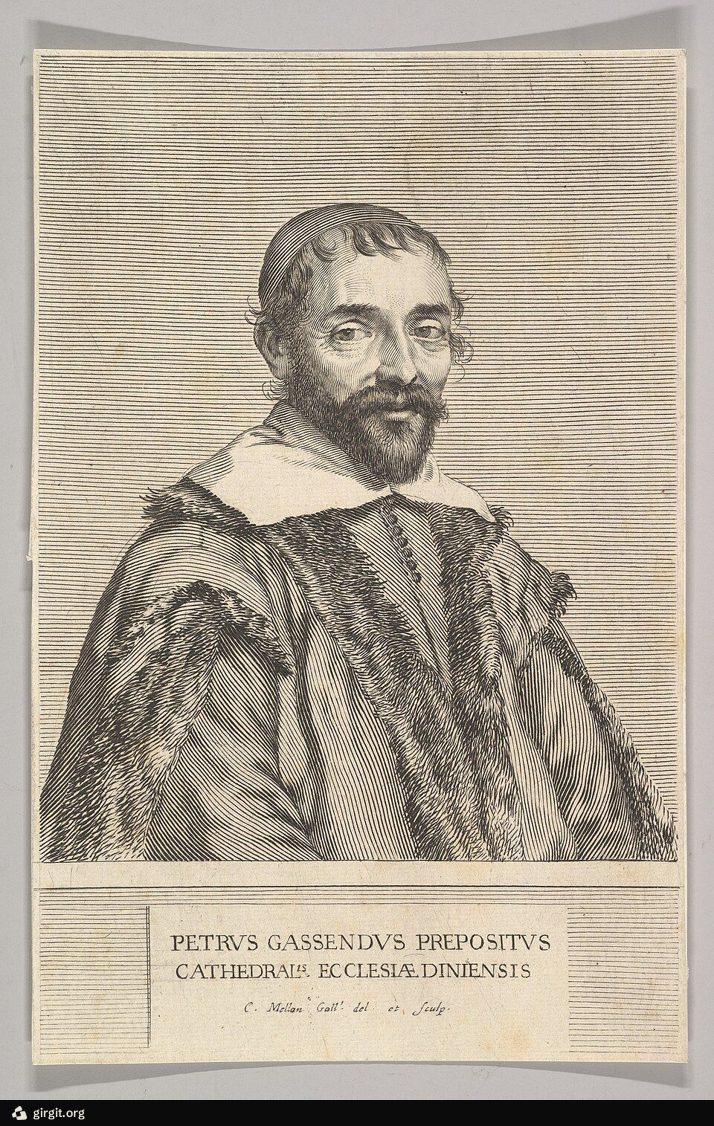
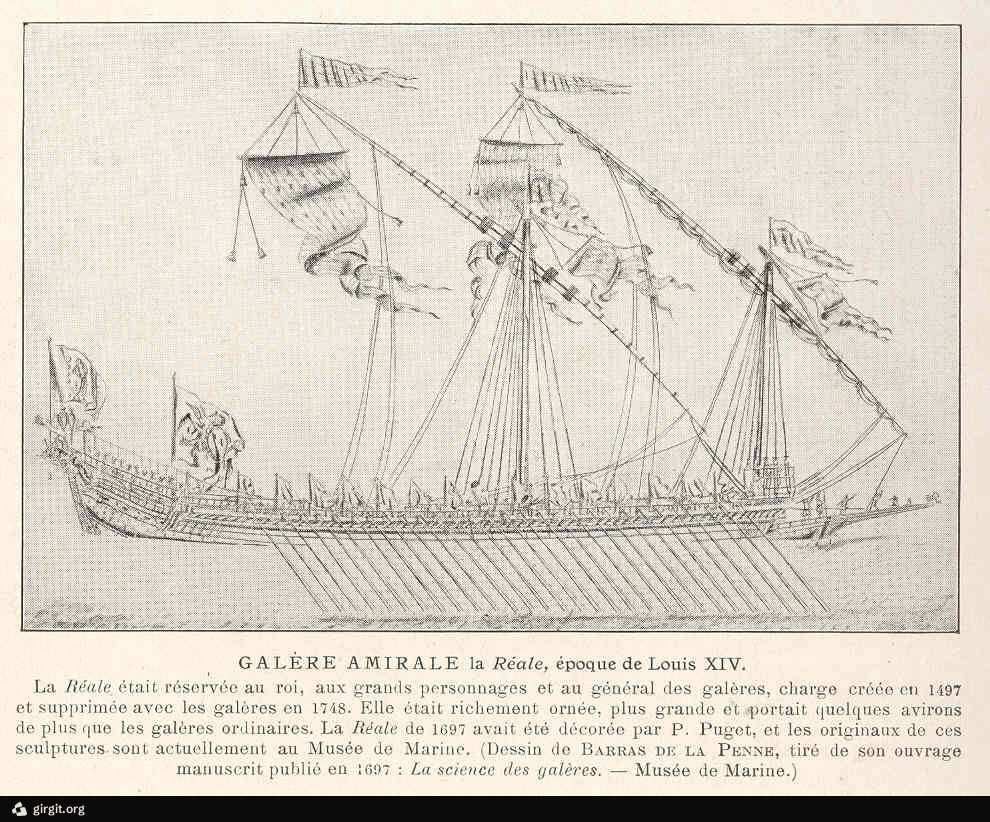
Where the "two separate stories" rule comes from, the one force that breaks it (the air), and the stone on a galley's mast that settled an old argument in 1640. The exam doesn't need this; it makes the page stick.
The roots: one force, one direction
- Why doesn't throwing a ball sideways make it fall more slowly?Because the only thing changing its motion, gravity, pulls straight down. A straight-down pull has no sideways part, so it cannot touch \( v_x \). And the sideways speed has no up-down part, so it cannot touch \( v_y \).
- Why does each direction get its own acceleration?Because the law that connects force and acceleration (you meet it in the next chapter) is a vector equation, \( \mathbf{F} = m\mathbf{a} \). A vector equation is two ordinary equations: \( F_x = m a_x \) and \( F_y = m a_y \). The x-part of the force decides \( a_x \) and nothing else.
- Why can forces be split like that?Because forces are vectors: they add head to tail, so a sideways push and a downward pull simply add up, and either can be taken apart again into its x- and y-parts. That is an experimental fact about forces, the parallelogram of forces.
- Then when do the two stories get tangled?When a force in one direction depends on the motion in the other. Air drag does: it points against the velocity and grows roughly as the square of the whole speed. A ball moving fast sideways is moving fast overall, so it also gets a bigger upward share of drag, and falls a little more slowly than a dropped ball.
- And the bedrock?Take the air away. Gravity alone is the same downward \( g \) at every speed and in every direction of motion, so the two stories are exactly separate. On the Moon the "two cameras" picture would be perfect.
So the rule on this page is exact only when the force does not care how fast the object is going. Gravity near the earth is such a force. Air drag is not. For a heavy, compact object over a short flight (a stone, a cricket ball tossed a few metres) the air hardly matters and the rule is very good. For a table-tennis ball it is poor: its drag already equals its weight at only about 8 to 9 m s−1, so a hard sideways throw changes its fall noticeably. Try both below.
A surprising twist: if drag were simply proportional to the velocity, \( -b\mathbf{v} \), the stories would separate again, because \( -b\mathbf{v} \) splits neatly into \( -bv_x \) and \( -bv_y \). That is roughly how very small, slow things move through a thick fluid (a dust grain settling in honey). It is the square law of fast motion through air that couples x and y.
The story
See it
 top of the mastfoot of the mastoars
Now put the air back. Guess first, then switch between no air, a cricket ball and a table-tennis ball.
Look at the arrow marked "air" on the thrown ball: it points back along the slanting path, so part of it points up. The dropped ball, moving more slowly, gets a smaller upward push. That is the whole difference. Turn the air off and the gap is exactly zero, at every height and every throw speed.
Solve it
Solve it
Gassendi's galley: take a 20 m mast and a speed of 5 m s−1 (both rough estimates). How long does the stone fall? If the old critics had been right and the stone kept none of the ship's speed, where would it land? (g = 9.8 m s−2, ignore the air.)
Hint
Answer
Solve it
The monkey and the hunter, a classic lecture demonstration. A hunter aims a dart gun straight at a monkey hanging from a branch. At the instant the dart leaves the gun, the monkey lets go and drops. Show that the dart hits the monkey, whatever its speed (as long as it gets there before the monkey reaches the ground). Ignore the air.
Hint
Answer
Solve it
A firework shell bursts 100 m above the ground, and its sparks fly out at 20 m s−1 in all directions. Ignoring the air, describe the cloud of sparks 2 s later: what shape, how big, and where is its centre? (g = 10 m s−2.)
Answer
Connect it
Connect it
- Free fall, Chapter 2. The y-story of every thrown object is exactly the free fall you already know: free fall.
- Projectile motion, next page. Gravity as the constant acceleration, one axis straight up: how does a thrown ball move?
- Laws of motion, Chapter 4. Why the stone keeps the ship's speed (inertia) and why \( \mathbf{F} = m\mathbf{a} \) splits into components (the second law).
- Fluids, Chapter 9. Drag proportional to speed, the case where x and y stay separate even with a fluid: Stokes' law.
- Relative velocity, Chapter 2. Two objects with the same acceleration see each other move at a steady velocity, as in the monkey and the hunter: relative velocity.
Still confused?
If the motions are independent, is the speed just vx + vy?
No. Independent means each part changes on its own; it does not mean the parts add like numbers. They are at right angles, so they add as vectors: \( v = \sqrt{v_x^2 + v_y^2} \). A ball moving 3 m s−1 sideways and 4 m s−1 down has a speed of 5 m s−1, not 7.
Does the thrown ball fall the same distance even though its path is longer?
Yes. "Falls" means the drop in height, the y-story, and that is \( \tfrac12 g t^2 \) for both balls at every moment. The thrown ball also travels sideways, so its path is longer, but the extra length is all sideways.
Why choose one axis along the acceleration?
Then the other axis has zero acceleration, so its story is the simplest one possible: steady motion. Any pair of perpendicular axes gives correct answers, but tilted axes give both stories an acceleration and twice the algebra.
Sources
- Wikipedia, "Galileo's ship": the mast experiment before Galileo, the 1624 reply to Ingoli (Drake's translation), and the Dialogue (1632), Second Day.
- Stanford Encyclopedia of Philosophy, "Pierre Gassendi": weights dropped from the mast of a moving ship.
- M. R. Risch, "History of Scientists? Elimination of naive beliefs about movement: the testing of the theories of Galileo in his lifetime on board of a galley" (2010): Marseille 1640, the governor of Provence, galley size and speed, the letters to Dupuy, students' answers today.
- Wikipedia, "Pierre Gassendi": De motu impresso a motore translato (1642).
- NASA Glenn Research Center, drag of a sphere and the drag equation: drag grows as the square of the speed; Cd about 0.5 for a ball.
Picture and video credits