Chemical Bonding and Molecular Structure
- 1. Why do atoms join at all?
- 2. How do you draw a Lewis structure?
- 3. What holds salt together?
- 4. How long, how strong? Bond parameters
- 5. When one drawing is not enough: resonance
- 6. Why does water have a plus end? Polarity of bonds
- 7. Why is water bent but CO₂ straight? VSEPR theory
- 8. What happens when two atoms bond? Valence bond theory
- 9. How does carbon make four equal bonds? Hybridisation
- 10. Electrons that belong to the whole molecule: MO theory
- 11. Why does oxygen stick to a magnet? Bond order
- 12. What makes water so sticky? Hydrogen bonding
- Review
1 of 12·NCERT §4.1 · §4.1.1 · §4.1.2·pp. 101–103·5 min
Why do atoms join at all?
The big ideaAtoms join so that each ends up with a full outer shell like a noble gas, usually eight electrons, either by handing electrons over or by sharing them.
In simple words
Some tiny bits of stuff are happy alone and never join anything. Most are not. They have an outer ring of tiny charged bits that is not full, and a full ring is calm and safe. So they join up. One may give a bit away and the other take it, and then they pull on each other. Or two may each put one bit into a shared pair that both can use.
Salt, water, sugar and the air you breathe are all made of atoms held together. The force that holds atoms together in a substance is a chemical bond. This chapter asks three questions: why do atoms bond, how do they bond, and what shape does the result take?
Kössel and Lewis: the noble gas clue
In 1916 two chemists, Kössel and Lewis, working separately, gave the first good answer. Their clue was the noble gases (helium, neon, argon and so on), which hardly react at all. Their outer shells are full: eight electrons, \( ns^2np^6 \), called an octet. Helium is the exception, with just two, a duplet. So, they said, a full outer shell must be a specially stable arrangement, and other atoms bond to reach one.
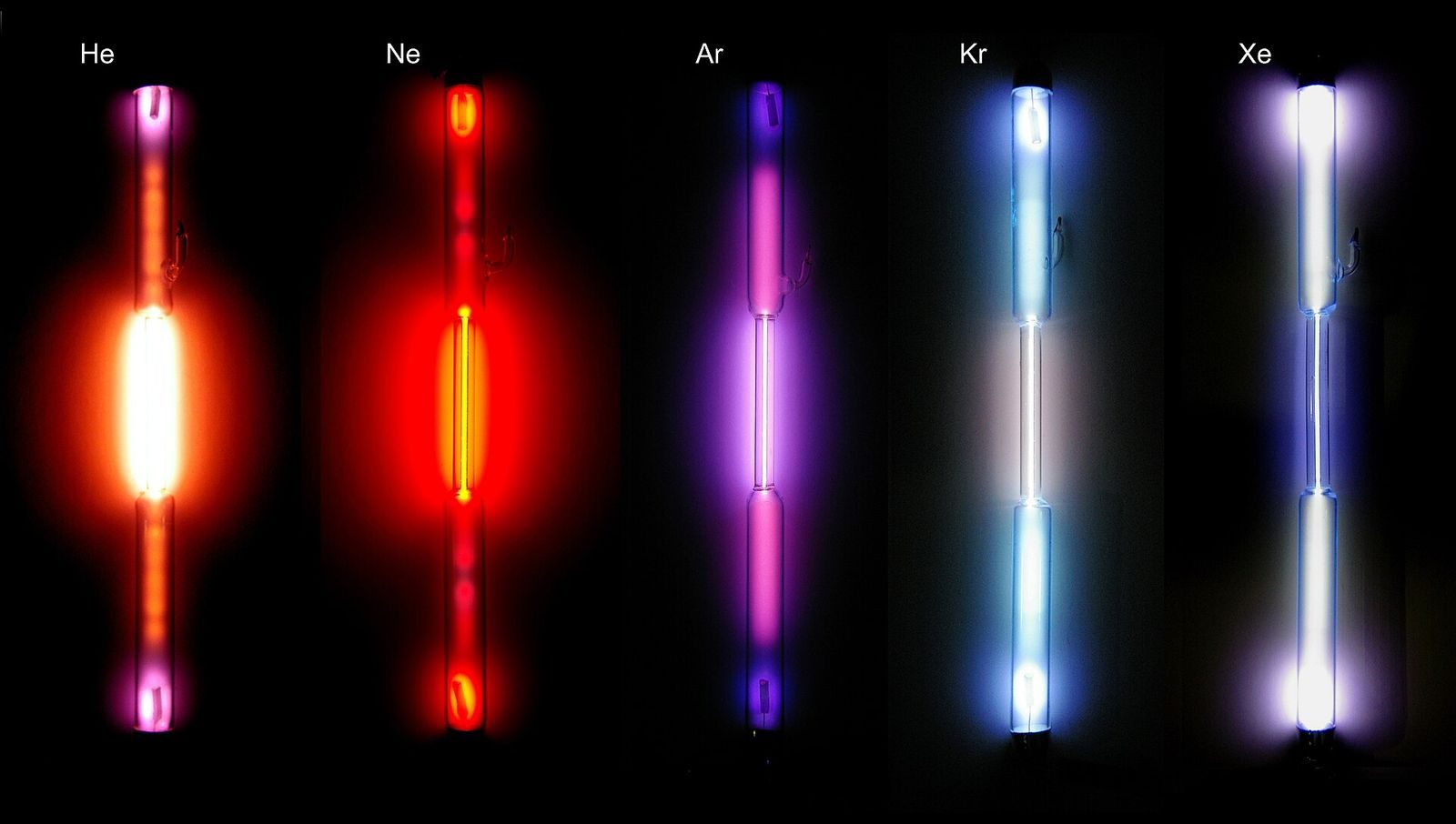 He: 2Ne: 8Ar: 8Kr: 8Xe: 8
Lewis pictured an atom as a positive kernel (the nucleus plus all the inner electrons) wrapped in an outer shell that can hold at most eight electrons. He even imagined the eight sitting on the corners of a cube: sodium has one corner filled, a noble gas has all eight.
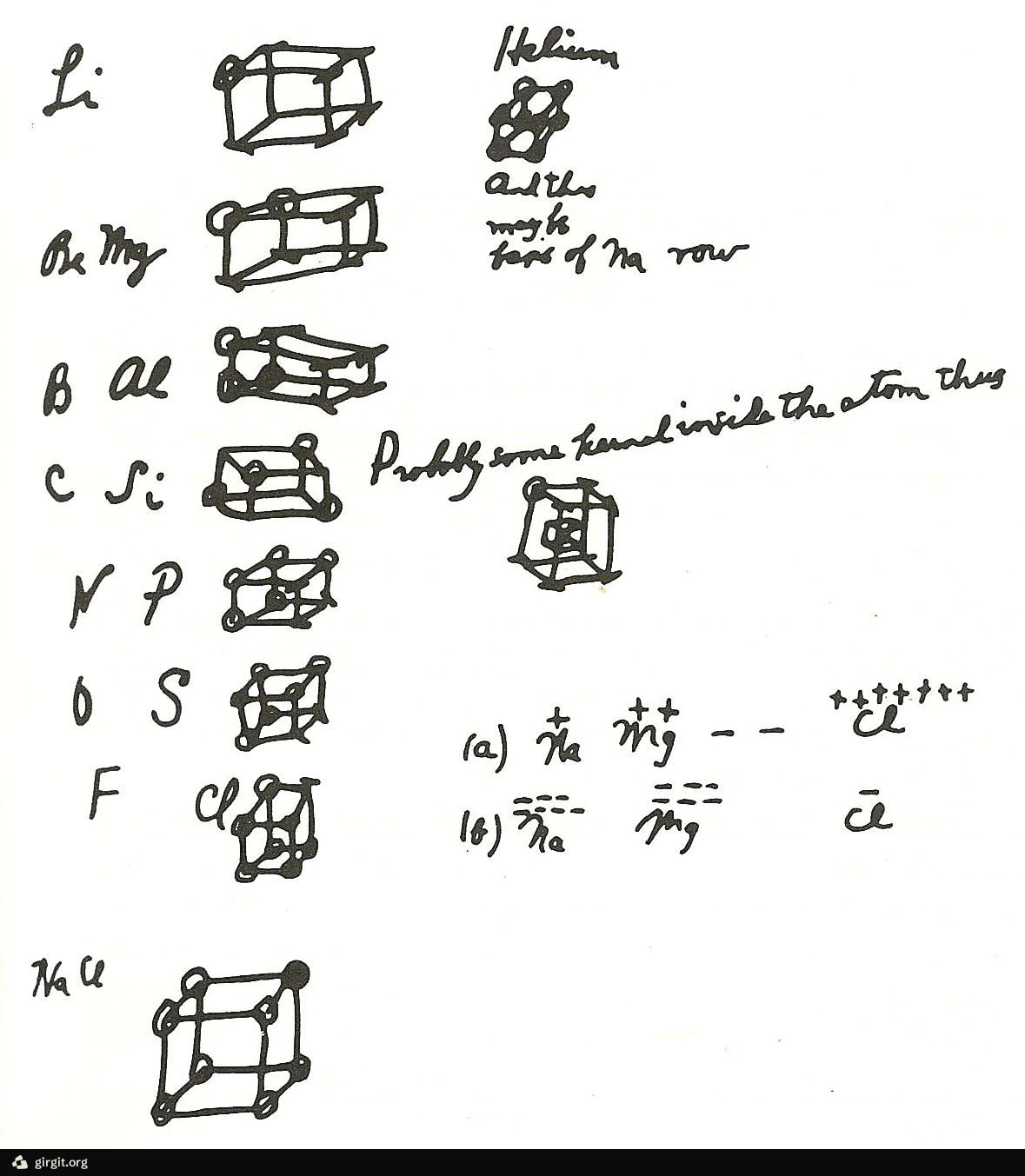 Li: 1 cornerF, Cl: 7 cornersNaCl: a full cube of 8
Lewis symbols
Only the outer electrons take part in bonding. These are the valence electrons; the inner ones are tucked away and stay out of it. Lewis wrote each atom as its symbol with one dot per valence electron. These are Lewis symbols.
| Element | Li | Be | B | C | N | O | F | Ne |
|---|---|---|---|---|---|---|---|---|
| Dots (valence electrons) | 1 | 2 | 3 | 4 | 5 | 6 | 7 | 8 |
| Usual (group) valence | 1 | 2 | 3 | 4 | 3 | 2 | 1 | 0 |
The dots tell you the group valence: it is usually either the number of dots, or 8 minus the number of dots. Nitrogen has 5 dots, so it usually makes 8 − 5 = 3 bonds, as in ammonia.
Kössel: giving and taking electrons
Kössel noticed four things:
- In the periodic table, the very electronegative halogens and the very electropositive alkali metals sit on either side of the noble gases.
- A halogen atom becomes a negative ion by gaining one electron; an alkali metal atom becomes a positive ion by losing one.
- The ions formed have noble gas configurations.
- The opposite ions are held together by electrostatic attraction.
Sodium chloride fits perfectly:
\[ \ce{Na -> Na+ + e-} \qquad [\mathrm{Ne}]\,3s^1 \to [\mathrm{Ne}] \] \[ \ce{Cl + e- -> Cl-} \qquad [\mathrm{Ne}]\,3s^2 3p^5 \to [\mathrm{Ar}] \] \[ \ce{Na+ + Cl- -> NaCl} \]Calcium fluoride works the same way: calcium loses two electrons (\( [\mathrm{Ar}]\,4s^2 \to [\mathrm{Ar}] \)) and each of two fluorine atoms gains one (\( [\mathrm{He}]\,2s^2 2p^5 \to [\mathrm{Ne}] \)), giving \(\ce{Ca^2+(F-)2}\), that is \(\ce{CaF2}\).
Try it: guess first, then hand the electrons over one at a time.
A bond made by the attraction between oppositely charged ions is an electrovalent bond. The electrovalence of an element is the number of unit charges on its ion: calcium has an electrovalence of +2, chlorine of −1. Kössel's picture is the basis of our ideas about ionic compounds, though he knew many compounds did not fit it.
The octet rule
Put together, Kössel's and Lewis's ideas became the electronic theory of chemical bonding. Its central statement is the octet rule: atoms combine by transferring or sharing valence electrons so that each ends up with eight electrons in its outer shell.
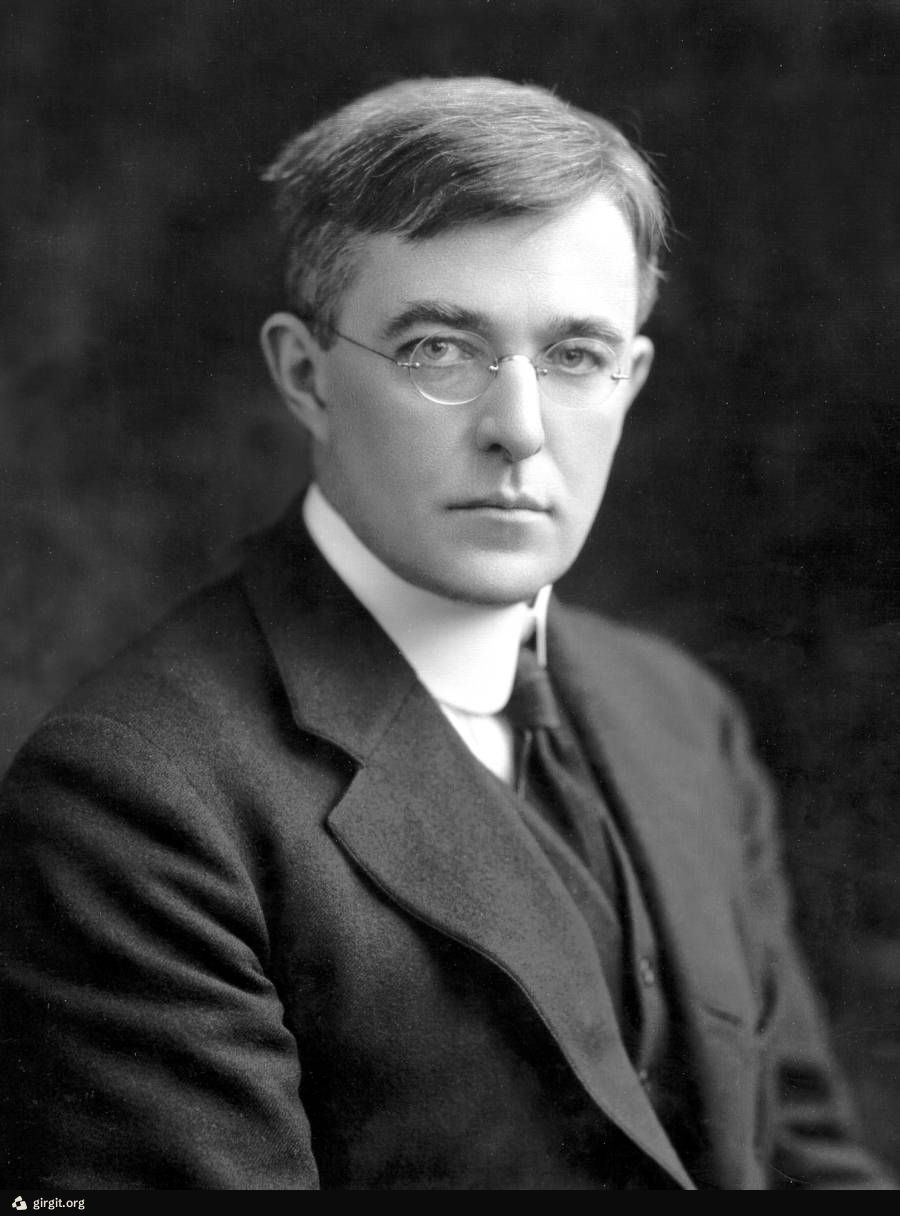
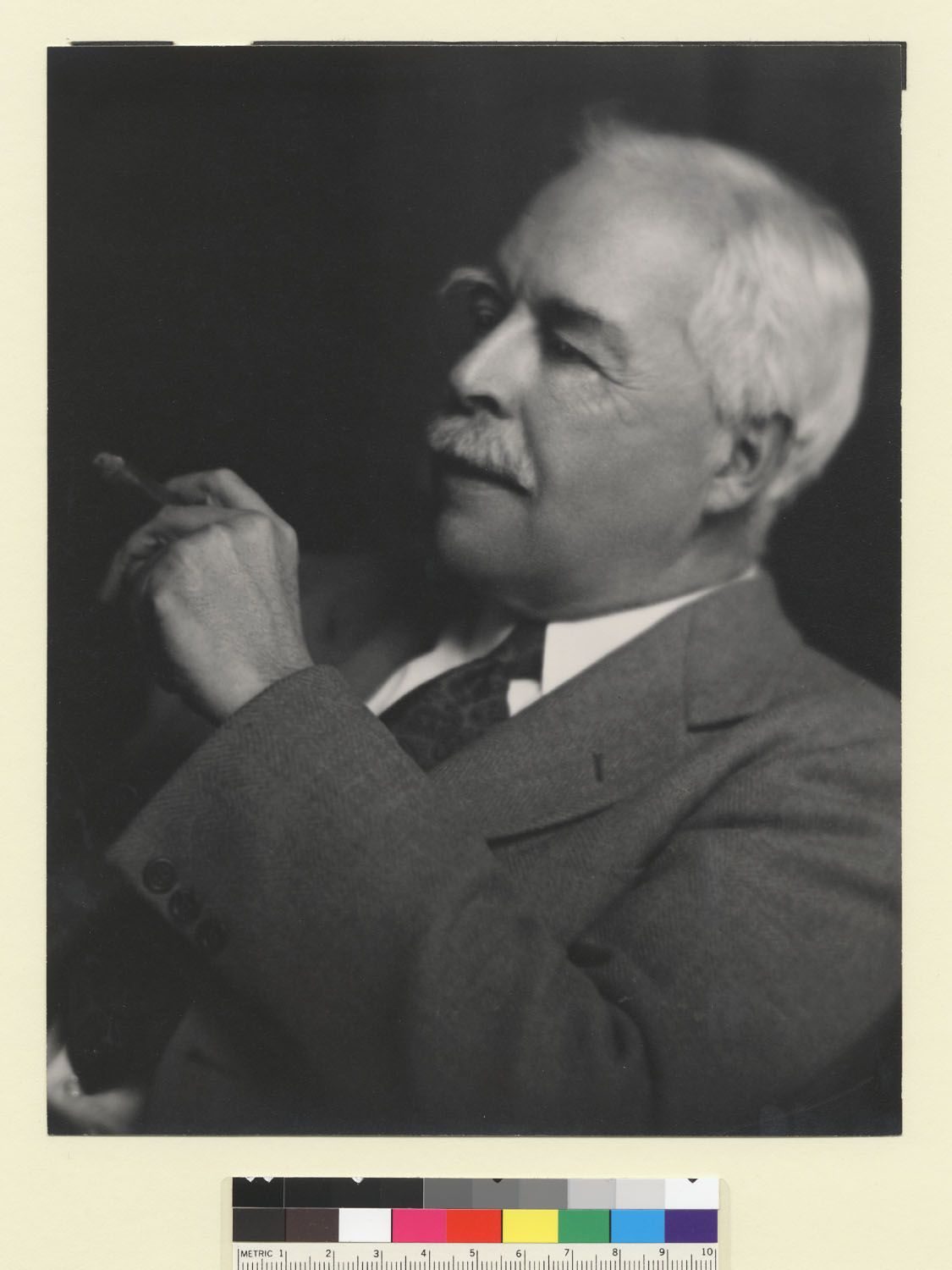 G.N. Lewis: sharing
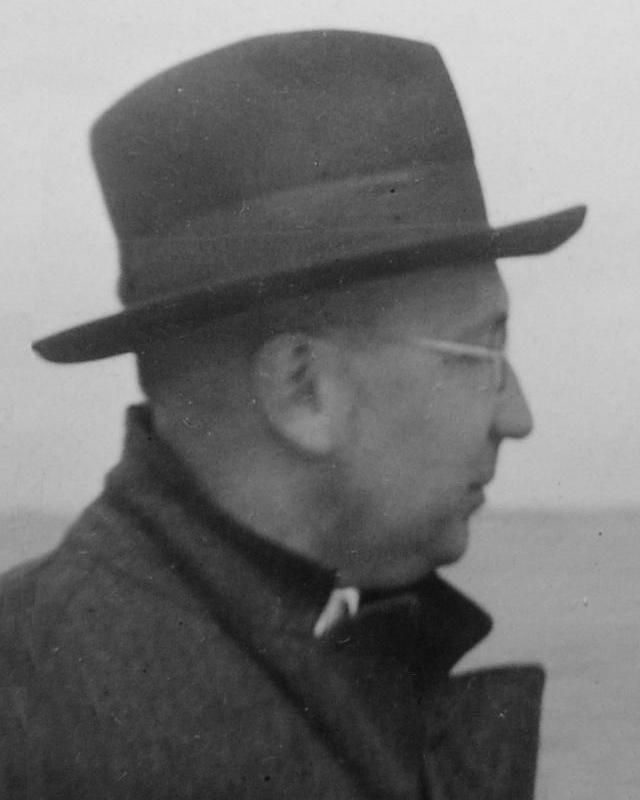 W. Kossel: giving and taking
Sharing: the covalent bond
Two chlorine atoms cannot both take an electron from each other. Instead they share. Each chlorine (\( [\mathrm{Ne}]\,3s^2 3p^5 \)) is one electron short of argon. Each puts one electron into a shared pair, and now both count eight around themselves. In 1919 Langmuir dropped Lewis's fixed cube and named this a covalent bond. Drawings that show electrons as dots between and around atoms are Lewis dot structures.
The rules of the Lewis–Langmuir picture:
- Every bond is one shared pair of electrons.
- Each atom in the bond gives at least one electron to the pair.
- By sharing, each atom reaches a noble gas outer shell.
In water, oxygen shares one pair with each hydrogen: oxygen now counts eight, each hydrogen counts two (like helium). In carbon tetrachloride, \(\ce{CCl4}\), carbon shares one pair with each of four chlorines.
Single, double, triple
- Single bond: one shared pair, drawn as one line. \(\ce{H-H}\), \(\ce{Cl-Cl}\).
- Double bond: two shared pairs. Carbon dioxide (\(\ce{O=C=O}\)) has two; ethene (\(\ce{H2C=CH2}\)) has one between its carbons.
- Triple bond: three shared pairs. Nitrogen (\(\ce{N#N}\)) and ethyne (\(\ce{HC#CH}\)).
Try it: change the number of shared pairs between two atoms.
Don't mix these up
- Ionic (electrovalent): electrons are transferred, ions attract. Covalent: electrons are shared.
- Hydrogen is satisfied with two electrons (a duplet), not eight.
Just remember
The reasons are on this page, but these names, years and counting habits are things to have ready. Hooks:
- Kössel: giving and taking (ions); Lewis: sharing (pairs); both 1916
- Kössel's kharcha: one atom spends an electron, the other pockets it. Lewis lends: both put an electron into a shared pair. Same year, two countries, working separately.
- Langmuir named the shared bond "covalent" in 1919
- Co-valent is co-sharing, like a co-passenger on one seat. Langmuir came three years after Lewis: 1916 + 3 = 1919.
- Group valence: the number of dots for 1 to 4 dots, 8 minus the dots for 5 to 7
- "Till four, count the dots; after four, count the gaps." N has 5 dots and 3 gaps (NH₃); O has 2 gaps (H₂O); F has 1 (HF).
- H and He: a duplet (2), not an octet
- The first shell is a two-seater scooter: it has only the 1s orbital. Every later outer shell is an eight-seater car: one s and three p orbitals, two each.
- Chemical bond
- The attraction that holds atoms together in a substance.
- Valence electrons
- The outer-shell electrons, the only ones that take part in bonding.
- Lewis symbol
- An element's symbol with one dot for each valence electron.
- Octet rule
- Atoms transfer or share electrons to get eight in their outer shell.
- Electrovalent bond
- The attraction between oppositely charged ions; an ionic bond.
- Electrovalence
- The number of unit charges on an element's ion.
- Covalent bond
- A bond made by sharing a pair of electrons.
Words to know
Sulphur has 6 valence electrons. What is its usual group valence?
- 6
- 2
- 0
In \(\ce{CaF2}\), what is the electrovalence of calcium?
- −2
- +2
- +1
How many electrons are shared between the two atoms in an \(\ce{N2}\) molecule?
- 2
- 4
- 6
Deep dive · optional
Why eight? A rule that began as a drawing of cubes
Where the magic number eight really comes from, how a sketch made for students in 1902 became the octet rule, and why its inventor had to bend his own cubes. The exam does not ask any of this; it is here so the rule stops feeling arbitrary.
The roots: eight is one s and three p
- Why do two atoms bond at all?Because together they have less energy than apart. A shared pair sits between two nuclei and is pulled by both; an ion pair sits close to an opposite charge. Either way energy comes out, and lower energy is where things settle, the way a ball settles at the bottom of a bowl.
- Why do atoms seem to aim for eight outer electrons?The outer shell of every atom after helium has one s orbital and three p orbitals. Each orbital holds two electrons, so the shell is full at 2 + 6 = 8. Eight is not a mystical number; it is the size of the s + p set.
- Why is a full set so stable?A ninth electron would have to start a new shell, farther out and hidden behind all the others, so it is barely held. That is why noble gases have positive electron gain enthalpies. And pulling one out of a full shell is expensive, which is why their ionisation enthalpies are the highest in each period. Neither giving nor taking pays, so they stay alone.
- Why do hydrogen and helium stop at two?The first shell has only the 1s orbital: room for two. That is the duplet.
- The bedrockTwo facts you already accept: opposite charges attract (Coulomb's law), and each orbital can hold at most two electrons (the Pauli principle). Count the orbitals in the outer shell and you get the octet.
So the octet rule is a shortcut for a deeper statement: atoms bond in ways that fill their outer s and p orbitals, because filled orbitals near two nuclei, or ions near opposite charges, are low in energy. Seen this way, it is no surprise that the rule bends. Boron in BF3 stops at six, and big atoms like sulphur hold twelve: the shortcut fails whenever the energy says otherwise. The next page meets those cases, and the ionic-bond page shows that for salts the energy pay-off does not even come from the octet.
The story
See it
Lewis's cubes worked beautifully for single and double bonds and then hit a wall. Guess first, then switch his 1902 cubes to his 1916 pairs and watch the wall disappear.
The fix had a bonus. Four pairs pointing to the corners of a tetrahedron put bonds 109.5° apart, the shape chemists had known for carbon since van 't Hoff and Le Bel proposed the tetrahedral carbon atom in 1874. The cube was wrong; the pairs were right, and the idea of pairs pointing apart grows into VSEPR theory later in this chapter.
Solve it
Solve it: methane on cubes
In the cube model a single bond is a shared edge. Carbon's cube has 4 electrons and needs 4 hydrogens, each sharing one edge. Where must the four edges be, and what shape would that give methane? Why did that worry Lewis?
Hint
Answer
Solve it: spot the error
A student writes: "Na+ has a noble gas octet, so turning a sodium atom into Na+ releases energy." What is wrong?
Answer
Solve it: predict, then check
Using only Kössel's idea of reaching the nearest noble gas, predict the formulas of the compounds of (a) aluminium and oxygen, (b) magnesium and nitrogen. Then say what the octet idea cannot tell you about them.
Answer
Connect it
Connect it
- Why eight, Structure of Atom. One s and three p orbitals, two electrons each: quantum numbers and electronic configuration give you the number.
- Why noble gases stay alone, Periodicity. The highest ionisation enthalpies and positive electron gain enthalpies, and the dots-or-gaps rule of valence.
- When eight fails. BF3, NO and SF6 on the next page, Lewis structures and formal charge.
- Where the energy really comes from. For ionic solids it is the crystal, not the octet: lattice enthalpy.
- Lewis's pairs, pointing apart. His 1916 tetrahedron of pairs becomes VSEPR theory; and his pair idea returns as Lewis acids and bases in Equilibrium.
Still confused?
Do atoms "want" eight electrons?
Atoms don't want anything. Arrangements with filled s and p orbitals near positive charge simply have low energy, and reactions run downhill in energy. "Wants an octet" is a handy way of saying "the octet arrangement is usually the low-energy one".
If Lewis's cube was wrong, why learn the octet rule?
Because the cube was only the picture; the counting was right. Lewis's own 1916 paper already moved the electrons into pairs. The rule of eight, the shared pair and the dot drawings survived every later theory, including the quantum-mechanical ones on later pages.
Kössel or Lewis: who was right?
Both, for different compounds. Kössel's transfer describes salts like NaCl and CaF2; Lewis's sharing describes molecules like Cl2, H2O and CH4. Real bonds lie on a scale between the two, which the polarity page measures with dipole moments.
Sources
- G.N. Lewis, "The Atom and the Molecule", J. Am. Chem. Soc. 38, 762–785 (1916)
- W. Kossel, "Über Molekülbildung als Frage des Atombaus", Annalen der Physik 354, 229–362 (1916)
- I. Langmuir, "The Arrangement of Electrons in Atoms and Molecules", J. Am. Chem. Soc. 41, 868–934 (1919)
- Cubical atom (Wikipedia): edges, faces, and the triple-bond problem
- Gilbert N. Lewis (Wikipedia, citing P. Coffey, Cathedrals of Science, 2008): 1902 notes, 41 nominations
- Lewis's memorandum of 1902 (file page)
- Walther Kossel (Wikipedia)
- Covalent bond (Wikipedia): Langmuir's "covalence", 1919
- Irving Langmuir (Wikipedia): Nobel Prize 1932, priority dispute
- J.H. van 't Hoff (Wikipedia): tetrahedral carbon, 1874

Picture and video credits
Show 3 picture and video credits
- noble-gases-glowing-in-tubes.jpg: Alchemist-hp www.pse-mendelejew.de, CC BY-SA 2.0 de
- gilbert-n-lewis-portrait.jpg: Johan Hagemeyer, CC BY 4.0
- walther-kossel-1928.jpg: GFHund, CC BY 3.0


