Structure of AtomFull experience
- 1. What is an atom made of?
- 2. Why did a few alpha particles bounce back?
- 3. Atomic number, mass number, isotopes and isobars
- 4. Why should Rutherford's atom collapse? And what is light?
- 5. Light comes in packets
- 6. Why does each element glow in its own colours?
- 7. Bohr's model of the hydrogen atom
- 8. How Bohr explained the hydrogen spectrum, and where he failed
- 9. Is an electron a particle or a wave?
- 10. Orbitals and quantum numbers
- 11. What does an orbital look like, and which is lowest?
- 12. How do electrons fill an atom?
- Review
12 of 12·NCERT §2.6.4 · §2.6.5 · §2.6.6·pp. 61–68·7 min
How do electrons fill an atom?
The big ideaElectrons fill orbitals from the lowest energy up (aufbau), at most two per orbital with opposite spins (Pauli), and one per orbital before any pairing (Hund).
In simple words
Think of passengers boarding an empty bus. They take the best seats first, the ones nearest the door. Each seat fits at most two people, sitting facing opposite ways. And on a row of equally good seats, people sit alone first and only share once every seat in the row has someone. Do this for every electron and you get the address list of the whole atom.
Aufbau principle
Aufbau is German for "building up". In the ground state, orbitals are filled in order of increasing energy: electrons take the lowest available orbital first. Because orbital energies depend on the effective nuclear charge, no single order fits every atom perfectly, but this order is very useful:
\[ 1s,\ 2s,\ 2p,\ 3s,\ 3p,\ 4s,\ 3d,\ 4p,\ 5s,\ 4d,\ 5p,\ 6s,\ 4f,\ 5d,\ 6p,\ 7s \ldots \]To remember it, write the sub-shells in rows (1s; 2s 2p; 3s 3p 3d; …) and read along diagonal arrows from top right to bottom left: the (n + l) rule in picture form. It places outer electrons remarkably well (potassium's last electron goes into 4s, not 3d), but treat it as a guide: orbitals very close in energy can swap.
Try it: work out n + l for six electrons and line them up.
Pauli exclusion principle
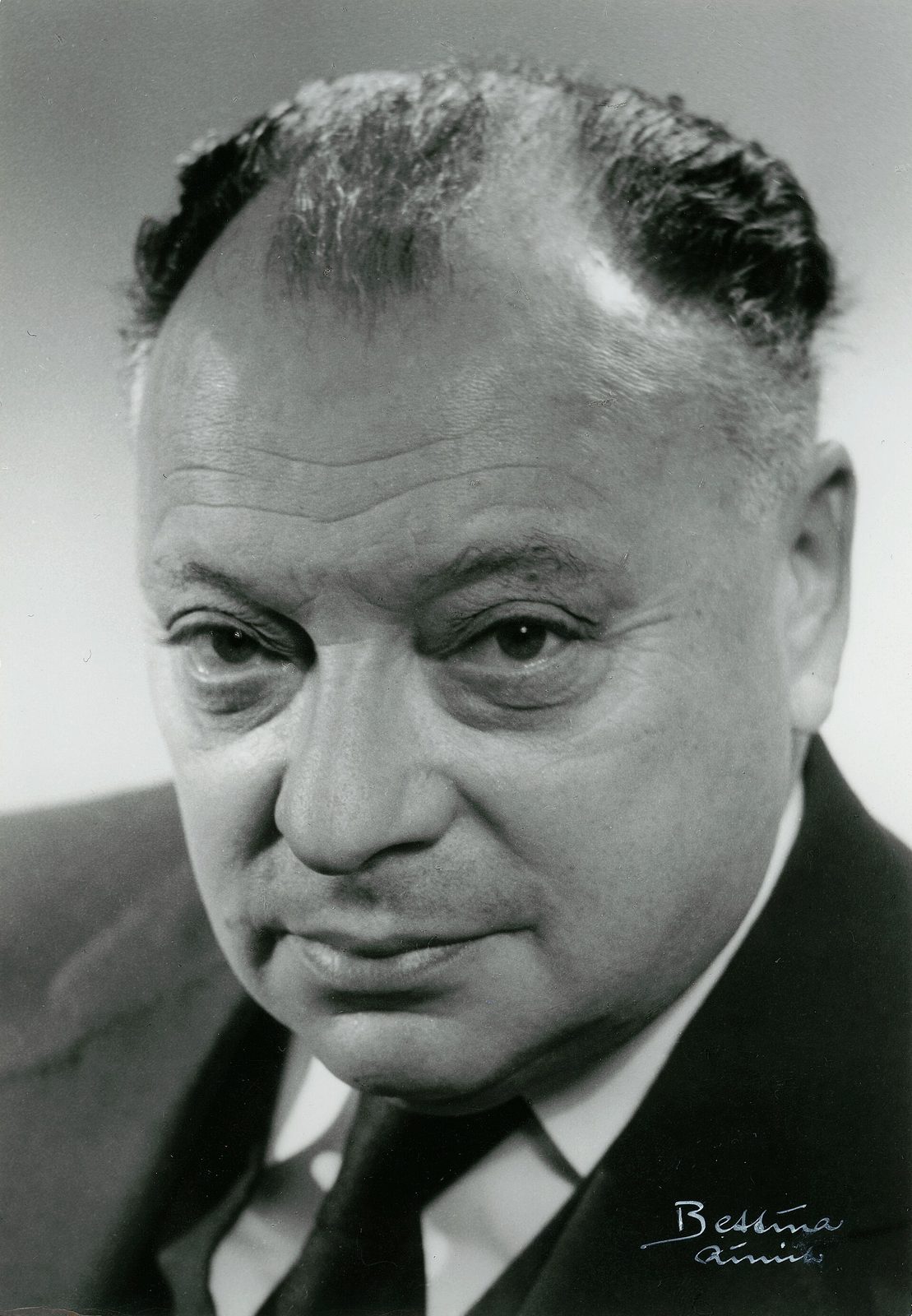
Wolfgang Pauli (1926): no two electrons in an atom can have the same set of all four quantum numbers. Put another way: an orbital holds at most two electrons, and they must have opposite spins. They may share n, l and ml, but then their ms must differ.
This fixes how many electrons each sub-shell holds: s holds 2, p holds 6, d holds 10, f holds 14. A shell holds at most \( 2n^2 \) electrons.
Hund's rule of maximum multiplicity
For orbitals of the same sub-shell (degenerate orbitals): electrons do not pair up in any orbital until every orbital of that sub-shell has one electron. These single electrons have parallel spins. So pairing begins with the 4th electron in p, the 6th in d and the 8th in f.
Try it: add 2p electrons one by one and watch both rules at work.
Writing electronic configurations
The electronic configuration of an atom is how its electrons are distributed among orbitals. Two ways to write it:
- sa pb dc notation: the sub-shell, with the number of electrons as a superscript and the shell number in front, e.g. 1s2 2s2 2p3.
- Orbital diagram: each orbital a box, each electron an arrow, ↑ for one spin and ↓ for the other. It shows all four quantum numbers, which the first notation does not.
| Element | Z | Configuration | Orbital diagram (1s · 2s · 2p) |
|---|---|---|---|
| H | 1 | 1s1 | [↑] |
| He | 2 | 1s2 | [↑↓] |
| Li | 3 | 1s2 2s1 | [↑↓] [↑] |
| Be | 4 | 1s2 2s2 | [↑↓] [↑↓] |
| B | 5 | 1s2 2s2 2p1 | [↑↓] [↑↓] [↑][ ][ ] |
| C | 6 | 1s2 2s2 2p2 | [↑↓] [↑↓] [↑][↑][ ] |
| N | 7 | 1s2 2s2 2p3 | [↑↓] [↑↓] [↑][↑][↑] |
| O | 8 | 1s2 2s2 2p4 | [↑↓] [↑↓] [↑↓][↑][↑] |
| F | 9 | 1s2 2s2 2p5 | [↑↓] [↑↓] [↑↓][↑↓][↑] |
| Ne | 10 | 1s2 2s2 2p6 | [↑↓] [↑↓] [↑↓][↑↓][↑↓] |
Lithium's third electron cannot enter 1s (Pauli), so it goes to 2s. Sodium to argon repeat the pattern with 3s and 3p. To save writing, the filled inner shells are replaced by the noble gas symbol: Na is [Ne] 3s1 and Ar is [Ne] 3s2 3p6. Electrons in completely filled inner shells are core electrons; those added to the outermost shell (highest n) are valence electrons.
After argon
- K and Ca: 4s is lower than 3d, so they take 4s1 and 4s2.
- Sc to Zn: the five 3d orbitals fill (3d is lower than 4p).
- Ga to Kr: 4p fills.
- Rb to Xe: 5s, 4d and 5p fill in the same pattern.
- Cs and Ba: 6s1 and 6s2. From La to Hg, 4f and 5d fill. Then 6p, 7s, and finally 5f and 6d. Elements after uranium are short-lived and made artificially.
Worked example 1: iron and phosphorus
- Fe, Z = 26: 1s2 2s2 2p6 3s2 3p6 4s2 3d6, written [Ar] 3d6 4s2. In 3d: five electrons go in singly, the sixth pairs: [↑↓][↑][↑][↑][↑]. So 4 unpaired electrons.
- P, Z = 15: [Ne] 3s2 3p3. By Hund's rule 3p is [↑][↑][↑]: 3 unpaired electrons.
The odd ones: chromium and copper
By the filling order, Cr (Z = 24) should be [Ar] 3d4 4s2 and Cu (Z = 29) should be [Ar] 3d9 4s2. In fact:
Remember
- Cr: [Ar] 3d5 4s1 (half-filled d)
- Cu: [Ar] 3d10 4s1 (completely filled d)
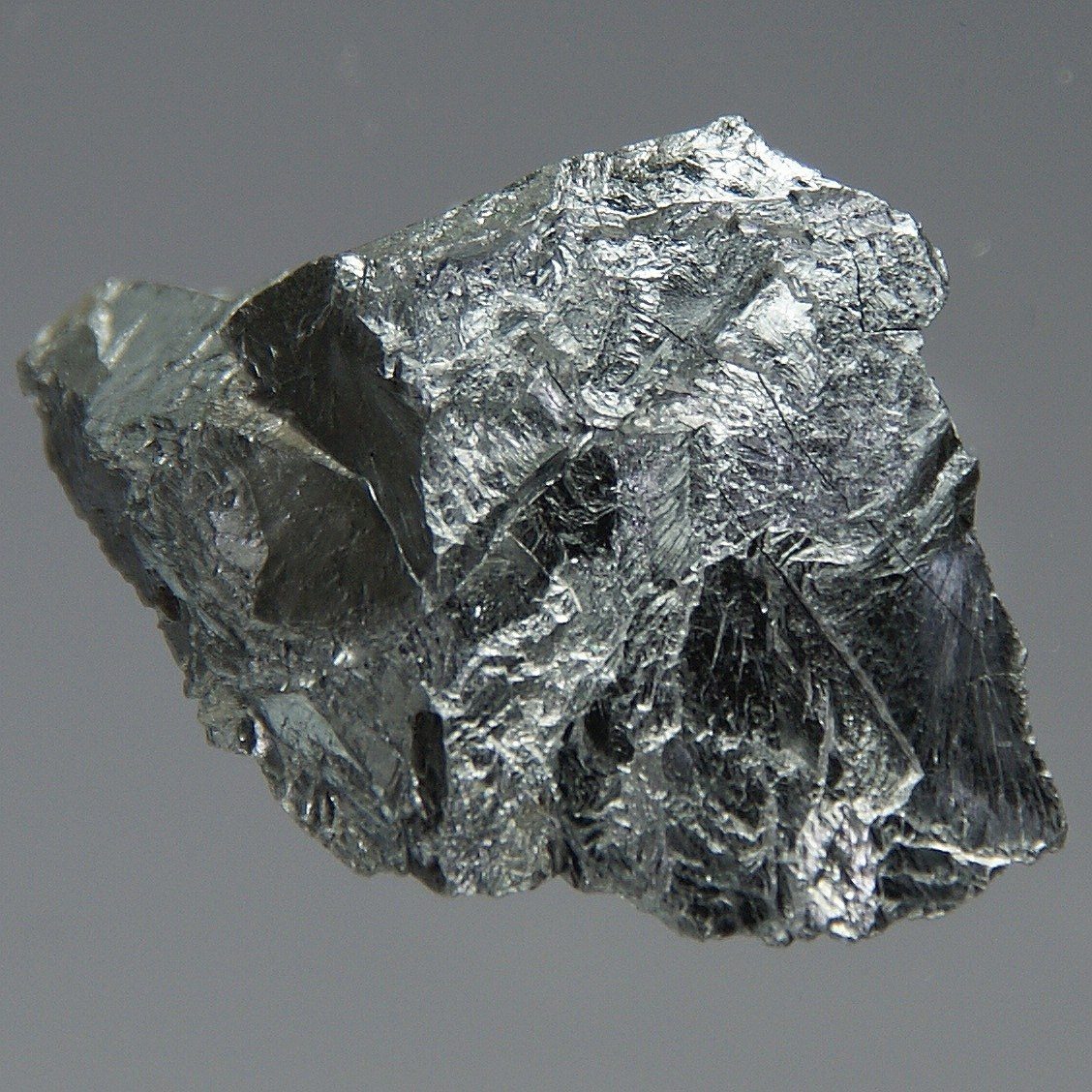 Cr: [Ar] 3d⁵ 4s¹
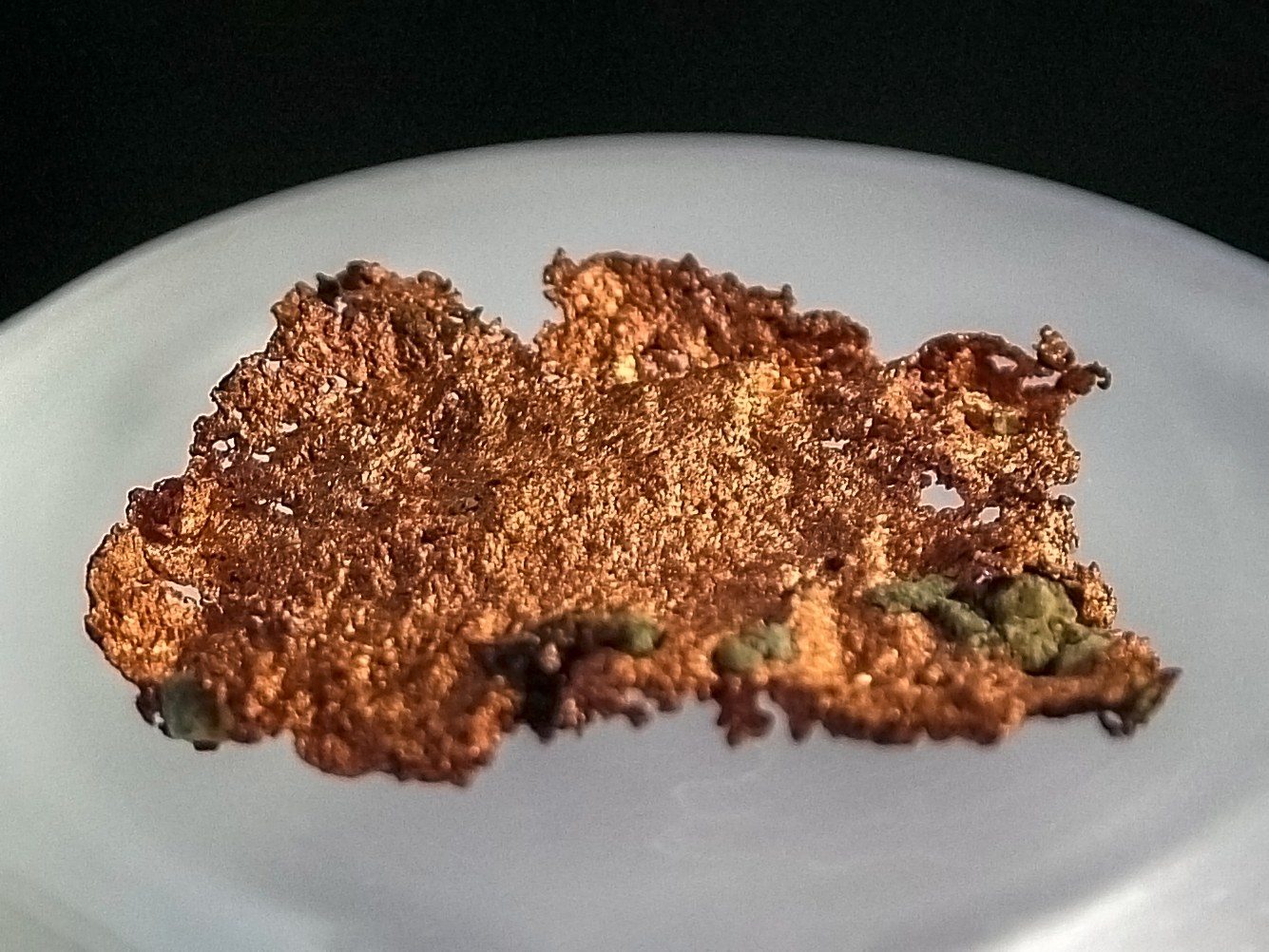 Cu: [Ar] 3d¹⁰ 4s¹
4s and 3d are very close in energy, so one electron moves from 4s to 3d whenever that leaves the d sub-shell exactly half-filled or completely filled. Such arrangements, p3, p6, d5, d10, f7, f14, have extra stability (lower energy). The ground state is always the arrangement of lowest total energy. Other exceptions exist too.
Try it: build every atom from hydrogen to zinc, including the two odd ones.
Why half-filled and filled sub-shells are extra stable
- Symmetrical distribution: symmetry brings stability. Electrons in one sub-shell have equal energy but different places in space, so they shield one another little and are held more strongly by the nucleus.
- Exchange energy: electrons with the same spin in degenerate orbitals can swap places, and each possible swap releases energy, the exchange energy. The number of swaps is greatest for a half-filled or full sub-shell. A d5 set of five parallel electrons allows 10 exchanges; d4 allows only 6. Exchange energy is also the reason behind Hund's rule.
So the extra stability comes from (i) relatively small shielding, (ii) smaller Coulomb repulsion and (iii) larger exchange energy.
Try it. Write the configuration of zinc (Z = 30) and of manganese (Z = 25). How many unpaired electrons does each have?
Answer
Why it matters. Configuration explains why atoms bond, why some elements are metals, and why argon is inert while the halogens are reactive. Dalton's model could answer none of these.
Don't mix these up
- Pauli limits how many electrons go in one orbital (two, opposite spins). Hund decides how they spread over orbitals of equal energy (singly first, parallel spins).
- 4s fills before 3d, but in the written configuration of Cr and Cu remember 4s1, not 4s2.
- N's 2p is [↑][↑][↑], never [↑↓][↑][ ] or [↑][↑][↓].
Just remember
The filling order has reasons (the (n + l) rule and shielding), but the exceptions you are examined on, the noble-gas numbers and the names are things to learn. Hooks:
- Cr = [Ar] 3d5 4s1, Cu = [Ar] 3d10 4s1
- "Chromium and Copper Cheat": both C-metals borrow one 4s electron to make d half full (Cr, 5) or full (Cu, 10). Their heavier cousins Mo and Ag (and Au) do the same.
- The filling order
- 1s 2s 2p 3s 3p 4s 3d 4p 5s 4d 5p 6s 4f 5d 6p 7s 5f 6d 7p. Read the (n + l) diagonals from the page before; the only surprise to remember is "s before the d of the shell below".
- Noble-gas cores: He 2, Ne 10, Ar 18, Kr 36, Xe 54, Rn 86
- Start at 2 and add 8, 8, 18, 18, 32: the row lengths of the periodic table, each one twice.
- Aufbau, Pauli, Hund
- Aufbau is German for "building up". Pauli: Pair at most, opposite spins. Hund: like passengers in a bus, everyone takes an empty seat (orbital) before anyone sits beside a stranger.
- Aufbau principle
- Fill orbitals in order of increasing energy.
- Pauli exclusion principle
- No two electrons in an atom share all four quantum numbers.
- Hund's rule
- In one sub-shell, fill singly with parallel spins before pairing.
- Electronic configuration
- How an atom's electrons are spread among its orbitals.
- Core / valence electrons
- Inner filled-shell electrons / outermost-shell electrons.
- Exchange energy
- Energy released when same-spin electrons in degenerate orbitals swap places.
Words to know
The configuration 1s2 2s2 2px2 2py1 for nitrogen's ground state breaks which rule?
- Pauli exclusion principle
- Hund's rule
- Aufbau principle
What is the ground-state configuration of chromium (Z = 24)?
- [Ar] 3d4 4s2
- [Ar] 3d5 4s1
- [Ar] 3d6
How many electrons can have n = 3 and l = 2 in one atom?
- 2
- 6
- 10
- 18
Deep dive · optional
Why do chromium and copper break the rule?
What the filling order really is, the trade that chromium and copper make, and the people who read these rules out of light. Not needed for the exam beyond the two configurations, but it turns the exceptions into sense.
The roots: an atom does not read the list
- Why is chromium not 3d4 4s2, as the filling order says?Because an atom does not follow a list. It settles into whichever arrangement of all its electrons has the lowest total energy. The filling order is a very good guide to the energies of single orbitals, but the total also includes how much the electrons repel one another.
- Why can repulsion change the answer at chromium?Because there 4s and 3d are almost equal in energy. When two choices are nearly level, small effects decide which one wins.
- What small effects?Two of them. First, two electrons squeezed into one orbital (like 4s2) share the same space and repel strongly: pairing costs energy. Second, electrons with the same spin in different orbitals of one sub-shell are kept apart (Pauli forbids them to be in the same place at once), so they repel less. The textbook counts this as exchange energy, one share for every pair of same-spin electrons.
- Why is d5 so much better than d4?Count the pairs. Four parallel electrons make 6 pairs; five make 10. Moving one electron up from 4s gains 4 pairs and breaks up the crowded 4s pair, for the small price of the 4s to 3d gap. At copper the same move turns d9 (16 pairs) into d10 (20 pairs): again 4 more.
- The bedrockLike charges repel, every system settles at its lowest energy, and two electrons with the same spin cannot share one orbital.
So the exceptions are not broken rules. They are the same rule, "lowest total energy", in a place where the shortcut (fill orbitals one by one in order) is too rough. Look at the whole row: vanadium could also gain pairs by moving up (3 more), but that is not enough to pay the gap; manganese has nothing to gain (d5 is already half full, and a sixth electron would only pair up). Only at d4 and d9 is the reward big enough, which is exactly where chromium and copper sit.
The pattern is not a law of nature. Below chromium, molybdenum is also [Kr] 4d5 5s1, and below copper, silver and gold are d10 s1. But tungsten, below molybdenum, is plain 5d4 6s2, niobium is 4d4 5s1, and palladium is 4d10 with no 5s electron at all. In the second and third transition rows the gaps are different, and the balance tips in other places. Only chromium and copper are on your syllabus.
Textbook check
- The textbook says half-filled and filled sub-shells are extra stable because of symmetry and exchange energy, and that exchange energy is the reason behind Hund's rule.
- Now we know more: accurate calculations since the 1970s show that the main reason for Hund's first rule is a little different. Electrons in singly occupied orbitals are less screened from the nucleus, so the nucleus holds them more tightly. The exchange count is still a fine way to keep score of which arrangement wins.
- In the exam write the textbook's reasons: symmetry, exchange energy, less shielding.
The story
See it

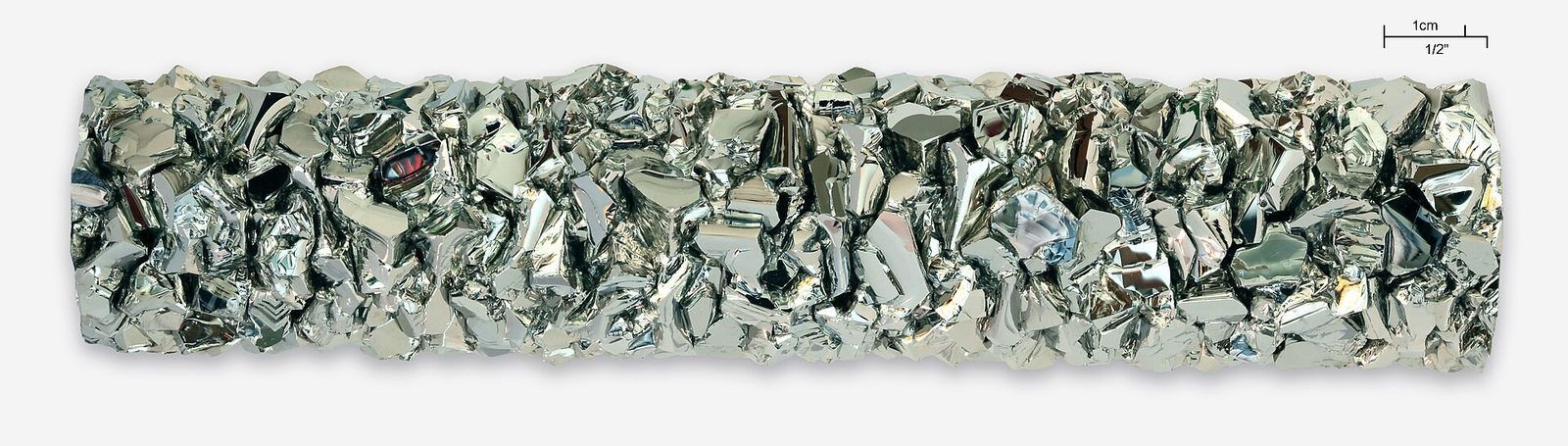 Hf: [Xe] 4f¹⁴ 5d² 6s²
Now keep score yourself. Each arc joins two electrons of the same spin in 3d: one exchange pair. Change the element, the gap and the pairing cost in the sentence, then press Every element to see which gaps would make which atoms move an electron up.
Solve it
Solve it: predict, then check
Molybdenum (Z = 42) sits right below chromium, with [Kr] as its core. Predict its configuration. Then do the same for tungsten (Z = 74, core [Xe] 4f14), right below molybdenum.
Answer
Solve it
A magnet can count unpaired electrons, because each one acts like a tiny magnet. How many unpaired electrons would a chromium atom have if it followed the filling order, and how many does it really have?
Answer
Solve it: keep score
Count the same-spin pairs in nitrogen's 2p3 when it follows Hund's rule, [↑][↑][↑], and when it does not, [↑↓][↑][ ]. Which has more, and by how much?
Answer
Solve it: use the model
In the widget's counting model, moving an electron up in vanadium (3d3 4s2 to 3d4 4s1) changes the energy by \( \Delta E = \text{gap} - 3K - P \). In chromium it is \( \text{gap} - 4K - P \), and in copper \( \text{gap} - 4K \). For what range of gaps would chromium and copper move up but vanadium not? Take \( P = 0.5K \).
Answer
Connect it
Connect it
- The periodic table, next chapter. Rows are shells being filled, and the s, p, d and f blocks are the sub-shell being filled. See Electronic configuration and periods and s, p, d and f blocks.
- Transition metals, Class 12. Unpaired d electrons give colour and magnetism; the magnetic moment \( \sqrt{n(n+2)} \) counts them. See d-block configurations and magnetism and colour.
- Bonding, Chapter 4. Valence electrons are the ones that take part in bonds; the octet is a filled s2p6. See Kossel, Lewis and the octet.
- Orbital energies, the page before. Why 4s comes before 3d at all: penetration and shielding. See shapes and energies of orbitals.
- Around you. The shine on a bicycle handlebar or a bathroom tap is a thin layer of chromium; a copper lota or the wiring in your walls is copper. Both are metals whose atoms have just one electron in their outer s orbital.
Still confused?
If 4s fills before 3d, why does iron lose its 4s electrons first when it forms Fe2+?
Because "fills first" is about the lowest total energy of the neutral atom, not a fixed order of orbitals. Once 3d holds electrons, the 3d orbitals sit lower than 4s, and 4s is also farther out. So when an atom loses electrons, the 4s ones go first: Fe is [Ar] 3d6 4s2, Fe2+ is [Ar] 3d6.
Then why isn't nickel 3d9 4s1?
Its reward is smaller. Going from d8 to d9 adds only 3 same-spin pairs (13 to 16), not 4. The measured ground state of nickel is 3d8 4s2, though the two arrangements are close in energy.
Is "half-filled is stable" a separate law?
No. It is shorthand for the counting above: a half-filled sub-shell has the most same-spin electrons with no forced pairing. Use it as a quick check, not as a reason on its own.
Sources
- Electron configurations of the elements (data page), from NIST atomic spectroscopy data
- Pauli exclusion principle: history (Stoner 1924, Pauli 1925, two-valuedness)
- The Nobel Prize in Physics 1945: Wolfgang Pauli
- Hund's rules: formulation around 1925, and the screening explanation of the first rule
- Friedrich Hund: life, Göttingen, tunnelling (1926)
- Hafnium: history (Bury 1921, Bohr, Coster and de Hevesy 1923, celtium)
Picture and video credits
Show 5 picture and video credits
- chromium-metal.jpg: Jurii, CC BY 3.0
- copper-native-crystal.jpg: W.carter, CC BY-SA 4.0
- wolfgang-pauli.jpg: Bettina Katzenstein / ETH-Bibliothek Zürich, CC BY-SA 4.0
- friedrich-hund-1920s.jpg: GFHund, CC BY 3.0
- hafnium-crystal-bar.jpg: Alchemist-hp (www.pse-mendelejew.de), CC BY-SA 3.0 de


