- 1. How do we sort animals?
- 2. Symmetry, germ layers and the coelom
- 3. Segments, the notochord, and the map of all phyla
- 4. Sponges, cnidarians and comb jellies
- 5. Flatworms, roundworms and segmented worms
- 6. Arthropods and molluscs: the two biggest phyla
- 7. Echinoderms and hemichordates
- 8. What makes a chordate?
- 9. Jawless vertebrates and fishes
- 10. Amphibians and reptiles
- 11. Birds and mammals
- Review
10 of 11·NCERT §4.2.11.4 · §4.2.11.5·pp. 48–49·5 min
Amphibians and reptiles
The big ideaAmphibians live a double life in water and on land with moist, scaleless skin; reptiles left the water for good, sealed in dry, scaly skin.
In simple words
A frog starts life as a tadpole swimming in a pond, then grows legs and hops onto land. Its skin is thin and wet, and it can even breathe through it. A lizard or a snake never needs a pond. Its skin is dry and covered in hard scales that keep water in, so it can live in a hot, dry place, and its eggs hatch on land.
Class Amphibia
From Greek amphi, dual, and bios, life: amphibians can live both in water and on land.
- Most have two pairs of limbs.
- Body divided into head and trunk; a tail in some.
- Skin is moist, with no scales.
- The eyes have eyelids. A tympanum (eardrum on the surface of the head) represents the ear.
- The alimentary canal, urinary and reproductive tracts all open into one common chamber, the cloaca, which opens to the outside.
- Breathing by gills, lungs and through the skin.
- Heart three-chambered: two auricles, one ventricle.
- Cold-blooded.
- Sexes separate. Fertilisation external. Oviparous; development indirect (through a tadpole).
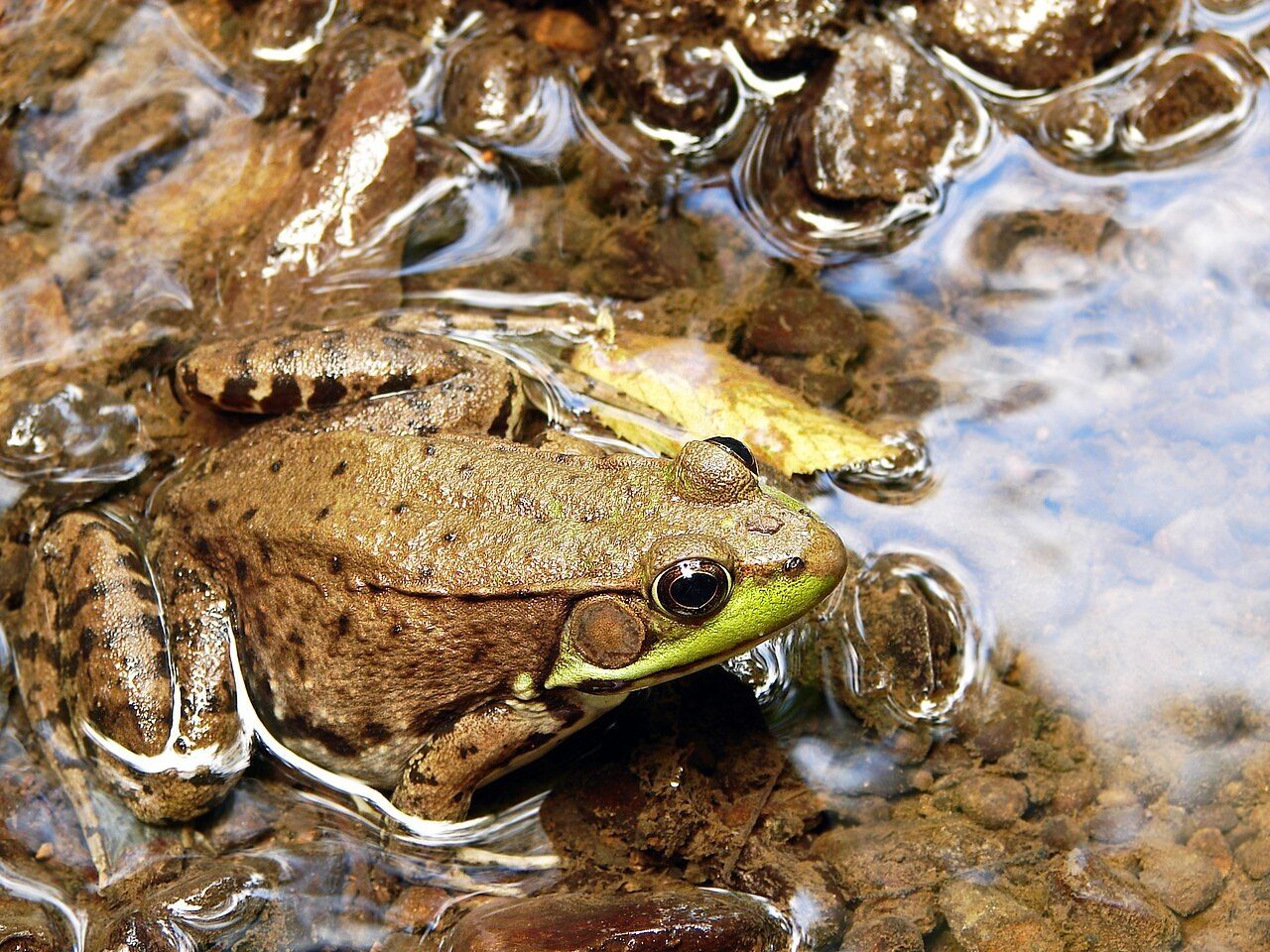 tympanum (eardrum)moist skin, no scales
Examples: Bufo (toad), Rana (frog), Hyla (tree frog), Salamandra (salamander), Ichthyophis (a limbless amphibian, found in the Western Ghats, easily mistaken for a worm or snake).
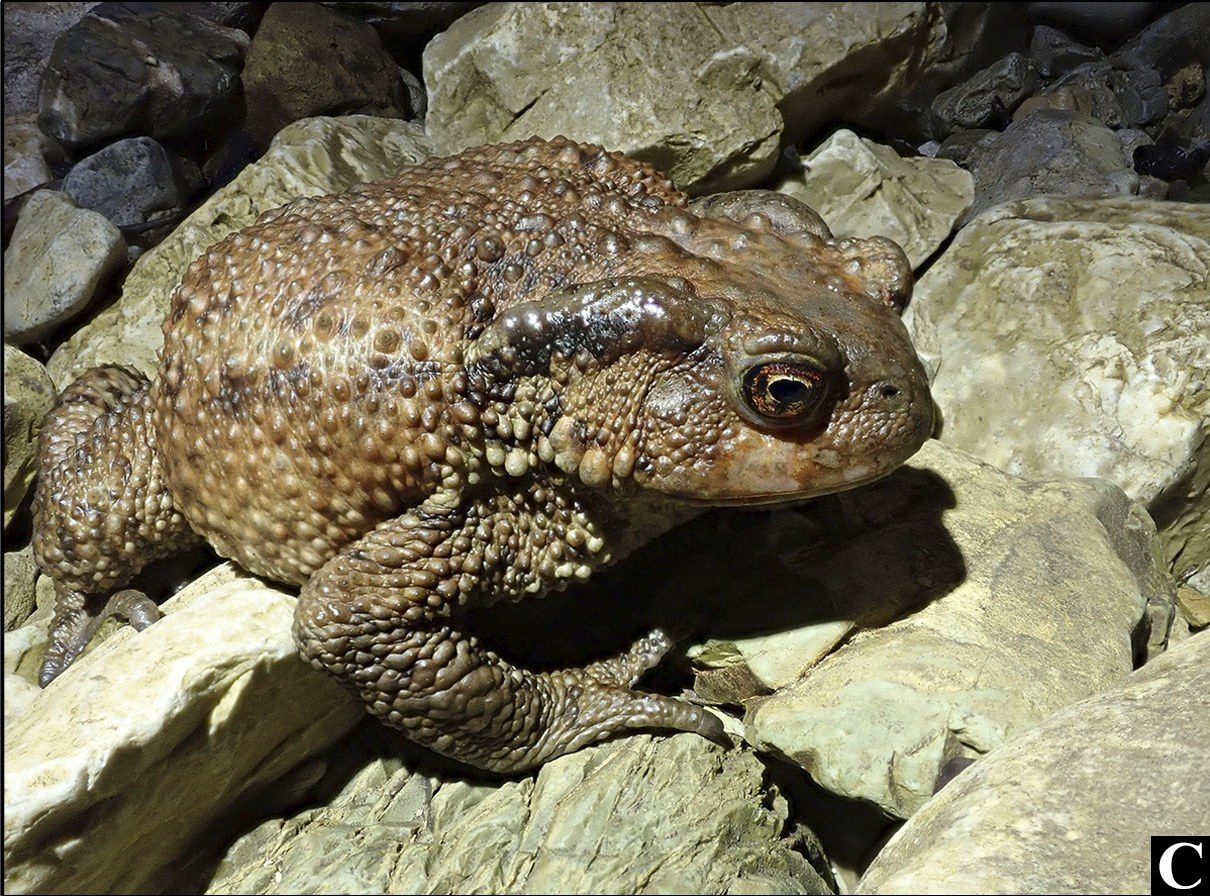
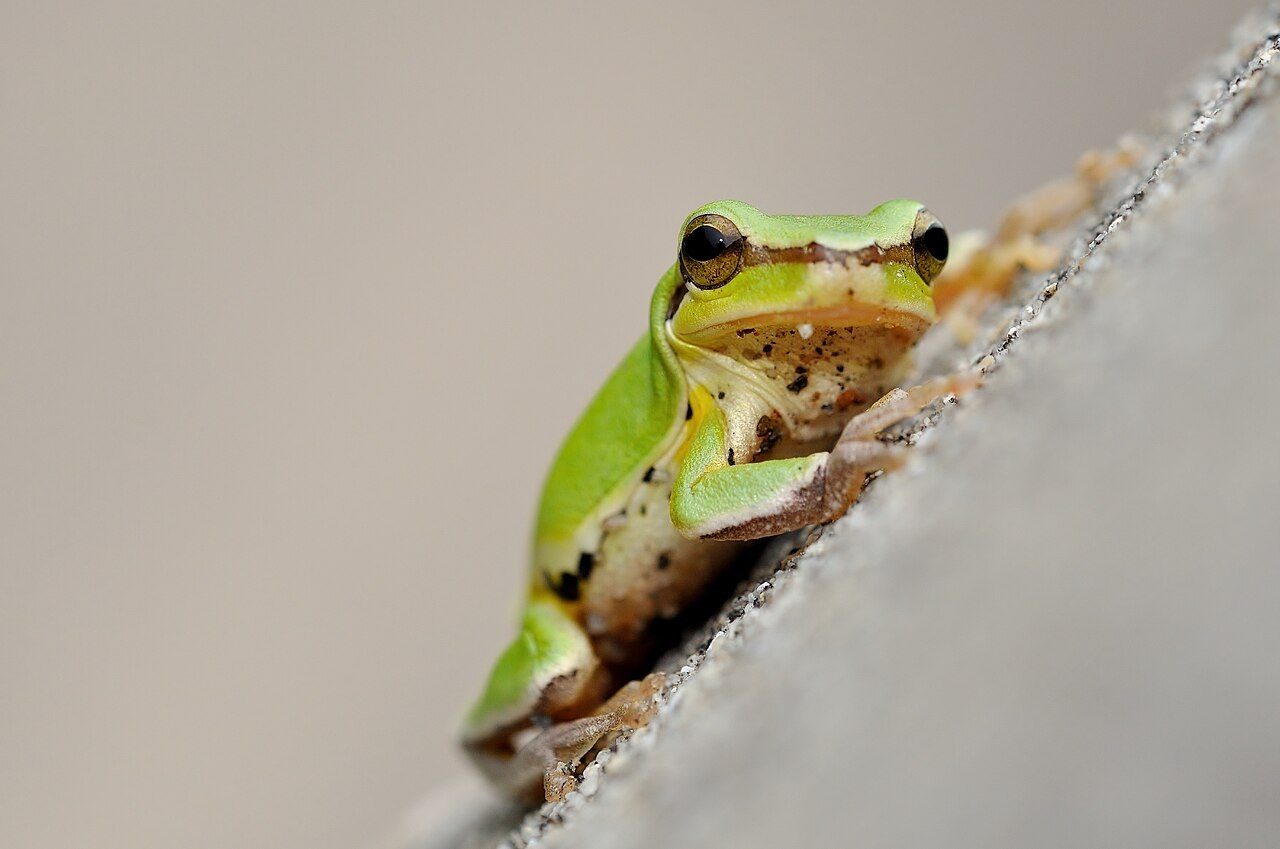
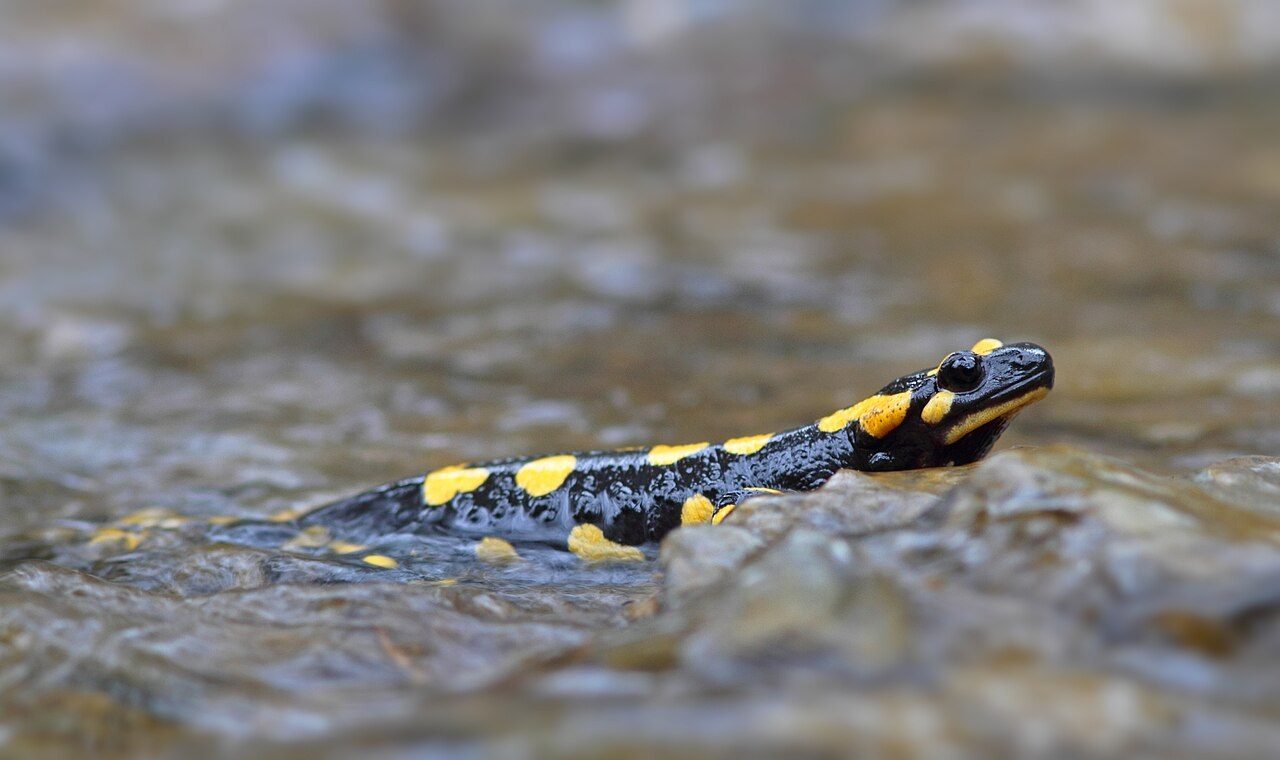
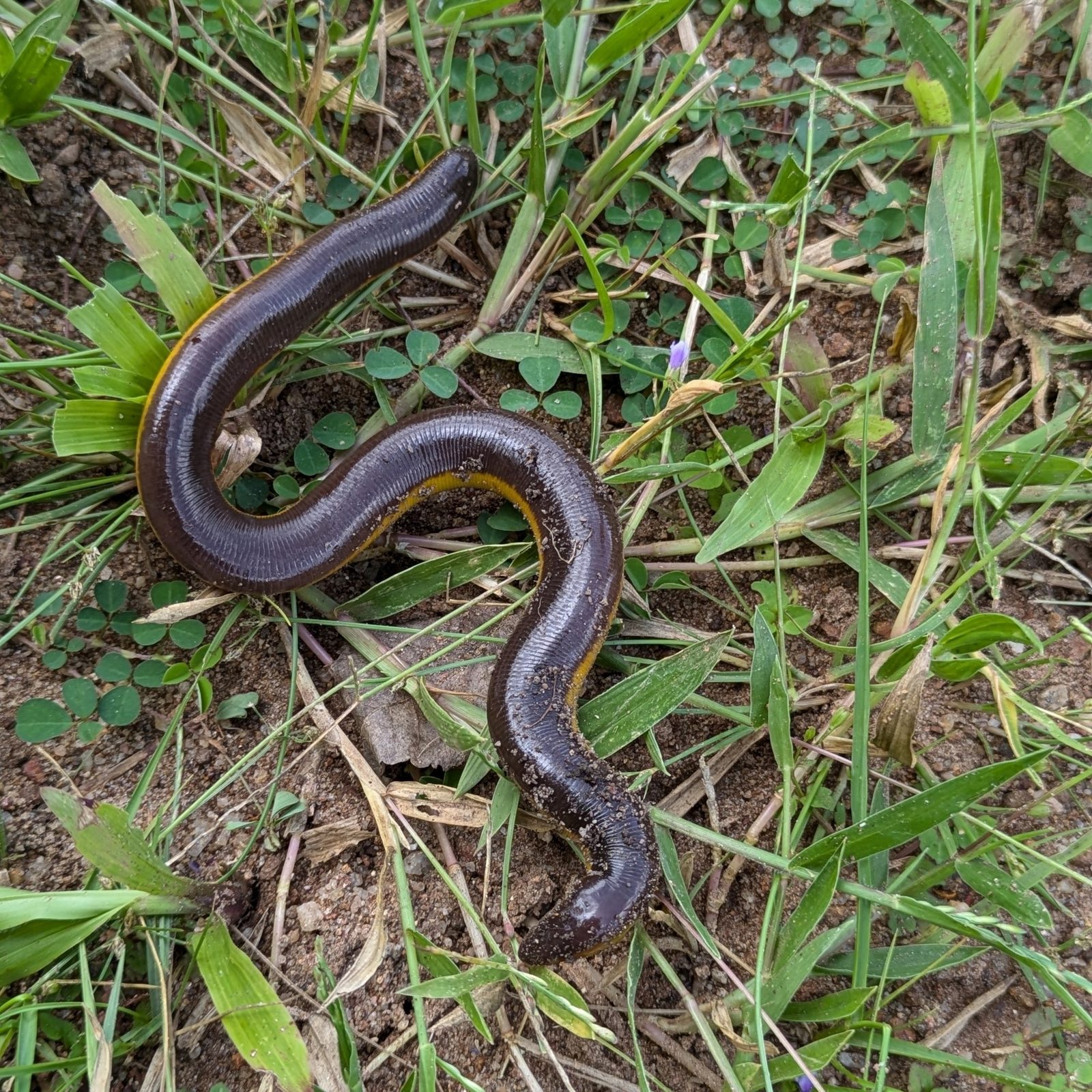 no limbs
Class Reptilia
From Latin repere or reptum, to creep or crawl: the name refers to the way they move.
- Mostly terrestrial (land-living).
- Body covered by dry, cornified skin (hardened with keratin), with epidermal scales or scutes.
- No external ear openings; a tympanum represents the ear.
- Limbs, when present, are two pairs. Snakes have none.
- Heart: three chambers in most reptiles; crocodiles are the exception with four.
- Poikilotherms (cold-blooded).
- Snakes and lizards shed their scales as a skin cast.
- Sexes separate. Fertilisation internal. Oviparous; development direct (the young hatch looking like small adults).
Look closely at a garden lizard's head and you will find a small round opening behind the eye, with the eardrum just inside it. The textbook says reptiles have no external ear opening; that is true of snakes and turtles but not of most lizards (see the note below the picture). For the exam, write the textbook's line.
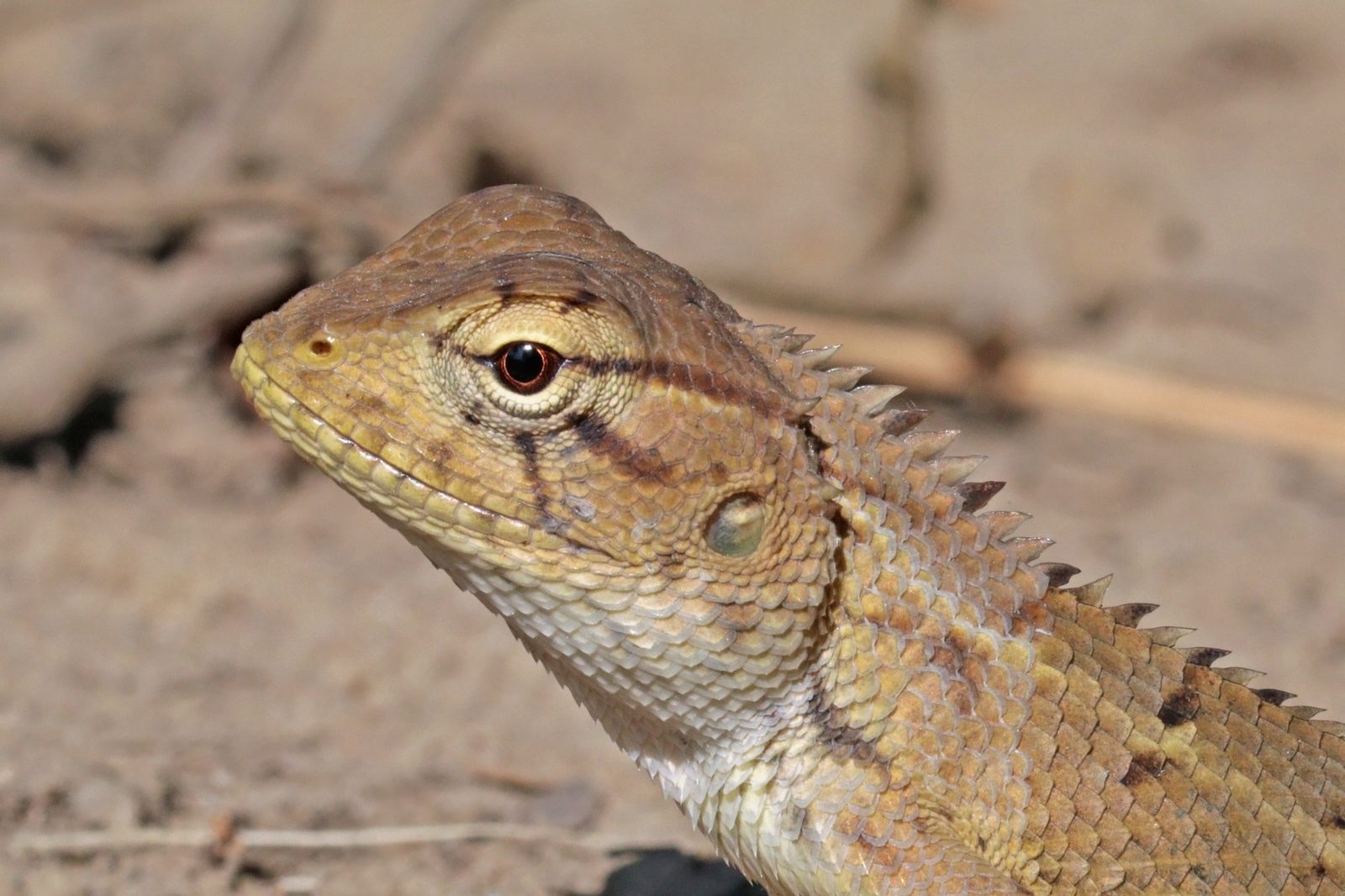 ear openingdry, scaly skin
Try it: compare the heart of a fish, a frog and a crocodile, and follow the oxygen round each loop.
Examples:
| Genus | Common name |
|---|---|
| Chelone | Turtle (marine) |
| Testudo | Tortoise (land) |
| Chameleon | Tree lizard |
| Calotes | Garden lizard (the one that nods its red head on your wall) |
| Hemidactylus | Wall lizard (the house gecko near your tube light) |
| Crocodilus | Crocodile |
| Alligator | Alligator |
| Naja | Cobra (poisonous) |
| Bungarus | Krait (poisonous) |
| Vipera | Viper (poisonous) |
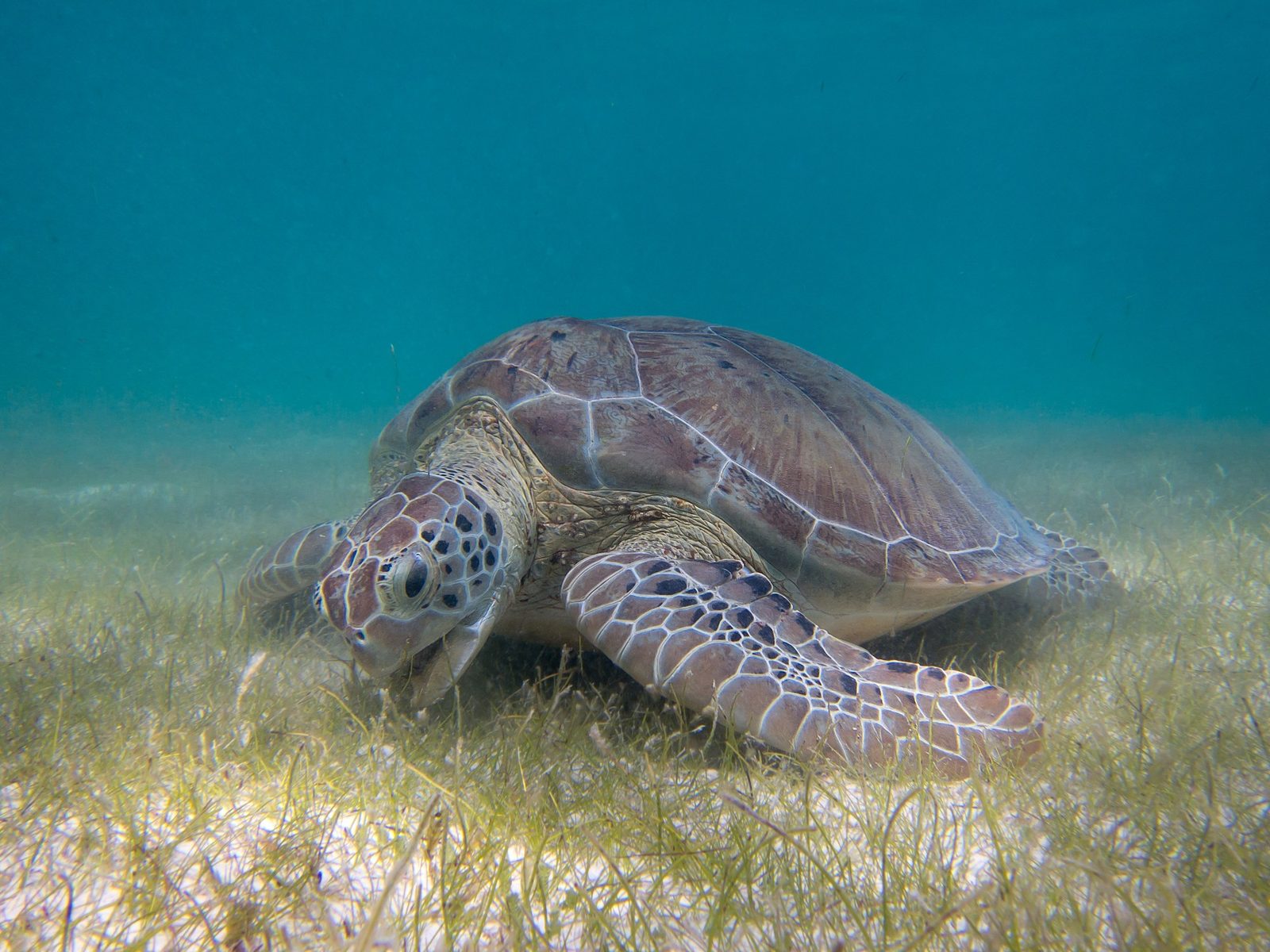
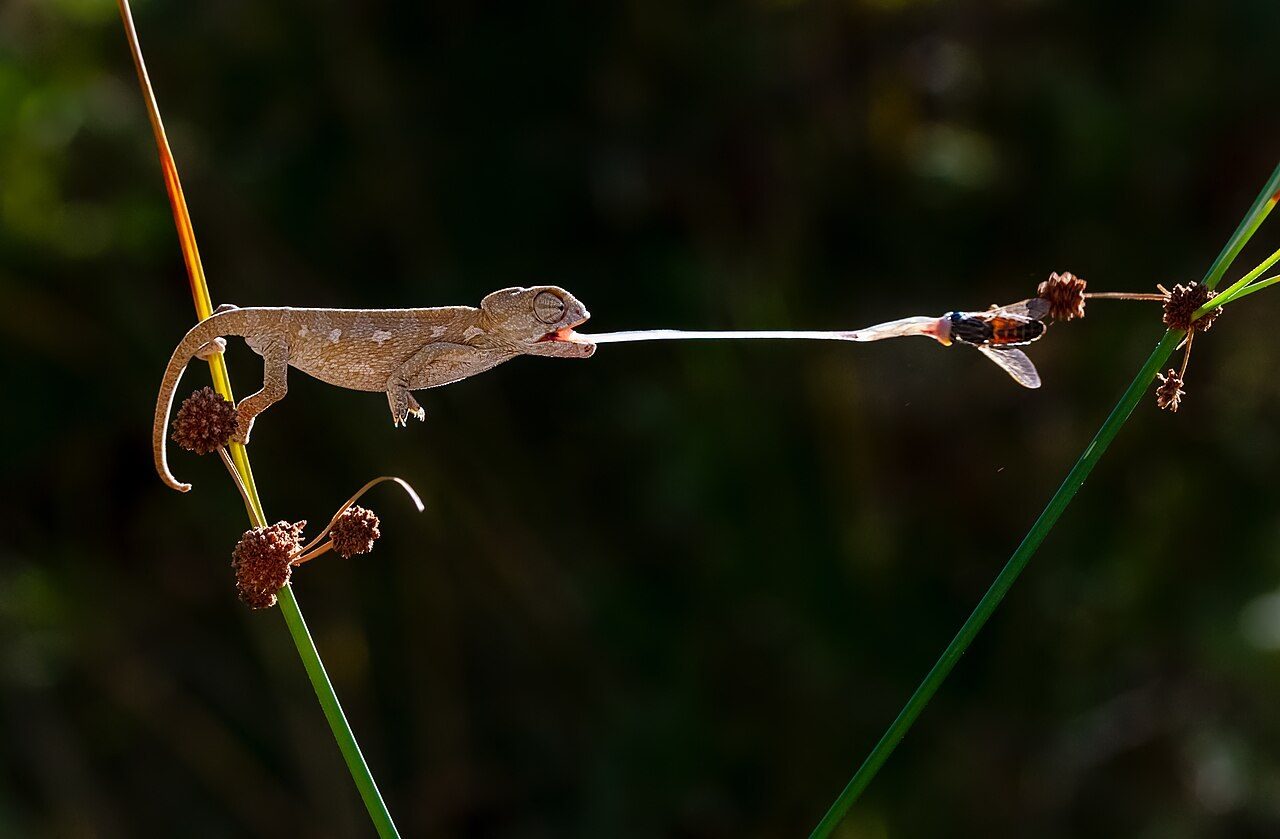
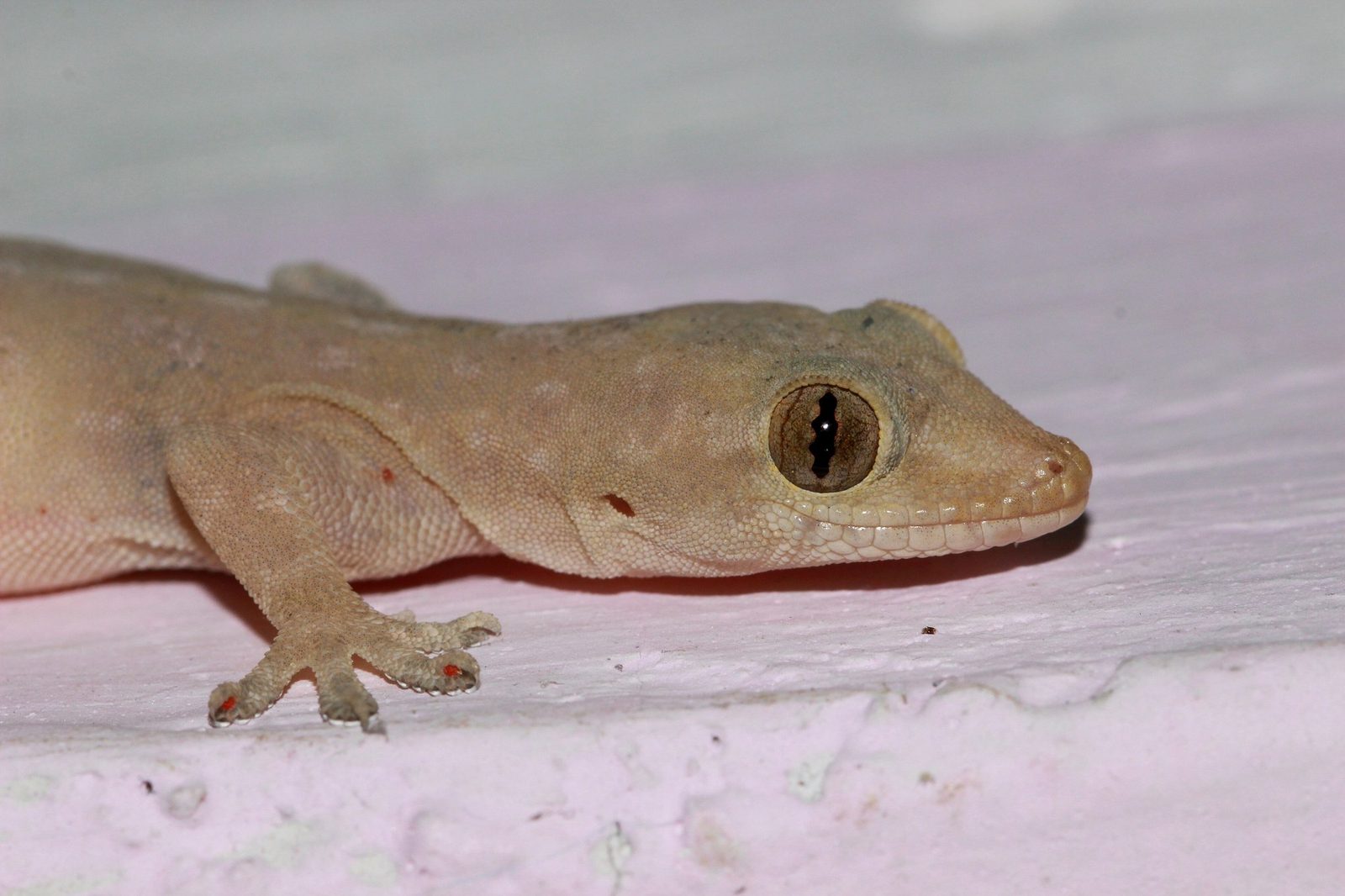
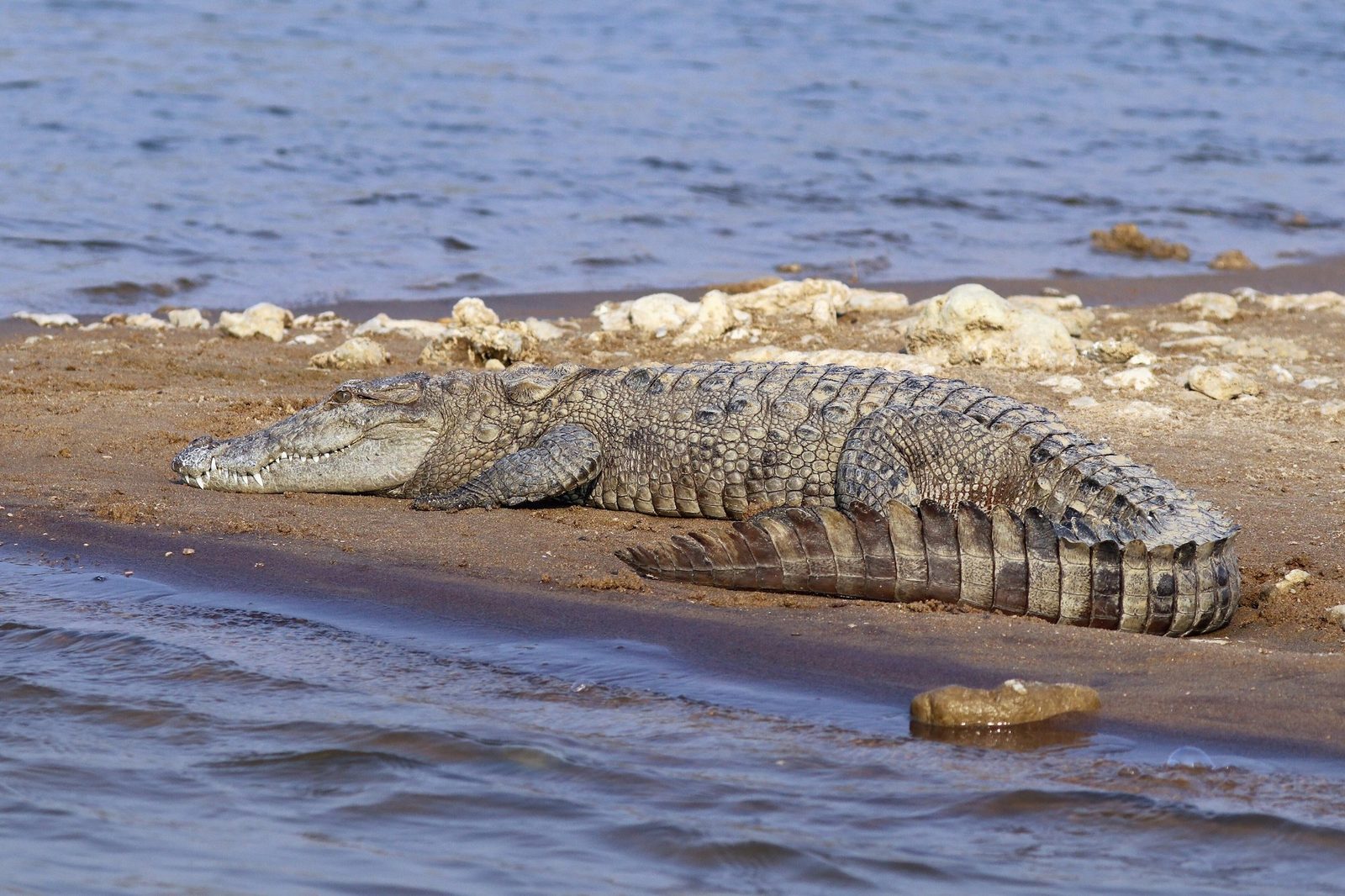 scutes
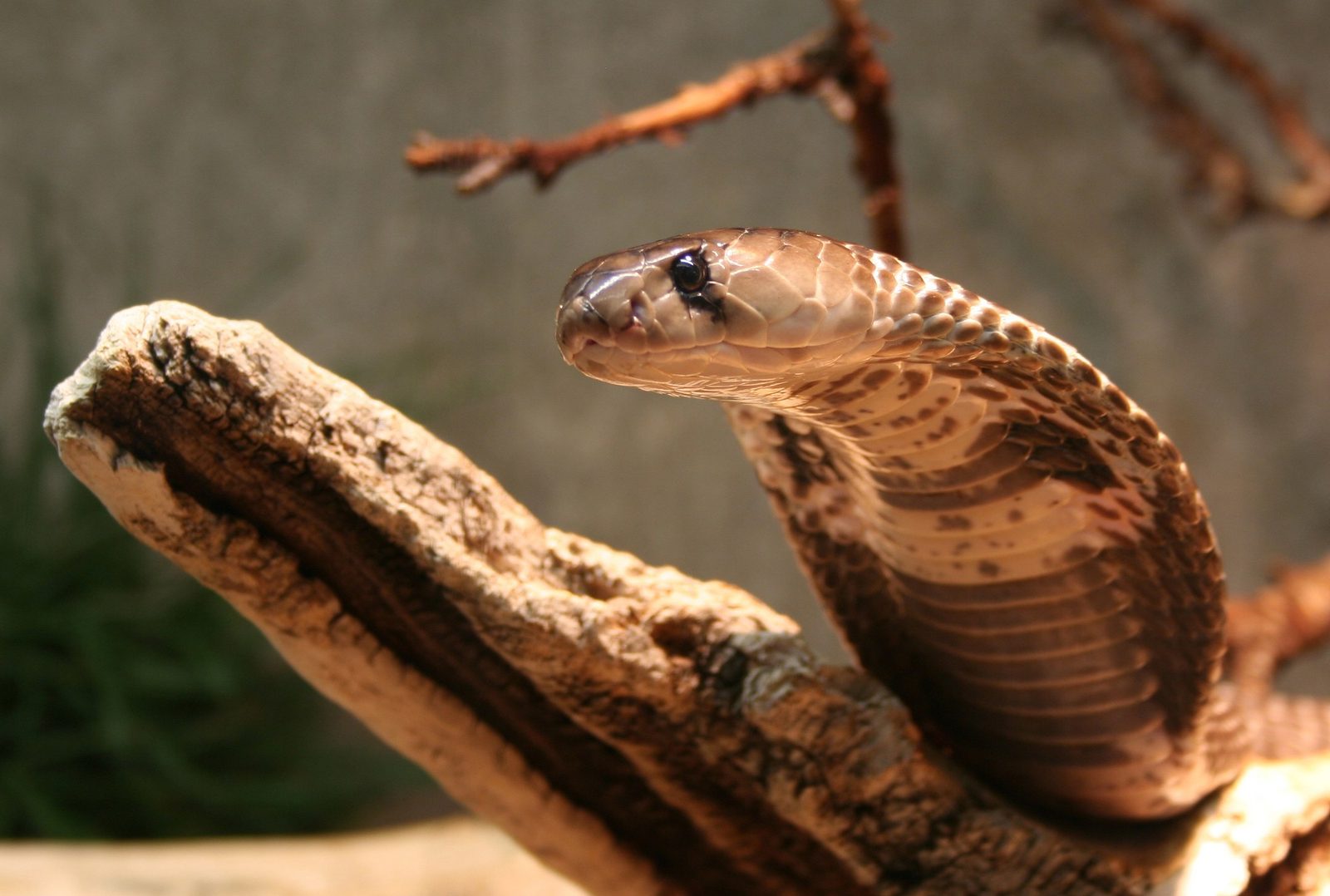
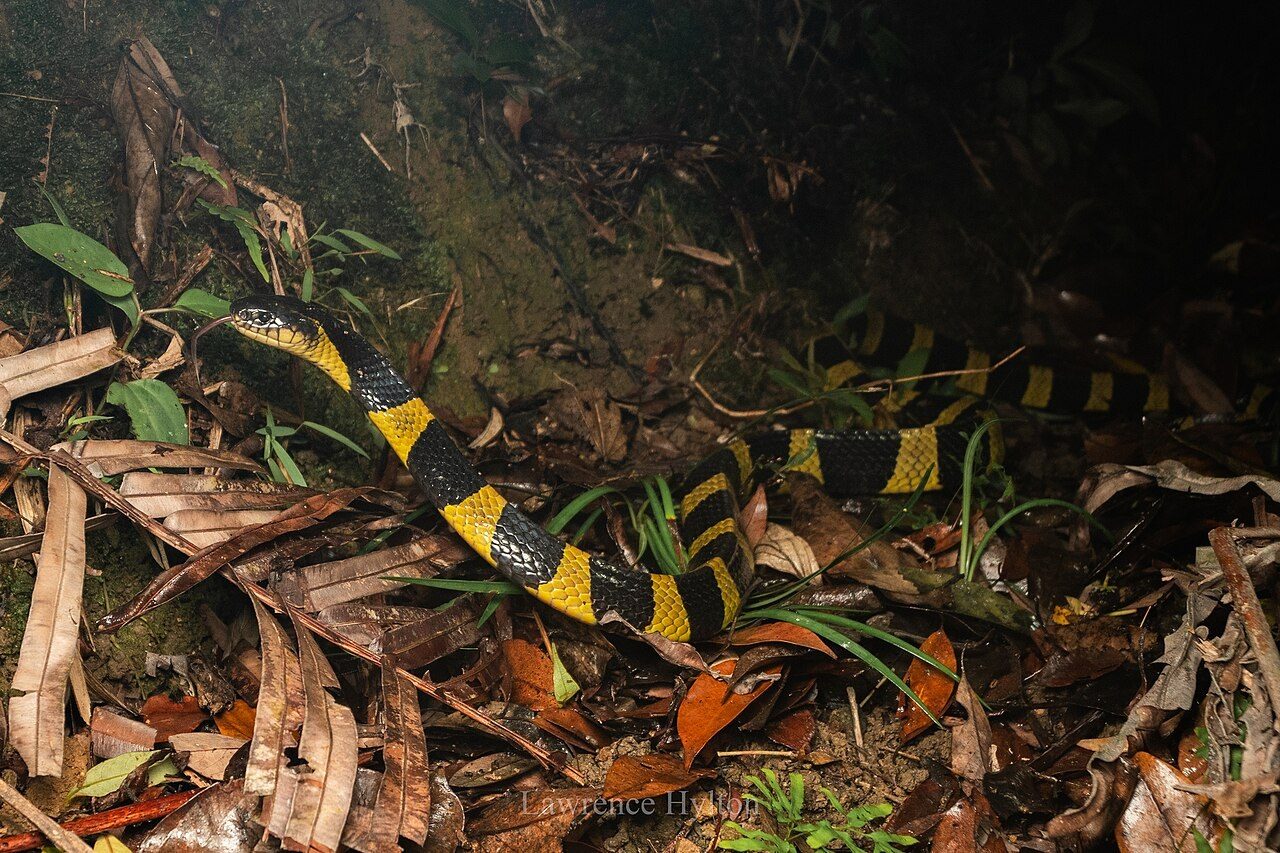
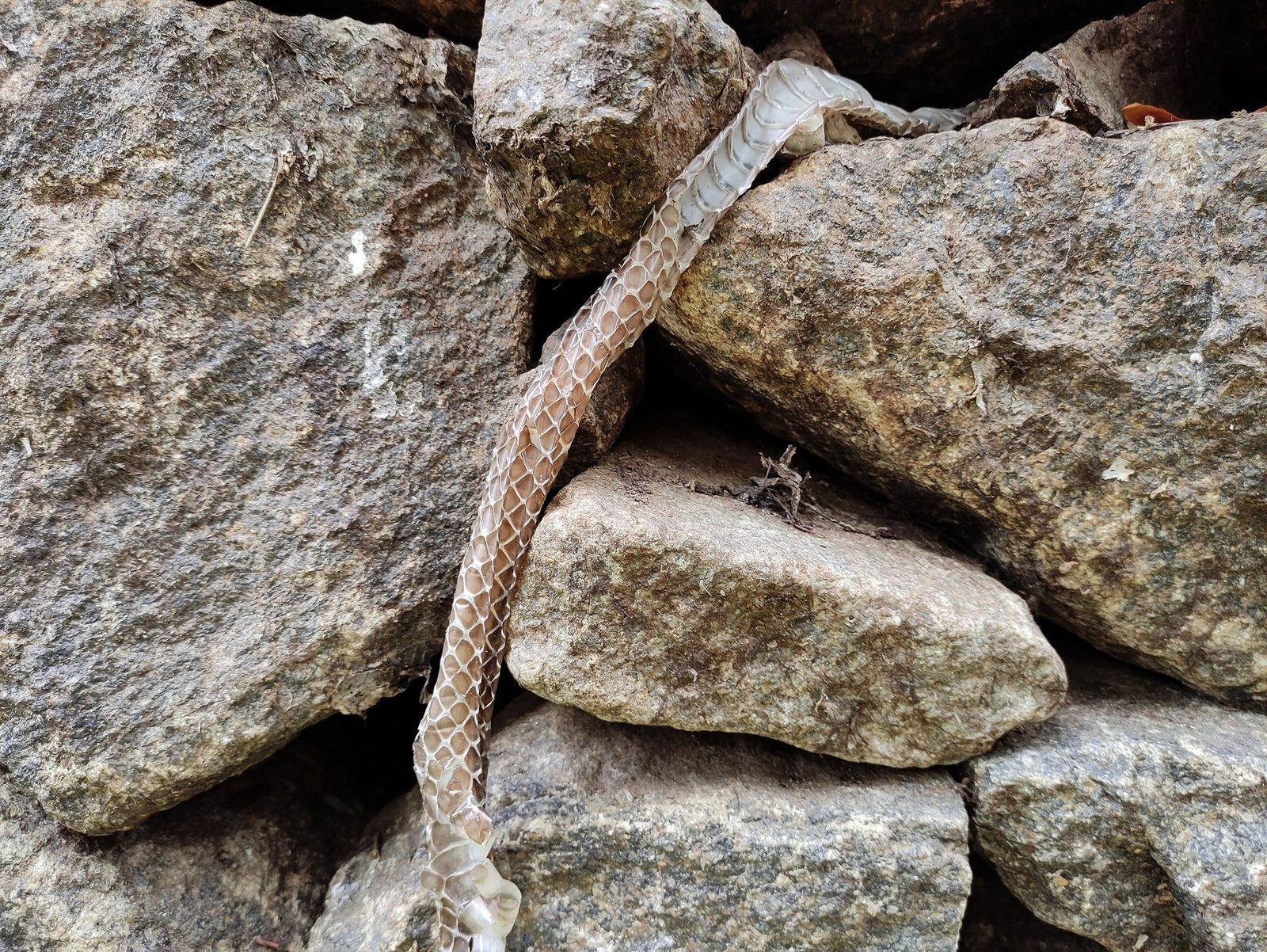 every scale outlined
Side by side
| Amphibia | Reptilia | |
|---|---|---|
| Habitat | Water and land | Mostly land |
| Skin | Moist, no scales | Dry, cornified, with scales or scutes |
| Breathing | Gills, lungs, skin | Lungs |
| Heart | 3 chambers | Usually 3; crocodile 4 |
| Ear | Tympanum | Tympanum, no external opening |
| Fertilisation | External | Internal |
| Development | Indirect (tadpole) | Direct |
| Remember | Rana, Bufo, Hyla, Ichthyophis | Chelone, Calotes, Hemidactylus, Naja |
Don't mix these up
- "All reptiles have a three-chambered heart" is false: crocodiles have four chambers.
- Chelone is a turtle and Testudo a tortoise. Both are cold-blooded; neither is a homeotherm.
- Ichthyophis looks like a snake but is an amphibian (moist skin, no scales on the surface).
- Amphibians: external fertilisation, indirect development. Reptiles: internal fertilisation, direct development.
Just remember
The genera and the counts are memory work. The names help:
- Amphibians: Bufo (toad), Rana (frog), Hyla (tree frog), Salamandra, Ichthyophis (limbless)
- Rana and Bufo are simply Latin for frog and toad. Hyl- is Greek for forest: the tree frog. Ichthy-ophis means "fish-snake": an amphibian that looks like neither fish nor frog.
- Reptiles: Chelone, Testudo, Chameleon, Calotes, Hemidactylus, Crocodilus, Alligator
- Chelone (Greek) and Testudo (Latin) both mean tortoise: the one with the C goes in the sea (turtle), the T on land. Hemi-dactylus: "half-finger", the gecko's split toe pads that stick to your wall. Calotes is the garden lizard that nods.
- Poisonous snakes: Naja (cobra), Bungarus (krait), Vipera (viper)
- Naja comes from the Sanskrit naga, snake. Vipera from Latin for "bearing live young", as many vipers do.
- Hearts: amphibians 3, reptiles 3, crocodile 4. Fertilisation: amphibians external, reptiles internal
- "Croc four, the rest three". Frogs mate in water and let eggs and sperm meet outside; reptiles must fertilise inside before the shell forms (deep dive).
- Tympanum
- An eardrum on the surface of the head.
- Cloaca
- One shared chamber where gut, urinary and reproductive tracts open.
- Cornified
- Hardened with keratin, like your nails.
- Scutes
- Large, thick horny plates, as on a crocodile or turtle.
- Skin cast
- The old skin a snake or lizard sheds in one piece.
- Poikilotherm
- An animal whose body temperature changes with its surroundings.
Words to know
Which reptile has a four-chambered heart?
- Naja
- Crocodilus
- Calotes
- Chelone
A frog can still take in oxygen while buried in mud with its lungs not working. How?
- Through its moist skin
- Through its cloaca
- Through its tympanum
Which pair is correct?
- Hemidactylus: garden lizard
- Testudo: turtle
- Hyla: tree frog
- Ichthyophis: snake
Deep dive · optional
How did vertebrates leave the water?
What keeps a frog near water, the two inventions that freed reptiles, the fish with a neck that showed how legs began, and a frog from Kerala that turned out to be a family of its own. The exam won't ask, but it is the story behind every row of the table.
The roots
- Why must most amphibians return to water?Because two things in their life dry out on land. Their eggs have only a jelly coat, no shell, and their tadpoles breathe with gills. So frogs lay eggs in water, and fertilisation can happen outside the body there.
- Why is the frog's skin moist and scaleless?Because it breathes through it. Oxygen can pass through thin, wet skin. But the same thin skin lets water out, so on a hot dry day a frog loses water fast, and a small frog fastest of all (widget below).
- How did reptiles escape?With two inventions. Skin hardened with keratin, dry and scaly, which stops most water loss (so all breathing moves to the lungs). And an egg with a shell and membranes inside it that keep the embryo in its own private pond. With that egg, the young can grow into a small adult inside it: direct development, on land.
- Then why must reptiles fertilise inside the body?Because the shell is laid down around the egg before it leaves the mother. Sperm can't get through a shell, so they must reach the egg inside her, first.
- And where did legs come from?From fins with bones in them. Lobe-finned fishes (the coelacanth of concept 9 is a living one) had fins built on a few stout bones, the same plan as an arm. In shallow, weedy water, fins that could prop the body up and push off the bottom were useful long before there was any land to walk on.
The story
See it
The pictures above show the land kit: the gecko's dry scales, the crocodile's scutes, a shed skin cast with every scale outlined. Compare the frog's wet skin. And the Tiktaalik fossil and painting show the first steps.
Solve it
Solve it
A 2 cm frog and a 10 cm frog have the same shape. How many times more skin does the small one have for each gram of its body? If both lose water through their skin at the same rate per square centimetre, how much faster does the small one dry out, as a share of its water?
Answer
Solve it
About 58,000 people a year die of snakebite in India. How many is that a day? If every death could be prevented by reaching antivenom within a few hours, what single change would save the most lives?
Answer
Why do reptiles need internal fertilisation?
- They live far from water
- The eggshell forms before laying, so sperm must reach the egg inside the mother
- They give birth to live young
Connect it
Connect it
- The frog, Ch 7. Rana in full: skin breathing, cloaca and three-chambered heart: meet the frog.
- Lobe-finned fishes, concept 9. The coelacanth story: jawless vertebrates and fishes.
- Fish to tetrapod, Class 12. The history of life.
- Western Ghats, Class 12. One of India's biodiversity hotspots, full of frogs found nowhere else: India's megadiversity.
- Hearts, concept 10 and Ch 15. Three chambers and four: the heart widget above, and double circulation.
Still confused?
Crocodiles have a four-chambered heart. Why aren't they warm-blooded?
A four-chambered heart and warm blood are separate things. Warm-bloodedness needs a high rate of burning food to make heat; crocodiles don't do that. Their heart also has a special opening (the foramen of Panizza) between the two arteries leaving it, and a valve that can send blood past the lungs, for example when diving. What that is for is still debated.
Is Ichthyophis a snake or a worm?
Neither: it is an amphibian, a caecilian, with moist skin and no limbs. The female coils round her eggs and guards them in damp soil.
Sources
- Daeschler, Shubin and Jenkins (2006), A Devonian tetrapod-like fish, Nature 440
- AmphibiaWeb: Nasikabatrachus sahyadrensis (Biju and Bossuyt, Nature 2003)
- Suraweera et al. (2020), Trends in snakebite deaths in India, eLife
- Eme et al. (2009), the crocodile's cardiac shunt, Journal of Experimental Biology
Picture and video credits
Show 16 picture and video credits
- rana-green-frog.jpg: Matt Reinbold from USA, CC BY-SA 2.0
- bufo-toad.jpg: R.S. Vargovitsh, CC BY 4.0
- hyla-tree-frog.jpg: Alan Yip Wah, CC BY-SA 3.0
- fire-salamander.jpg: Bouke ten Cate, CC BY 4.0
- ichthyophis-tamil-nadu.jpg: Paulmathi Vinod, CC BY 4.0
- tadpole-feeding.mp4: The Nature Box, CC BY-SA 4.0
- calotes-garden-lizard.jpg: Charles J. Sharp, CC BY-SA 4.0
- green-turtle.jpg: P.Lindgren, CC BY-SA 3.0
- chameleon.jpg: Mkrc85, CC BY-SA 4.0
- house-gecko-bangalore.jpg: Firos AK, CC BY-SA 4.0
- mugger-crocodile.jpg: Charles J. Sharp, CC BY-SA 4.0
- indian-cobra.jpg: Holger Krisp, CC BY 3.0
- banded-krait.jpg: Lawrence Hylton, CC BY 4.0
- snake-skin-cast.jpg: Vis M, CC BY-SA 4.0
- tiktaalik-fossil.jpg: James St. John, CC BY 2.0
- purple-frog.jpg: Christopher, CC BY 4.0


