- 1. How do we sort animals?
- 2. Symmetry, germ layers and the coelom
- 3. Segments, the notochord, and the map of all phyla
- 4. Sponges, cnidarians and comb jellies
- 5. Flatworms, roundworms and segmented worms
- 6. Arthropods and molluscs: the two biggest phyla
- 7. Echinoderms and hemichordates
- 8. What makes a chordate?
- 9. Jawless vertebrates and fishes
- 10. Amphibians and reptiles
- 11. Birds and mammals
- Review
1 of 11·NCERT §4.1 · §4.1.1·pp. 37–38·4 min
How do we sort animals?
The big ideaAnimals look wildly different on the outside, but they can be sorted by a few deep features of how their bodies are built, starting with how their cells are organised.
In simple words
A sponge, an earthworm, a crow and you are all animals. To put them in order, we don't look at colour or size. We ask simple questions about the inside of the body. Are the cells just stuck together in a loose heap, or do they work as teams? Do the teams make body parts? Do the body parts work together in big groups? Does food go in one hole and out the same hole, or in at one end and out at the other?
More than a million kinds of animals have been described so far, and new ones are found every year. Without a system, a list that long would be useless. Classification, sorting living things into groups by shared features, does two jobs: it makes the huge variety easier to study, and it gives every newly found species a proper place to sit.
The basis of classification
Animals differ in shape and form, but some fundamental features keep turning up across many of them. These features are the basis of classification:
- how the cells are arranged (the level of organisation);
- the symmetry of the body;
- the number of germ layers in the embryo;
- whether there is a body cavity, the coelom, and what kind;
- whether the body is in segments;
- whether there is a notochord;
- the patterns of the digestive, circulatory and reproductive systems.
This concept covers the first one. The next two cover the rest.
Levels of organisation
All animals are multicellular, but their cells are not all organised the same way. There are four levels, each built on the one before:
| Level | What it means | Who has it |
|---|---|---|
| Cellular level | Cells form a loose aggregate (a heap of cells). Cells share some work, but they don't form tissues. | Sponges (Porifera) |
| Tissue level | Cells that do the same job are grouped into tissues. | Coelenterates (Cnidaria), Ctenophores |
| Organ level | Tissues are grouped into organs, each with its own special job. | Platyhelminthes (flatworms) |
| Organ system level | Organs work together as organ systems, each doing one body function (digestion, breathing...). | Aschelminthes, Annelids, Arthropods, Molluscs, Echinoderms, Hemichordates, Chordates |
Sharing the work among cells is called division of labour. Even in a sponge there is a little of it; it grows with every level.
One animal for each level. Look for what each one has that the one before it lacks.
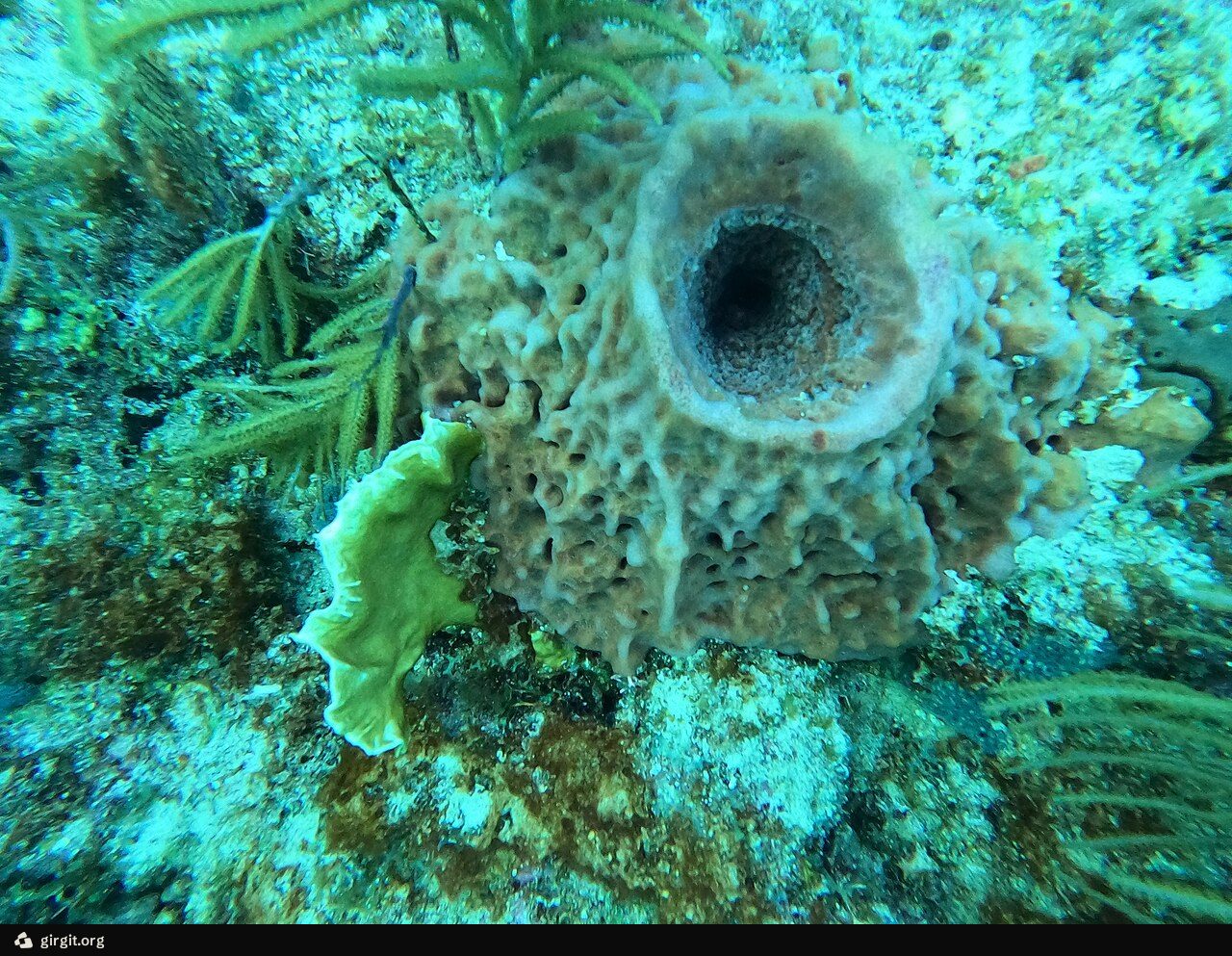 osculum (water out)wall full of tiny pores
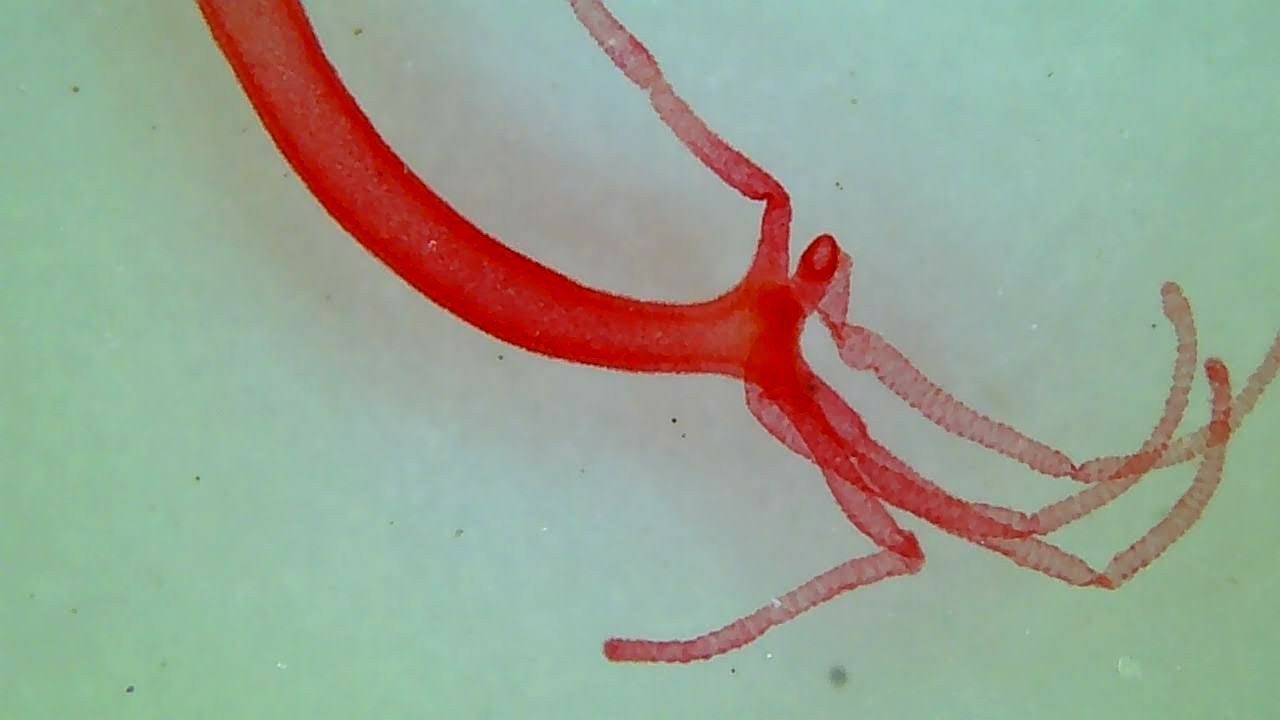 tentaclesmouthbody column
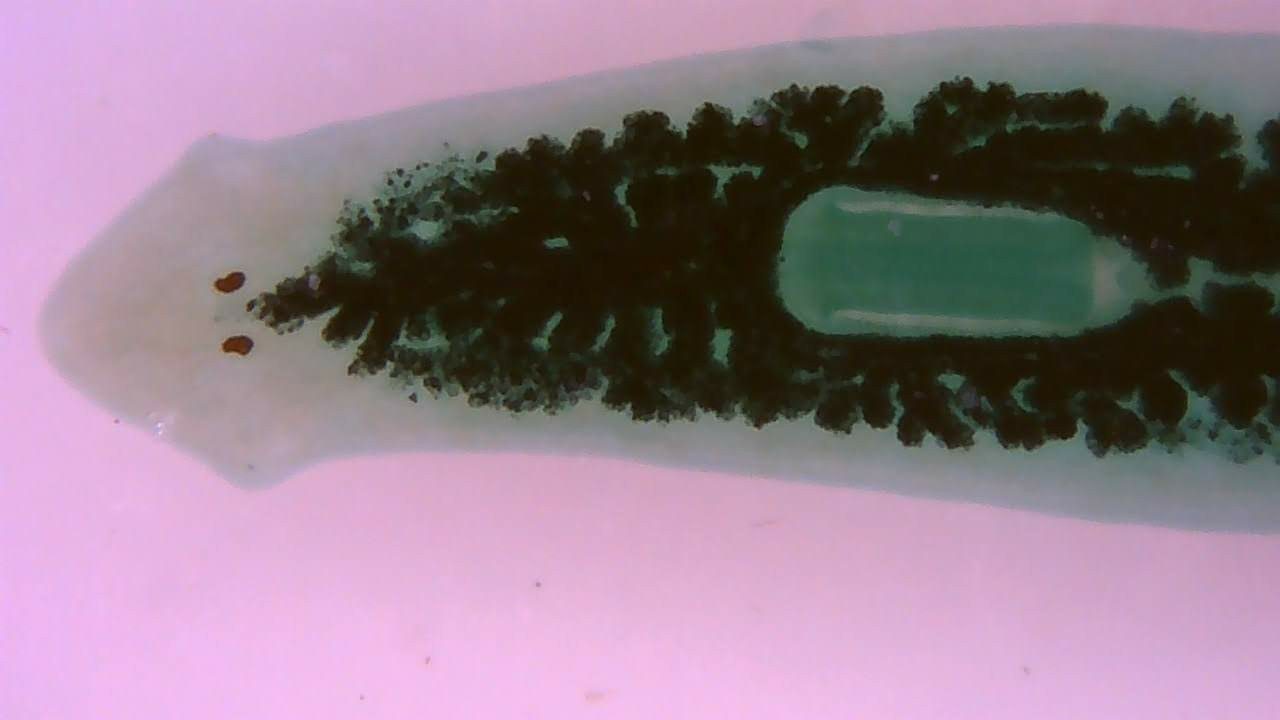 eyespotspharynxbranched gut
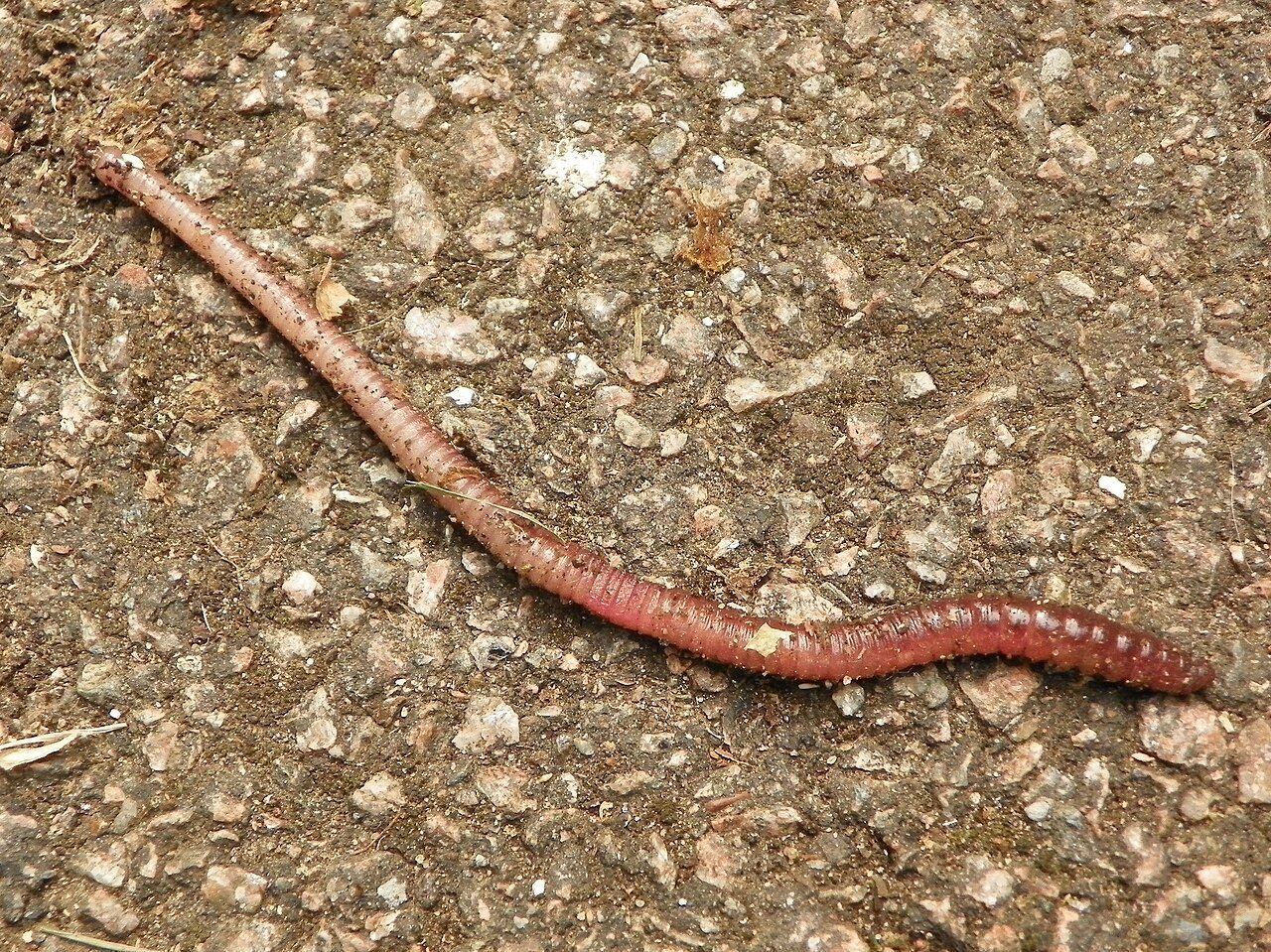 ring-like segments
Sort the phyla by level of organisation.
Two kinds of digestive system
Even at the organ system level, the systems vary. Take the gut:
- Incomplete digestive system: only one opening to the outside. The same hole is both mouth and anus. Flatworms (Platyhelminthes) have this; so do cnidarians and ctenophores.
- Complete digestive system: two openings, a mouth and a separate anus. Food moves one way, like on a conveyor belt. Roundworms onwards have this.
Try it: feed a gut with one opening and a gut with two, and count the meals each can take.
Two kinds of circulatory system
- Open circulatory system: the heart pumps blood out into open spaces, and cells and tissues are bathed directly in it. Example: arthropods such as a cockroach.
- Closed circulatory system: blood always stays inside a network of vessels of different widths: arteries, veins and capillaries. Example: earthworms and all chordates, including you.
Remember
- Cellular: sponges. Tissue: cnidarians and ctenophores. Organ: flatworms. Organ system: the rest.
- One opening = incomplete gut (flatworms). Two openings = complete gut.
- Open circulation: blood bathes the tissues. Closed: blood stays in vessels.
Just remember
Which phylum sits at which level, and which animals are "open", are facts to learn. The hooks:
- Cellular: sponges. Tissue: cnidarians and ctenophores. Organ: flatworms. Organ system: the rest.
- Climb it like a building: Sponge on the ground floor, the two jellies (jellyfish and comb jelly) on the first, the flat worm on the second, and every other phylum in the penthouse. Count the steps up with "Cells, Tissues, Organs, Systems".
- One opening (incomplete gut): flatworms, cnidarians, ctenophores
- The same three that sit below the organ-system floor. From roundworms upward, everybody has a separate exit.
- Open circulation: arthropods (cockroach). Closed: annelids (earthworm) and chordates
- "Open house cockroach": its blood sloshes around the rooms. The earthworm and you keep blood in closed pipes.
- Classification
- Sorting living things into groups by features they share.
- Cellular level
- Cells in a loose heap, with no tissues (sponges).
- Tissue
- A group of cells doing the same job.
- Organ system
- Several organs working together on one body function.
- Incomplete digestive system
- A gut with one opening that is both mouth and anus.
- Open circulatory system
- Blood leaves the vessels and bathes the tissues directly.
Words to know
A newly found animal has cells grouped into tissues, but no organs. Which group is it most likely to belong with?
- Sponges
- Coelenterates
- Flatworms
- Annelids
In a flatworm, undigested food leaves the body through
- a separate anus at the hind end
- the same opening it came in through
- its flame cells
In which animal are the tissues directly bathed in blood?
- A human
- An earthworm
- A cockroach
Deep dive · optional
Why do big animals need organs and pipes?
The levels of organisation, the gut and the blood system are all answers to one problem: getting things in and out of every cell. Here is the problem, the people who first saw the answer, and a number that surprises everyone. Not for the exam, but it makes the table make sense.
The roots: diffusion is fast only over tiny distances
- Why can a sponge get by with a loose heap of cells?Because every one of its cells sits next to water. Water flows through its pores and canals, so food and oxygen reach each cell directly, with no need for teams of cells to fetch and carry.
- Why can't a bigger, thicker animal do the same?Because its inner cells are far from the surface, and the only way oxygen moves on its own is diffusion: molecules wandering at random, spreading from where there are more to where there are fewer.
- Why is distance such a problem for diffusion?Because random wandering is slow over long distances. The time to diffuse a distance grows with the square of the distance. Ten times deeper takes a hundred times longer; a hundred times deeper takes ten thousand times longer.
- Why the square?A wandering molecule takes many small steps in random directions. Steps back cancel steps forward, so after N steps it has usually got only about √N steps away. To get twice as far it needs four times the steps. This is plain arithmetic about randomness, true for a perfume in a room or oxygen in a worm.
Put numbers on it. Oxygen in water diffuses about 0.1 mm in 2.5 seconds, but 1 cm in about seven hours. So any animal more than a millimetre or two thick has two choices: stay thin and flat (like a flatworm, or a sponge riddled with water channels), or build a delivery system. That is what the higher levels of organisation are. Tissues and organs share the work; a complete gut works like a conveyor belt, taking food in at one end while waste leaves at the other; and a circulatory system carries oxygen and food by bulk flow, pumped, so that diffusion only has to cover the last tiny gap from a capillary to a cell.
Open and closed systems both solve this, in different ways. In a closed system (earthworm, you) blood is kept in vessels under pressure and the finest vessels, the capillaries, come within a hair's breadth of every cell. In most insects the open system works because blood is not the main oxygen carrier at all: a separate set of air tubes, the tracheae, takes air straight to the tissues, and the blood mainly carries food and wastes. (A few insects, such as the red "bloodworm" larvae of midges, do carry oxygen in their blood with haemoglobin.)
The story
See it
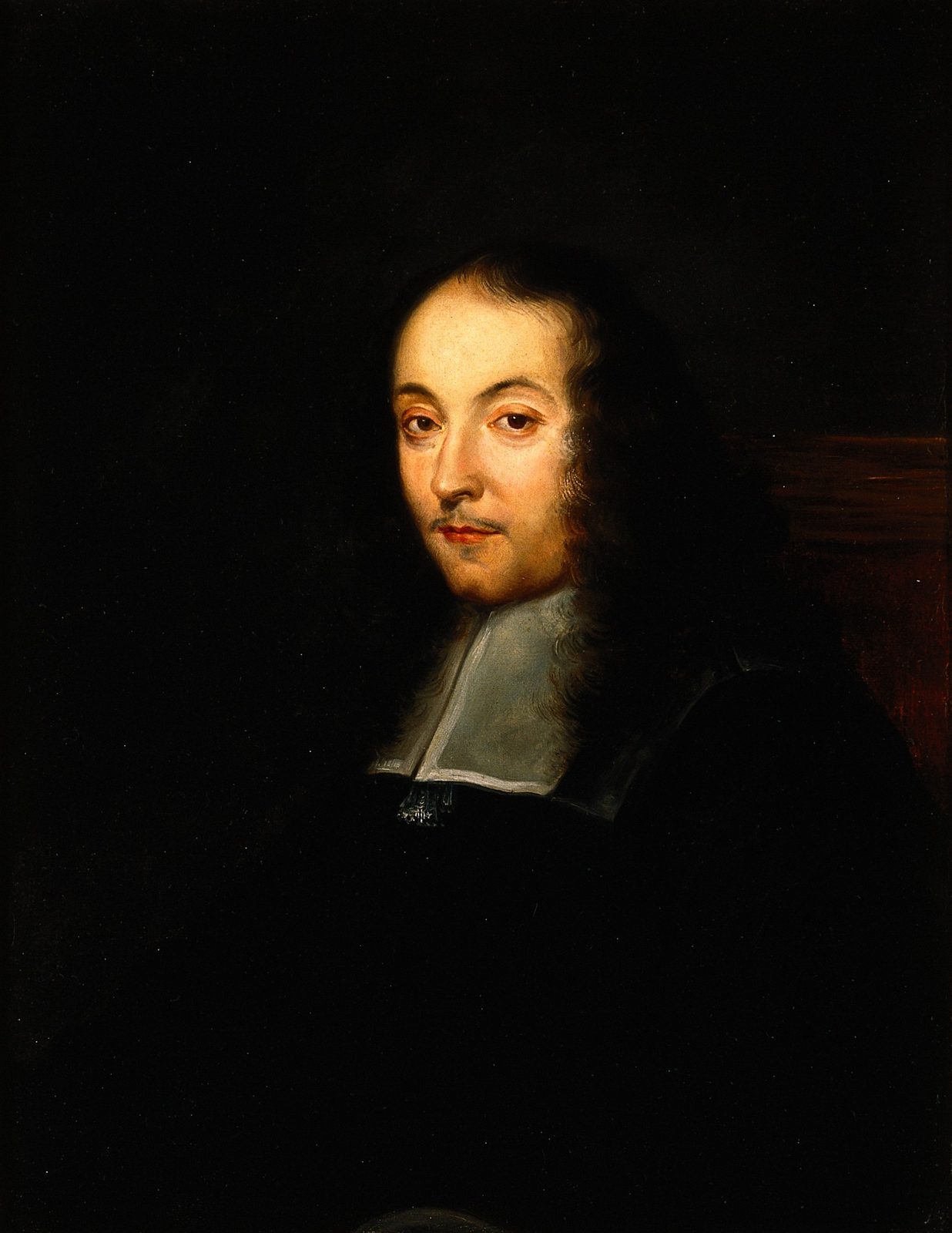
Malpighi, who closed Harvey's gap with a microscope, is below. Use the widget above to see why a sponge's open canals, a flatworm's flat body and your capillaries are three answers to the same arithmetic.
Solve it
Solve it
Two imaginary worms with no blood vessels live in the same pond. One is flat, 0.4 mm thick. The other is round, 4 mm across. Using "0.1 mm takes about 2.5 s", how long does oxygen take to reach the middle of each? Which body plan can work without a circulatory system?
Hint
Answer
Solve it
Harvey's argument in modern numbers: a resting human heart pumps about 70 mL of blood per beat at about 72 beats a minute. How much blood is that in an hour? An adult has about 5 litres of blood. What does that tell you?
Answer
Why can a cockroach manage with an open circulatory system, where blood just bathes the tissues?
- Its blood flows faster than ours
- Air tubes (tracheae) bring oxygen straight to its tissues
- It is thin enough for oxygen to diffuse in from the skin
Connect it
Connect it
- Cell size, Ch 8. The same arithmetic keeps cells small: see cell sizes and shapes.
- Tissues, Ch 7. What the tissue and organ levels are made of: how a body shares work.
- Your circulation, Ch 15. Harvey's loop, made double: double circulation.
- Gas exchange, Ch 14. Diffusion over the last tiny gap, in your lungs: exchange of gases.
- How many species, Class 12. The counting problem: how many species are there?
Still confused?
Is "organ level" the same as "organ system level"?
No. At the organ level (flatworms), tissues form organs, but the organs don't yet form big teams for whole jobs like circulation. At the organ system level, organs work together in systems: a gut from mouth to anus, a heart with vessels, and so on. That is why flatworms have no circulatory system and an incomplete gut.
If sponges have no tissues, how are they animals at all?
They are multicellular, they eat other living things instead of making food, their cells have no walls, and their cells do share work (collar cells pump and catch food, others build the skeleton). What they lack is cells organised into true tissues. Being at the bottom of the ladder doesn't make them not animals.
Sources
- Hektoen International: William Harvey and the circulation
- Encyclopaedia Britannica (1911): Malpighi
- NC State University, General Entomology: the insect circulatory system
- Engineering ToolBox: diffusion coefficients of gases in water
- Mora et al. (2011), How many species are there on Earth and in the ocean? PLoS Biology
- Down To Earth (2026): ZSI Animal Discoveries 2025
- 10th edition of Systema Naturae
Picture and video credits
Show 4 picture and video credits
- hydra-tentacles.jpg: The Other 95%, CC BY-SA 4.0
- planarian-gut-pharynx.jpg: The Other 95%, CC BY-SA 4.0
- earthworm-segments.jpg: anemoneprojectors, CC BY-SA 2.0
- malpighi-portrait.jpg: Wellcome Collection, CC BY 4.0


