- 1. How do we sort animals?
- 2. Symmetry, germ layers and the coelom
- 3. Segments, the notochord, and the map of all phyla
- 4. Sponges, cnidarians and comb jellies
- 5. Flatworms, roundworms and segmented worms
- 6. Arthropods and molluscs: the two biggest phyla
- 7. Echinoderms and hemichordates
- 8. What makes a chordate?
- 9. Jawless vertebrates and fishes
- 10. Amphibians and reptiles
- 11. Birds and mammals
- Review
9 of 11·NCERT §4.2.11.1 · §4.2.11.2 · §4.2.11.3·pp. 47–48·6 min
Jawless vertebrates and fishes
The big ideaThe first vertebrates in the list have no jaws (cyclostomes); then come the fishes, sorted by what their skeleton is made of: cartilage (sharks and rays) or bone (rohu, katla and most fish you know).
In simple words
Some long, slimy, eel-like animals have a round sucking mouth and no jaws at all; they hang on to fish. Then there are real fish. Sharks and rays have a skeleton of soft, bendy gristle, like the tip of your nose, and they must keep swimming or they sink. Most other fish have a skeleton of hard bone, a flap over their gills, and a bag of air inside that lets them float without trying.
Class Cyclostomata: jawless vertebrates
"Cyclostome" means round mouth. These are the only living members of Agnatha.
- All living members are ectoparasites (parasites on the outside of the host) on some fishes.
- Elongated body with 6 to 15 pairs of gill slits for breathing.
- A sucking, circular mouth without jaws.
- No scales and no paired fins.
- Cranium (skull) and vertebral column are cartilaginous.
- Closed circulation.
- Life story: they live in the sea but migrate to fresh water to spawn (lay eggs). Within a few days of spawning, the adults die. The larvae undergo metamorphosis and return to the ocean.
Examples: Petromyzon (lamprey) and Myxine (hagfish).
Look at the mouth first: a round sucking disc ringed with horny teeth, and no jaw to open or shut. The lamprey clamps on, rasps a hole with its tongue and drinks blood and body fluid.
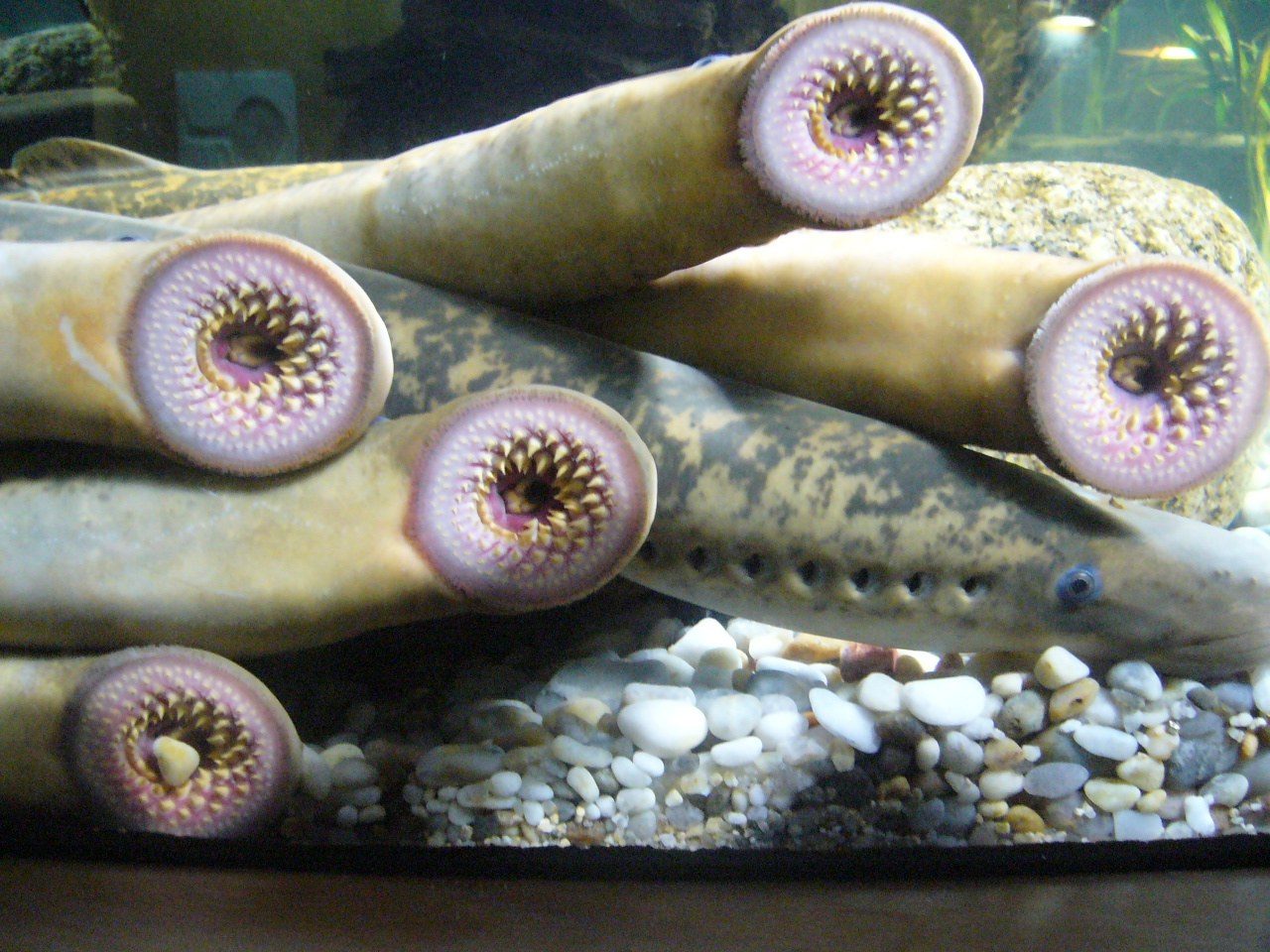 sucking disc, no jawshorny teeth
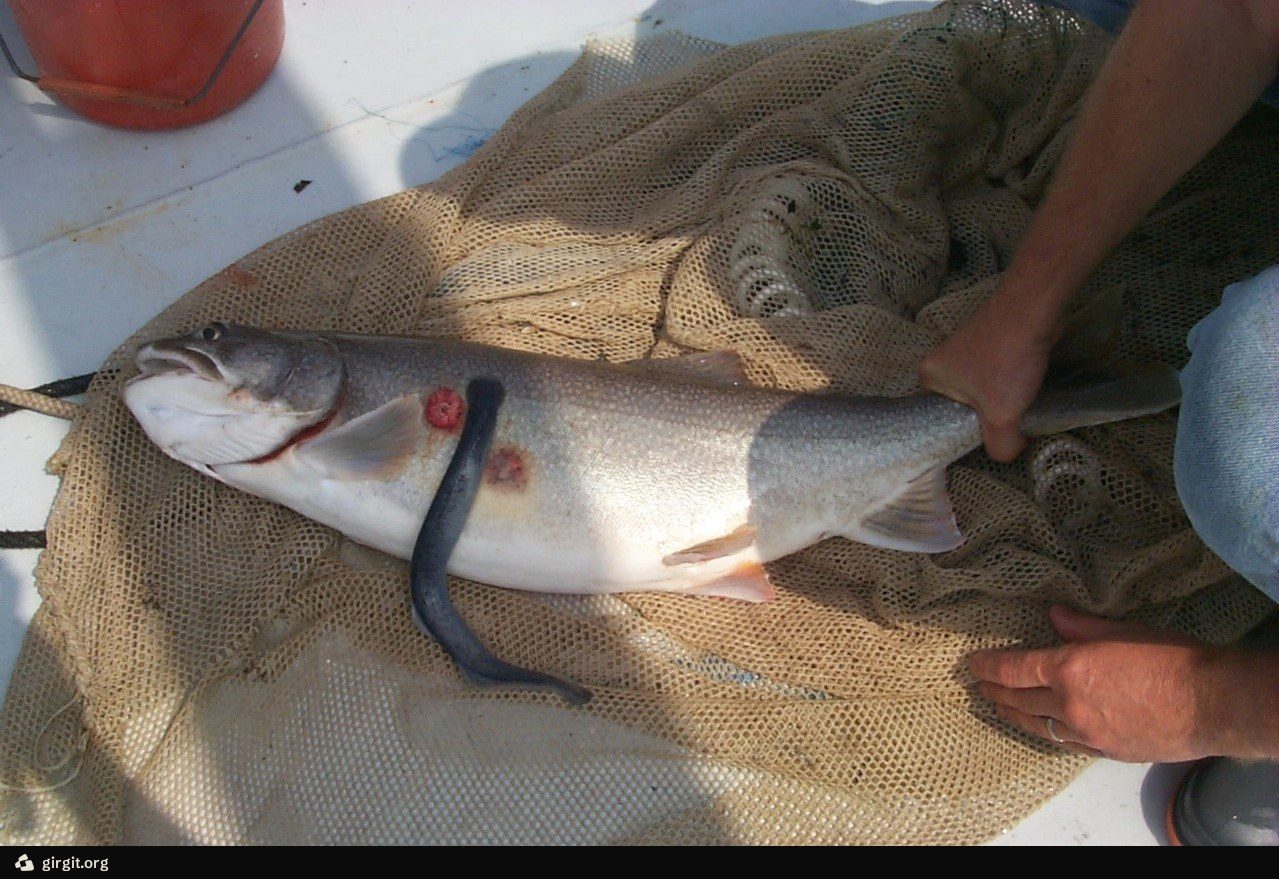 sea lampreylake trout (host)
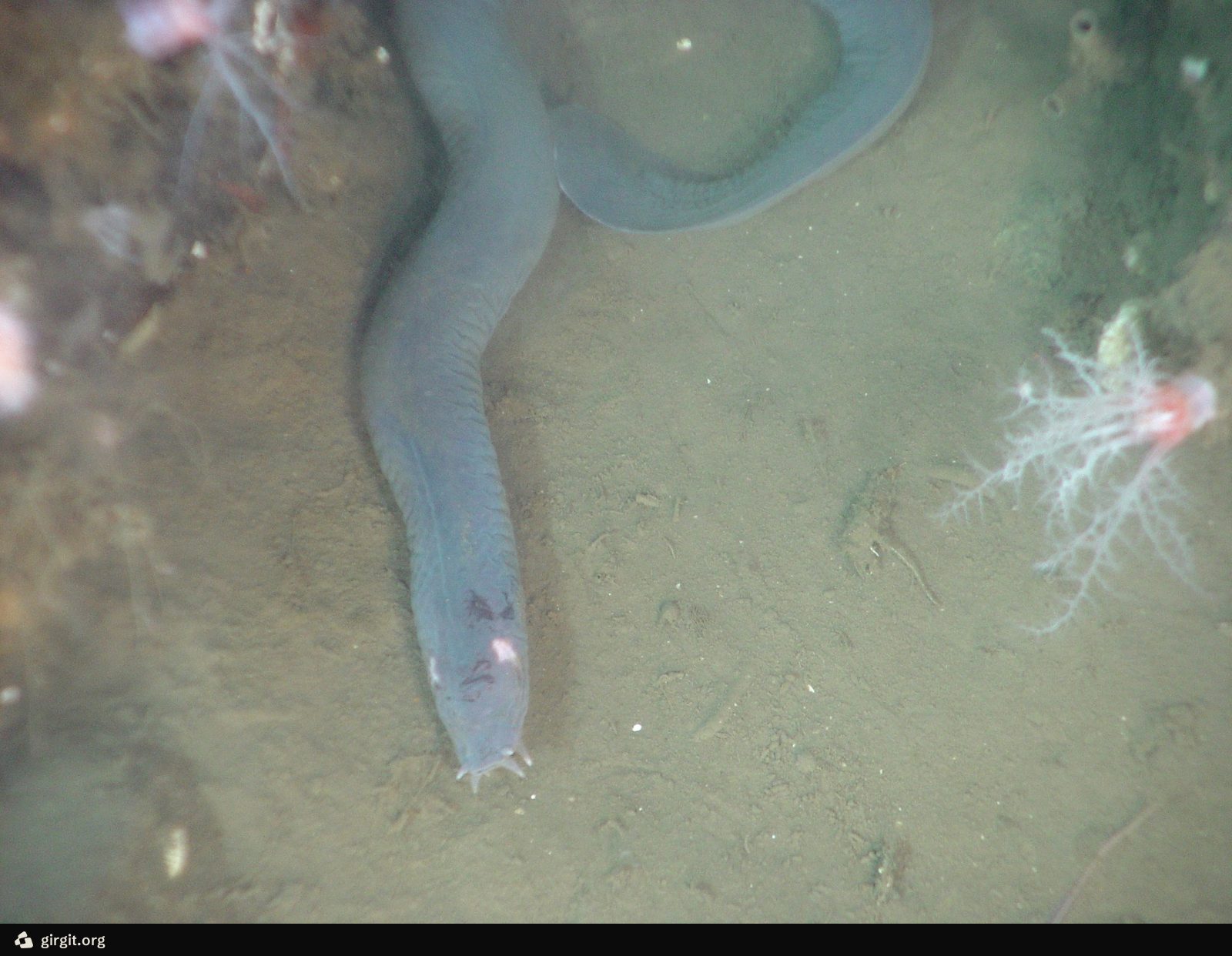 hagfishhead
Class Chondrichthyes: cartilaginous fishes
Chondros means cartilage, ichthys means fish.
- Marine, with a streamlined body and a cartilaginous endoskeleton.
- Mouth on the ventral side (underneath).
- The textbook says the notochord persists throughout life.
- Gill slits are separate and have no operculum (gill cover).
- Tough skin full of tiny placoid scales. The teeth are modified placoid scales, pointing backwards. Jaws are very powerful; they are predaceous (hunters).
- No air bladder, so they must swim constantly to avoid sinking.
- Heart two-chambered: one auricle, one ventricle.
- Some have electric organs (Torpedo, the electric ray); some have a poison sting (Trygon, the stingray).
- Cold-blooded or poikilothermous: they cannot keep their body temperature steady.
- Sexes separate. In males the pelvic fins carry claspers for passing sperm. Fertilisation internal; many are viviparous (giving birth to live young).
Examples: Scoliodon (dogfish), Pristis (sawfish), Carcharodon (great white shark), Trygon (stingray).
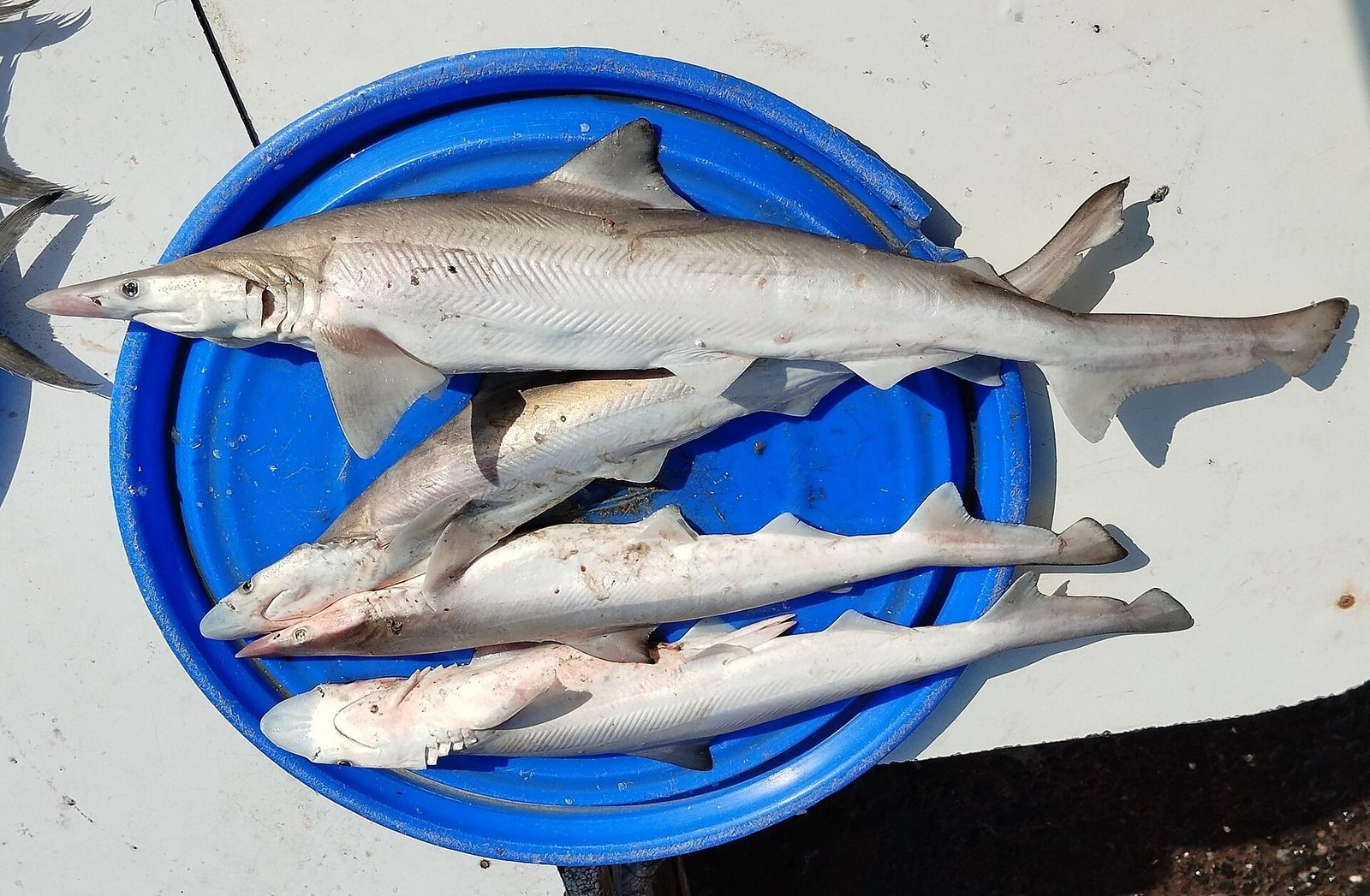 gill slits, no coverpectoral finspade snout
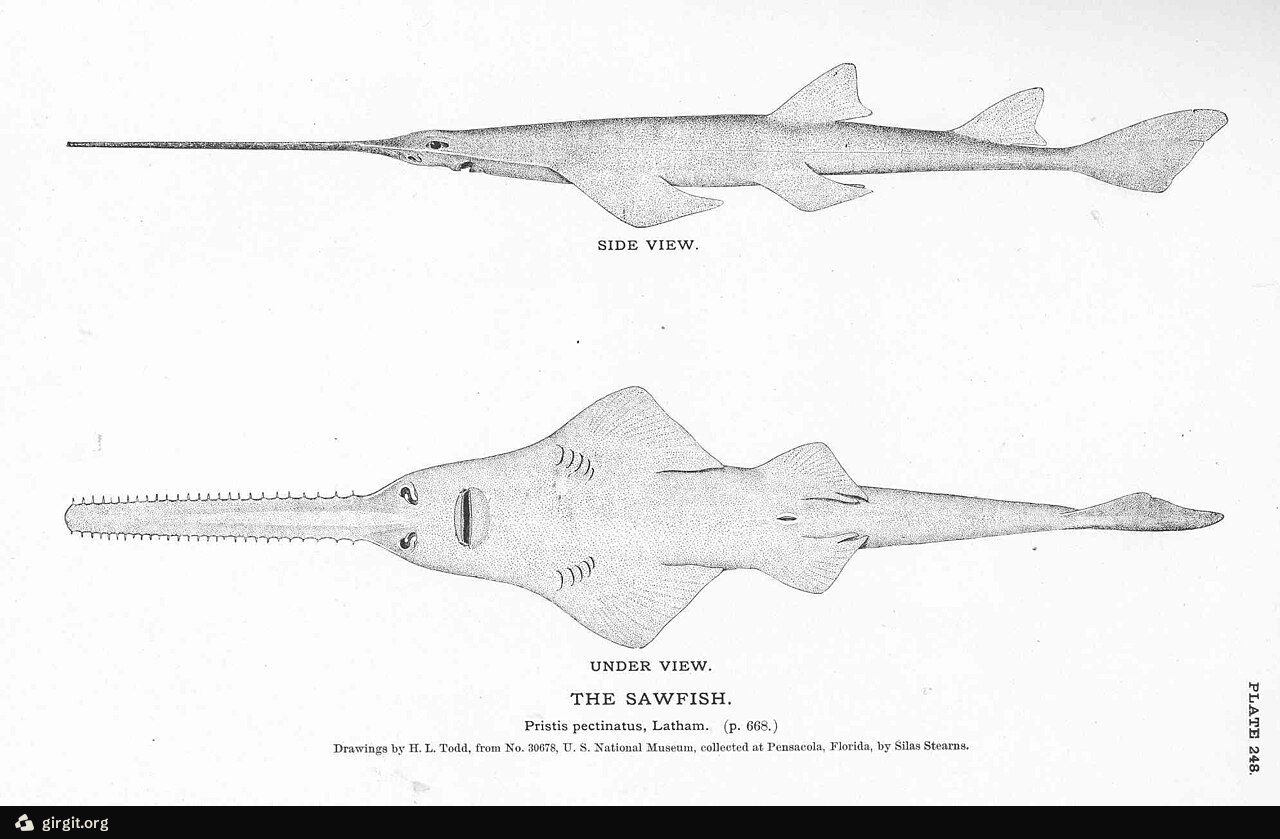 mouth underneathgill slitssawupper tail lobe longer
Run a finger along a shark from head to tail and it feels smooth; run it back and it feels like sandpaper. Those are the placoid scales, each one a tiny tooth pointing backwards.
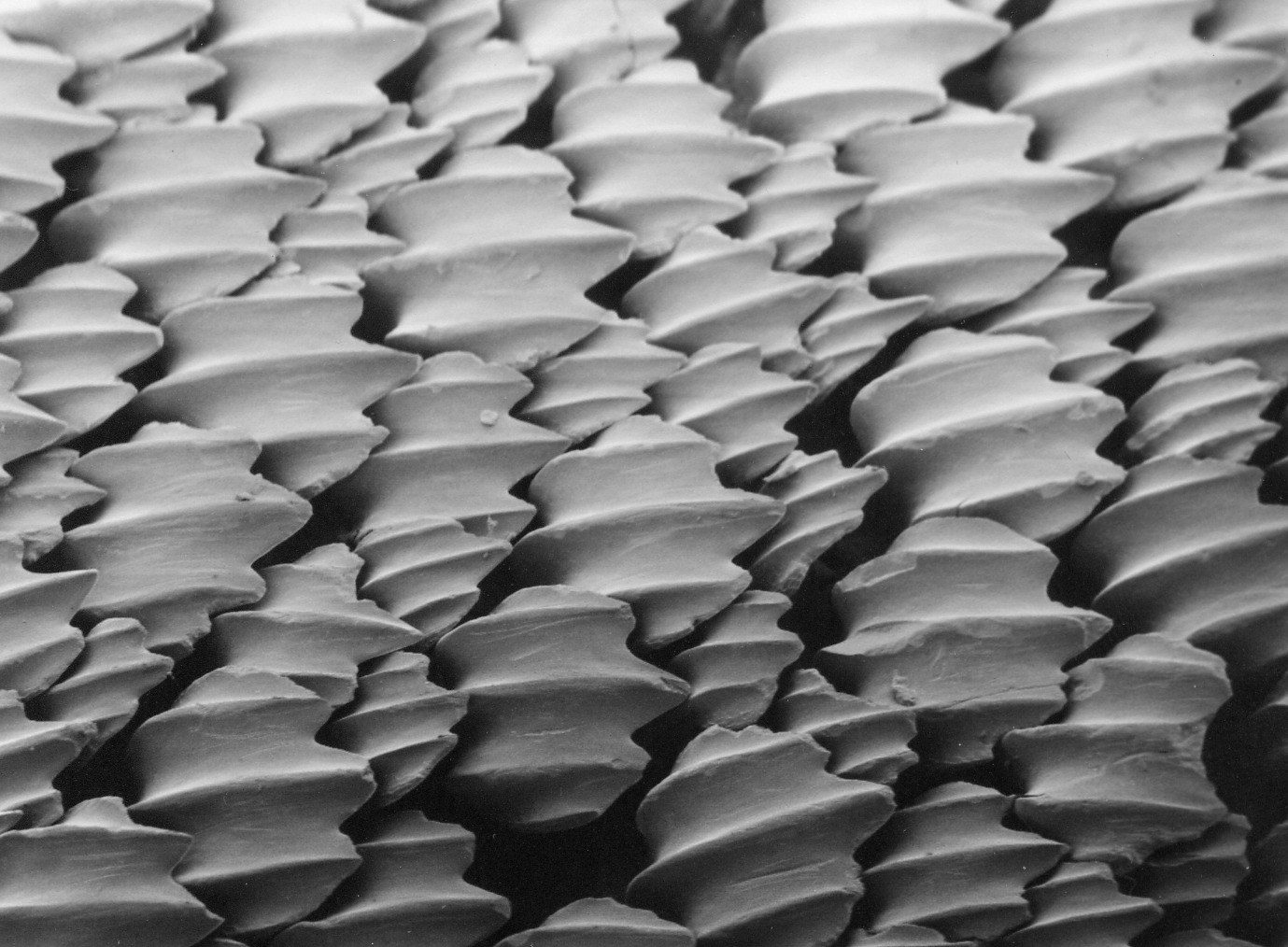 one placoid scaleridges
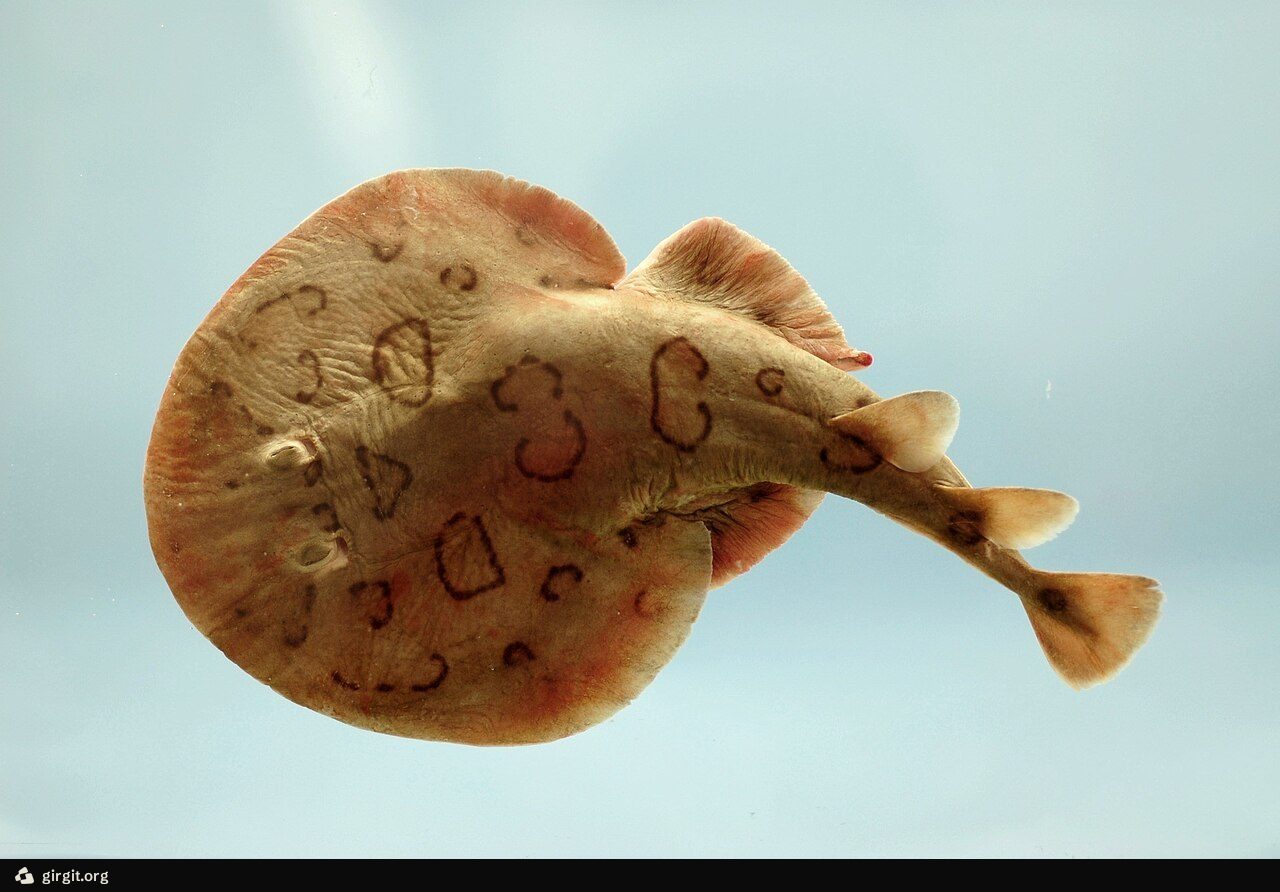 flat disc bodytail
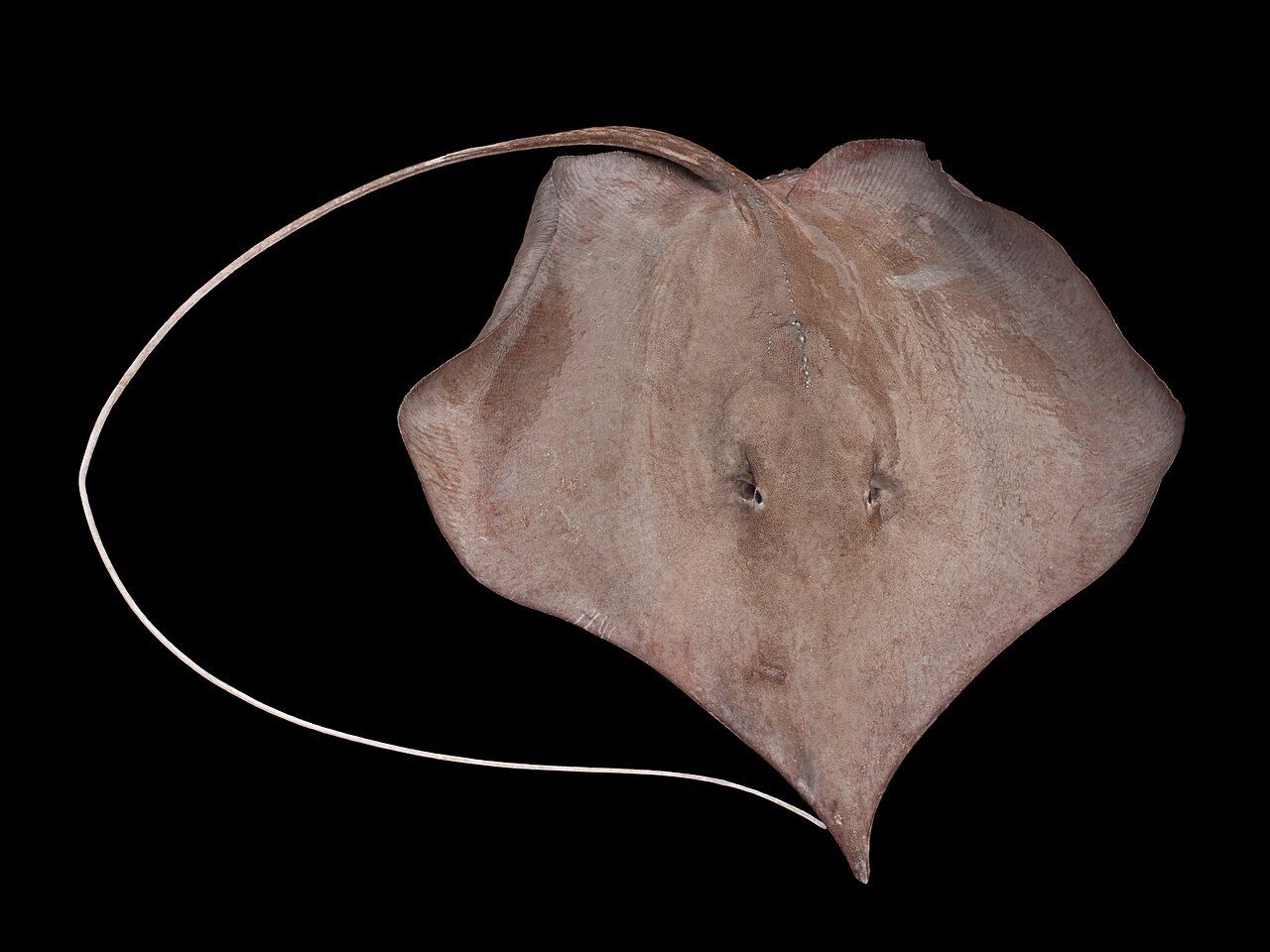 whip-like tailbody flattened into a disc
Try it: give a fish an air bladder and watch whether it sinks, hovers or rises.
Not in the current textbook, but NEET has asked it: sharks have a heterocercal tail fin, in which the upper lobe is longer than the lower one because the backbone runs up into it. Most bony fishes have a tail with two equal lobes.
Class Osteichthyes: bony fishes
Osteon means bone.
- Marine and freshwater, with a bony endoskeleton and streamlined body.
- Mouth mostly terminal (at the front tip).
- Four pairs of gills, covered on each side by an operculum.
- Skin covered in cycloid or ctenoid scales.
- An air bladder regulates buoyancy (how well it floats), so it can hover without swimming.
- Heart two-chambered (one auricle, one ventricle). Cold-blooded.
- Sexes separate. Fertilisation usually external. Mostly oviparous; development direct.
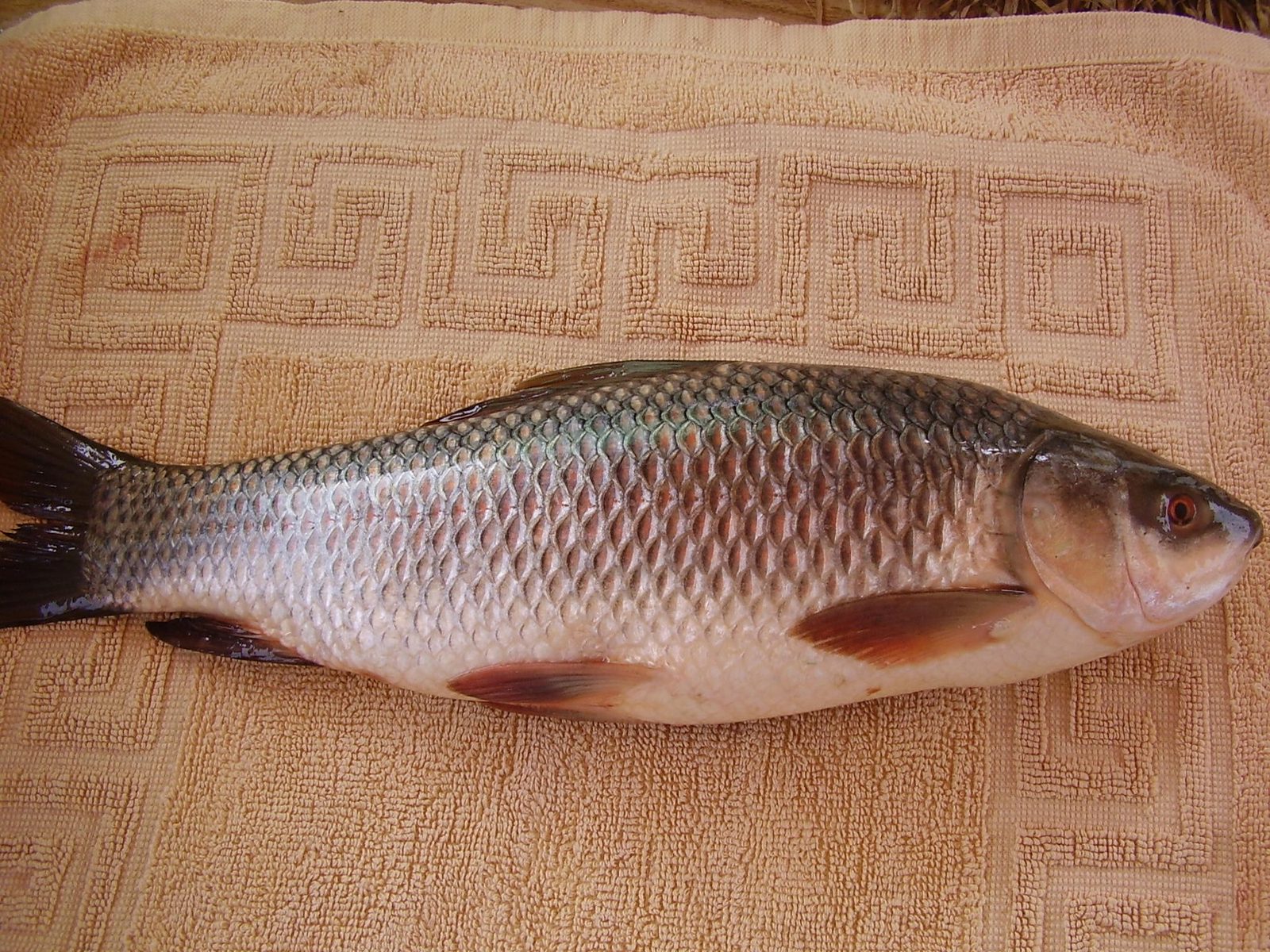 operculum (gill cover)cycloid scalesmouth at the tip
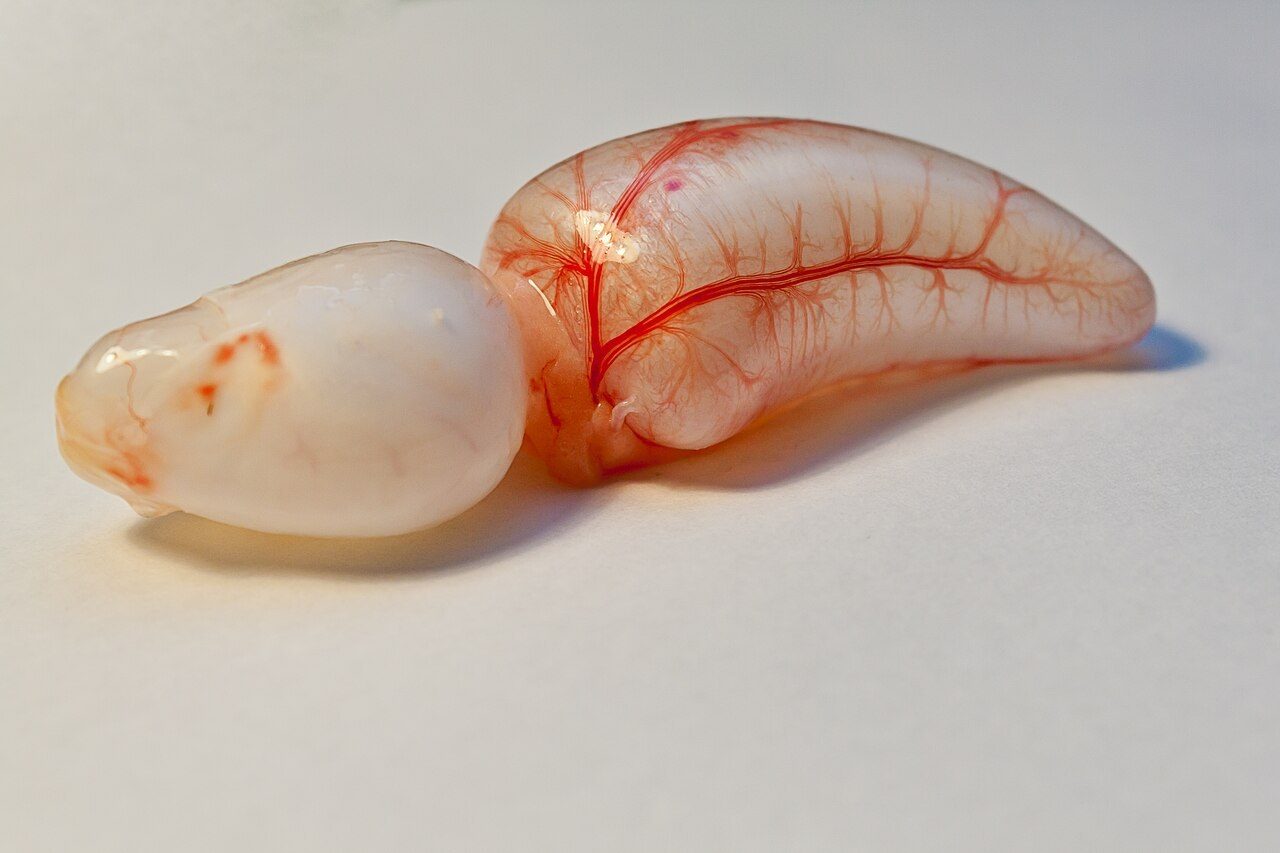 front chamberrear chamberblood vessels
| Where | Genus | Common name |
|---|---|---|
| Marine | Exocoetus | Flying fish |
| Hippocampus | Sea horse | |
| Freshwater | Labeo | Rohu |
| Catla | Katla | |
| Clarias | Magur | |
| Aquarium | Betta | Fighting fish |
| Pterophyllum | Angel fish |
Rohu, katla and magur are the fish of a Bengali or Assamese fish curry: all bony fish.
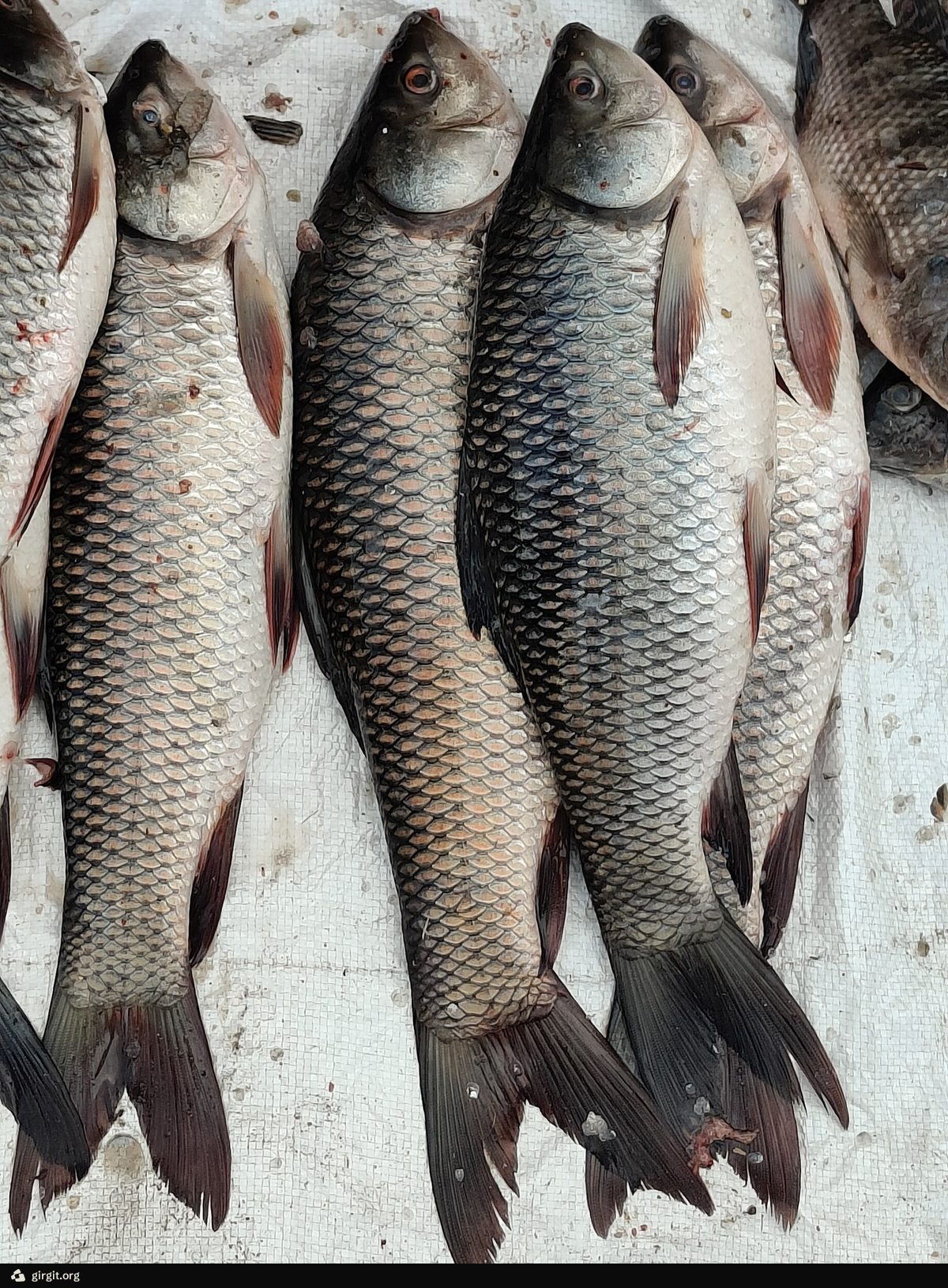
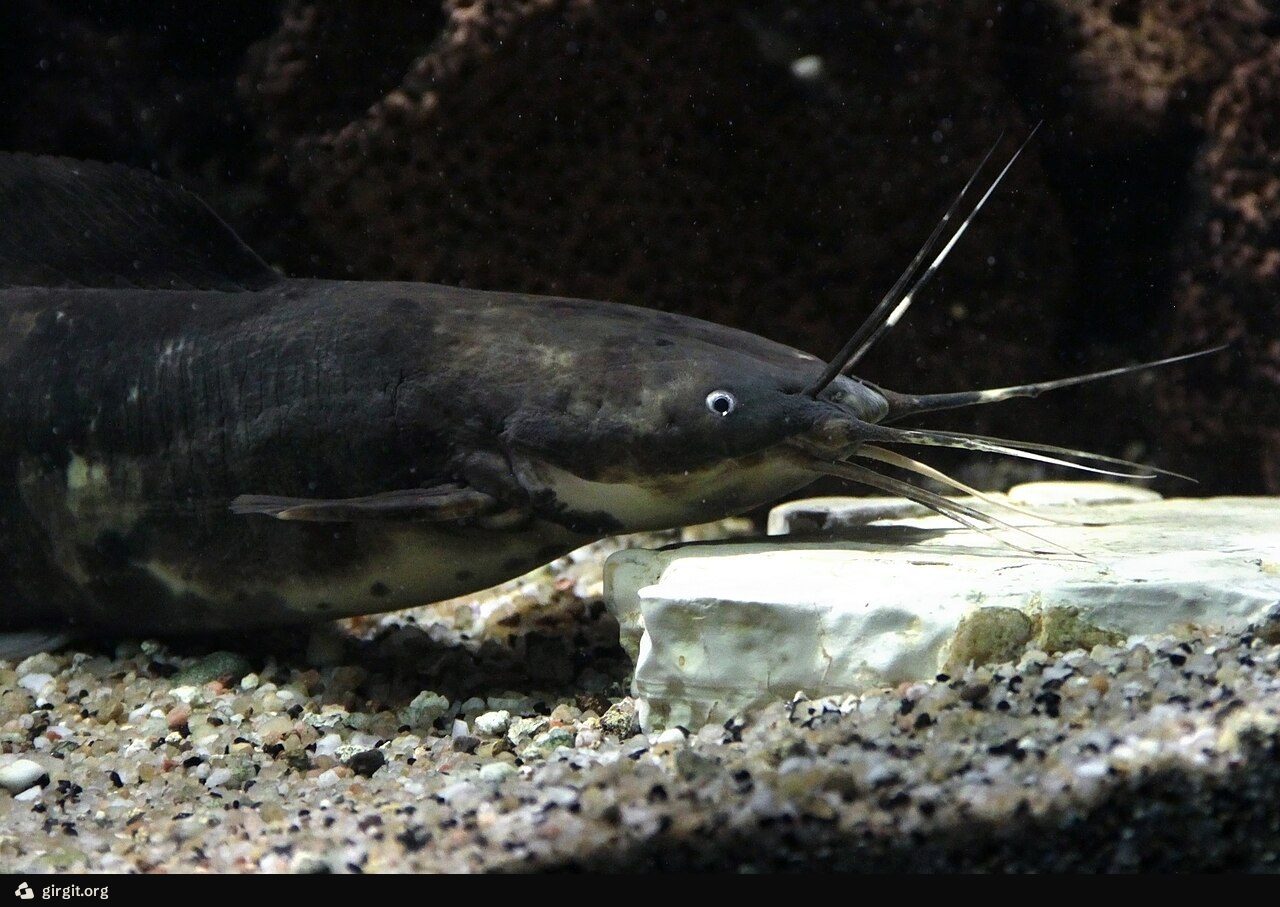 barbelssmooth skin, no scales
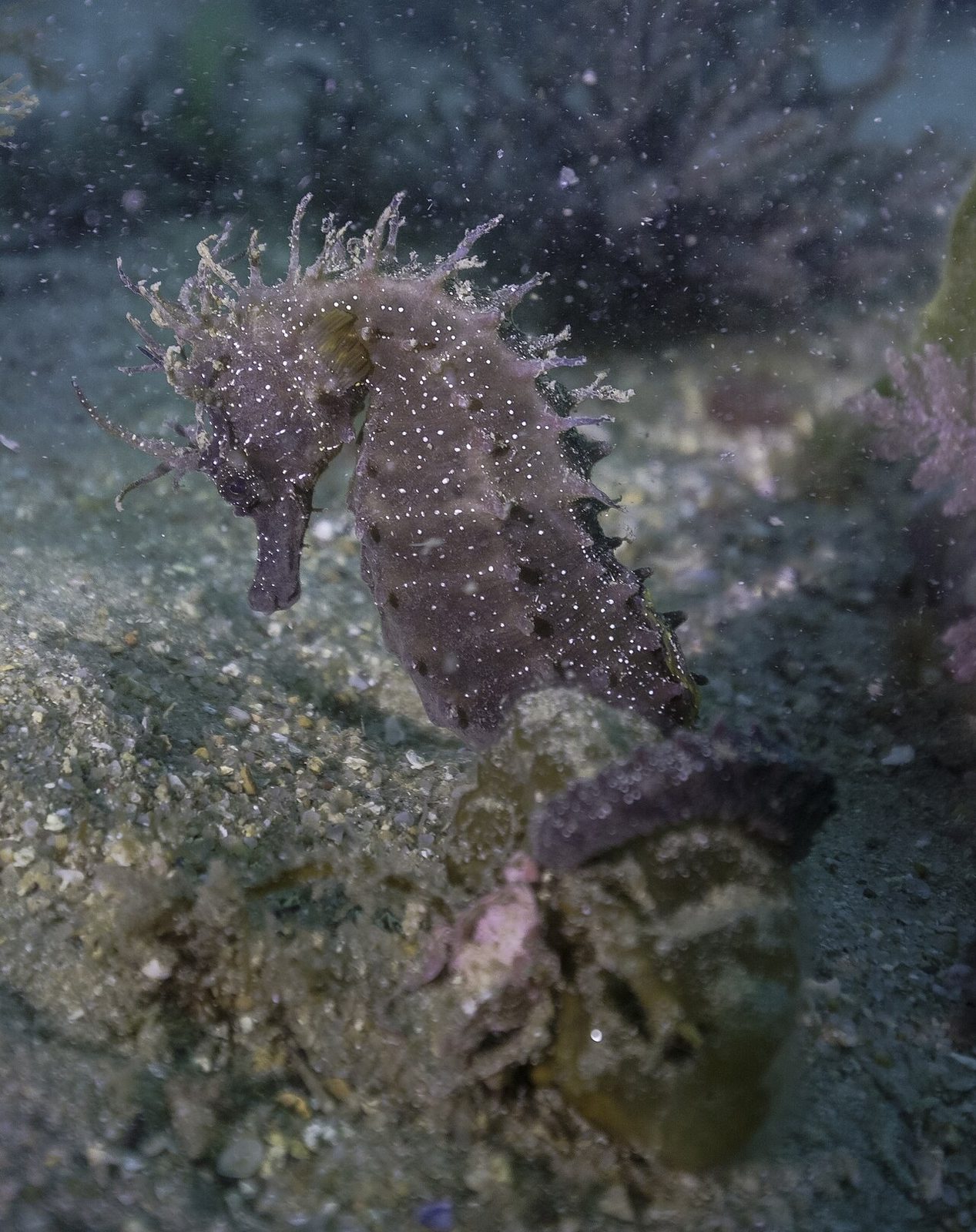
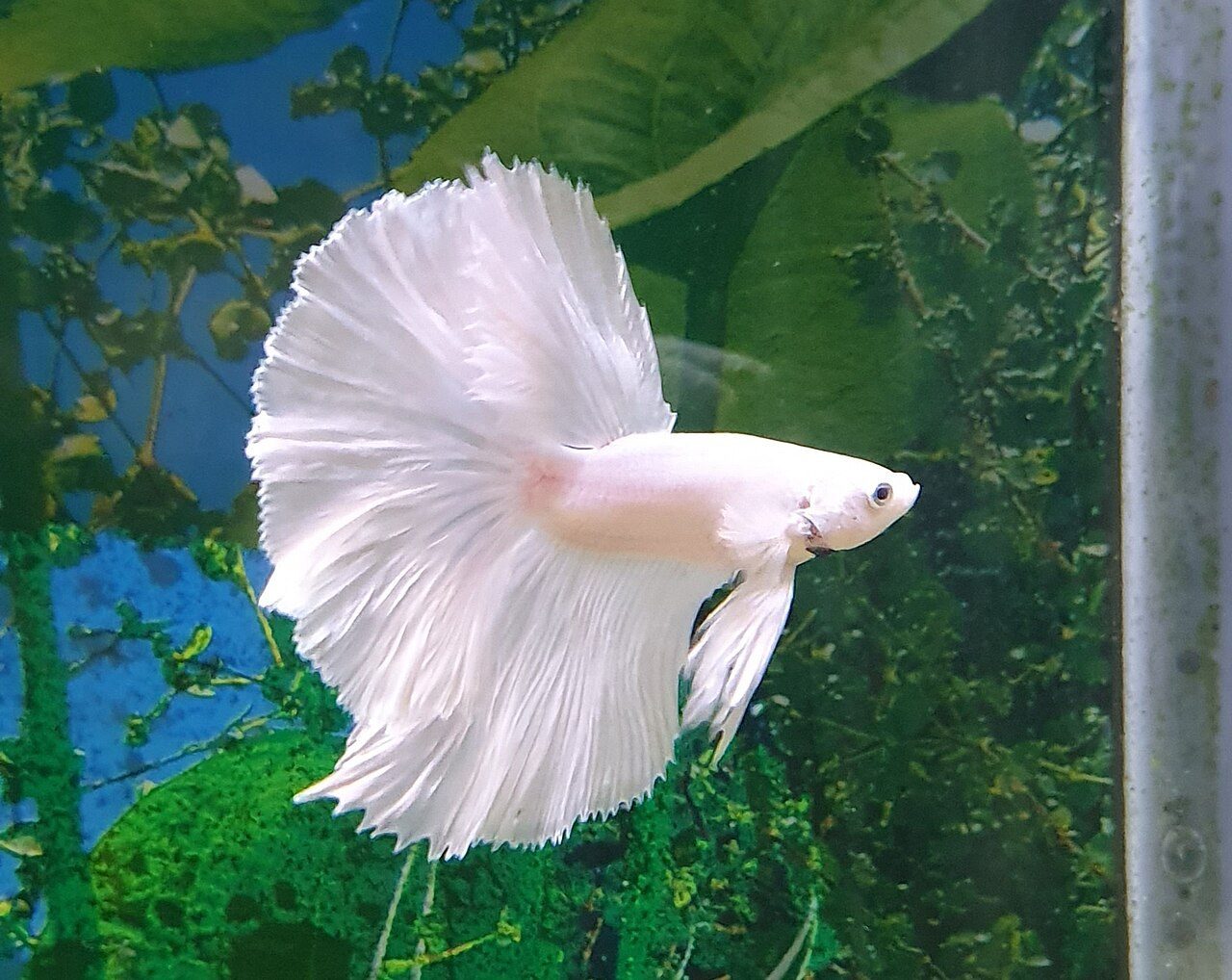 operculum
Side by side
| Cyclostomata | Chondrichthyes | Osteichthyes | |
|---|---|---|---|
| Jaws | None | Very powerful | Present |
| Skeleton | Cartilage | Cartilage | Bone |
| Mouth | Circular, sucking | Ventral | Mostly terminal |
| Gills | 6 to 15 pairs of slits | Separate slits, no operculum | 4 pairs, with operculum |
| Scales | None | Placoid | Cycloid or ctenoid |
| Paired fins | None | Present | Present |
| Air bladder | Not stated | Absent: must keep swimming | Present |
| Fertilisation | Spawn in fresh water | Internal; many viviparous | Usually external; mostly oviparous |
| Remember | Petromyzon, Myxine | Scoliodon, Pristis, Trygon, Torpedo | Labeo, Catla, Hippocampus, Betta |
Don't mix these up
- "All Pisces have an operculum" is false: only bony fish do.
- 6 to 15 pairs of gill slits = cyclostomes. Poison sting = Trygon. Electric organ = Torpedo.
- Air bladder = Osteichthyes. Its absence is why sharks swim non-stop.
- Dogfish (Scoliodon) and sawfish (Pristis) are cartilaginous; flying fish (Exocoetus) and sea horse (Hippocampus) are bony.
Just remember
No deeper reason for these: they are names and counts. Most of the names carry their own clue in Greek or Latin.
- Cyclostomes: Petromyzon and Myxine
- Petro-myzon is Greek for "stone sucker": lampreys hold on to stones with the mouth while building nests. Myx means slime: Myxine is the slime eel, the hagfish.
- Gill slits: 6 to 15 pairs (cyclostomes), 4 pairs of gills (bony fish)
- A lamprey's head has a row of round gill holes like the portholes of a ship (watch them pump in the video above). A bony fish keeps its 4 pairs under one lid, the operculum, like the 4 pages of a folded letter under its cover.
- Pristis, Trygon, Torpedo
- Pristis is Greek for saw (sawfish). Trygon is the old Greek name for the stingray. Torpedo is Latin for numbness: the ray numbs its prey, and the navy weapon was later named after the fish.
- Scoliodon, Carcharodon
- Both end in -odon, tooth: sharks are all about teeth. Carcharo means jagged, the great white's saw-edged teeth.
- Exocoetus, Hippocampus
- Hippo-campus: horse + sea monster, the sea horse. Exo-coetus, the fish that goes out of the water: the flying fish.
- Labeo (rohu), Catla (katla), Clarias (magur)
- Labeo means "big lips": picture the rohu's thick lips at the fish stall. Catla is simply katla. Clarias and magur both have a C-shaped moustache of barbels: "Clarias, catfish".
- Betta (fighting fish), Pterophyllum (angel fish)
- Ptero-phyllum: wing + leaf, the angel fish's tall leaf-like fins. Betta: "the betta fighter".
- Ectoparasite
- A parasite that clings to the outside of its host.
- Operculum
- The bony flap covering the gills of bony fish.
- Placoid scales
- Tiny tooth-like scales in shark skin.
- Air bladder
- A gas-filled sac that controls floating in bony fish.
- Poikilothermous
- Cold-blooded: body temperature follows the surroundings.
- Claspers
- Parts of a male shark's pelvic fins used in mating.
- Viviparous
- Giving birth to live young.
Words to know
A fish keeps swimming even while resting, or it sinks. What is it missing?
- Jaws
- An air bladder
- An operculum
- Paired fins
Which of these is a bony fish?
- Pristis
- Scoliodon
- Clarias
- Myxine
The teeth of a shark are
- modified placoid scales
- modified cycloid scales
- outgrowths of a bony jaw
Deep dive · optional
Why don't lampreys have jaws?
Where jaws came from, why a shark sinks but a rohu hovers, and three true stories: the lampreys that emptied the Great Lakes, the slime that stopped a highway, and the fish that came back from the dead. The exam won't ask, but it makes the page stick.
The roots: jaws were made from gills
- Why doesn't a lamprey have jaws?Because its family branched off before jaws existed. Lampreys and hagfish are the last survivors of the jawless fishes that filled the seas long before sharks. They never lost jaws; their line never had them.
- Then where did jaws come from?From the gill arches: the curved bars of cartilage that hold the gills open, one behind each gill slit. In early jawed fishes the first arch grew larger and became the upper and lower jaws.
- Why would a gill bar turn into a jaw?It was already halfway there. Each arch is a bar with a joint in the middle and muscles that squeeze the throat to pump water over the gills. A bigger first arch pumps harder; one that closes hard enough can grip, and then bite.
- Why not grow a jaw from scratch?Because evolution can only change what is already there, one working step at a time. Every in-between fish had to breathe and eat. Reshaping a part that already opened and closed was a path where every step worked.
- How do we know?Watch an embryo. In a shark, and in you, the first arch of the throat forms the jaw cartilages and the second arch forms the prop behind them. The same genes mark the jaw and the gill arches. You can't watch the past, but every embryo replays the plan.
Two clues are still visible in many sharks and rays. Between the jaw and the second arch sits a small hole behind each eye, the spiracle: it is the old gill slit squeezed shut when the first arch became the jaw. And the second arch, the hyomandibula, still props the jaw against the skull. In you the same two arches went further: the first became two tiny bones of your middle ear (malleus and incus) and the second the third one (stapes). You hear with old gill bars.
Honest note: the embryo story is solid, but the fossils that show each step from gill bar to jaw have not been found. Scientists agree on where jaws came from; they are still finding out exactly how fast and in what order.
The same reasoning explains floating. A bony fish's air bladder was not invented for floating either. The first bony fishes had lungs, pouches off the gut that gulped air. In most of their descendants the lung became a gas-filled float: the swim bladder. Lungs came first; the float came from them. Sharks are on a branch that never had either, so they float a different way: a huge liver full of light oil (in some deep-sea sharks the liver is up to about a quarter of the body's weight). Even that is not enough for most sharks to hover, so they swim, and their fins give lift like a plane's wings.
The stories
See it
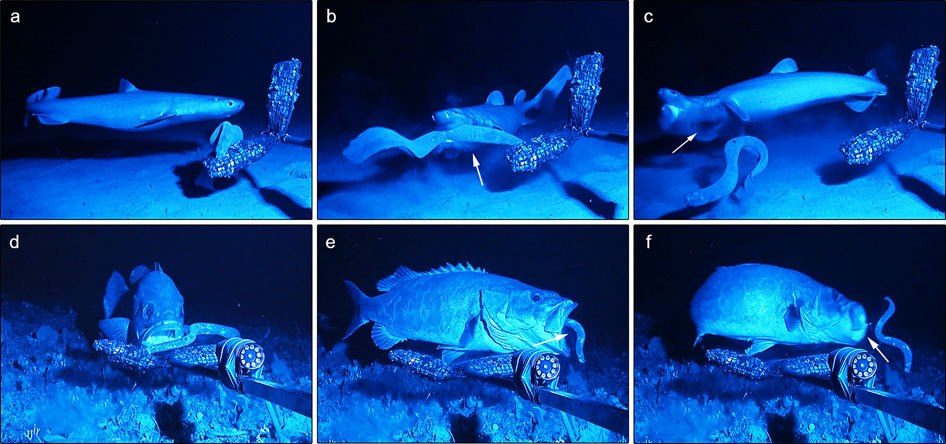
The hagfish trick, filmed in a lab tank: trapped in its own slime, it knots itself and slides the knot along its body.
Solve it
Solve it
Use the bladder widget's numbers. Shark muscle and cartilage average about 1,075 kg/m³; sea water is 1,025 kg/m³; shark liver oil (mostly squalene) is about 860 kg/m³. What fraction of a shark's volume would have to be this oil for it to hover without swimming? Compare it with the air bladder of a bony fish.
Hint
Answer
Solve it
Before the lampreys, the upper Great Lakes gave about 15 million pounds (about 6.8 million kg) of lake trout a year. One lamprey kills up to about 18 kg of fish while it feeds. Roughly how many feeding lampreys would it take to eat a whole year's catch? Does that sound possible?
Answer
A student writes: "Hagfish are ectoparasites on fish and swim up rivers to spawn." What is wrong?
- Hagfish have jaws
- That is the lamprey's life, not the hagfish's
- Hagfish are not vertebrates
Connect it
Connect it
- Gill slits, concept 8. The pharyngeal gill slits that make you a chordate are the same slits whose arches became jaws and ear bones.
- Your ear, Class 11 Ch 18. The malleus, incus and stapes of the ear are former gill arches 1 and 2.
- Floating, Physics Class 11 Ch 9. The bladder and the shark liver are Archimedes' principle at work; see pressure and depth.
- Lungs to legs, concept 10. The coelacanth is a lobe-finned fish; its cousins' fins became the limbs of the first amphibians.
- Fish on your plate. India is the world's third-largest fish producer (about 175 lakh tonnes in 2022-23, three-quarters from inland waters). The backbone of Indian fish farming is the major carps rohu, katla and mrigal, which would not breed in ponds until Hiralal Chaudhuri and K. H. Alikunhi in Odisha induced spawning with a pituitary injection on 10 July 1957. India now marks 10 July as National Fish Farmers' Day.
- The biggest fish is a shark. The whale shark, a cartilaginous fish that filters plankton, became in 2001 the first fish protected under Schedule I of India's Wild Life (Protection) Act. In Gujarat, a campaign led by the Forest Department compared the whale sharks' yearly visit to a daughter coming home to her parents, and fishers have since freed hundreds of whale sharks caught in their nets. See conservation.
Still confused?
If sharks have cartilage, are they more "primitive" than bony fish?
Not really. Sharks and bony fish are two branches that split long ago, and both have had the same amount of time to evolve. Fossils suggest early relatives of both had bone in their skin and skulls; the shark line later lost most of it and kept a light, flexible cartilage skeleton, which suits a fish with no float. Cartilage is a different design, not an unfinished one.
Does a shark really die if it stops swimming?
Some do, some don't. A shark sinks if it stops, because it has no air bladder. Breathing is a separate question: great whites and makos must swim to push water over their gills (ram ventilation), but nurse sharks pump water with their cheek muscles and can rest on the sea floor. The exam fact, "no air bladder, so they swim constantly to avoid sinking", is about floating.
The textbook says all cyclostomes are parasites that spawn in fresh water. Is that true for hagfish?
No. That description fits lampreys. Hagfish are sea-floor scavengers and hunters that never enter rivers. In the exam, write NCERT's statement; just know it is really about Petromyzon.
Sources
- Great Lakes Fishery Commission: Sea lamprey and Lampricides
- GLFC: Sea lamprey life cycle
- US Fish and Wildlife Service: All about invasive sea lamprey
- National Geographic (2024): the sea lamprey fight
- OPB (2017): Hagfish truck spill on Highway 101
- Zintzen et al. (2011), Hagfish predatory behaviour and slime defence, Scientific Reports
- Hagfish slime gland cells and thread skeins (eLife)
- Ota et al. (2011), vertebra-like elements in hagfish, Nature Communications
- Review: the origin of jaws from the pharyngeal arches
- StatPearls: Embryology, pharyngeal arches
- Natural History Museum: Coelacanths and Smith (1939), Nature 143: 455
- Florida Museum: Shark biology and Britannica: Do sharks die if they stop swimming?
- University of Copenhagen (2021): lungs came before swim bladders
- Lok Sabha answer: India's fish production 2022-23; Vikaspedia: National Fish Farmers' Day
- Gujarat Forest Department: Whale shark conservation
Picture and video credits
Show 13 picture and video credits
- lamprey-oral-discs.jpg: Fernando Losada Rodríguez, CC BY-SA 4.0
- lamprey-oral-disc.mp4: Vassia Atanassova (Spiritia), CC BY 3.0
- lamprey-gill-pores.mp4: Vassia Atanassova (Spiritia), CC BY 3.0
- spadenose-shark-mumbai.jpg: Dr. Raju Kasambe, CC BY-SA 4.0
- shark-skin-denticles-sem.jpg: Pascal Deynat/Odontobase, CC BY-SA 3.0
- stingray-specimen.jpg: Tomas Willems & Hans Hillewaert, CC BY-SA 3.0
- rohu-side.jpg: Khalid Mahmood, CC BY-SA 4.0
- swim-bladder-bream.jpg: Grand-Duc, CC BY-SA 3.0
- seahorse.jpg: Diego Delso, CC BY-SA 4.0
- betta-halfmoon.jpg: Eduardoblas, CC BY-SA 4.0
- coelacanth-holotype-east-london.jpg: Bernard DUPONT, CC BY-SA 2.0
- hagfish-slime-knot.mp4: Böni L, Fischer P, Böcker L, Kuster S, Rühs P (Scientific Reports, 2016), CC BY 4.0
- hagfish-slime-predators.jpg: Vincent Zintzen, Clive D. Roberts, Marti J. Anderson et al. (Scientific Reports, 2011), CC BY-SA 2.5


