- 1. How do we sort animals?
- 2. Symmetry, germ layers and the coelom
- 3. Segments, the notochord, and the map of all phyla
- 4. Sponges, cnidarians and comb jellies
- 5. Flatworms, roundworms and segmented worms
- 6. Arthropods and molluscs: the two biggest phyla
- 7. Echinoderms and hemichordates
- 8. What makes a chordate?
- 9. Jawless vertebrates and fishes
- 10. Amphibians and reptiles
- 11. Birds and mammals
- Review
4 of 11·NCERT §4.2.1 · §4.2.2 · §4.2.3·pp. 40–42·6 min
Sponges, cnidarians and comb jellies
The big ideaThe simplest animals live in water and let water do the work: sponges pump it through their pores, cnidarians sting what it brings, and comb jellies row through it with combs of hairs.
In simple words
Sponges are animals that look like plants. They sit in one place and pull sea water in through tiny holes all over their body, take out the food, and push the water out of a big hole on top. Jellyfish and their cousins have arms covered in tiny stinging darts that shoot out to catch food. Comb jellies are soft, clear balls that swim with rows of beating hairs and often glow in the dark.
Phylum Porifera: the sponges
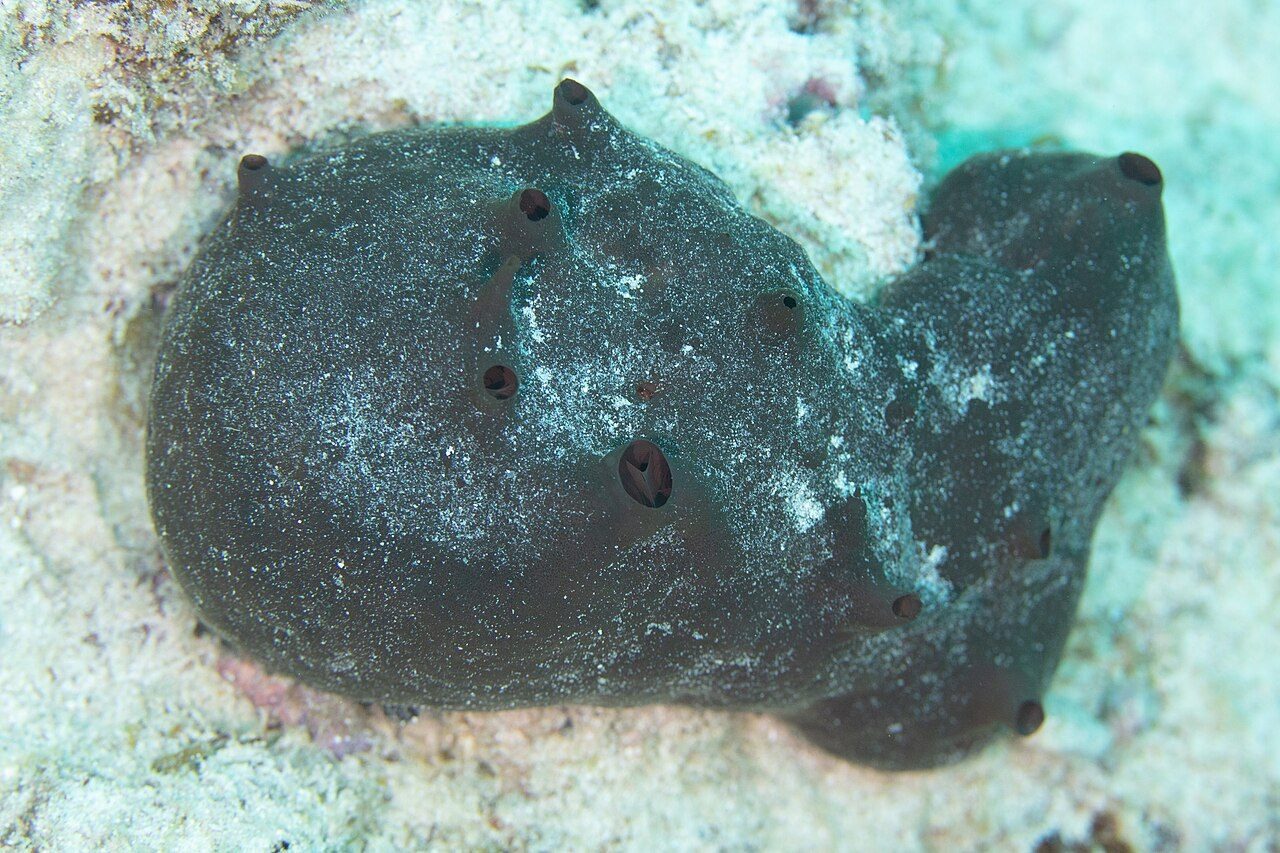
"Porifera" means pore-bearing. Members are the sponges: mostly marine, mostly asymmetrical, and the most primitive multicellular animals, with only a cellular level of organisation.
Their key feature is the water transport or canal system:
- Water enters through tiny pores in the body wall, the ostia.
- It flows into a central cavity, the spongocoel.
- It leaves through one large opening at the top, the osculum.
This one stream of water brings food, carries out gas exchange (respiration) and removes waste. The walls of the spongocoel and the canals are lined by flagellated choanocytes, also called collar cells; their beating flagella keep the water moving and they trap food. Digestion is intracellular (inside cells).
Try it: follow the water through a sponge and see where it moves fastest.
- Skeleton: tiny needles called spicules, or soft spongin fibres.
- Sexes: not separate. Each sponge is a hermaphrodite, making both eggs and sperm.
- Reproduction: asexual by fragmentation; sexual by gametes. Fertilisation is internal. Development is indirect, with a larva that looks quite different from the adult.
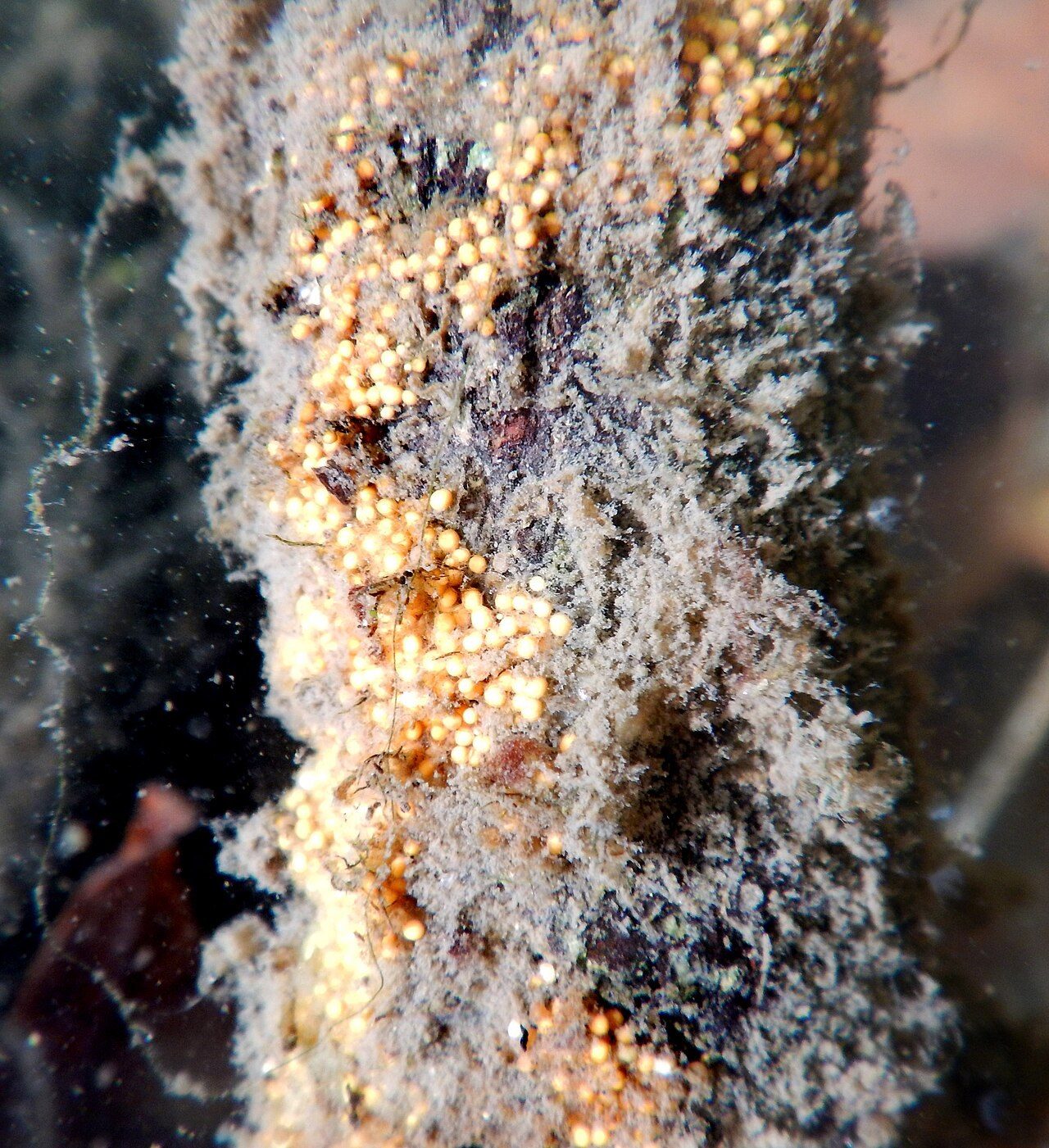
Examples: Sycon (also called Scypha), Spongilla (a freshwater sponge) and Euspongia (the bath sponge, whose spongin skeleton was once sold for scrubbing).
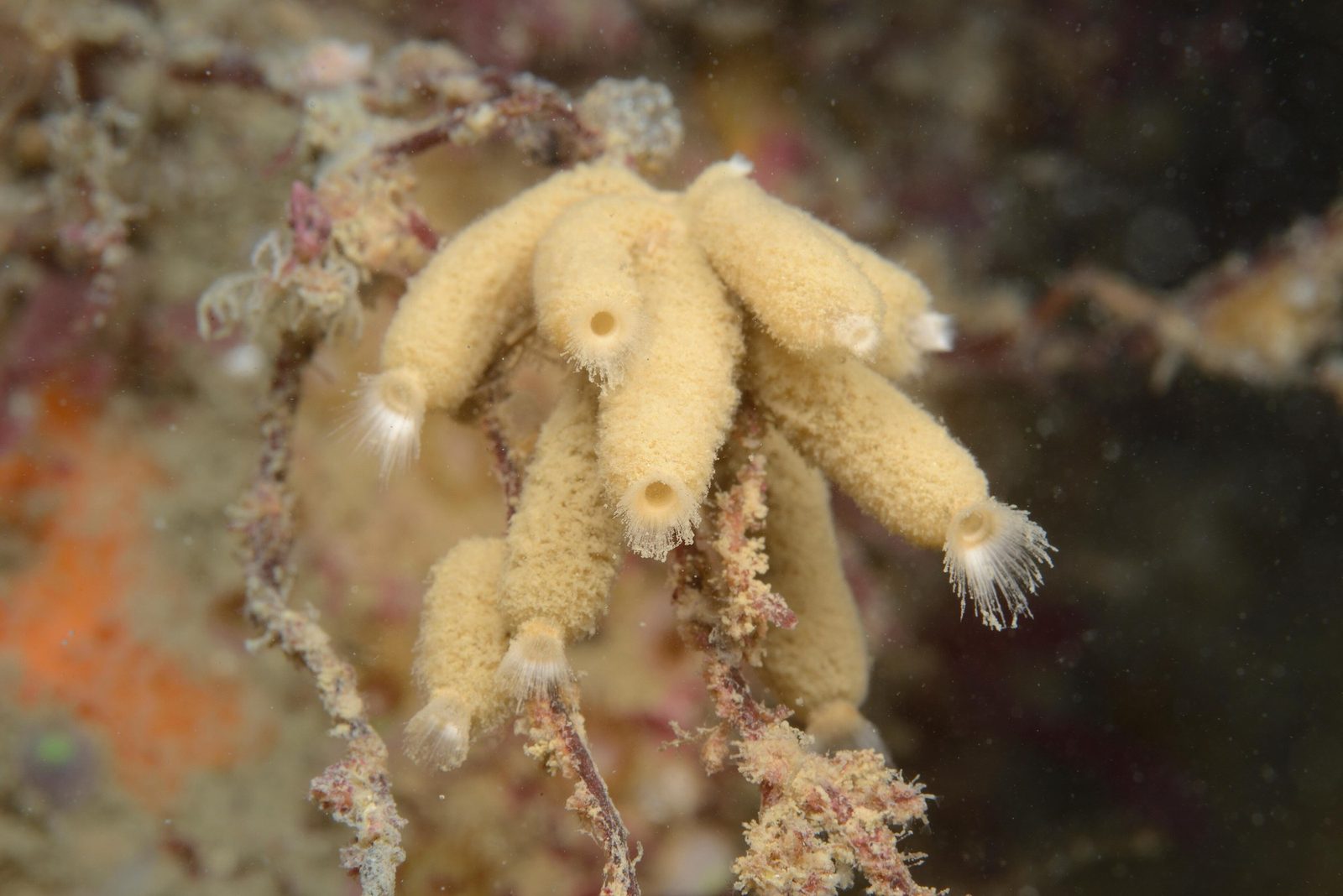 osculum, ringed by spicules
Phylum Coelenterata (Cnidaria)
Coelenterates are aquatic, mostly marine, radially symmetrical, diploblastic animals with a tissue level of organisation. Some are sessile (fixed in one place), others free-swimming.
The name Cnidaria comes from the cnidoblasts or cnidocytes: cells on the tentacles and body holding stinging capsules called nematocysts. Cnidoblasts are used for anchorage, defence and catching prey. This is why a jellyfish stings on a beach in Goa.
- One central gut space, the gastro-vascular cavity, opening only by the mouth, on a raised cone called the hypostome.
- Digestion is both extracellular (in the cavity) and intracellular.
- Some, the corals, build a skeleton of calcium carbonate. Whole coral reefs, like those around Lakshadweep, are built this way.
A cnidarian at work: the tentacles of a living Hydra, and a sea anemone on a reef. Every tentacle is armed with thousands of stinging cells.
Polyp and medusa
| Polyp | Medusa | |
|---|---|---|
| Shape | Cylinder, mouth facing up | Umbrella, mouth facing down |
| Lifestyle | Sessile | Free-swimming |
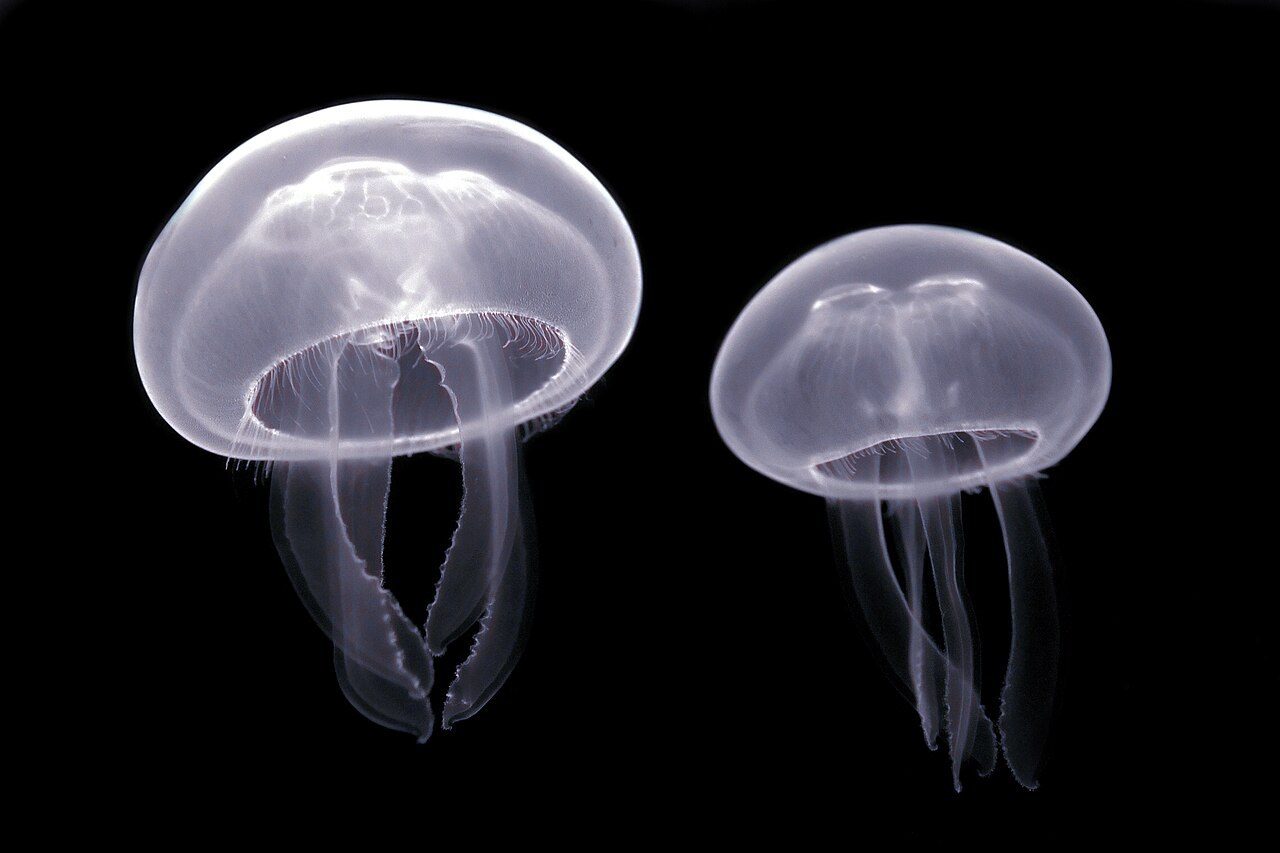
| Examples | Hydra, Adamsia | Aurelia (jellyfish) |
Some cnidarians have both forms in their life cycle. Polyps make medusae asexually, and medusae make polyps sexually. This switching is called alternation of generations or metagenesis. Example: Obelia.
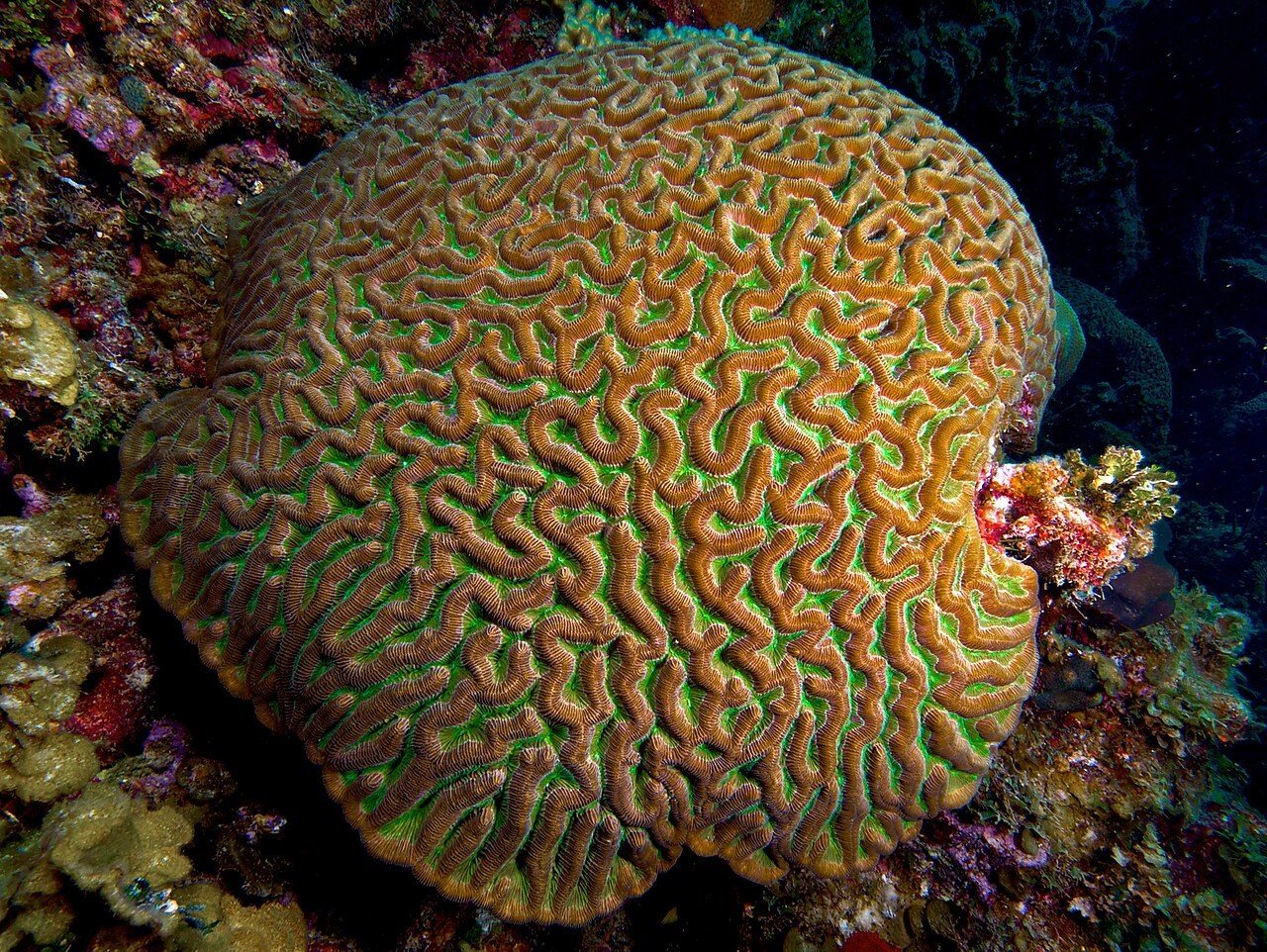
Examples: Physalia (Portuguese man-of-war), Adamsia (sea anemone), Pennatula (sea pen), Gorgonia (sea fan), Meandrina (brain coral).
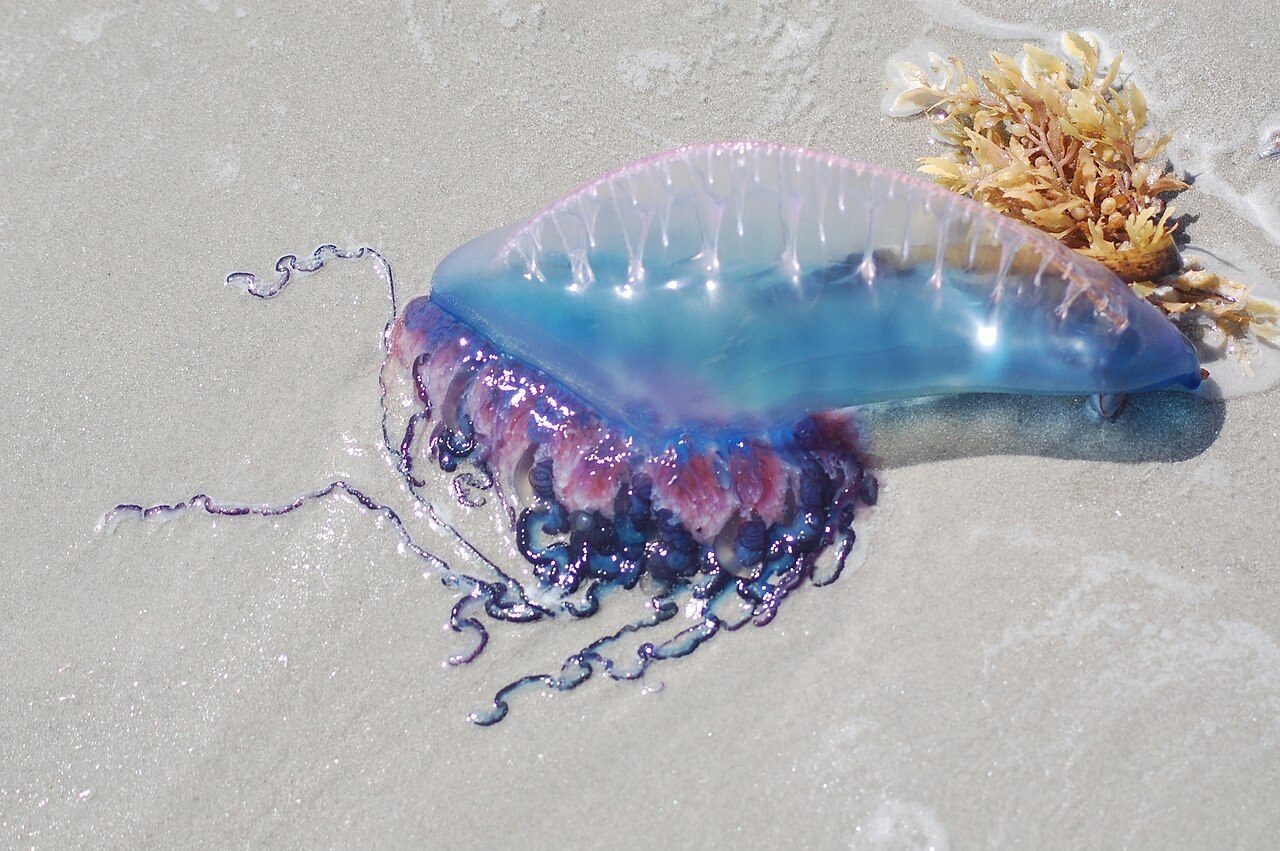 gas floatstinging tentacles
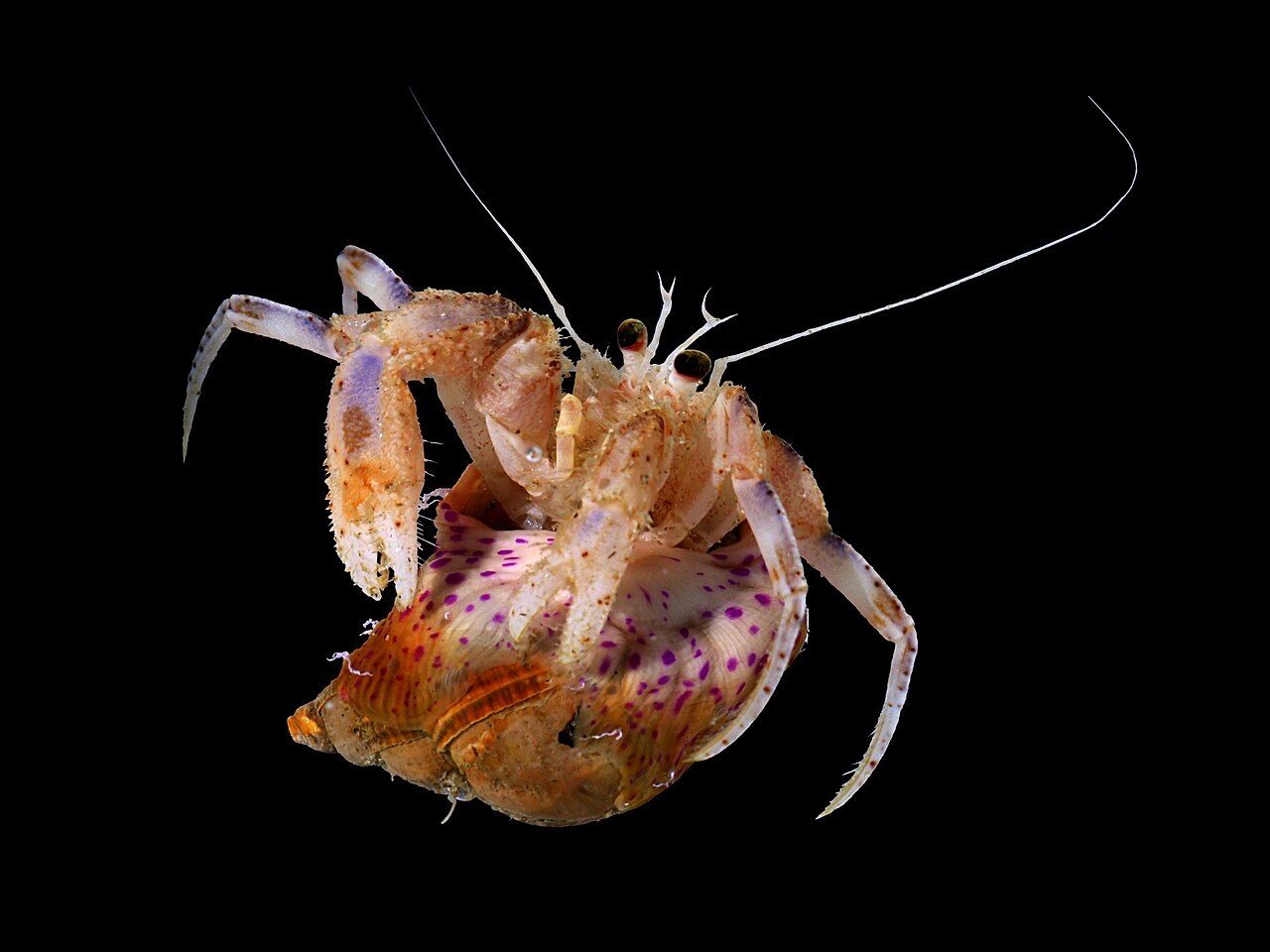 Adamsia wraps the shellhermit crab
Phylum Ctenophora: comb jellies
Ctenophores ("comb-bearers") are the sea walnuts or comb jellies. They are exclusively marine, radially symmetrical, diploblastic, with a tissue level of organisation, like cnidarians, but with no stinging cells.
- Eight external rows of ciliated comb plates, used for locomotion (swimming).
- Digestion is extracellular and intracellular.
- Bioluminescence, the ability of a living thing to give off light, is well marked.
- Sexes not separate (hermaphrodite). Reproduction is only sexual. Fertilisation external; development indirect.
Examples: Pleurobrachia and Ctenoplana.
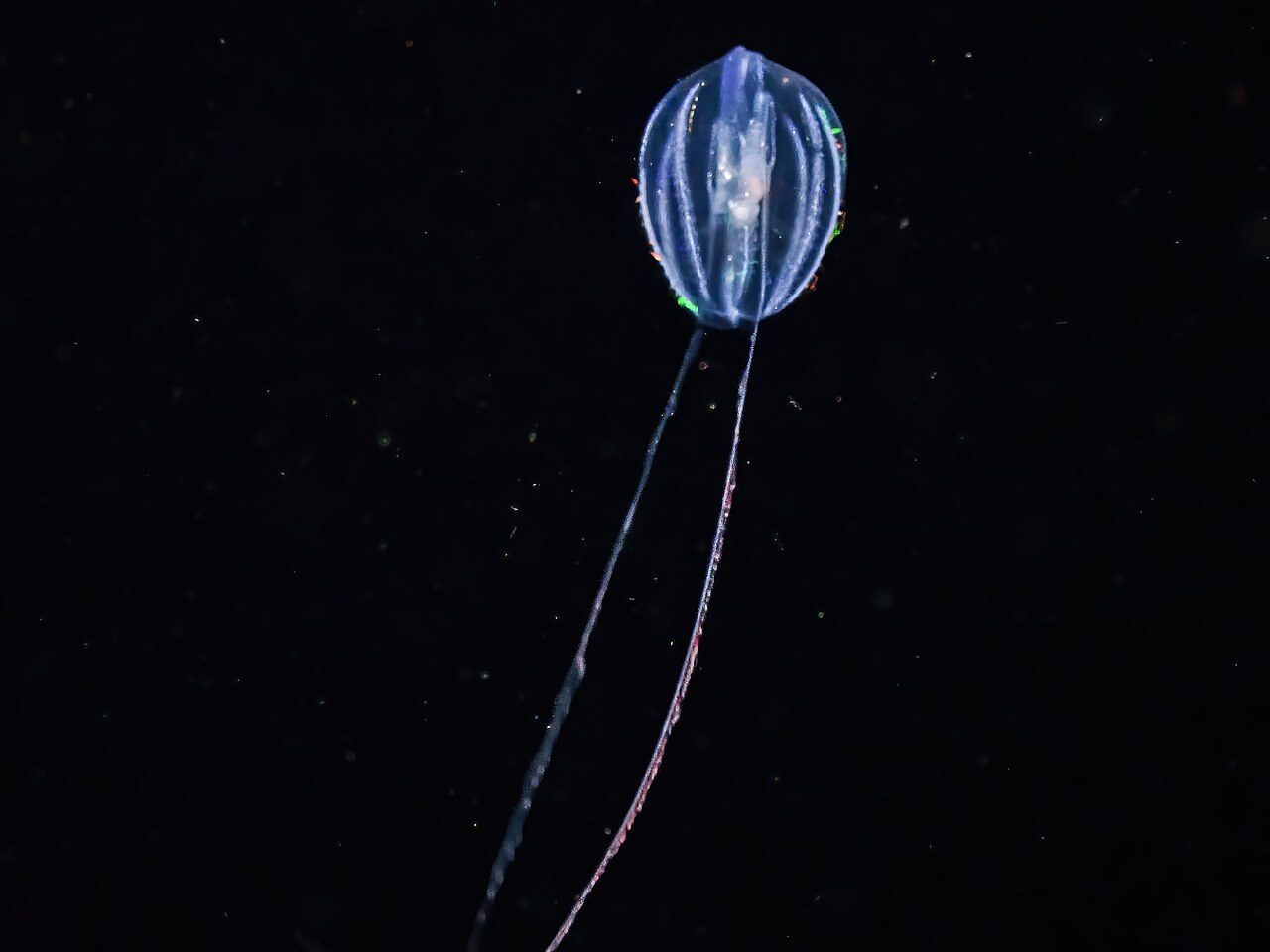 comb rowstentacles
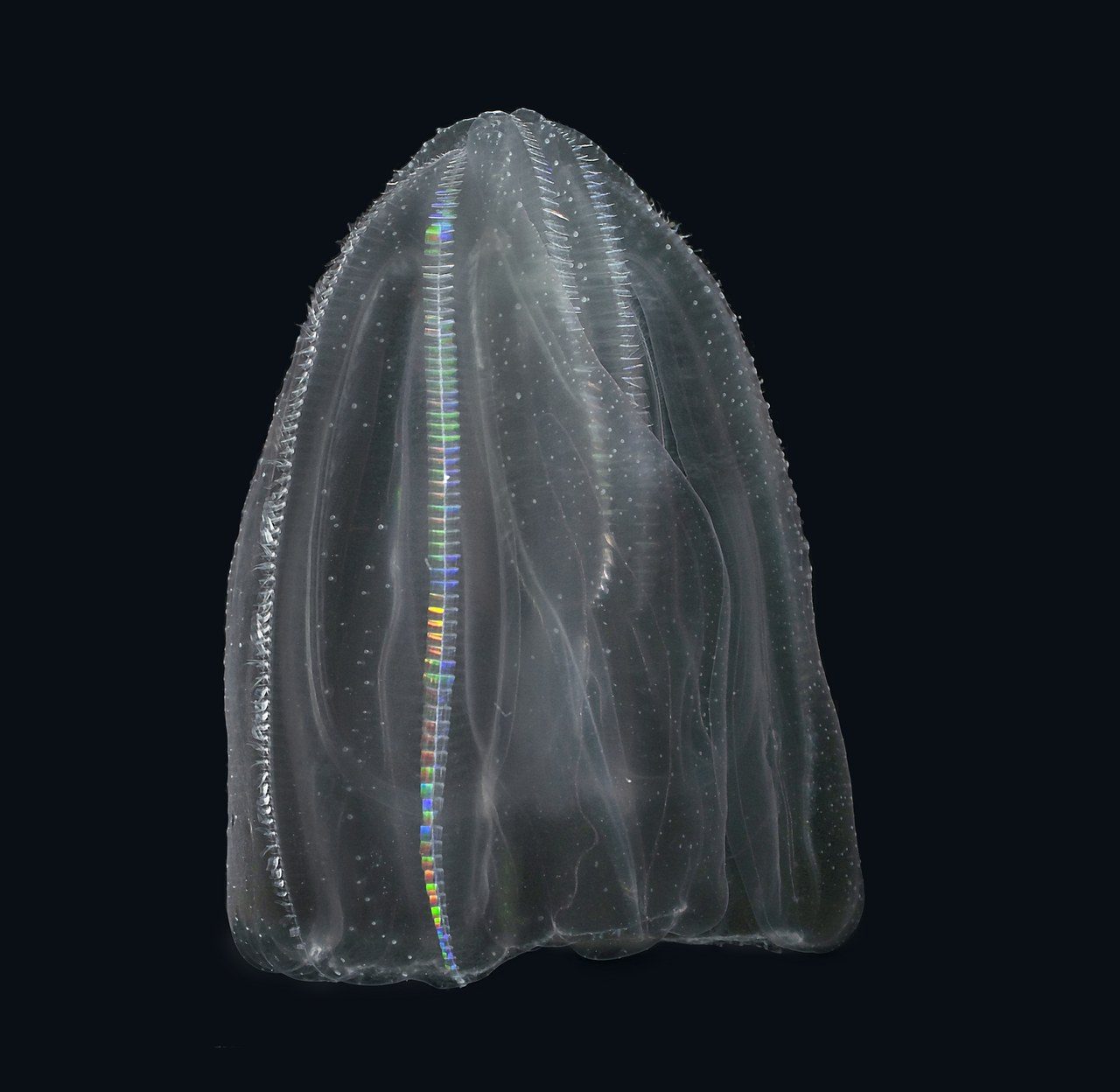 comb row scattering light
Side by side
| Porifera | Coelenterata | Ctenophora | |
|---|---|---|---|
| Level | Cellular | Tissue | Tissue |
| Symmetry | Mostly none | Radial | Radial |
| Germ layers | No true tissues | Diploblastic | Diploblastic |
| Digestion | Intracellular | Extra- and intracellular | Extra- and intracellular |
| Hallmark | Canal system, choanocytes | Cnidoblasts | 8 comb plates, bioluminescence |
| Sexes | Hermaphrodite | Not stated | Hermaphrodite |
| Fertilisation | Internal | Not stated | External |
| Remember | Sycon, Spongilla, Euspongia | Physalia, Adamsia, Meandrina | Pleurobrachia, Ctenoplana |
Don't mix these up
- Ostia are the many small entry pores; the osculum is the single big exit. The spongocoel is lined by choanocytes, not by ostia or oscula.
- Comb plates are for swimming, not digestion.
- Adamsia (sea anemone) is a polyp; Aurelia is a medusa. Obelia shows metagenesis.
- Sponges have internal fertilisation; ctenophores have external fertilisation.
Just remember
The examples are names to learn. Most carry their meaning in Greek or Latin:
- Porifera: Sycon, Spongilla, Euspongia
- Sykon is Greek for fig: a small fig-shaped sponge. Spong-illa is the "little sponge" of ponds (freshwater). Eu-spongia is the "true sponge", the one in the bathroom.
- Coelenterata: Physalia, Adamsia, Pennatula, Gorgonia, Meandrina
- Physa means bubble: the man-of-war's float. Penna is a feather: the sea pen. Gorgonia, the sea fan, waves like a Gorgon's hair. Meander, a winding river: the grooves of brain coral. Adamsia is the anemone that rides on a hermit crab (photo above).
- Metagenesis: Obelia. Polyp only: Hydra, Adamsia. Medusa: Aurelia
- Obelia lives both lives, polyp and medusa, taking turns like a relay: "Obelia, one life after the other".
- Ctenophora: Pleurobrachia, Ctenoplana
- Pleuro-brachia: side + arms, two long tentacles out of its sides. Cteno-plana: comb + flat, a flattened comb jelly.
- Ostia, osculum
- The many tiny inlet pores, and the one large outlet, of a sponge.
- Choanocytes
- Flagellated collar cells lining a sponge's cavity and canals.
- Hermaphrodite
- One animal that makes both eggs and sperm.
- Cnidoblast
- A stinging cell holding a nematocyst.
- Metagenesis
- Polyp and medusa stages alternating in one life cycle.
- Comb plates
- Eight rows of fused cilia that move a ctenophore.
- Bioluminescence
- Light made by a living thing.
Words to know
In a sponge, water leaves the body through the
- ostia
- spongocoel
- osculum
Polyps produce medusae asexually, and medusae produce polyps sexually. This is seen in
- Obelia
- Pleurobrachia
- Spongilla
- Adamsia
A clear, glowing sea animal swims using rows of beating cilia and has no stinging cells. It is most likely a
- jellyfish
- ctenophore
- sponge
Deep dive · optional
How do animals with no organs fire, rebuild and glow?
Sponges, cnidarians and comb jellies have no organs, yet a cnidarian fires the fastest weapon in nature, a cut Hydra grows back whole, and pressed-apart sponge cells rebuild a sponge. Here is how, and the 18th-century experiment that shocked Europe. Not for the exam.
The roots: a sting is a loaded spring
- How can a jellyfish sting without a brain?Each stinging cell (cnidoblast) works on its own. It has a tiny trigger hair; touch it, or touch it with the taste of prey, and that one cell fires. No message has to travel to a brain and back.
- What does it fire?Its nematocyst: a capsule holding a hollow thread coiled up inside it, turned inside out like the finger of a glove pushed in, with a sharp stylet at the front.
- Where does the power come from?From pressure built up slowly beforehand. The capsule is packed with dissolved material; water is drawn in, and the pressure inside reaches about 15 megapascals, roughly 150 times the pressure of the air. When the lid opens, that stored pressure is released all at once.
- How fast is it?Filmed at 1.43 million frames a second, the stylet of a Hydra capsule covered its 13 micrometres in as little as 0.7 millionths of a second, with an acceleration of up to 5.4 million g. The pressure at its tip was estimated at over 7 gigapascals, which the scientists compared with a bullet. Enough to pierce the hard outer coat of the tiny crustaceans a Hydra eats.
- Why can that work with no muscles?For the same reason a catapult can: energy put in slowly can come out quickly. A muscle can't contract in a millionth of a second, but a stretched or pressurised store can let go that fast. The price: each capsule fires once. A fired cell is replaced by a new one made from stem cells.
Rebuilding works for the same reason sponges can be heaps. At the cellular and tissue levels, cells are not locked into organs with fixed places, and these animals keep plenty of stem cells that can become other cell types. Press a sponge through fine cloth and its separated cells crawl back together and sort themselves into a working sponge. Cut a Hydra in pieces and each piece rebuilds the missing parts. An animal built of organs, like you, cannot do this, because each organ is built once, in the embryo, and its cells are specialised for good.
And the comb jelly's rainbow is not its glow. The rainbow flickering along the comb rows in the video above is daylight broken into colours by the beating cilia, the way a CD's surface splits light; switch off the light and the rainbow vanishes. Its true bioluminescence is a separate, faint blue-green light made by special cells lying under the comb rows, seen only in the dark. Comb jellies are the largest animals known to swim using cilia.
The story
See it
What is inside a stinging cell, drawn in 1911 from the microscope: the coiled thread before firing, and the thread shot out with its barbs.
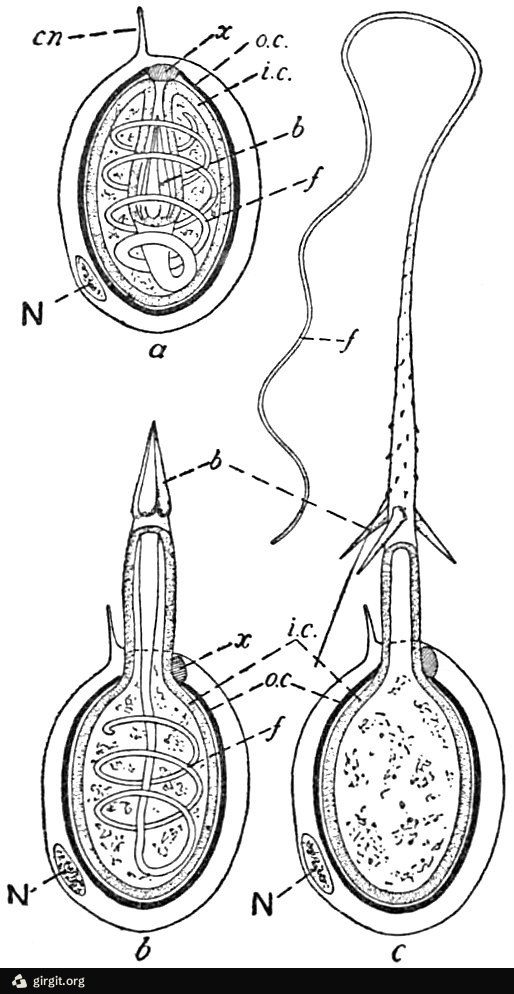 coiled thread, before firingthread shot out, with barbs
Solve it
Solve it
A car tyre is pumped to about 2 bar (0.2 MPa) above the air outside. A nematocyst capsule holds about 15 MPa. How many times the tyre's pressure is that? Why doesn't the capsule need to be strong like a tyre to fire hard?
Answer
Solve it
In Lakshadweep, a study found live coral covering 37.2% of the reef in 1998 and 19.1% in 2022, after marine heatwaves in 1998, 2010 and 2016. What fraction of the living coral was lost? Corals are cnidarian polyps that host tiny algae; why would hot water hurt them?
Answer
The rainbow colours flickering along a comb jelly's comb rows in daylight are
- its bioluminescence
- light split by the beating cilia
- stinging cells catching the light
Connect it
Connect it
- Levels of organisation, concept 1. Why heaps of cells can rebuild and organs can't: sorting animals.
- Anemone and clownfish, Class 12. The clownfish living safely among an anemone's stinging tentacles is the textbook example of commensalism.
- Coral reefs and diversity, Class 12. India's reefs in Lakshadweep, the Gulf of Mannar, the Gulf of Kachchh and the Andaman and Nicobar Islands are biodiversity hotspots of the sea: India's megadiversity.
- Invasive species, Class 12. Mnemiopsis is a classic case of an alien species invasion, one of the evil quartet.
Still confused?
If sponges have no tissues, how can their cells do different jobs?
Different cells do specialise: collar cells pump and trap food, other cells carry food around and build spicules. What sponges lack is cells joined into true tissues with a fixed arrangement. That is why the cells can be separated and come back together.
Is a jellyfish's sting dangerous to people?
Most are mild, but some, like the Portuguese man-of-war (Physalia) and box jellyfish, can be very painful or dangerous. The nematocysts of a dead, washed-up man-of-war can still fire, because each cell fires on its own when touched.
Sources
- Nüchter et al. (2006), Nanosecond-scale kinetics of nematocyst discharge, Current Biology 16: R316
- Embryo Project Encyclopedia: Abraham Trembley and National Academies: Trembley's polyps
- Linda Hall Library: Henry Van Peters Wilson
- Woods Hole Oceanographic Institution: comb jelly light
- NOAA: What is a Portuguese man o' war?
- Marine Biological Laboratory: comb jelly
- Kideys (2005), Mnemiopsis in the Black Sea, Oceanography 18(2)
- Down To Earth (2025): Lakshadweep's coral reefs have halved
Picture and video credits
Show 11 picture and video credits
- sycon-sponge.jpg: Olivier Dugornay, CC BY 4.0
- bath-sponge.jpg: Diego Delso, CC BY-SA 4.0
- spongilla-gemmules.jpg: Lamiot, CC BY-SA 4.0
- green-hydra-tentacles.mp4: Janeklass, CC BY 4.0
- physalia.jpg: Brett Ortler, CC BY 4.0
- aurelia-medusa.jpg: Luc Viatour, CC BY-SA 3.0
- adamsia-hermit-crab.jpg: Hans Hillewaert, CC BY-SA 4.0
- brain-coral.jpg: Nhobgood Nick Hobgood, CC BY-SA 3.0
- pleurobrachia.jpg: Vsevolod Rudyi, CC BY 4.0
- mnemiopsis.jpg: Yuliia Baiandina, CC BY 4.0
- comb-jelly-combs.mp4: Eric Polk (Monterey Bay Aquarium), CC BY-SA 4.0


