Act 08NCERT §4.2.11 · pp. 45–475 min
What makes a chordate?
The starfish becomes a lancelet: a rod, the notochord, runs along its back, a hollow nerve tube lies above it, gill slits open in its throat and its tail runs on past the anus.
A rod appears along the back. Everything after this is our side of the family.
From the textbookpp. 45–47
NCERT Biology, Class 11 · Reprint 2026-27
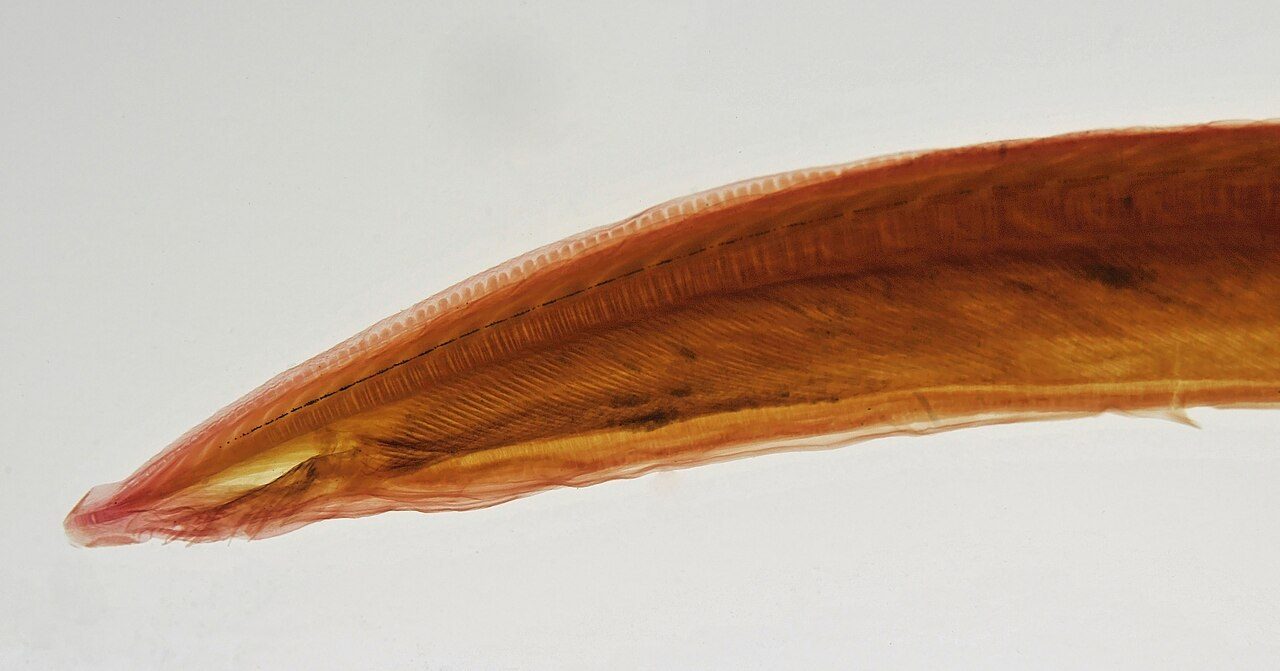
8.0The big idea
A rod, a tube, slits and a tail.
Chordates have all three badges at some stage of life. Vertebrates are the chordates whose rod is replaced by a backbone.
Full text
The big ideaChordates are the animals that, at some stage, have a notochord, a hollow nerve cord along the back and gill slits in the throat; vertebrates are the chordates whose notochord is replaced by a backbone.
In simple words
You, a fish, a frog and a parrot all belong to one big family. At the start of life, every member grows a stiff rod down its back, a nerve tube just above it, and slits in its throat. In most of the family, a backbone of small bones later takes the place of the rod. A few sea animals in the family keep the rod and never grow a backbone.
8.1Phylum Chordata
Three badges, and a tail
A stiff rod along the back.
A tube of nerve on the back side, above the rod.
Openings in the throat wall.
The body goes on past the anus.
The embryo's rod is replaced by a backbone.
8.2At the bottom of the key
Everything the others had, and more
Bilateral, triploblastic, coelomate, at the organ system level, with a closed circulatory system. Like club badges, worn once is enough: you had gill slits and a tail for a few weeks in the womb.
Full text
The chordate features
Members of phylum Chordata are defined by three things:
- a notochord;
- a dorsal hollow nerve cord (a tube-like nerve cord on the back side);
- paired pharyngeal gill slits (openings in the throat).
They are also bilateral, triploblastic, coelomate, with an organ system level of organisation, a post-anal tail (a part of the body that goes on past the anus) and a closed circulatory system.
- 1
Level of organisation?
CellularPorifera
Tissue, organ or organ system
- 2
Symmetry and germ layers?
Radial · two layersCoelenterataCtenophora
Bilateral · three layers
- 3
Body cavity?
NonePlatyhelminthes
False coelomAschelminthes
True coelom
- 4
Segmented?
NoMolluscaEchinodermataHemichordata
Yes
- 5
Notochord?
NoAnnelidaArthropoda
YesChordata
8.3Chordates versus non-chordates
Mirror images
Whatever is on the back in one is on the belly in the other.
Chordates
Rod, slits, tail; nerve on the back
- Notochord
- Present
- Central nervous system
- Dorsal, hollow, single
- Pharynx
- Perforated by gill slits
- Heart
- Ventral
- Post-anal tail
- Present
Non-chordates · an earthworm
No rod, no slits; nerve on the belly
- Notochord
- Absent
- Central nervous system
- Ventral, solid, double
- Pharynx
- No gill slits
- Heart
- Dorsal, if there is one
- Post-anal tail
- Absent
Full text
Chordates versus non-chordates
| Feature | Chordates | Non-chordates |
|---|---|---|
| Notochord | Present | Absent |
| Central nervous system | Dorsal, hollow and single | Ventral, solid and double |
| Pharynx | Perforated by gill slits | No gill slits |
| Heart | Ventral | Dorsal (if there is one) |
| Post-anal tail | Present | Absent |
A handy way to remember: the two groups are mirror images. Whatever is on the back in one is on the belly in the other. Think of an earthworm's double ventral nerve cord from concept 5, and compare it with your spinal cord running down your back.
Try itTurn the worm over
Flip an earthworm
Turn it over and lay it beside a fish.
CheckWhich side?
Spot the non-chordate
Which feature belongs to a non-chordate?
- A dorsal hollow nerve cord
- A dorsal heart
- A pharynx with gill slits
- A post-anal tail
8.4Three subphyla
Where does the rod run?
Uro
Urochordata (Tunicata)
- Notochord
- Only in the larval tail
- Examples
- Ascidia, Salpa, Doliolum
Cephalo
Cephalochordata
- Notochord
- Head to tail, throughout life
- Example
- Branchiostoma (Amphioxus, lancelet)
Vert
Vertebrata
- Notochord
- Only in the embryo; replaced by a vertebral column
- Examples
- Fish, frogs, reptiles, birds, mammals
Full text
Three subphyla
| Subphylum | Notochord | Examples |
|---|---|---|
| Urochordata (Tunicata) | Only in the larval tail | Ascidia, Salpa, Doliolum |
| Cephalochordata | From head to tail, kept throughout life | Branchiostoma (Amphioxus or lancelet) |
| Vertebrata | Only in the embryo; replaced by a vertebral column | Fish, frogs, reptiles, birds, mammals |
Urochordates and cephalochordates together are called protochordates. They are exclusively marine. The names help: uro = tail (notochord only in the tail), cephalo = head (notochord reaches right into the head).
8.5Protochordates · exclusively marine
Chordates without a backbone
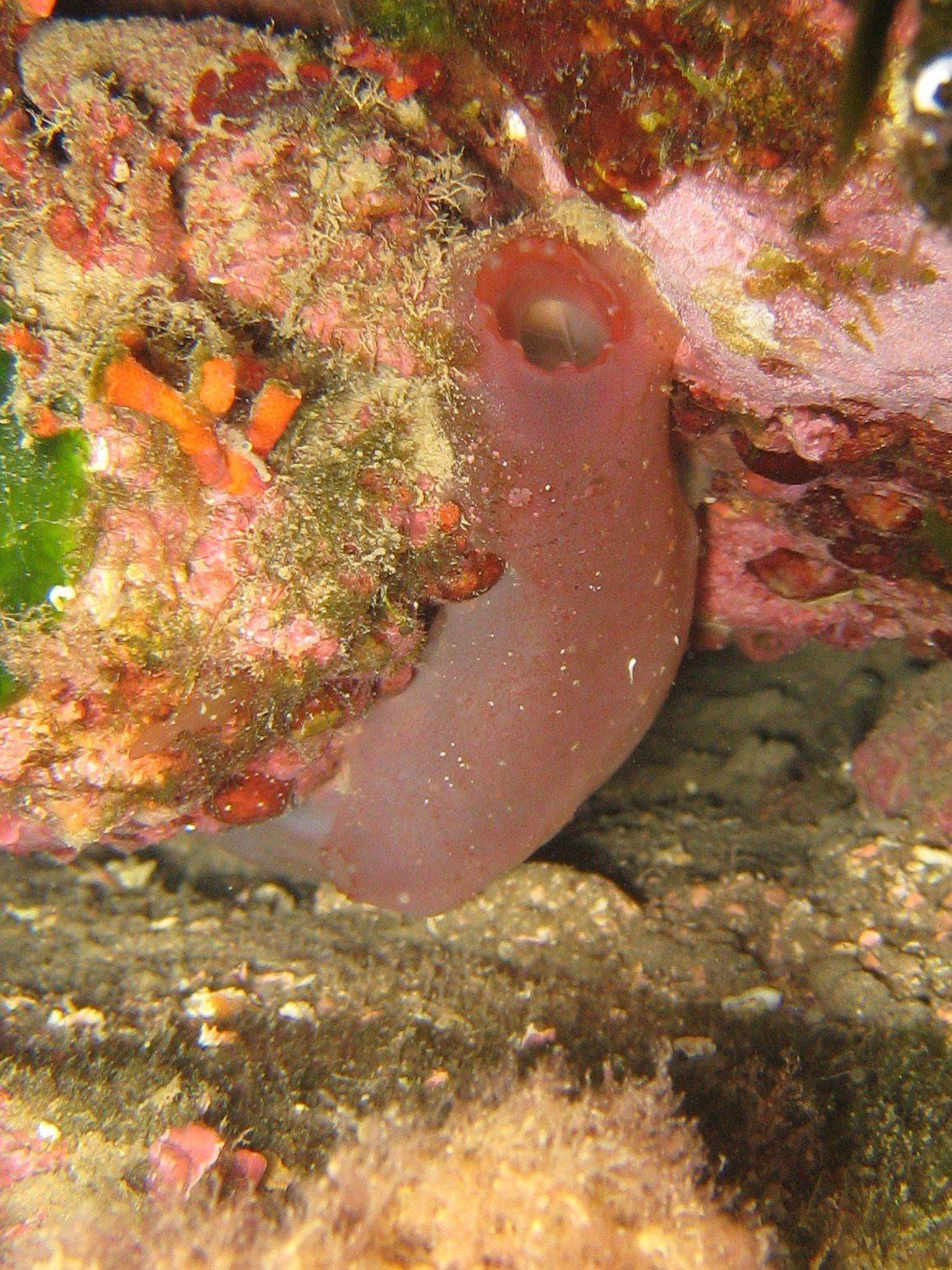
Uro = tail: the rod only in the larva's tail.
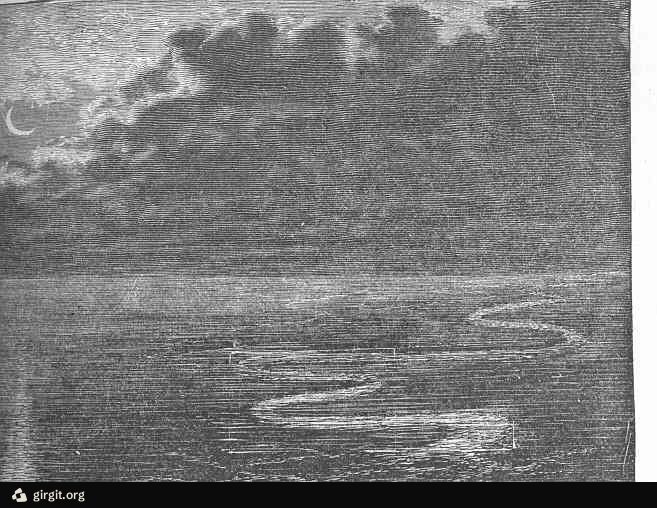
A urochordate that drifts in chains.
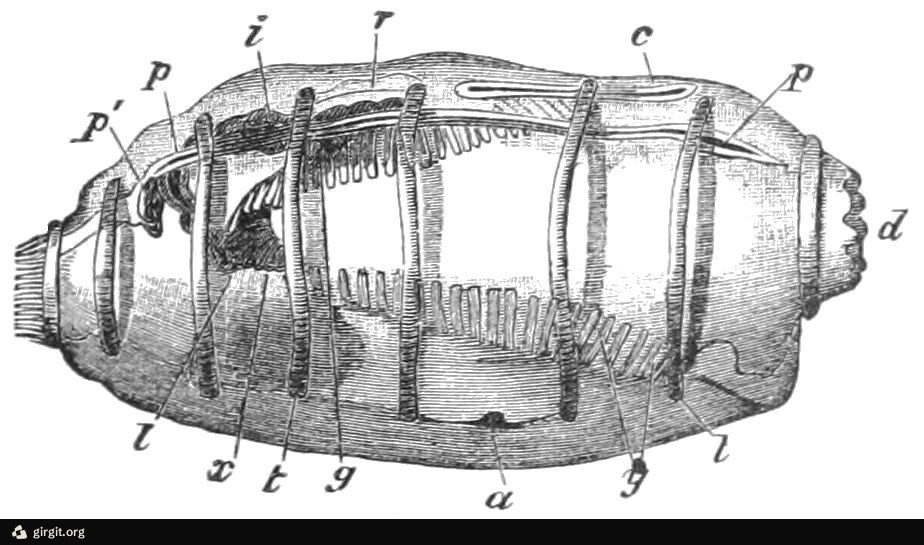
A barrel-shaped tunicate.
Cephalo = head: the rod reaches right into the head, for life.
CheckHead to tail, for life
Whose rod lasts?
In which animal does the notochord run from head to tail and last all its life?
- Ascidia
- Branchiostoma
- Rana
- Balanoglossus
Try itSort the chordates
Into their subphyla
Drop each animal where its rod runs.
8.6Vertebrates
All are chordates; not all chordates are
The embryo's notochord is replaced by a vertebral column of cartilage or bone. All Mumbaikars are Indians; not all Indians are Mumbaikars.
Full text
Vertebrates
In vertebrates, the embryo's notochord is replaced in the adult by a vertebral column (backbone) of cartilage or bone. So:
All vertebrates are chordates, but not all chordates are vertebrates.
Besides the chordate features, vertebrates have:
- a muscular heart on the ventral side, with 2, 3 or 4 chambers depending on the class;
- kidneys, which remove waste and balance water and salts;
- paired appendages: fins or limbs.
8.7A muscular heart, ventral
2–4chambers
2, 3 or 4, depending on the class
- KidneysRemove waste; balance water and salts.
- Paired appendagesFins or limbs.
CheckNot all chordates
Why not vertebrates?
Why is it true that not all chordates are vertebrates?
- Some chordates never have a notochord
- Protochordates have a notochord but never a vertebral column
- Hemichordates are chordates without a backbone
8.8How vertebrates are divided
Jaws, then fins or limbs
Gnathos = jaw: a-gnatha, jawless; gnatho-stomata, jaw-mouthed. Tetra-poda, four-footed, though snakes and some amphibians lost their legs.
Full text
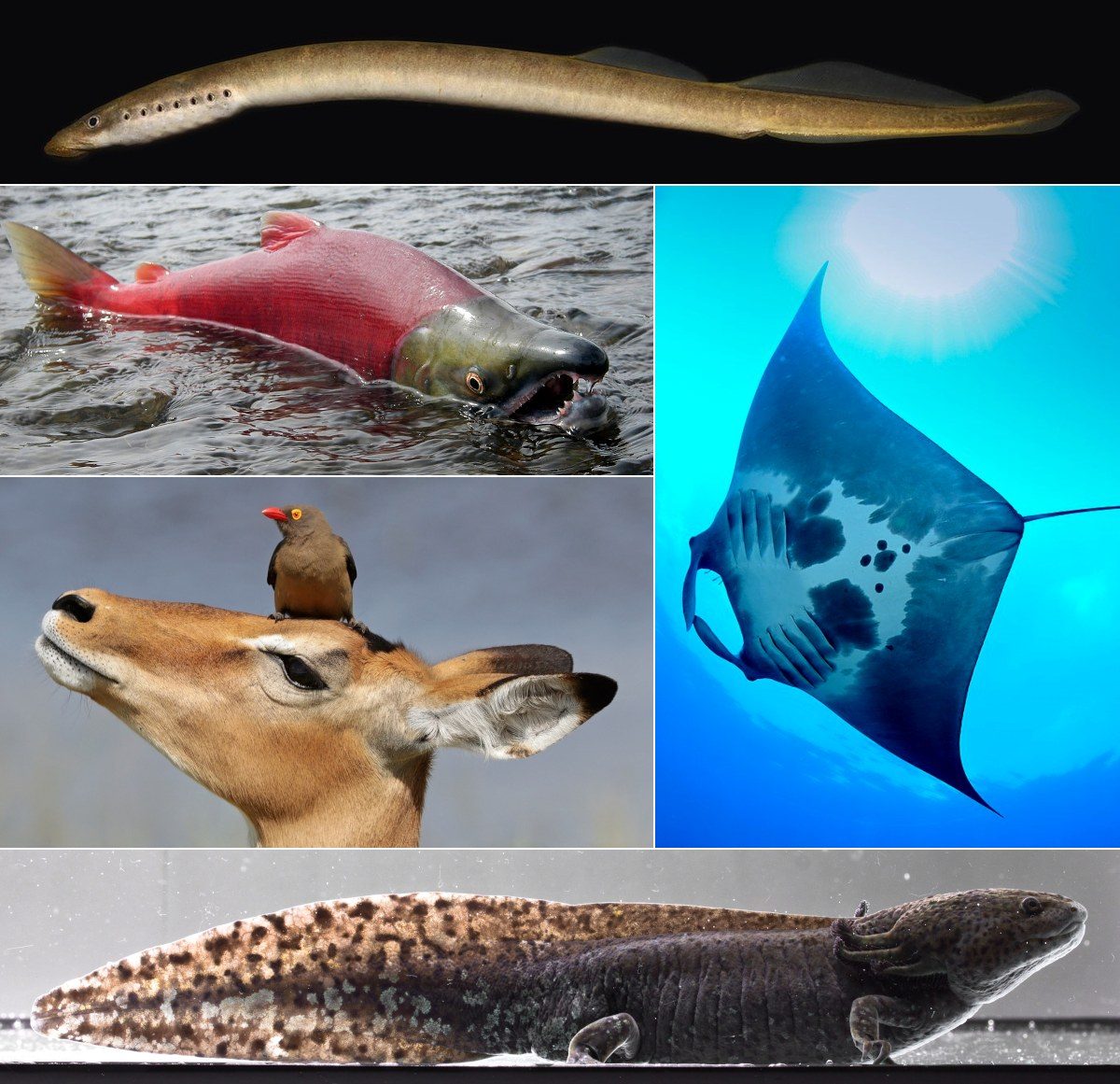
How vertebrates are divided
- Division Agnatha: no jaws.
- Class Cyclostomata (lampreys, hagfish)
- Division Gnathostomata: with jaws.
- Super class Pisces (bear fins): Class Chondrichthyes, Class Osteichthyes.
- Super class Tetrapoda (bear limbs): Class Amphibia, Reptilia, Aves, Mammalia.
Gnathos means jaw, so "a-gnatha" is jawless and "gnatho-stomata" is jaw-mouthed. "Tetrapoda" means four-footed, even though snakes and some amphibians have lost their legs.
Don't mix these up
- Chordate nerve cord: dorsal, hollow, single. Non-chordate: ventral, solid, double.
- Chordate heart is ventral; non-chordate heart is dorsal. Easy to swap under pressure.
- Chordates are coelomate, not pseudocoelomate, and have a closed circulation.
- Lifelong notochord: Cephalochordata. Larval tail only: Urochordata.
Division
Agnatha
no jaws
- Class Cyclostomatalampreys, hagfish
Division
Gnathostomata
with jaws
Super class
Pisces
bear fins
- Chondrichthyes
- Osteichthyes
Super class
Tetrapoda
bear limbs
- Amphibia
- Reptilia
- Aves
- Mammalia
8.9Don't mix these up
Easy to swap under pressure
Trap
Chordate heart dorsal, nerve cord ventral
Fact
Chordate heart ventral; nerve cord dorsal, hollow, single
Chordates are coelomate with a closed circulation. Lifelong rod: Cephalochordata. Larval tail only: Urochordata.
Don't mix these up
- Chordate nerve cord: dorsal, hollow, single. Non-chordate: ventral, solid, double.
- Chordate heart is ventral; non-chordate heart is dorsal. Easy to swap under pressure.
- Chordates are coelomate, not pseudocoelomate, and have a closed circulation.
- Lifelong notochord: Cephalochordata. Larval tail only: Urochordata.
KeepJust remember
Names that explain themselves
Tap a card for its hook.
WordsTo know
Seven words
- Dorsal hollow nerve cord
- A tube of nerve tissue along the back.
- Pharyngeal gill slits
- Paired openings in the wall of the throat.
- Post-anal tail
- The part of the body that continues past the anus.
- Protochordates
- Urochordates and cephalochordates: chordates without a backbone.
- Vertebral column
- The backbone, of cartilage or bone, that replaces the notochord.
- Agnatha, Gnathostomata
- Jawless and jawed vertebrates.
- Tetrapoda
- Vertebrates with limbs: amphibians, reptiles, birds, mammals.
NEETAsked in the exam
The real thing
RootsThe kit of a small swimming filter-feeder
Each badge had a job
- Slits: a food sieveLater gills; in you, ear and throat.
- Rod: for swimmingMuscle pulls on it; the body bends.
- Tail: a better paddleAll muscle, no gut.
- Hollow cord: it rolled upThe neural tube, still hollow in you.
- Backbone: bigger bodiesSupport, anchors, armour.
See itA lifetime of badges
Who keeps which badge?
The lancelet keeps the whole kit; the sea squirt only the sieve; a vertebrate rebuilds it.
StoryA slug that wasn't
From mollusc to cousin
- 1774Peter Simon PallasA preserved animal from Cornwall: Limax lanceolatus, a slug.
- 1834Oronzio CostaThe Italian zoologist renames it Branchiostoma, "gill mouth".
- 1860sKovalevskyIts development: the closest living picture of a simple chordate.
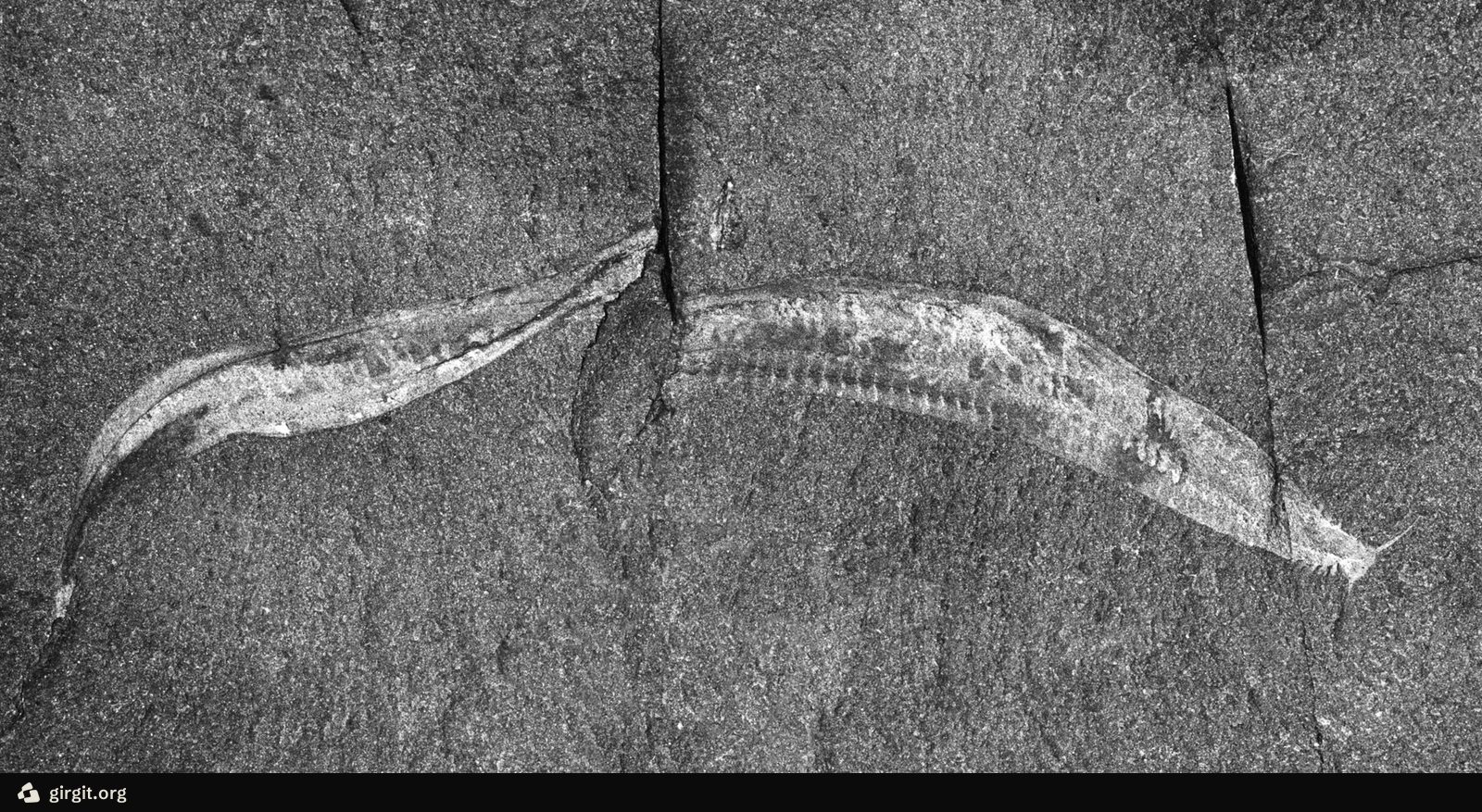 Pikaia

StoryThe Burgess Shale, Canada
A worm that was family
- 1911: Charles WalcottNames Pikaia, a ribbon a few centimetres long, and calls it an annelid.
- 2012: Simon Conway Morris, Jean-Bernard Caron114 specimens: muscle blocks like a lancelet's, maybe a notochord.
- About 505 million years oldPerhaps one of our oldest relatives.
Solve itTwo problems and a check
Your turn
Solve it
A tiny sea animal has a pharynx with slits, a notochord in its tail and a hollow nerve cord, and swims. Two weeks later it has settled on a rock, lost its tail and is pumping water through its slits. Name the subphylum, and say which features it kept.
Answer
Solve it
Spot the error: "All chordates have a backbone, and all animals with gill slits are chordates."
Answer
In an adult human, which chordate feature is still present in its original form?
- The notochord
- The dorsal hollow nerve cord
- Open gill slits
ConnectAnd still confused?
Where this goes next
Connect it
- Your spinal cord, Ch 18. The dorsal hollow nerve cord, grown up: the human neural system.
- Your backbone, Ch 17. What replaced the notochord: the axial skeleton.
- Jaws from slits, concept 9. What the pharyngeal arches became: jawless vertebrates and fishes.
- Evolution, Class 12. Embryos as evidence: evidences for evolution.
Did human embryos really have gill slits?
Not working gills. Around the fourth week the human embryo has pharyngeal arches with pouches inside and grooves outside, the same plan as the gill region of a fish embryo, but they never open through. They go on to form the jaw, the ear bones, the tonsils, the thymus and parts of the throat. Textbooks call them "gill slits" because of the shared plan.
Why is the heart ventral in chordates but dorsal in non-chordates?
It is a pattern, not a rule you can derive: in chordates the main pump lies below the gut, in annelids and arthropods the main pumping vessel or heart lies above it. Learn it with the "mirror image" picture: whatever is on the back in one group is on the belly in the other.