Act 07NCERT §4.2.9–4.2.10 · p. 455 min
Echinoderms and hemichordates
The insect becomes a starfish: five arms round a central disc, a ring of water pipes and rows of tube feet underneath.
Five arms round a disc, hundreds of feet underneath.
From the textbookp. 45
NCERT Biology, Class 11 · Reprint 2026-27
7.0The big idea
Walking on water pipes.
Echinoderms: spiny-skinned sea animals moved by water-filled tubes. Hemichordates: small sea worms that share gill slits with us, but have no true notochord.
Full text
The big ideaEchinoderms are spiny-skinned sea animals that move with a system of water-filled tubes; hemichordates are small sea worms that share gill slits with us but have no true notochord.
In simple words
A starfish has no head and no brain in the middle, but it can walk. Under each arm are hundreds of tiny tube feet pumped full of sea water, like a row of little water balloons that stretch and grip. The acorn worm is a soft sea worm that digs in sand. It has slits in its throat like a fish, which makes it a far-off cousin of animals with backbones.
7.1Where they sit on the key
Coelom, no segments, no rod
Both are true coelomates without segments. Neither has a notochord: both are non-chordates.
- 1
Level of organisation?
CellularPorifera
Tissue, organ or organ system
- 2
Symmetry and germ layers?
Radial · two layersCoelenterataCtenophora
Bilateral · three layers
- 3
Body cavity?
NonePlatyhelminthes
False coelomAschelminthes
True coelom
- 4
Segmented?
NoMolluscaEchinodermataHemichordata
Yes
- 5
Notochord?
NoAnnelidaArthropoda
YesChordata
7.2Phylum Echinodermata · "spiny-skinned"
Bones inside, spines out
- An endoskeleton of calcareous ossiclesSmall chalky plates, often with spines through the skin.
- All marine; organ system, triploblastic, coelomateAdults radial, larvae bilateral.
- Complete gut, upside downMouth on the lower (ventral) side, anus on the upper (dorsal).
Full text
Phylum Echinodermata
"Echinoderm" means spiny-skinned. These animals have an endoskeleton (an inner skeleton) of calcareous ossicles: small chalky plates, often with spines poking out through the skin.
- All marine. Organ system level, triploblastic, coelomate.
- Adults are radial, but the larvae are bilateral.
- Complete gut, with the mouth on the lower (ventral) side and the anus on the upper (dorsal) side.
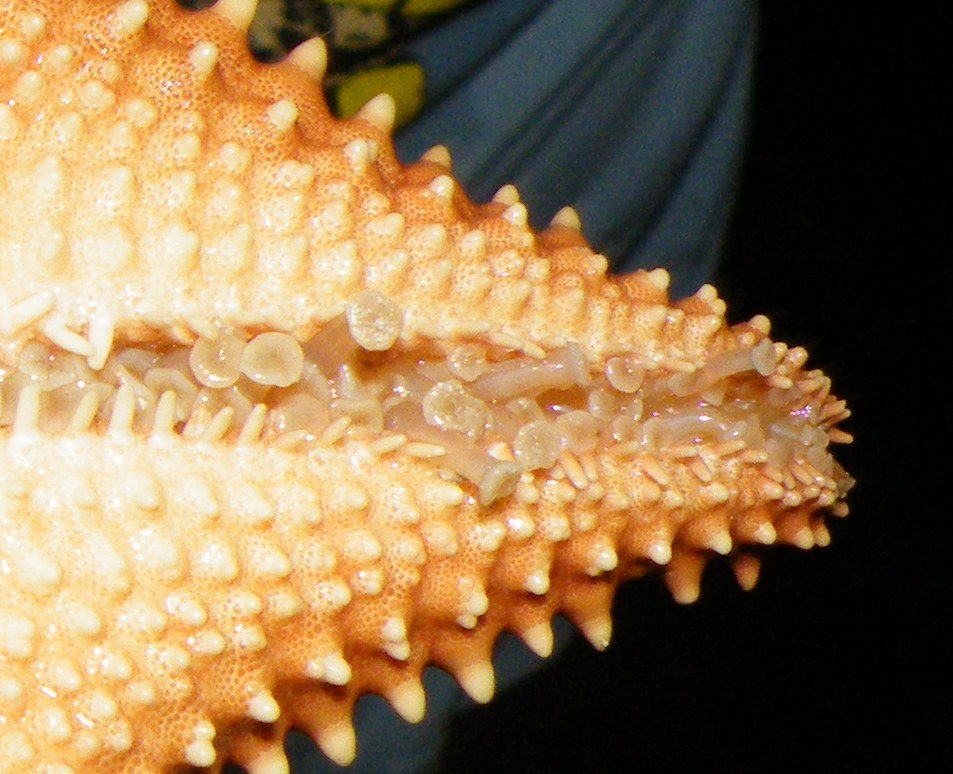
- Most distinctive feature: the water vascular system. It has three jobs: moving the animal (locomotion), catching food and carrying it to the mouth, and breathing (respiration).
- No excretory system.
- Sexes separate. Reproduction sexual. Fertilisation usually external. Development indirect, with a free-swimming larva.
Examples:
| Genus | Common name |
|---|---|
| Asterias | Starfish |
| Echinus | Sea urchin |
| Antedon | Sea lily |
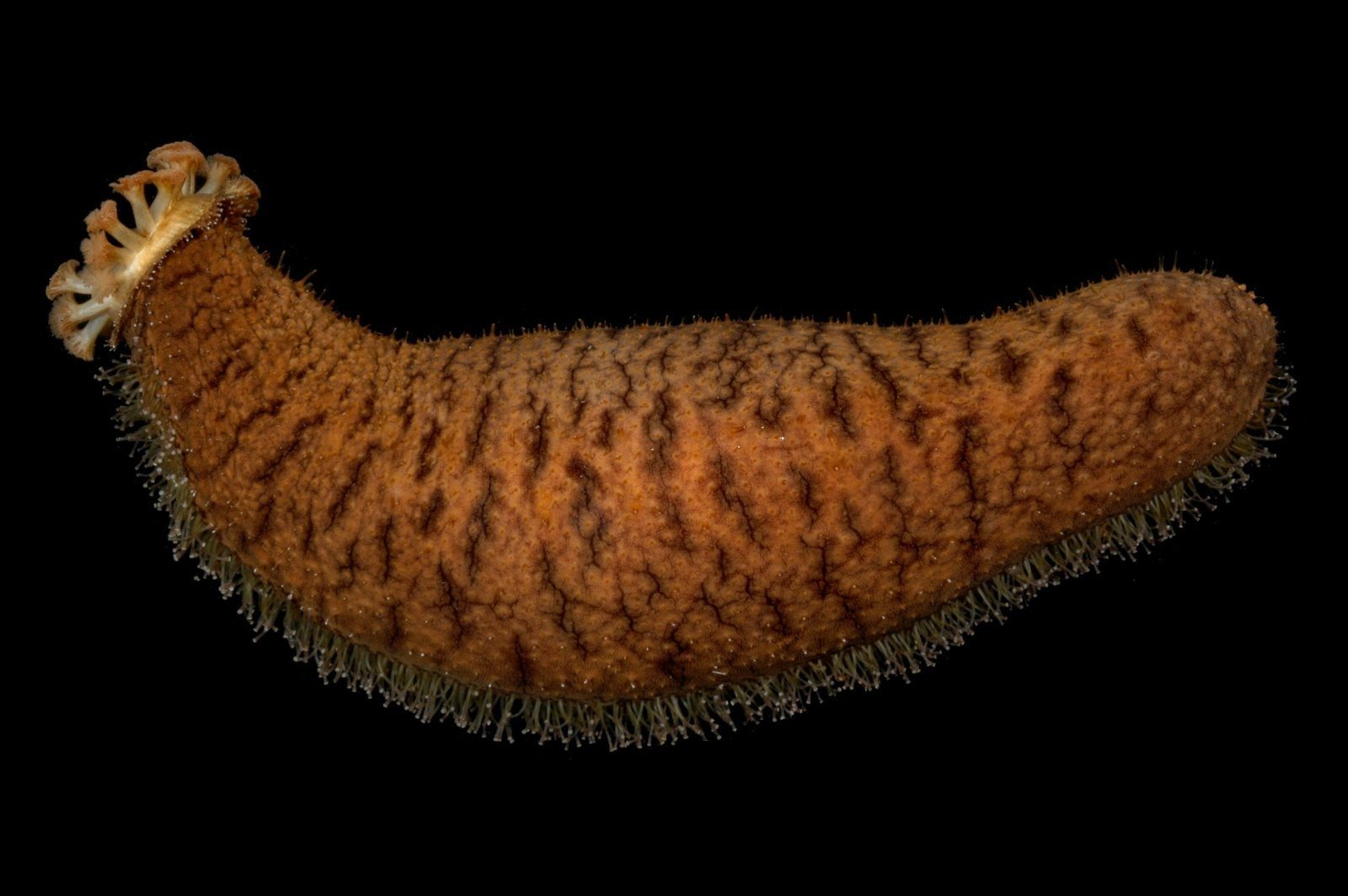
| Cucumaria | Sea cucumber |
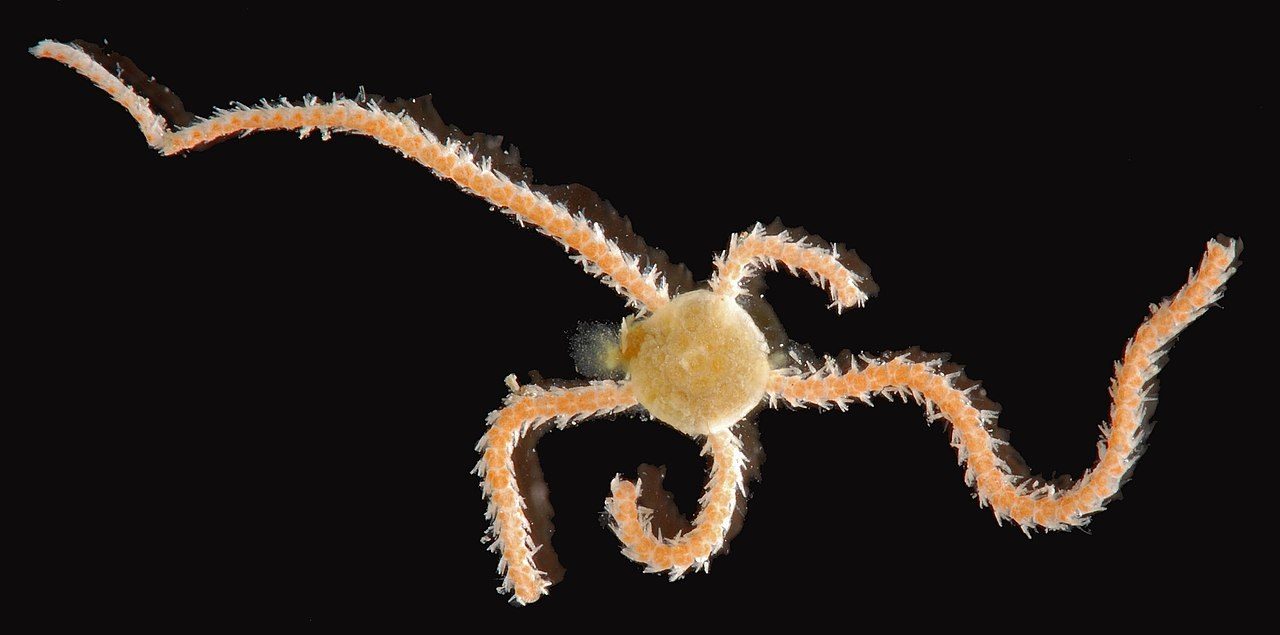
| Ophiura | Brittle star |
Starfish, sea lily and sea cucumber are no more fish, lilies or cucumbers than a seahorse is a horse.
CheckWhich way up?
Where is the mouth?
In an echinoderm, the mouth is on the
- lower (ventral) side
- upper (dorsal) side
- same opening as the anus
7.3The water vascular system
A set of hydraulic jacks
Sea water enters through a sieve plate on top.
A ring round the mouth, then a canal down every arm.
Water in, a foot stretches; water out, it pulls back. Together they drag the star across a rock.
Locomotion, capture and transport of food, and respiration. Not excretion.
Try itOne foot
Squeeze the bulb
Push water from the bulb into a tube foot and see how far it goes.
7.4Echinoderms
0
No excretory system at all.
- Sexes separateReproduction sexual.
- Fertilisation usually externalIn the sea.
- Development indirectThrough a free-swimming larva.
CheckWalk, eat, breathe
Which job is missing?
Which job does the water vascular system of a starfish NOT do?
- Locomotion
- Capture of food
- Respiration
- Excretion
7.5Examples to learn
No fish, no lily, no cucumber
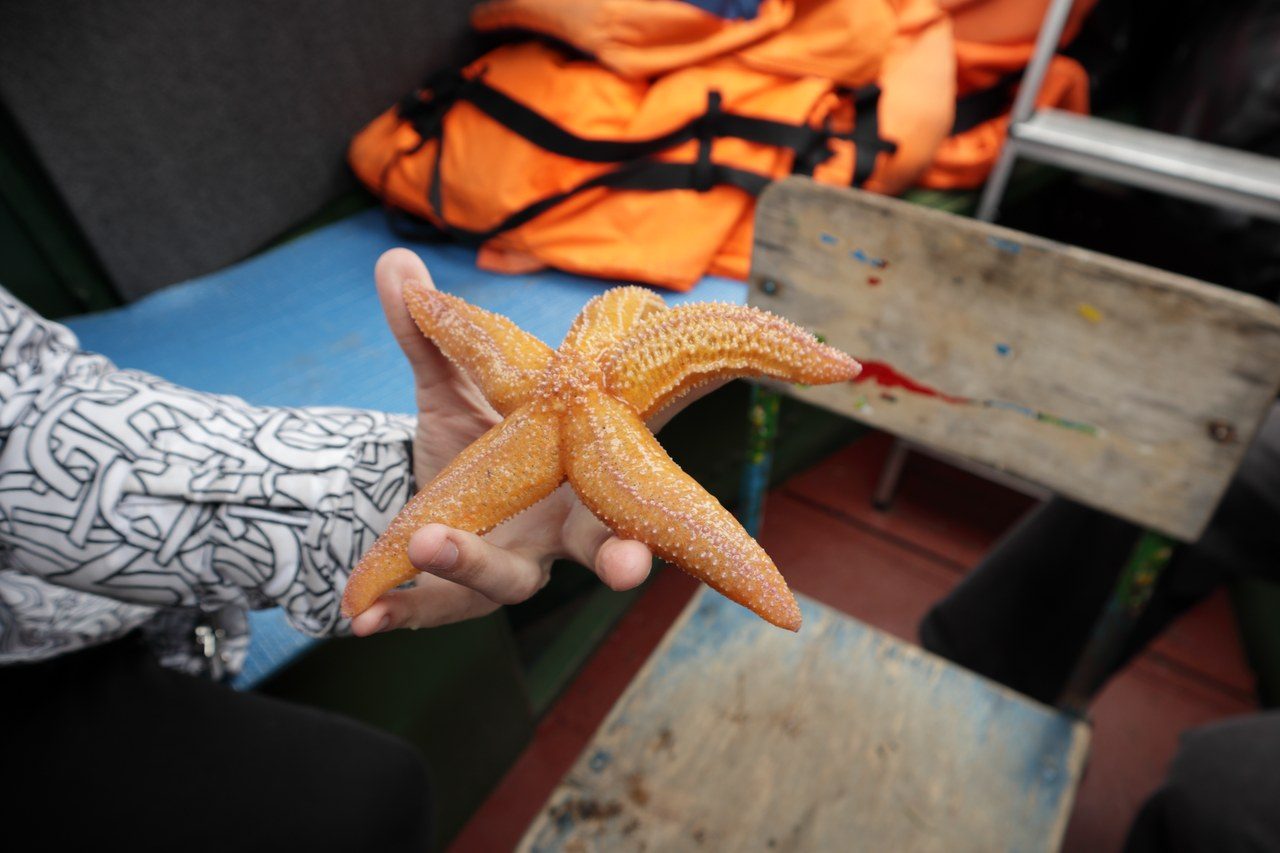
Asterias, the starfish.
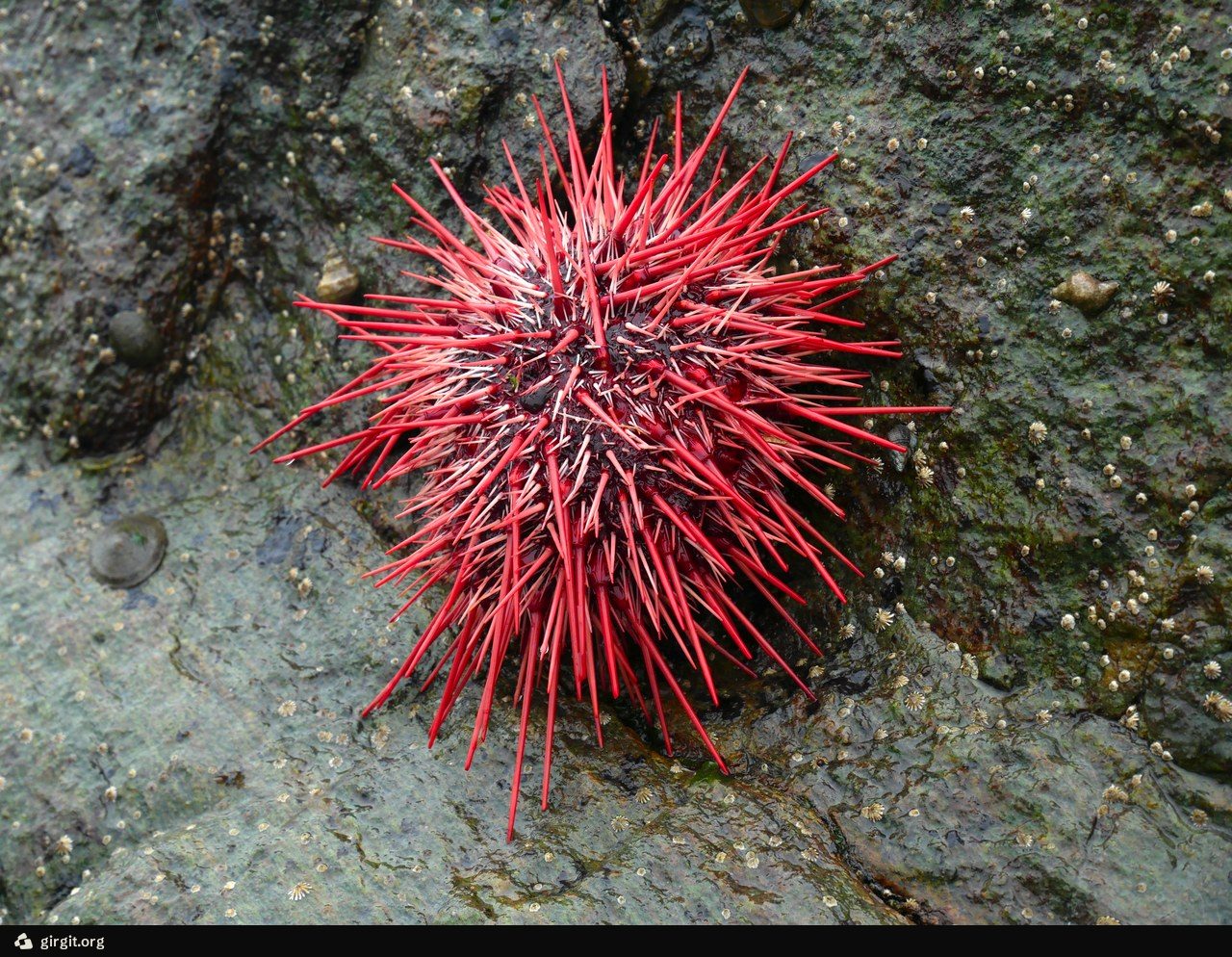
Echinus, the sea urchin.
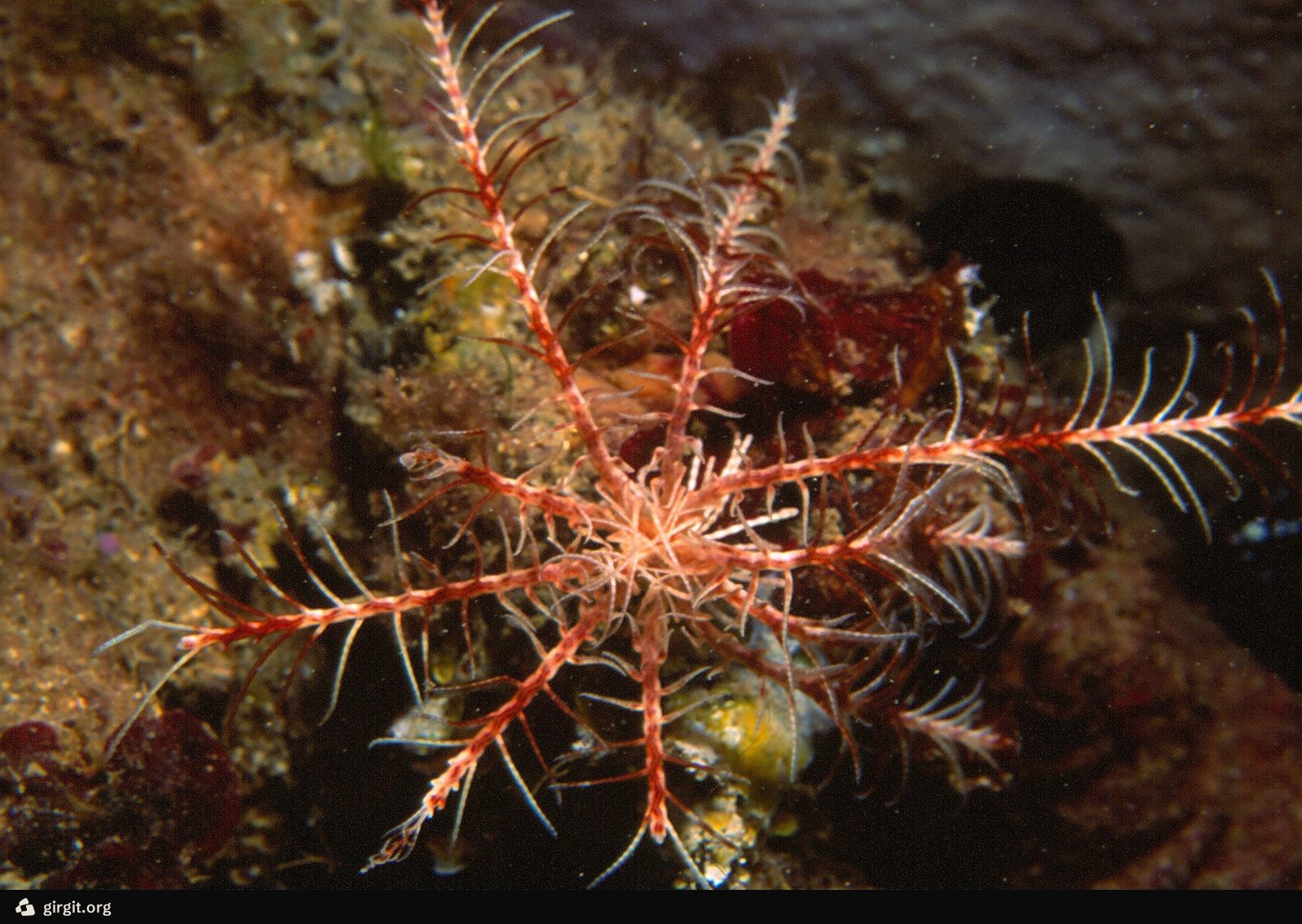
Antedon, the sea lily (feather star).
Cucumaria, the sea cucumber.
Ophiura, the brittle star.
7.6Phylum Hemichordata · "half a chordate"
The cousin with our family nose
- Once a sub-phylum of ChordataNow a separate phylum of non-chordates.
- The stomochordA rudimentary rod in the collar that looks like a notochord but is not one.
- Three partsA proboscis, a collar, a long trunk.
Full text
Phylum Hemichordata
Hemichordata was once treated as a sub-phylum of Chordata. It is now a separate phylum, placed with the non-chordates.
Why the confusion? In the collar region they have a small, rudimentary (poorly developed) structure called the stomochord, which looks similar to a notochord but is not one. ("Hemi" means half: half a chordate.)
- Few in number: a handful of sea-dwelling animals shaped like worms.
- Organ system level, bilateral, triploblastic, coelomate.
- Body cylindrical, in three parts: from front to back, a proboscis, a collar, and a long trunk.
- Open circulatory system.
- Breathing through gills: like chordates, the pharynx has gill slits.
- Excretory organ: the proboscis gland.
- Sexes separate. Fertilisation external. Development indirect.
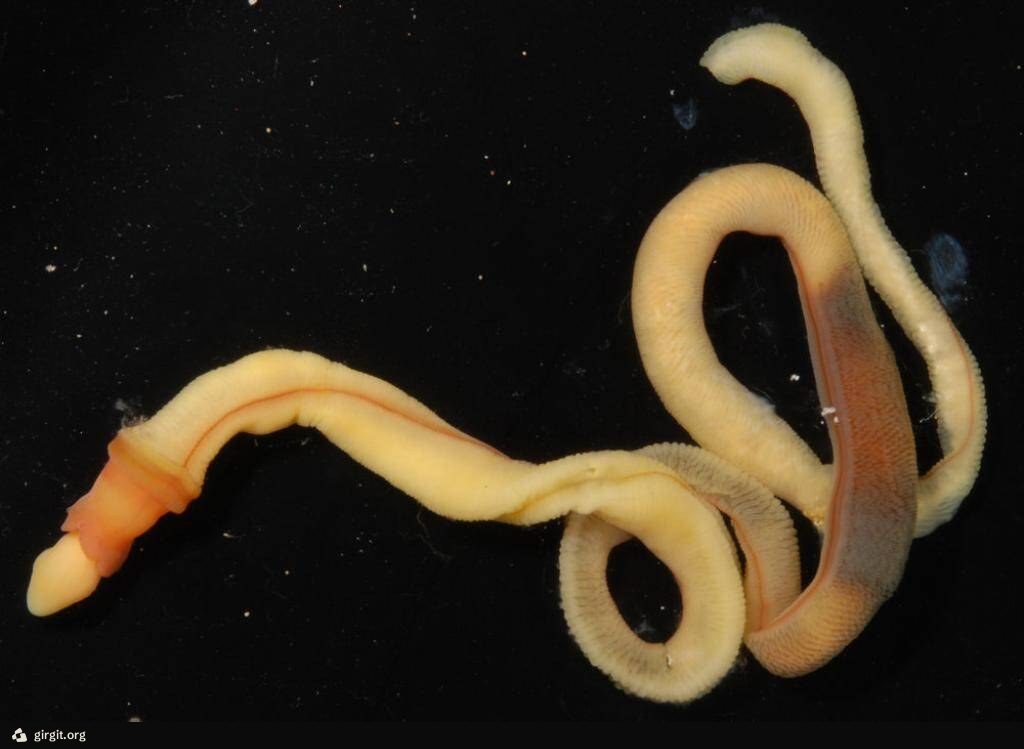
Examples: Balanoglossus (the acorn worm) and Saccoglossus.
7.7A handful of sea-dwelling, worm-shaped animals
Gill slits, like ours
Organ system level, bilateral, triploblastic, coelomate; body cylindrical.
Breathe
Respiration
- Organs
- Gills: a pharynx with gill slits
Flow
Blood and waste
- Circulation
- Open
- Excretion
- The proboscis gland
Young
Reproduction
- Sexes
- Separate
- Fertilisation
- External
- Development
- Indirect
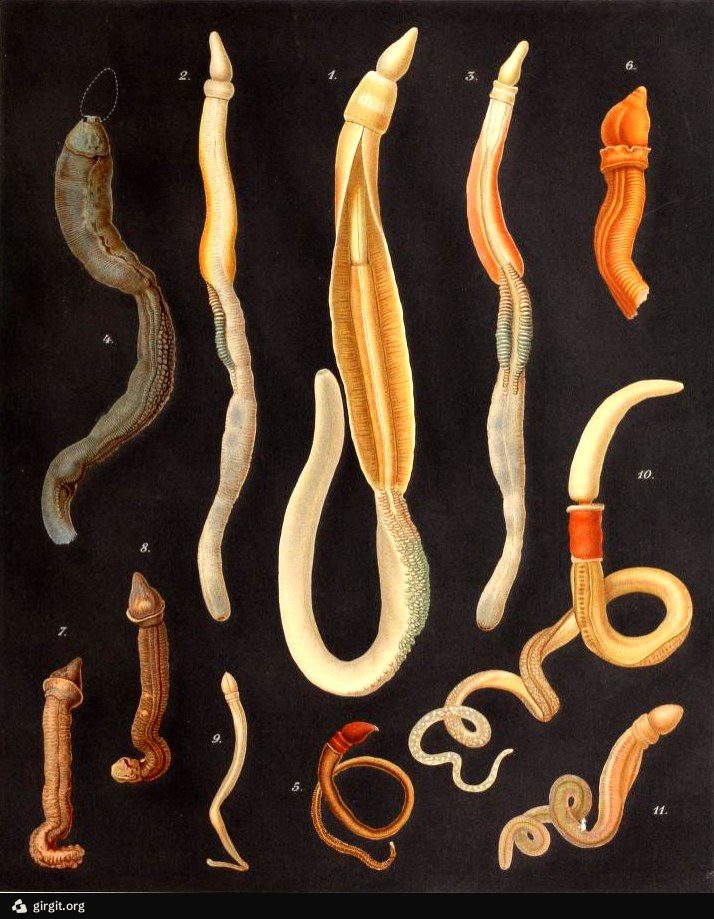
7.8Drawn in 1893
Two tongues to learn
Balanoglossus, the acorn worm, and Saccoglossus. Both end in -glossus, tongue: the proboscis looks like one.
CheckOut of the chordates
Why not a chordate?
Why is Balanoglossus no longer placed in Chordata?
- It has no gill slits
- Its stomochord is not a true notochord
- It is radially symmetrical
- It has no coelom
Try itSort them
Spiny or half-chordate?
Drop each genus on its phylum.
7.9Side by side
Two phyla, one glance
Echinodermata
All marine
- Symmetry
- Adult radial, larva bilateral
- Body
- Spiny, endoskeleton of ossicles
- Hallmark
- Water vascular system
- Excretion
- No excretory system
- Fertilisation
- Usually external
Hemichordata
Marine
- Symmetry
- Bilateral
- Body
- Worm-like: proboscis, collar, trunk
- Hallmark
- Stomochord, gill slits
- Excretion
- Proboscis gland
- Fertilisation
- External
Full text
Side by side
| Echinodermata | Hemichordata | |
|---|---|---|
| Habitat | All marine | Marine |
| Symmetry | Adult radial, larva bilateral | Bilateral |
| Body | Spiny, endoskeleton of ossicles | Worm-like: proboscis, collar, trunk |
| Hallmark | Water vascular system | Stomochord, gill slits |
| Excretion | No excretory system | Proboscis gland |
| Fertilisation | Usually external | External |
| Remember | Asterias, Echinus, Antedon, Cucumaria, Ophiura | Balanoglossus, Saccoglossus |
Don't mix these up
- The water vascular system does locomotion, food capture and transport, and respiration. Not excretion, not digestion.
- Echinoderms have an endoskeleton (inside); arthropods have an exoskeleton (outside).
- Stomochord is not a notochord. Hemichordates are non-chordates. What they really share with chordates is a pharynx with gill slits.
- Radial symmetry is never found in hemichordates, adult or larva.
7.10Don't mix these up
Gill slits are not enough
Trap
The stomochord is a notochord
Fact
It is not: hemichordates are non-chordates
What they share with chordates is a pharynx with gill slits. Echinoderms: endoskeleton; arthropods: exoskeleton.
Don't mix these up
- The water vascular system does locomotion, food capture and transport, and respiration. Not excretion, not digestion.
- Echinoderms have an endoskeleton (inside); arthropods have an exoskeleton (outside).
- Stomochord is not a notochord. Hemichordates are non-chordates. What they really share with chordates is a pharynx with gill slits.
- Radial symmetry is never found in hemichordates, adult or larva.
KeepJust remember
Walk, eat, breathe
Five echinoderms, two hemichordates, one list of jobs: tap a card.
WordsTo know
Six words
- Ossicles
- Small chalky plates making an echinoderm's skeleton.
- Water vascular system
- Water-filled canals and tube feet of echinoderms.
- Stomochord
- A rudimentary notochord-like rod in a hemichordate's collar.
- Proboscis
- The front, snout-like part of a hemichordate.
- Proboscis gland
- The excretory organ of hemichordates.
- Endoskeleton
- A skeleton inside the body.
NEETAsked in the exam
The real thing
RootsThe gap a starfish needs in a clam
0.1mm
thinner than a sheet of paper
- Pulls of more than 3 kgMeasured in 1956; repeated pulls open it quickly.
- Then the stomach goes outThrough its mouth and the gap: the clam is digested in its shell.
- Glue, then releaseTwo glue cells stick, a third lets go.
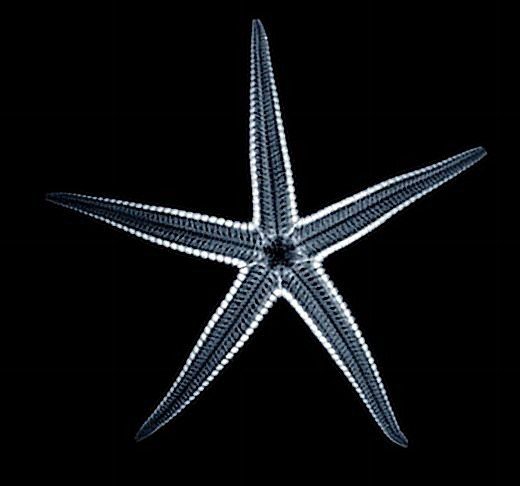
See itAn X-ray
Hydraulics inside chalk
A closed set of water-filled canals: squeeze an ampulla, water fills its tube foot; muscles in the foot pull it back. Hundreds of tiny hydraulic machines.
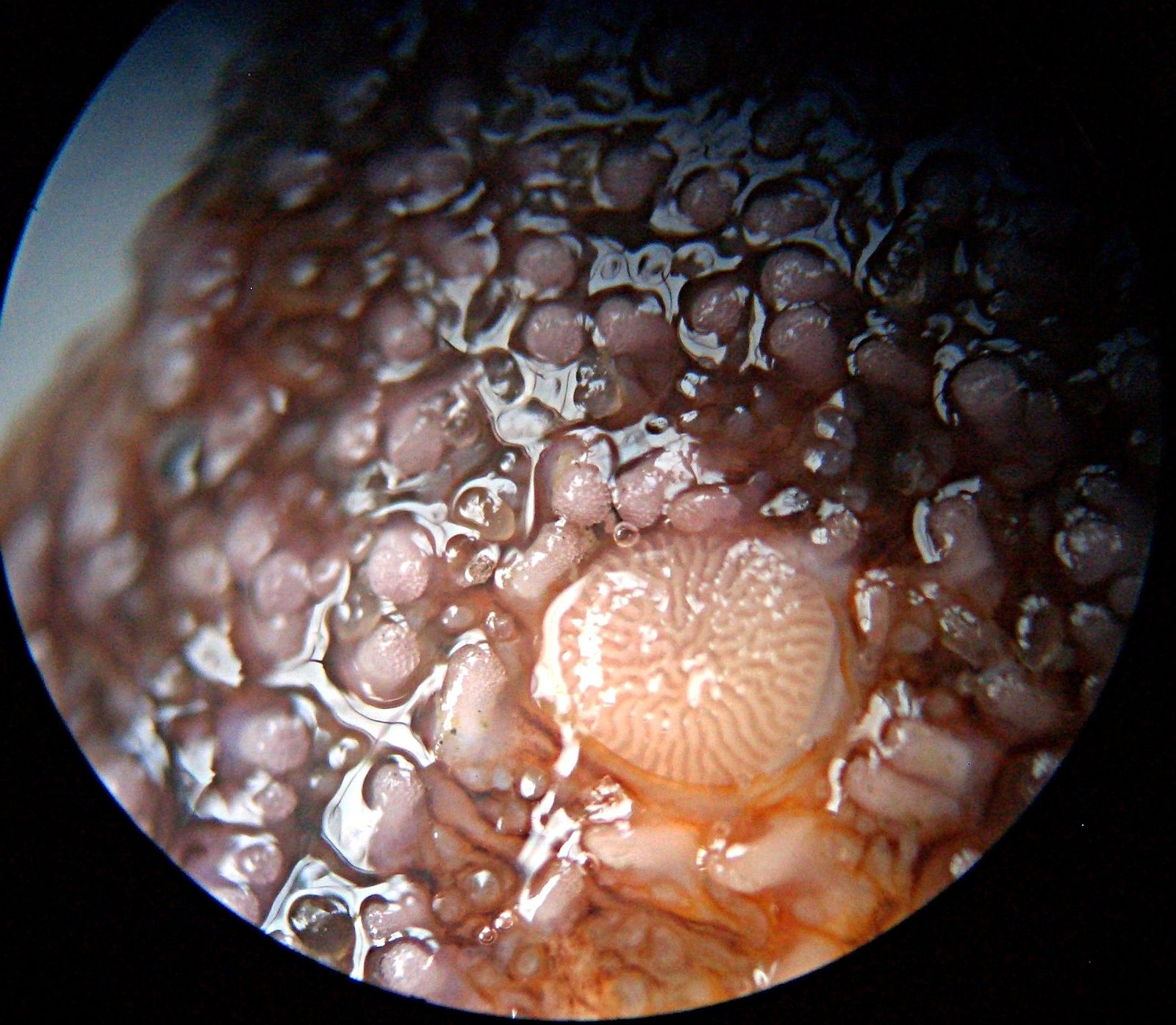
RootsOnly almost radial
One plate, one mirror line
Between two arms on top sits a single sieve plate where sea water enters. Only one mirror line runs through it.
See itTurn the star
Five-fold, nearly
Turn it, find the matching turns, then see the madreporite break the symmetry.
RootsWhy "cousin"?
Mouth second
Deuterostomes: echinoderms, hemichordates, chordates
The embryo's first opening becomes the anus
The mouth forms later: "second mouth". Starfish and acorn worms are closer to us than an earthworm or octopus.
William Bateson, 1880s
He named them half-chordates
Hemichordata, from studying Balanoglossus. Later: the notochord gene is not switched on in the stomochord.
StoryEchinoderms that shaped whole seas
Stars that vanish, stars that eat reefs
- 1962Crown-of-thorns outbreaksGreat Barrier Reef: 1962, 1979, 1993, 2009, about fifteen years each.
- 2012Coral cover 28% → 13.8%214 reefs since 1985: starfish 42% of the loss, storms 48%, bleaching 10%.
- 2013Sea star wasting, North America's Pacific coastStars turn to mush; the sunflower sea star loses about 90%, some 5.75 billion.
- 2020December: Critically EndangeredA marine heatwave is linked. Urchins boom and graze kelp forests bare.
Solve itTwo problems and a check
Your turn
Solve it
A starfish needs a gap of 0.1 mm to push its stomach into a clam. A clam's two shells meet along an edge 5 cm long. If the starfish opens a gap of 0.1 mm along the whole edge, how much water-filled space has it made, roughly, if the gap is 2 cm deep into the shell? Compare with the volume of a single drop of water (about 0.05 mL).
Answer
Solve it
A student says: "Hemichordates have gill slits, so they are chordates." Spot the error, using what defines a chordate.
Answer
In a starfish, sea water enters the water vascular system through the
- mouth
- madreporite
- tube feet
ConnectAnd still confused?
Where this goes next
Connect it
- Hydraulics, Physics Class 11. Pascal's law and the hydraulic lift, the same physics as the tube foot: hydraulic machines.
- Layers and openings, concept 2. Blastopore to anus, the deuterostome way: symmetry, layers and coelom.
- Chordates, concept 8. What hemichordates lack: the chordate features.
- Food webs, Class 12. Starfish, urchins and kelp as a chain where removing one link changes everything: food chains.
If the adult starfish is radial, why do textbooks call echinoderms "bilateral coelomates" in the chart?
Because their larvae are bilateral and their ancestors were bilateral. The radial adult is a later change. Tables list the adult (radial); the family tree goes by ancestry (bilateral).
Do echinoderms really have no excretory organs? Where does the waste go?
They have no special organs for it. Ammonia, their main waste, is very soluble and diffuses out across thin surfaces such as the tube feet and the skin gills into the sea water.
Sources
- Lavoie (1956), How sea stars open bivalves, Biological Bulletin 111: 114
- Tube foot adhesion and de-adhesion in sea stars (review)
- Stomochord
- Life: The Science of Biology, deuterostomes
- Cornell Chronicle (2020): sunflower sea star listed as critically endangered
- De'ath et al. (2012), The 27-year decline of coral cover on the Great Barrier Reef, PNAS
- eAtlas: crown-of-thorns starfish outbreaks