Act 01NCERT §4.1–4.1.1 · pp. 37–384 min
How do we sort animals?
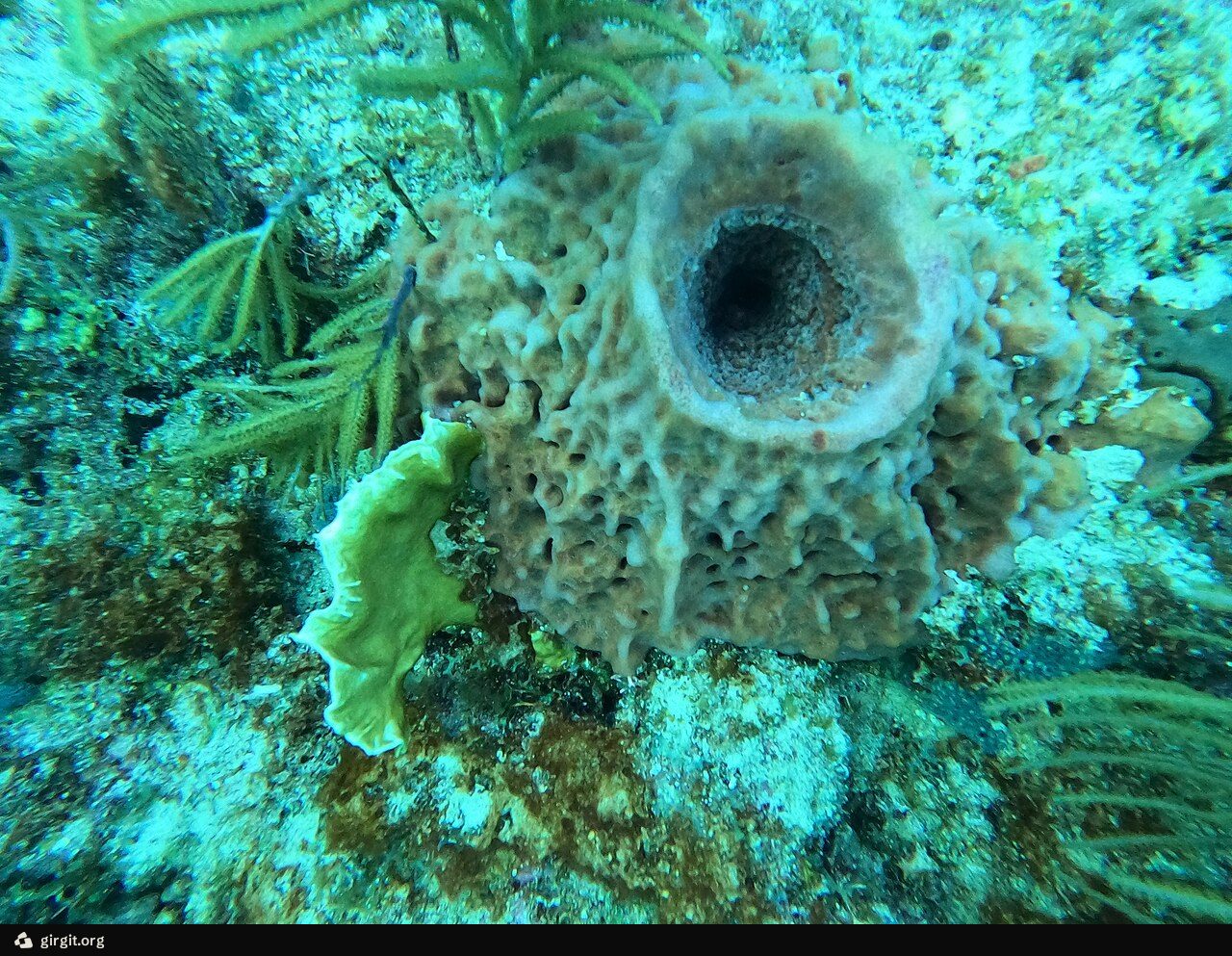
A sponge, a loose vase of separate cells with water flowing in through its pores and out of the top, becomes a jelly whose cells are organised into two layers: the step from the cellular level to the tissue level.
Cells that work alone, then cells that work as teams.
From the textbookpp. 37–38
NCERT Biology, Class 11 · Reprint 2026-27
1.0The big idea
Sort them by how the body is built.
Not by colour or size. By a few deep features of the body, starting with how its cells are organised.
Full text
The big ideaAnimals look wildly different on the outside, but they can be sorted by a few deep features of how their bodies are built, starting with how their cells are organised.
In simple words
A sponge, an earthworm, a crow and you are all animals. To put them in order, we don't look at colour or size. We ask simple questions about the inside of the body. Are the cells just stuck together in a loose heap, or do they work as teams? Do the teams make body parts? Do the body parts work together in big groups? Does food go in one hole and out the same hole, or in at one end and out at the other?
More than a million kinds of animals have been described so far, and new ones are found every year. Without a system, a list that long would be useless. Classification, sorting living things into groups by shared features, does two jobs: it makes the huge variety easier to study, and it gives every newly found species a proper place to sit.
1.1Kinds of animal described so far
1 million+
- Classification: sorting by shared featuresLiving things grouped by what they have in common.
- Job oneIt makes a huge variety easier to study.
- Job twoEvery newly found species gets a proper place to sit.
1.2The basis of classification
Ask about the inside
Fundamental features shared across many animals: level of organisation, symmetry, germ layers, the coelom, segments, a notochord, and how the gut, blood and reproductive systems work. Like sorting vehicles by wheels and engine, never by colour.
Full text
The basis of classification
Animals differ in shape and form, but some fundamental features keep turning up across many of them. These features are the basis of classification:
- how the cells are arranged (the level of organisation);
- the symmetry of the body;
- the number of germ layers in the embryo;
- whether there is a body cavity, the coelom, and what kind;
- whether the body is in segments;
- whether there is a notochord;
- the patterns of the digestive, circulatory and reproductive systems.
This concept covers the first one. The next two cover the rest.
- 1
Level of organisation?
CellularPorifera
Tissue, organ or organ system
- 2
Symmetry and germ layers?
Radial · two layersCoelenterataCtenophora
Bilateral · three layers
- 3
Body cavity?
NonePlatyhelminthes
False coelomAschelminthes
True coelom
- 4
Segmented?
NoMolluscaEchinodermataHemichordata
Yes
- 5
Notochord?
NoAnnelidaArthropoda
YesChordata
1.3Levels of organisation
Four floors, one animal each
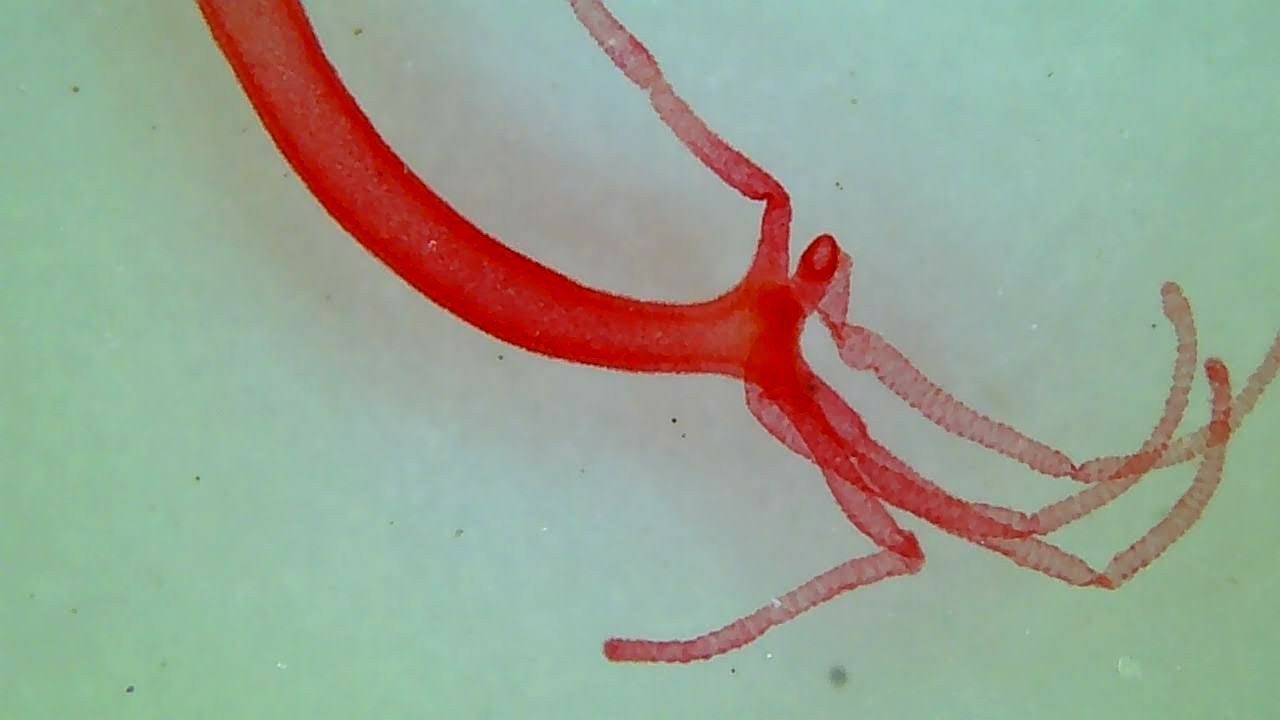
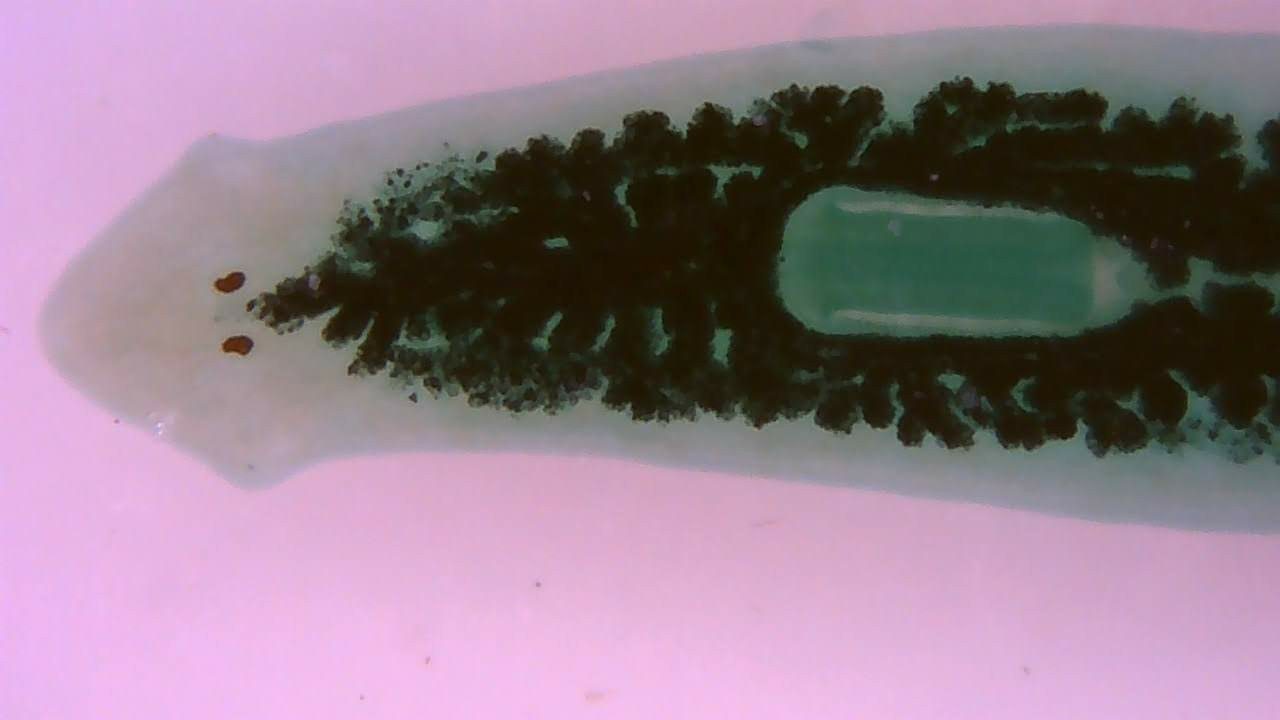
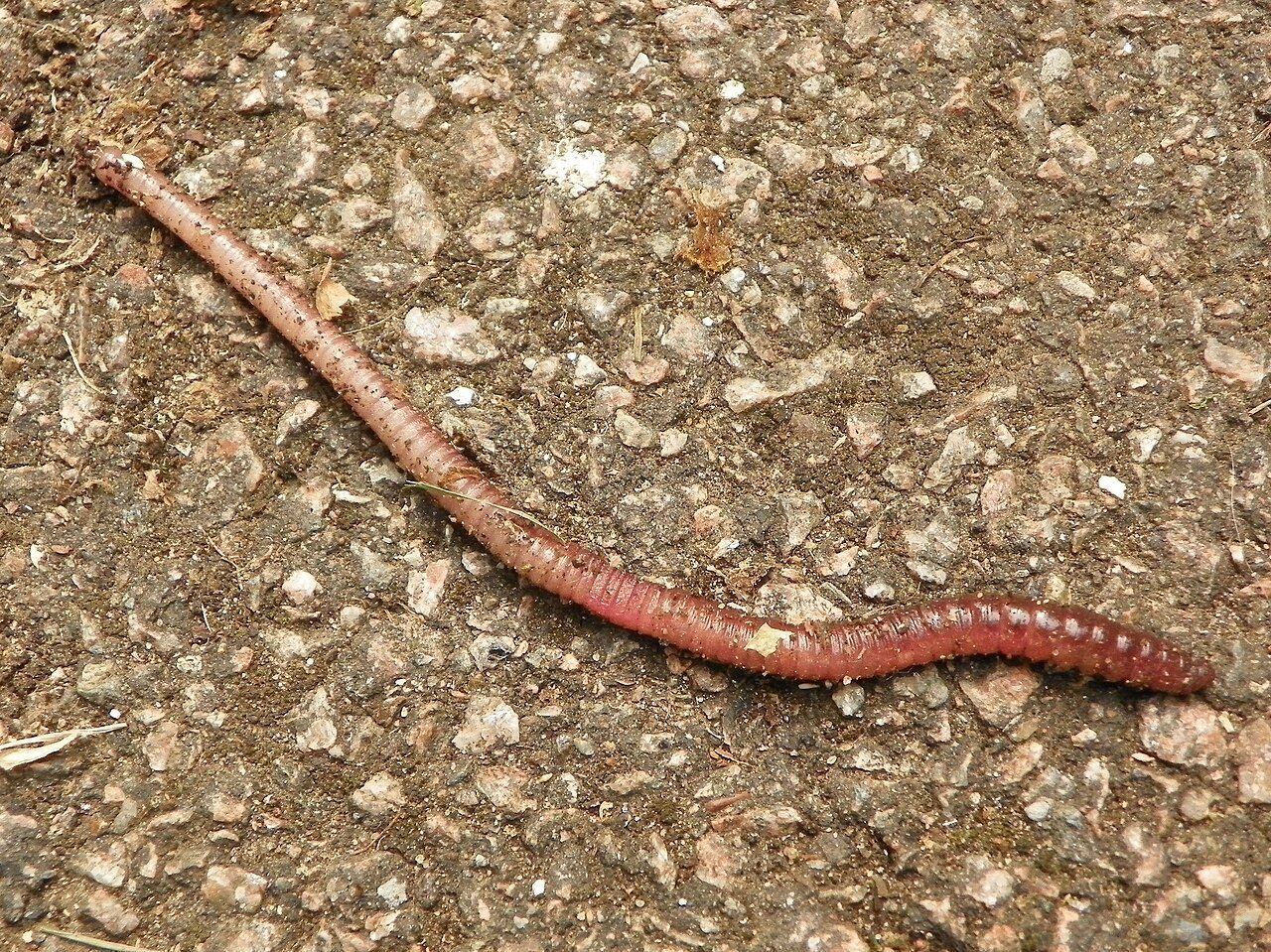
All animals are multicellular. Here the cells form a loose aggregate, with no tissues.
Cells doing the same job grouped into tissues.
Tissues grouped into organs, each with its own job.
Organs working as organ systems: Aschelminthes, annelids, arthropods, molluscs, echinoderms, hemichordates, chordates.
1.4Grows with every level
Share the work
Division of labour: cells sharing the work. A little in a sponge, more at each floor. A milling crowd, then a team of bowlers, the fielding side, the whole match.
Full text
Levels of organisation
All animals are multicellular, but their cells are not all organised the same way. There are four levels, each built on the one before:
| Level | What it means | Who has it |
|---|---|---|
| Cellular level | Cells form a loose aggregate (a heap of cells). Cells share some work, but they don't form tissues. | Sponges (Porifera) |
| Tissue level | Cells that do the same job are grouped into tissues. | Coelenterates (Cnidaria), Ctenophores |
| Organ level | Tissues are grouped into organs, each with its own special job. | Platyhelminthes (flatworms) |
| Organ system level | Organs work together as organ systems, each doing one body function (digestion, breathing...). | Aschelminthes, Annelids, Arthropods, Molluscs, Echinoderms, Hemichordates, Chordates |
Sharing the work among cells is called division of labour. Even in a sponge there is a little of it; it grows with every level.
One animal for each level. Look for what each one has that the one before it lacks.
Sort the phyla by level of organisation.
CheckTissues, no organs
Which floor?
A newly found animal has cells grouped into tissues, but no organs. Which group is it most likely to belong with?
- Sponges
- Coelenterates
- Flatworms
- Annelids
Try itSort the phyla
Put each on its floor
Drop every phylum on its level of organisation.
1.5Two kinds of digestive system
One hole, or two
Flatworms · cnidarians · ctenophores
Incomplete digestive system
Food goes in and waste comes out of the same hole.
Roundworms onwards
Complete digestive system
Two openings: in at the mouth, out at the anus, one way, like a conveyor belt.
Full text
Two kinds of digestive system
Even at the organ system level, the systems vary. Take the gut:
- Incomplete digestive system: only one opening to the outside. The same hole is both mouth and anus. Flatworms (Platyhelminthes) have this; so do cnidarians and ctenophores.
- Complete digestive system: two openings, a mouth and a separate anus. Food moves one way, like on a conveyor belt. Roundworms onwards have this.
Try itFeed both guts
Count the meals
A gut with one opening against a gut with two.
CheckThe flatworm's exit
Where does waste leave?
In a flatworm, undigested food leaves the body through
- a separate anus at the hind end
- the same opening it came in through
- its flame cells
1.6Two kinds of circulatory system
A bucket, or pipes
Arthropods · a cockroach
Open circulatory system
The heart pumps blood out into open spaces; cells are bathed directly.
Earthworms · all chordates · you
Closed circulatory system
Blood stays inside vessels of different widths: arteries, veins and capillaries. Like drip irrigation, not a bucket.
Full text
Two kinds of circulatory system
- Open circulatory system: the heart pumps blood out into open spaces, and cells and tissues are bathed directly in it. Example: arthropods such as a cockroach.
- Closed circulatory system: blood always stays inside a network of vessels of different widths: arteries, veins and capillaries. Example: earthworms and all chordates, including you.
Remember
- Cellular: sponges. Tissue: cnidarians and ctenophores. Organ: flatworms. Organ system: the rest.
- One opening = incomplete gut (flatworms). Two openings = complete gut.
- Open circulation: blood bathes the tissues. Closed: blood stays in vessels.
CheckBathed in blood
Which animal is open?
In which animal are the tissues directly bathed in blood?
- A human
- An earthworm
- A cockroach
KeepJust remember
Floors, holes and pipes
Facts to learn: tap a card for its hook.
WordsTo know
Six words
- Classification
- Sorting living things into groups by features they share.
- Cellular level
- Cells in a loose heap, with no tissues (sponges).
- Tissue
- A group of cells doing the same job.
- Organ system
- Several organs working together on one body function.
- Incomplete digestive system
- A gut with one opening that is both mouth and anus.
- Open circulatory system
- Blood leaves the vessels and bathes the tissues directly.
RootsOxygen diffusing 1 cm in water
7hours
but only 2.5 s for 0.1 mm
- A sponge's cells all touch waterPores and canals feed each one.
- Diffusion is random wanderingFast over tiny gaps only.
- Time grows with distance squaredN random steps get you about √N away.
- Stay thin, or build a delivery systemA complete gut, a pumped circulation.
See itGuess first
How long to go 1 cm?
Drag the depth; add vessels and watch the time collapse.
RootsTwo ways to run pipes
Pressure, or air tubes
Closed · earthworm, you
Blood under pressure in vessels
Capillaries come within a hair's breadth of every cell.
Open · most insects
Blood is not the oxygen carrier
Air tubes, the tracheae, take air straight to the tissues; blood carries food and wastes. Midge "bloodworm" larvae are the exception, with haemoglobin.
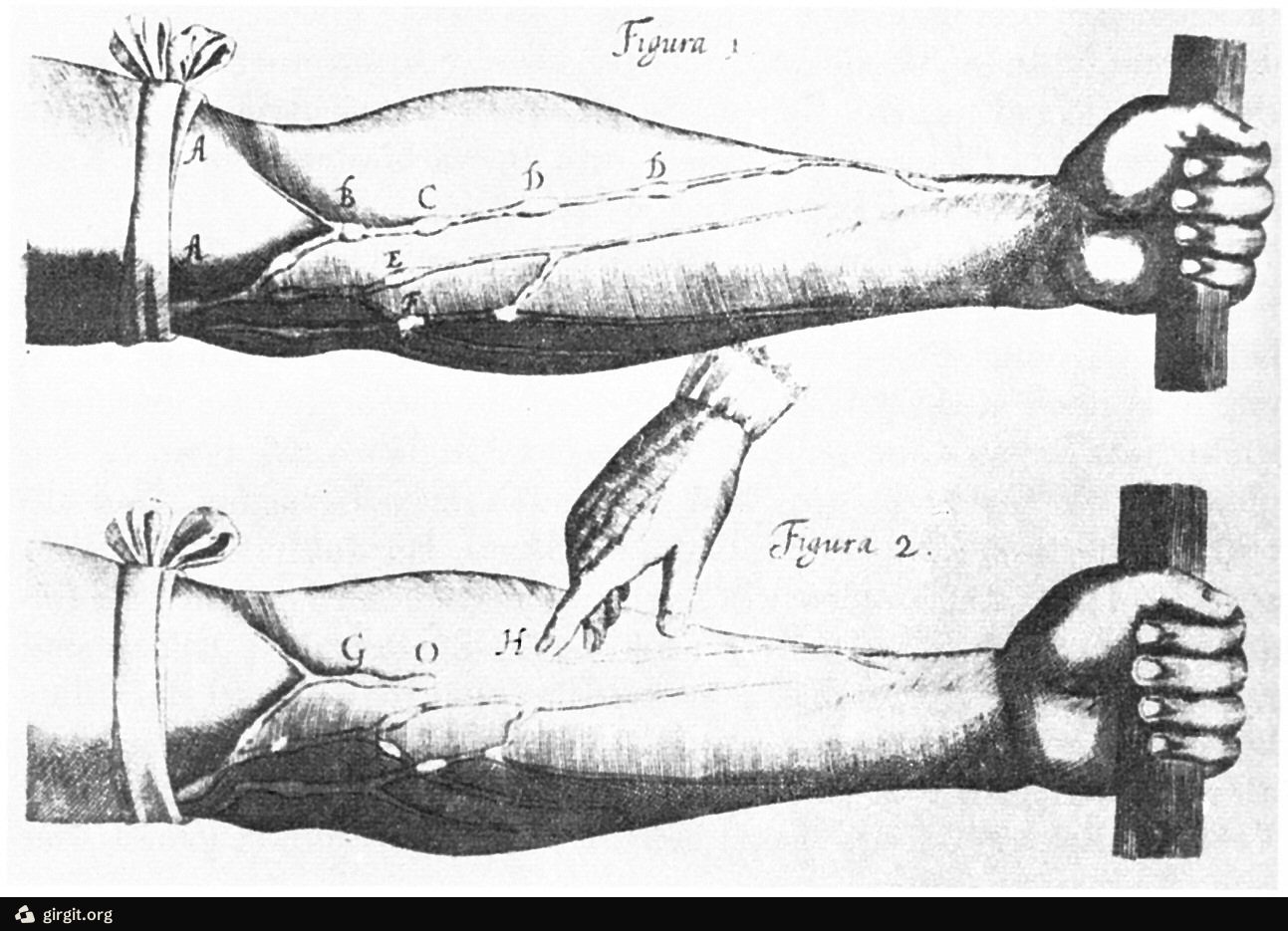 band tied tightvalves bulge as knotsfinger empties the vein
StoryLondon, 1628 · Bologna, 1661
The same blood, round and round
- The English physician William Harvey measuredPumped per hour: far more than food could make. De Motu Cordis, 1628.
- Valves point one wayBand the arm: veins swell; valves pass blood only heartwards.
- The Italian Marcello Malpighi closed the gapA frog's lung, an early microscope: capillaries.
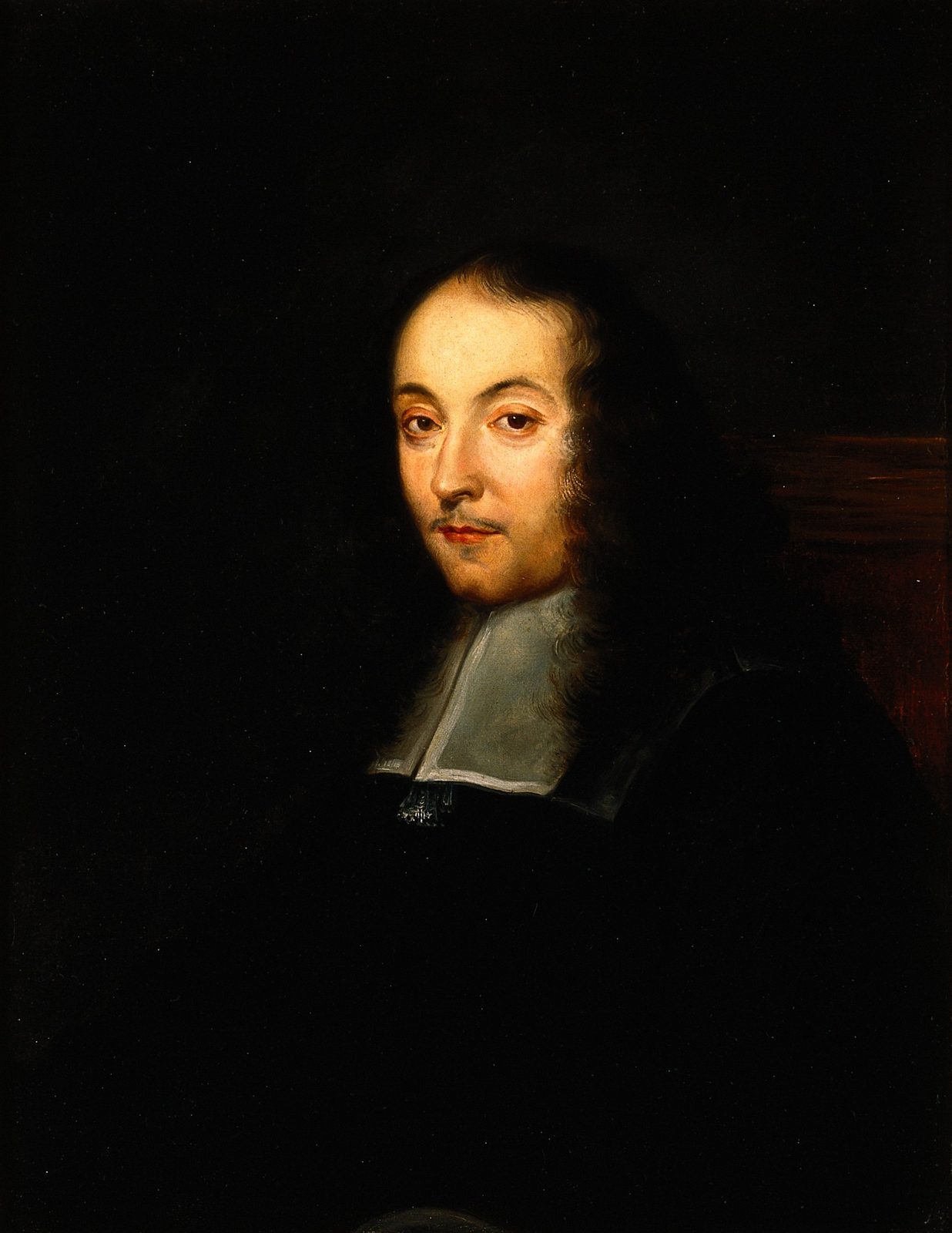
See itMalpighi
The circle, closed
Blood never leaves the pipes; only what it carries crosses their thin walls. A sponge's canals, a flatworm's flatness and your capillaries answer the same arithmetic.
StoryCounting the list
From 4,200 to millions
- 1758About 4,200 animalsCarl Linnaeus, Systema Naturae, 10th edition: where animal names officially start.
- 2011About 7.8 million speciesAn estimate of all the animals on Earth, most still undescribed.
- 2025India: 1,05,953India's species and subspecies, about 5.3% of all named (Zoological Survey of India). 483 new to science in 2025.
Solve itTwo problems and a check
Your turn
Solve it
Two imaginary worms with no blood vessels live in the same pond. One is flat, 0.4 mm thick. The other is round, 4 mm across. Using "0.1 mm takes about 2.5 s", how long does oxygen take to reach the middle of each? Which body plan can work without a circulatory system?
Hint
Answer
Solve it
Harvey's argument in modern numbers: a resting human heart pumps about 70 mL of blood per beat at about 72 beats a minute. How much blood is that in an hour? An adult has about 5 litres of blood. What does that tell you?
Answer
Why can a cockroach manage with an open circulatory system, where blood just bathes the tissues?
- Its blood flows faster than ours
- Air tubes (tracheae) bring oxygen straight to its tissues
- It is thin enough for oxygen to diffuse in from the skin
ConnectAnd still confused?
Where this goes next
Connect it
- Cell size, Ch 8. The same arithmetic keeps cells small: see cell sizes and shapes.
- Tissues, Ch 7. What the tissue and organ levels are made of: how a body shares work.
- Your circulation, Ch 15. Harvey's loop, made double: double circulation.
- Gas exchange, Ch 14. Diffusion over the last tiny gap, in your lungs: exchange of gases.
- How many species, Class 12. The counting problem: how many species are there?
Is "organ level" the same as "organ system level"?
No. At the organ level (flatworms), tissues form organs, but the organs don't yet form big teams for whole jobs like circulation. At the organ system level, organs work together in systems: a gut from mouth to anus, a heart with vessels, and so on. That is why flatworms have no circulatory system and an incomplete gut.
If sponges have no tissues, how are they animals at all?
They are multicellular, they eat other living things instead of making food, their cells have no walls, and their cells do share work (collar cells pump and catch food, others build the skeleton). What they lack is cells organised into true tissues. Being at the bottom of the ladder doesn't make them not animals.
Sources
- Hektoen International: William Harvey and the circulation
- Encyclopaedia Britannica (1911): Malpighi
- NC State University, General Entomology: the insect circulatory system
- Engineering ToolBox: diffusion coefficients of gases in water
- Mora et al. (2011), How many species are there on Earth and in the ocean? PLoS Biology
- Down To Earth (2026): ZSI Animal Discoveries 2025
- 10th edition of Systema Naturae