Act 03NCERT §3.3 · p. 784 min
The modern periodic table
Mendeleev's columns unfold into the modern long form. Ordered by weight, four pairs sit in the wrong places; ordered by atomic number, argon and potassium, cobalt and nickel, tellurium and iodine, thorium and protactinium swap back.
By weight, four pairs stand in the wrong boxes. By atomic number, they swap back.
From the textbookp. 78
NCERT Chemistry Part I, Class 11 · Reprint 2026-27
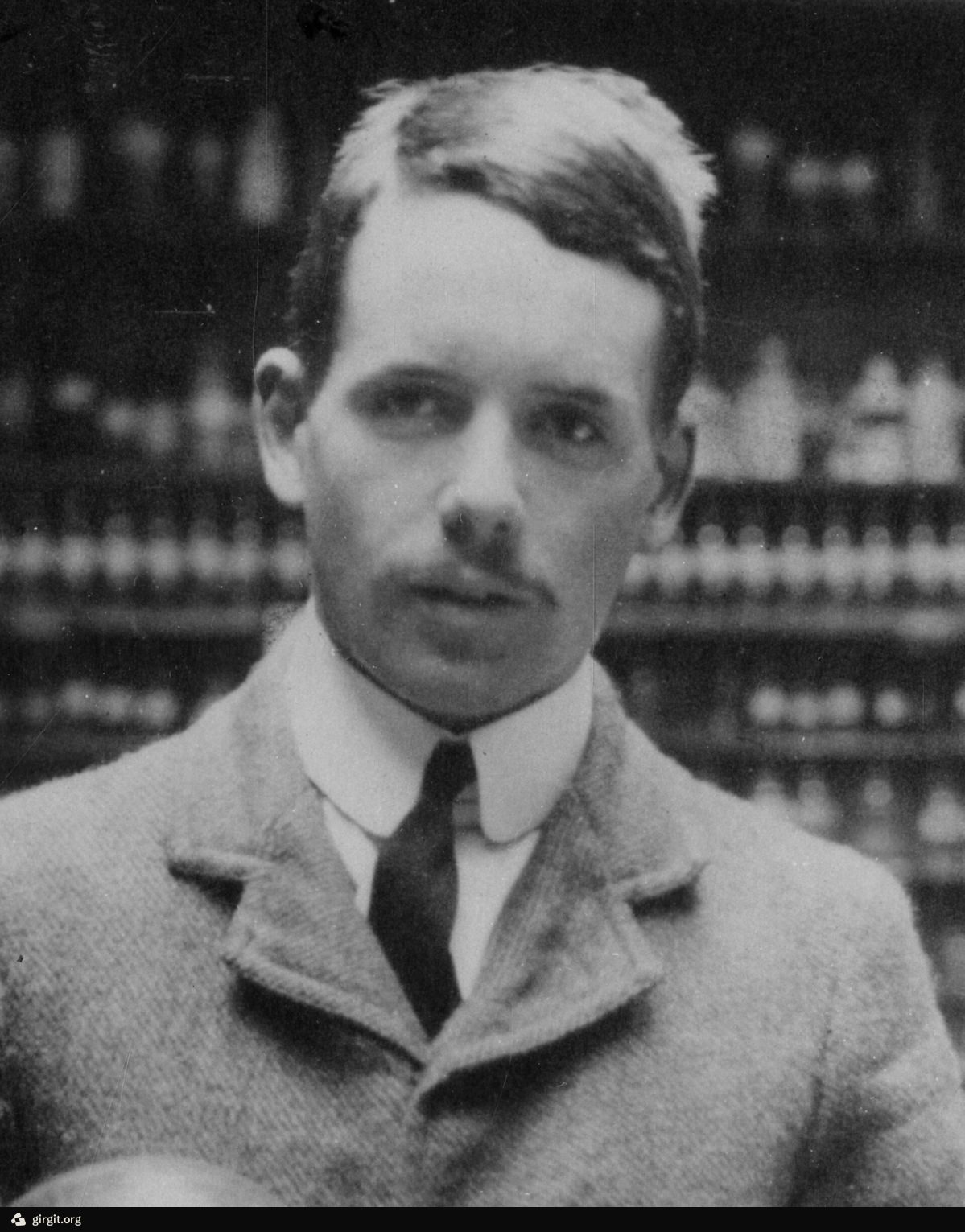
3.0English physicist Henry Moseley
1913
Mendeleev weighed. Moseley counted.
Nobody knew what was inside an atom in 1869. Moseley struck each element with fast electrons and measured the X-rays it gave off: every element has its own characteristic X-ray spectrum.
Full text
The big ideaMoseley showed that atomic number, not atomic mass, is the true order of the elements, and today's long-form periodic table has 7 periods and 18 groups built on that order.
In simple words
Lining people up by weight goes wrong sometimes, because two people can be nearly the same weight. Lining them up by their roll number never goes wrong. A man found that every building block has its own roll number, which is how many tiny plus bits sit in its middle. Once the chart was ordered by that number, all the odd cases fixed themselves.
Moseley and the atomic number
When Mendeleev made his table, nobody knew what was inside an atom. In 1913 the English physicist Henry Moseley studied the X-rays that each element gives off when struck by fast electrons. Each element has its own characteristic X-ray spectrum. He found a simple rule:
- A graph of \( \sqrt{\nu} \) against atomic number \( Z \) is a straight line. Here \( \nu \) (the Greek letter nu) is the frequency of the X-rays.
- A graph of \( \sqrt{\nu} \) against atomic mass is not a straight line.
So the atomic number is the more fundamental property. It equals the nuclear charge (the number of protons), which also equals the number of electrons in a neutral atom.
The modern periodic law
- The physical and chemical properties of the elements are periodic functions of their atomic numbers.
Ordering by atomic number puts tellurium (Z = 52) before iodine (Z = 53) naturally, the very pair Mendeleev had to swap by hand.
The law brought out family likenesses among all 94 elements found in nature. That count includes neptunium and plutonium, which, like actinium and protactinium, occur in traces in pitchblende, a uranium ore. It also guided the making of short-lived artificial elements.
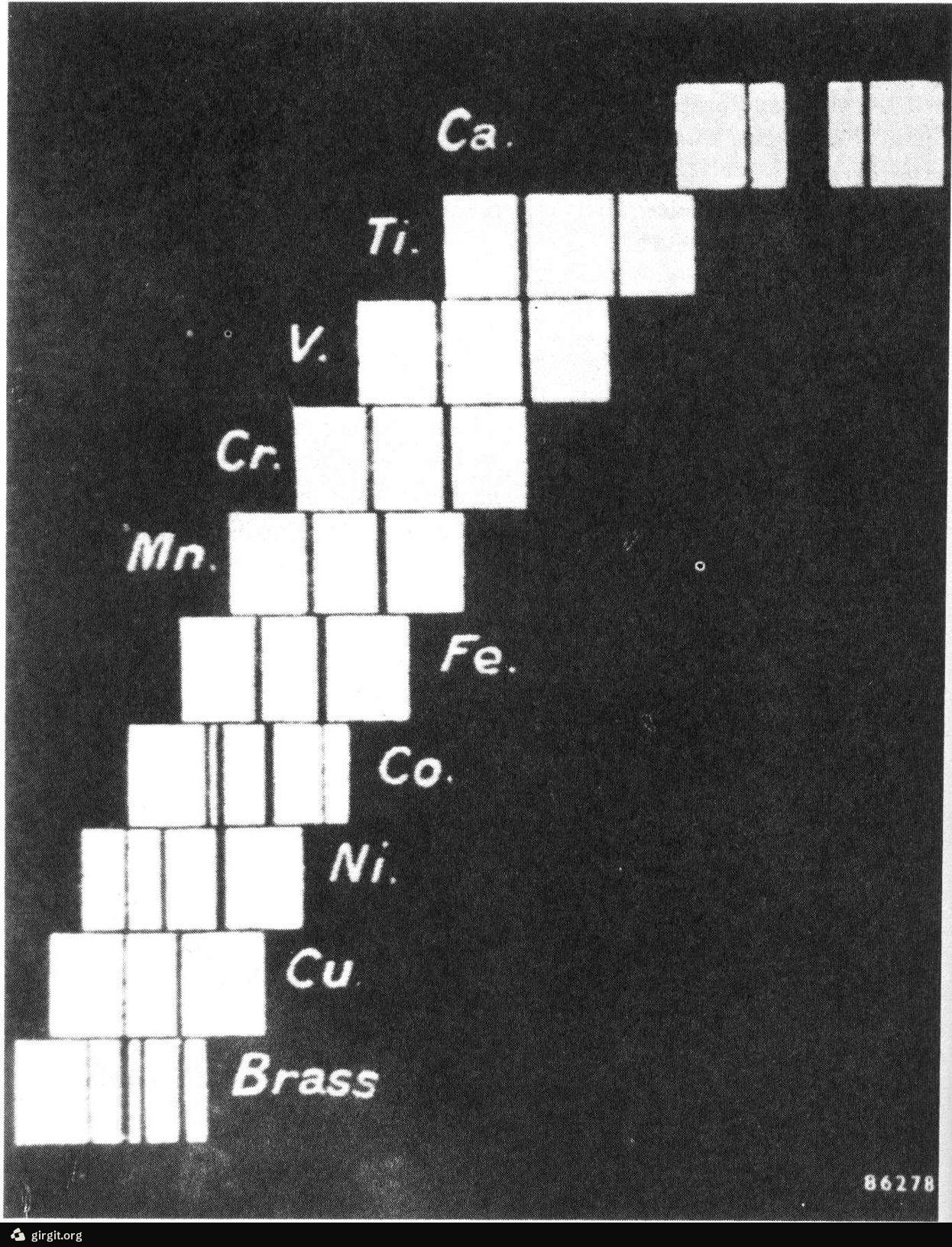
3.1His plate: each row one element
One element, one equal step
Go one element on, and the X-ray lines move one even step. Not by weight: by a whole number that goes up by one each time.
3.2\( \nu \), the Greek letter nu: the X-rays' frequency
Mass bends it. Number straightens it.
Not a straight line: argon and potassium, cobalt and nickel double back.
Every point slides into line: a straight line.
Z, not mass. And at 43, a rung with no element: missing in 1913.
CheckThe straight line
Straight against what?
Moseley got a straight line when he plotted the square root of X-ray frequency against
- atomic mass
- atomic number
- period number
3.3What the number counts
Z is a count of protons
Weight can be nearly equal for two people; roll numbers never clash. Each element's roll number is how many plus charges sit in its middle.
3.4The modern periodic law
Properties are a periodic function of atomic number.
Mendeleev's law said atomic weight. Change one word, and the odd cases fix themselves.
3.5Heavier first, and right
Tellurium before iodine, naturally
Mendeleev had to swap this pair by hand. By atomic number it needs no swap: Te is 52, I is 53.
By weight
Iodine would land among O, S, Se. Wrong family.
By atomic number
The same happens to Ar 18 and K 19, Co 27 and Ni 28.
Try itPlot it yourself
Mass or number?
Guess first, then plot Moseley's X-rays against mass and against atomic number.
3.6Family likenesses, all of them
94elements
found in nature. The law brought out the families among all of them.
- The last two,neptunium and plutonium, occur only as traces in pitchblende, a uranium ore.
- So doactinium and protactinium.
- It also guidedthe making of short-lived artificial elements.
3.7Why do properties repeat?
The outside comes back
- Z up by one: one more electron.
- Every so oftenthe outer arrangement matches an earlier element's, one shell further out.
- So the law isthe periodic variation in electronic configuration. Two acts on, in detail.
Full text
Why do properties repeat?
Because electronic configurations repeat. As Z increases by one, one more electron is added. Every so often the outer arrangement of electrons becomes the same as an earlier element's, one shell further out, and so the properties come back. The periodic law is really a result of the periodic variation in electronic configuration. You will see this in detail two concepts from now.
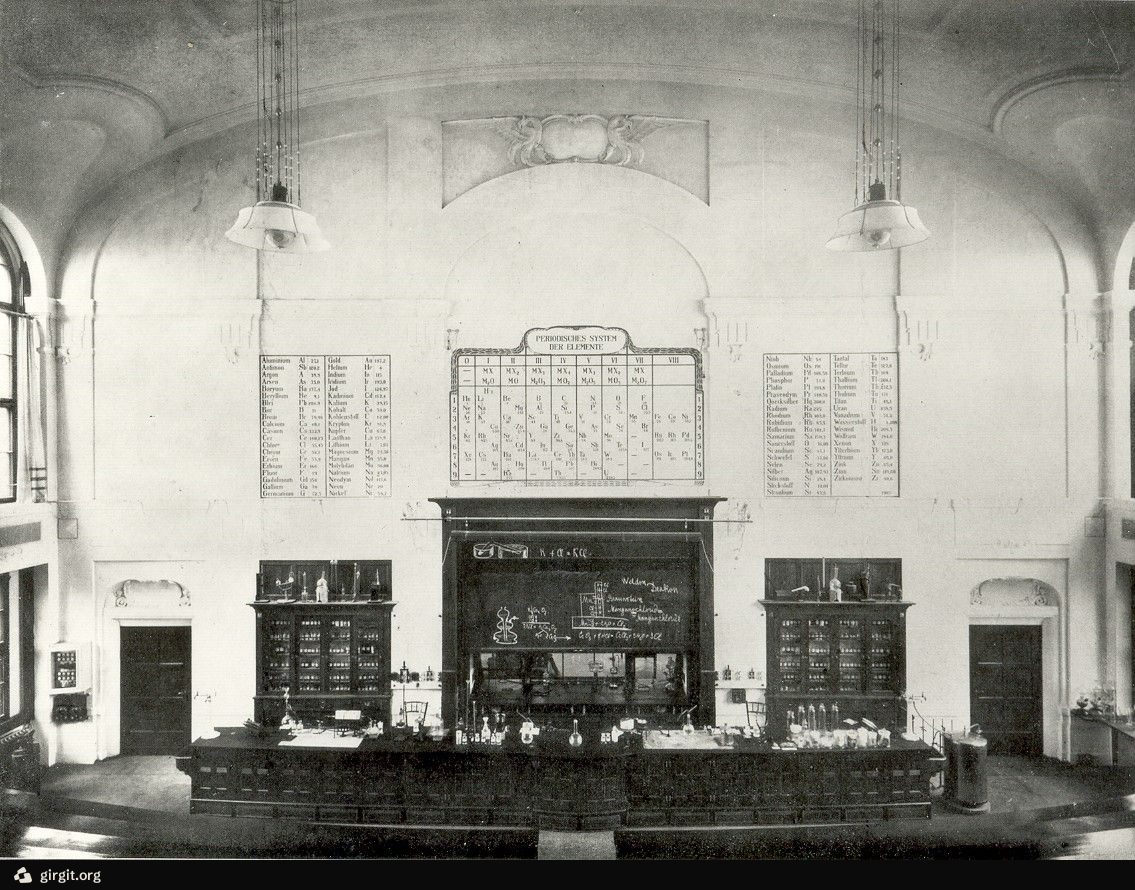 Short form: groups 0 to VIIIElements and atomic weights
3.8Many shapes have been drawn
For decades: eight columns
Some tables stress valence and reactions, others electron arrangements. Lecture halls hung the short form, two kinds of element squeezed into each column.
3.9The long form: most convenient, most used
18 columns, 7 rows
- Rows 2 and 3: two boxes left, six right, a gap between.
- The lanthanoids and actinoidssit below, so the table is not too wide.
Full text
The long form of the periodic table
Many shapes of periodic table have been drawn. Some stress valence and reactions, others stress electron arrangements. For decades lecture halls hung a short form with only eight main columns, squeezing two kinds of element into each one.
The most convenient and widely used today is the long form. Picture it like this:
- A wide grid of 18 columns and 7 rows.
- Row 1 is just two boxes, at the far left (hydrogen) and far right (helium), with a big empty space between.
- Rows 2 and 3 have two boxes on the left and six on the right, with a gap in the middle.
- From row 4 down, the middle is filled in by ten extra columns.
- Two separate rows of 14 elements, the lanthanoids and actinoids, sit in a panel below the main table so it does not become too wide.
The horizontal rows are called periods (Mendeleev called them series). The vertical columns are groups or families: elements in a group have similar outer electronic configurations.
IUPAC (the International Union of Pure and Applied Chemistry) numbers the groups 1 to 18, replacing the older labels IA to VIIA, VIII, IB to VIIB and 0.
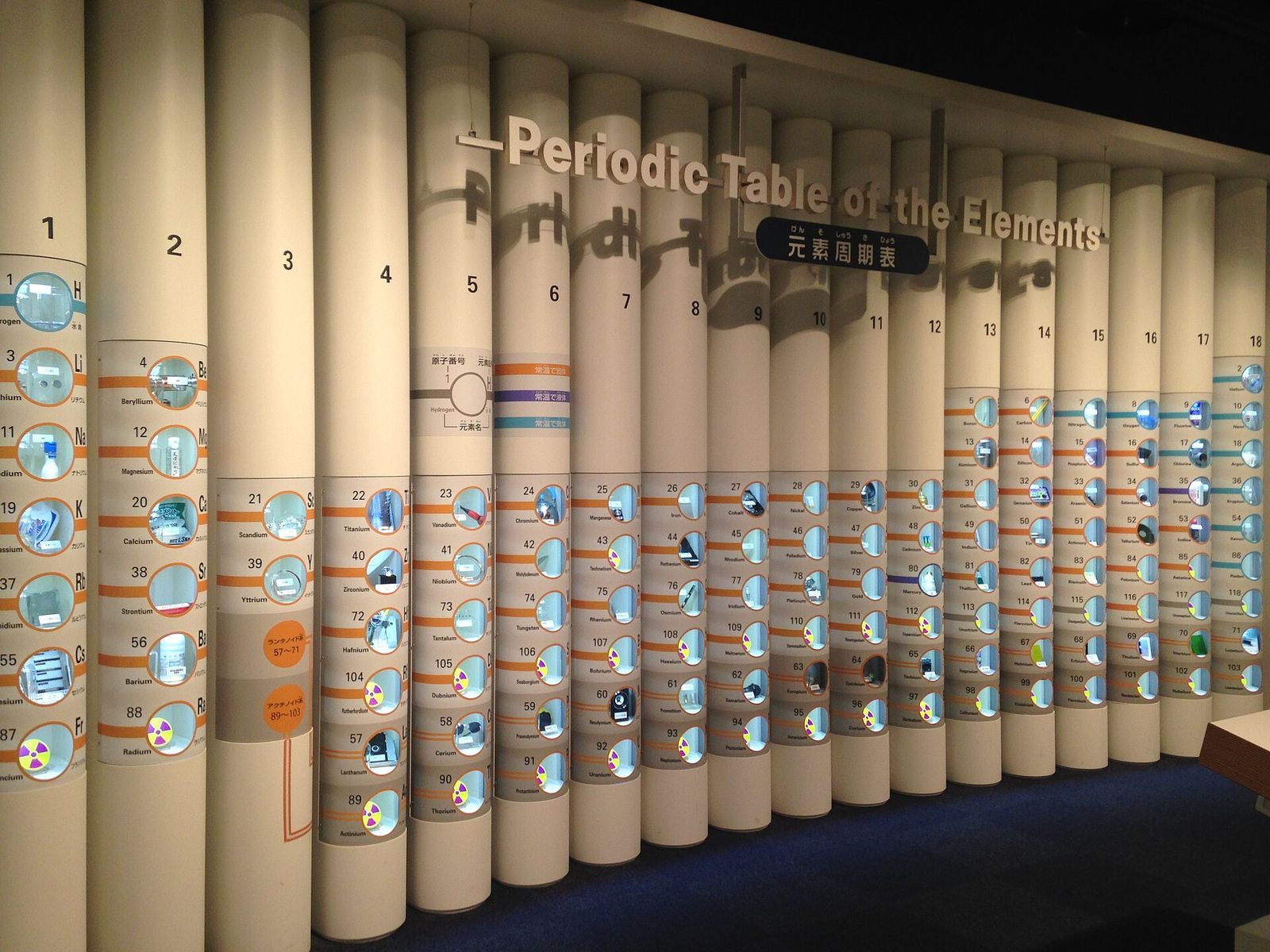 Group 1H: period 1Group 18f-block strips
3.10Rows and columns, named
Periods across, groups down
- Periods: the rows (Mendeleev's series).
- Groups or families: the columns, with similar outer electronic configurations.
- IUPAC numbers them 1 to 18.
3.11The International Union of Pure and Applied Chemistry
IA to VIIA, 0 → 1 to 18
The old A, B, VIII and 0 labels are gone. For the right-hand side, add 10.
1, 2
Left: s side
- Old
- IA, IIA
- Now
- 1, 2
3–12
The middle
- Old
- IIIB to VIIB, VIII, IB, IIB
- Now
- 3 to 12
13–18
Right: add 10
- Old
- IIIA to VIIA, and 0
- Now
- 13 to 17, and 18
3.12Seven periods
2 · 8 · 8 · 18 · 18 · 32 · 32
elements in periods 1 to 7.
- Period number= the highest principal quantum number n, the outermost shell.
- 14 lanthanoids(period 6) and 14 actinoids(period 7) go in the bottom panel.
- Period 7: 32, complete up to element 118.
Full text
Seven periods
- The period number equals the highest principal quantum number \( n \) (the outermost shell) of the elements in it.
- Number of elements in periods 1 to 7: 2, 8, 8, 18, 18, 32, and period 7 also 32 now that it is complete up to element 118.
- The 14 lanthanoids (period 6) and 14 actinoids (period 7) are the ones placed in the bottom panel.
Textbook check · §3.3Period 7 is no longer incomplete
- The textbook says
- The seventh period is incomplete. (Its own §3.4 then lists every element up to 118 with an official name.)
- What we know now
- On 30 December 2015 IUPAC confirmed the discoveries of elements 113, 115, 117 and 118 and announced that "the 7th period of the periodic table of elements is complete". Their names were approved in November 2016. Period 7 now holds 32 elements, the same as period 6.Source: IUPAC, Discovery and assignment of elements with atomic numbers 113, 115, 117 and 118 (2015)
- In the exam
- If a question asks how many elements period 7 has, write 32. If it quotes NCERT's line that the seventh period is incomplete, recognise it as the older statement.
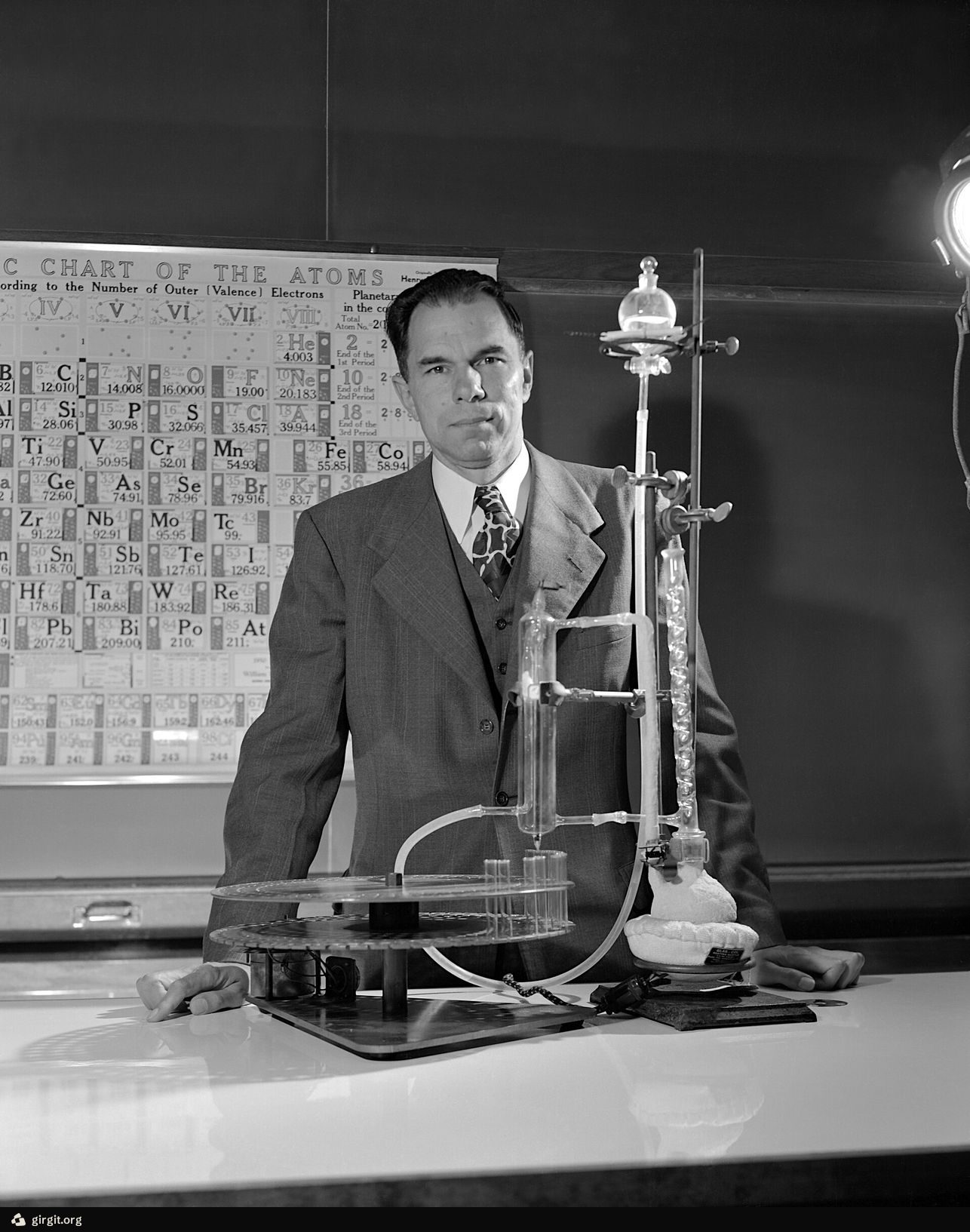
The American chemist Glenn T. Seaborg discovered plutonium in 1940 and then the transuranium elements up to 102. His work led to moving the actinoids into their own row below the lanthanoids. He won the Nobel Prize in Chemistry in 1951, and element 106, seaborgium (Sg), is named after him.
Don't mix these up
- Period = horizontal row = same outermost shell \( n \). Group = vertical column = same outer configuration, similar properties.
- Mendeleev's law: atomic weight. Modern law: atomic number. Moseley's straight line was \( \sqrt{\nu} \) against Z.
Textbook check§3.3
Is period 7 incomplete?
The textbook says
"The seventh period is incomplete"
Its own §3.4 then lists every element up to 118 with an official name.
What we know now
Complete since 2015: 32 elements
On 30 December 2015 IUPAC confirmed 113, 115, 117 and 118: "the 7th period of the periodic table of elements is complete". Names approved November 2016. In the exam: 32; know the old line.
 Actinoids in their own rowTc (43)Ion-exchange column
3.13American chemist Glenn T. Seaborg
He moved the actinoids down
- 1940: discovered plutonium, then the transuranium elements up to 102.
- His workgave the actinoids their own row, below the lanthanoids.
- Nobel Prize in Chemistry 1951; element 106 is seaborgium (Sg).
CheckPeriod 4
What does period 4 tell you?
An element is in period 4. What does that tell you for sure?
- It has 4 valence electrons
- Its outermost electrons are in the shell with n = 4
- It has properties similar to every other period 4 element
3.14Don't mix these up
Rows, columns, weight, number
Period
A row: same outermost shell n
Mendeleev's law: atomic weight.
Group
A column: same outer configuration
Modern law: atomic number. \( \sqrt{\nu} \) against Z is the straight line.
Don't mix these up
- Period = horizontal row = same outermost shell \( n \). Group = vertical column = same outer configuration, similar properties.
- Mendeleev's law: atomic weight. Modern law: atomic number. Moseley's straight line was \( \sqrt{\nu} \) against Z.
KeepJust remember
Conventions and dates
Nothing deeper decides these: tap a card for its hook.
WordsTo know
Six words
- Atomic number (Z)
- Number of protons in the nucleus; the true order of the table.
- Modern periodic law
- Properties repeat as a function of atomic number.
- Period
- A horizontal row; its number is the outermost shell n.
- Group (family)
- A vertical column, numbered 1 to 18 by IUPAC.
- Long form
- The 18-column periodic table used today.
- IUPAC
- The international body that sets chemical names and rules.
RootsA ladder with equal rungs
One rung twice as tall
- Frequencies climbedin equal steps, one per element.
- Molybdenum (42) to ruthenium (44): the step was twice as big.
- So one rungis missing, and he could say what its X-ray would look like.
Full text
The roots: a ladder with equal rungs
- How could Moseley say an element was missing between molybdenum and ruthenium?Because his X-ray frequencies climbed in equal steps, one step per element. Between molybdenum (42) and ruthenium (44) the step was twice as big. A ladder with one rung twice as tall has a rung missing.
- Why one equal step per element?The X-ray line he measured (called K-alpha) is made when an electron drops into the innermost shell, n = 1. Its energy grows as the square of the charge that electron feels, so \( \sqrt{\nu} \) grows in proportion to that charge. Add one proton and the charge goes up by one unit: one more equal step.
- Why does that electron feel the nucleus almost bare?It sits closest in. All the other electrons are further out, and a shell of charge outside you pulls you equally in every direction, so its pulls cancel. Only the one other electron left in the innermost shell shields it, by about one unit. So it feels \( Z - 1 \), and \( \sqrt{\nu} \propto (Z - 1) \).
- Why can't atomic mass show a missing element?Mass counts protons plus neutrons, and the number of neutrons wanders. The step from one element to the next is sometimes 1 u, sometimes 4 u, and three times it even goes backwards (Ar/K, Co/Ni, Te/I). A jump of 3 u could be a missing element, or just a neutron-rich neighbour. Mass has no rungs.
- The bedrockCharge comes in whole units, and the energy of an electron near a nucleus grows as the square of the charge it feels (Bohr's \( Z^2/n^2 \), from Coulomb's law). Whole units make equal rungs; equal rungs make a count.
Once the order became a count, questions that chemists had argued over for decades could be settled in a few months. How many elements lie between hydrogen and uranium? Exactly 92. How many rare earths are there? From lanthanum (57) to lutetium (71), exactly 15, no more and no less. Which ones are still unknown? Moseley's own measurements, which reached gold, showed four empty rungs: 43, 61, 72 and 75, and no other gaps between aluminium (13) and gold (79). Above gold, 85 and 87 were missing too.
RootsThe line he measured: K-alpha
Why one equal step per proton
- An electron dropsto n = 1; energy grows as the charge it feels, squared.
- Outer shells cancel; only the other n = 1 electron shields it.
- Bedrock: whole units of charge; \( Z^2/n^2 \) (Bohr, from Coulomb's law).
RootsMass has no rungs
Neutrons make mass wander
- Masscounts protons plus neutrons, and the neutrons vary.
- The stepis sometimes 1 u, sometimes 4 u; three times it goes backwards (Ar/K, Co/Ni, Te/I).
- A 3 u jumpcould be a missing element, or a neutron-rich neighbour.
RootsSettled in months
92
elements between hydrogen and uranium. Exactly.
- Rare earths: lanthanum (57) to lutetium (71), exactly 15.
- Up to gold: four empty rungs, 43, 61, 72 and 75; no other gaps between aluminium (13) and gold (79).
- Above gold: 85 and 87 missing too.
StoryFilling the empty rungs
The last gaps
- 1914Oxford: how many rare earths?So alike that a "pure" sample was often two. Didymium ("twin") split into neodymium ("new twin") and praseodymium ("green twin"). Moseley's X-rays: room for exactly 15.
- 1902A hunch at 61Bohuslav Brauner suspected an element between neodymium and samarium; the ladder made it certain. Claims in 1926 fell apart.
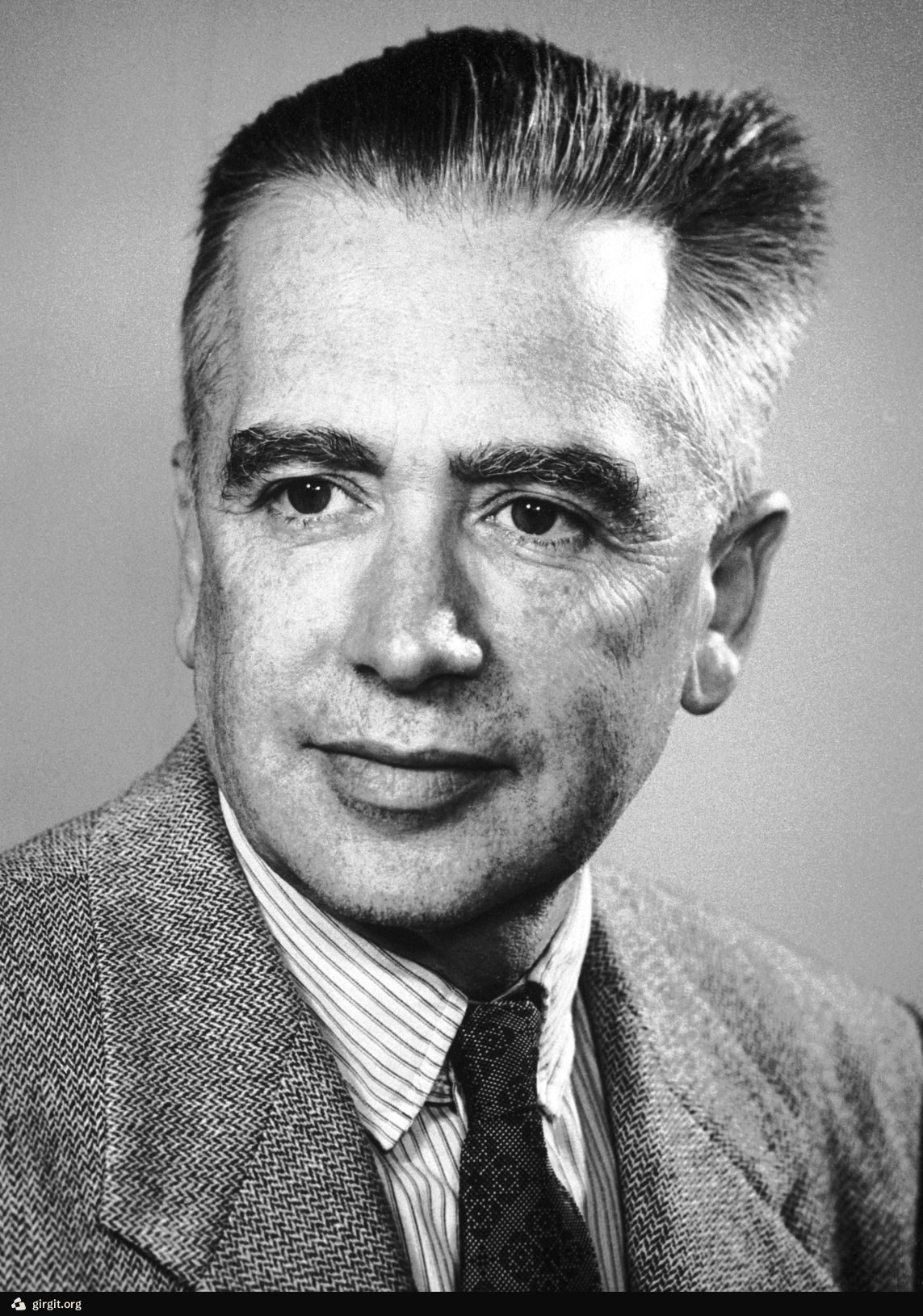
- 1937An element in the postEmilio Segrè asked Ernest Lawrence for discarded cyclotron parts; a molybdenum strip came by mail. In Palermo, Segrè and Carlo Perrier found element 43 in it: the first made by people before found in nature.
- 1939ParisFrancium (87), found by Marguerite Perey: the last element found in nature.
- 1945Clinton Laboratories (now Oak Ridge)Jacob Marinsky, Lawrence Glendenin and Charles Coryell find 61 among uranium's fission products; announced in 1947. Grace Mary Coryell names it promethium, after Prometheus. No stable isotope.
- 1947TechnetiumElement 43 named, from Greek technetos, "artificial".
Full text
The story
Two more gaps, 72 and 75, were filled from rocks, both by X-rays. Hafnium (1923) has its own story on the electronic configuration page. Rhenium (1925) had in fact been found in 1908 by a Japanese chemist, who put it in the wrong gap; that story is on the next page.
StoryBerkeley and Palermo, 1936 to 1937
The man who filled 43
By 1936 four places below uranium were empty: 43, 61, 85, 87. Segrè, visiting the cyclotron in California, filled the first. X-rays found 72 (hafnium, 1923) and 75 (rhenium, 1925); a Japanese chemist had found rhenium in 1908, in the wrong gap.
See itTravel in time
One gap scrambles everything
Scrub the year back to 1914 and switch between ordering by mass and by atomic number.
 Gap: element 43
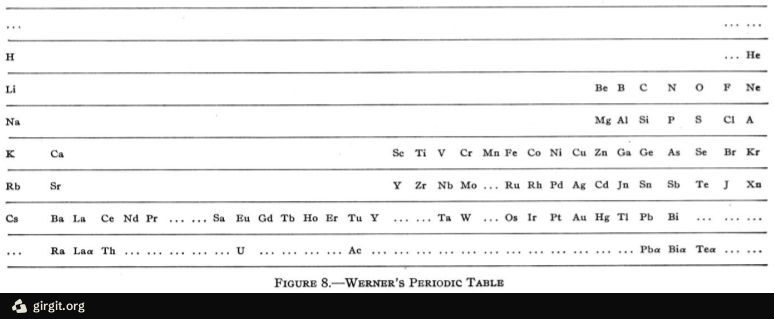
See itAlfred Werner, 1905
The long form is older than Moseley
Transition metals and rare earths in their own columns, very wide. After molybdenum, an empty place: he knew something was missing, not that it was 43.
Solve itThree problems
Your turn
Solve it: predict, then check
Molybdenum (Z = 42) gives its K-alpha X-ray at 0.0709 nm. Using \( \nu \propto (Z - 1)^2 \), predict the wavelength for element 43, which nobody had seen in 1914, and for ruthenium (44).
Hint
Answer
Solve it: what would happen if…
It is 1914. Element 43 is unknown. You line up every known element strictly by atomic mass and give them roll numbers 1, 2, 3 in that order. Which family does ruthenium end up in, and what happens to the elements after it?
Answer
Solve it: think harder
A chemist in 1913 announces a new element with atomic mass 42.5 u, between calcium and scandium. Using only Moseley's idea, explain why there cannot be a new element between them, whatever its mass.
Answer
ConnectAnd still confused?
Where this goes next
Connect it
- Moseley himself, Chapter 2. His experiment, his straight line and his death at Gallipoli are on Atomic number, isotopes and isobars.
- Why the energy goes as Z², Chapter 2. Bohr's energy levels for one electron and a charge Z: How Bohr explained the spectrum. Moseley's K-alpha line is the same sum with \( Z - 1 \) for Z.
- Mendeleev's gaps, one page back. His eka-manganese is technetium, the gap at 43. See Mendeleev's periodic table.
- Shielding, later in this chapter. "The other electrons cancel out from outside" is the same idea that explains why atoms shrink across a period: see How big is an atom?
- The f-block strip. Why the lanthanoids and actinoids come in rows of 14: The s, p, d and f blocks, and in Class 12, The lanthanoids.
- Hospitals. Technetium, the element nobody could find, is now made on purpose every day: its short-lived form technetium-99m is the most used medical radioisotope in the world, in tens of millions of scans a year (bones, heart, thyroid, kidneys).
If atomic number is the order, why does the table still print atomic masses?
Because chemists weigh things. To turn grams into moles you need the average mass of the atoms, so the mass stays in every box. It just no longer decides where the box goes. For the three reversed pairs, the box order follows Z and the masses simply read "out of order".
Why are the lanthanoids and actinoids pulled out and put below?
Only to save width. Put them back in their places and the table becomes 32 columns wide, like Werner's 1905 table above. Both shapes are the same table; the 18-column one fits on a page.
Which elements belong under yttrium: lanthanum and actinium, or lutetium and lawrencium?
Chemists still argue about this. NCERT puts lanthanum and actinium in group 3, with the strips starting at cerium and thorium. Many chemists prefer lutetium and lawrencium in group 3; an IUPAC project reported in 2021 that it is a matter of convention but suggested the lutetium form as a compromise. For the exam, follow NCERT's table.
Sources
- Henry Moseley (Wikipedia): gaps at 43, 61, 72, 75; exactly 15 lanthanides; no other gaps between Al and Au; didymium; element 61 predicted
- Promethium (Wikipedia): Brauner 1902, Moseley 1914, false claims 1926, Marinsky, Glendenin and Coryell 1945, announced 1947, Grace Mary Coryell and the name
- Technetium (Wikipedia): Segrè and Perrier 1937, the molybdenum foil from Lawrence's cyclotron, the name (1947), technetium-99m in medicine
- History of the periodic table (Wikipedia): Werner 1905, the gaps left in 1936 (43, 61, 85, 87), francium 1939 by Marguerite Perey, Seaborg's actinide concept
- Periodic table (Wikipedia): 18-column and 32-column forms; Bassett, Thomsen and Werner
- Technetium-99m (Wikipedia): tens of millions of procedures a year, the most used medical radioisotope
- Group 3 element (Wikipedia): the lanthanum/lutetium question and the 2021 IUPAC report
- X-ray Data Booklet, Table 1-2 (Lawrence Berkeley National Laboratory): K-alpha energies of Mo, Tc and Ru
- IUPAC (2015): the seventh period is complete
- Timeline of chemical element discoveries (Wikipedia): the years used in the widget