Act 12NCERT §2.6.4–2.6.6 · pp. 61–687 min
How do electrons fill an atom?
The 2p dumbbell becomes a 3d orbital, a dumbbell with a ring round its waist.
Now move the electrons in, one by one.
From the textbookpp. 61–68
NCERT Chemistry Part I, Class 11 · Reprint 2026-27
12.0The big idea
Lowest first. Two per room. Alone, then paired.
Like boarding an empty bus: best seats first, two per seat facing opposite ways, nobody shares while a seat is free.
Full text
The big ideaElectrons fill orbitals from the lowest energy up (aufbau), at most two per orbital with opposite spins (Pauli), and one per orbital before any pairing (Hund).
In simple words
Think of passengers boarding an empty bus. They take the best seats first, the ones nearest the door. Each seat fits at most two people, sitting facing opposite ways. And on a row of equally good seats, people sit alone first and only share once every seat in the row has someone. Do this for every electron and you get the address list of the whole atom.
12.1Aufbau: German for building up
Lowest energy first
In the ground state, orbitals fill by increasing energy. Read the arrows: the (n + l) rule as a picture.
- Potassium's last electron:4s, not 3d.
- A guide, not a law:close orbitals can swap.
Full text
Aufbau principle
Aufbau is German for "building up". In the ground state, orbitals are filled in order of increasing energy: electrons take the lowest available orbital first. Because orbital energies depend on the effective nuclear charge, no single order fits every atom perfectly, but this order is very useful:
\[ 1s,\ 2s,\ 2p,\ 3s,\ 3p,\ 4s,\ 3d,\ 4p,\ 5s,\ 4d,\ 5p,\ 6s,\ 4f,\ 5d,\ 6p,\ 7s \ldots \]To remember it, write the sub-shells in rows (1s; 2s 2p; 3s 3p 3d; …) and read along diagonal arrows from top right to bottom left: the (n + l) rule in picture form. It places outer electrons remarkably well (potassium's last electron goes into 4s, not 3d), but treat it as a guide: orbitals very close in energy can swap.
Try itSix electrons, four numbers each
Line them up by energy
Lower n + l sits lower; on a tie, lower n.
12.2Wolfgang Pauli · 1926
Two to a room, opposite spins
No two electrons in an atom share all four quantum numbers. Same n, l and ml? Then their ms must differ.
Full text
Pauli exclusion principle
Wolfgang Pauli (1926): no two electrons in an atom can have the same set of all four quantum numbers. Put another way: an orbital holds at most two electrons, and they must have opposite spins. They may share n, l and ml, but then their ms must differ.
This fixes how many electrons each sub-shell holds: s holds 2, p holds 6, d holds 10, f holds 14. A shell holds at most \( 2n^2 \) electrons.
12.2What Pauli fixes
2n²per shell
Two per orbital: s holds 2, p 6, d 10, f 14.
2
s · 1
6
p · 3
10
d · 5
14
f · 7
Checkn = 3, l = 2
How many electrons fit?
How many electrons can have n = 3 and l = 2 in one atom?
- 2
- 6
- 10
- 18
12.3Hund's rule of maximum multiplicity
Alone before paired
- Same sub-shell, equal energy:one electron per orbital first, spins parallel.
- Pairing startswith the 4th electron in p, the 6th in d, the 8th in f.
- Like a hostel:a room each before anyone doubles up.
Full text
Hund's rule of maximum multiplicity
For orbitals of the same sub-shell (degenerate orbitals): electrons do not pair up in any orbital until every orbital of that sub-shell has one electron. These single electrons have parallel spins. So pairing begins with the 4th electron in p, the 6th in d and the 8th in f.
Try itBoron to neon
Place the 2p electrons
Watch both rules: Hund spreads them out, Pauli forces the pairs.
CheckNitrogen, written wrong
Which rule breaks?
The configuration 1s2 2s2 2px2 2py1 for nitrogen's ground state breaks which rule?
- Pauli exclusion principle
- Hund's rule
- Aufbau principle
12.4Writing an electronic configuration
Two ways to write it
sa pb dc notation
1s2 2s2 2p3
Shell number, sub-shell, electrons as a superscript.
Orbital diagram
↑↓ ↑↓ ↑↑↑
A box per orbital, an arrow per electron. Shows all four quantum numbers.
Both describe how an atom's electrons are spread among its orbitals.
Full text
Writing electronic configurations
The electronic configuration of an atom is how its electrons are distributed among orbitals. Two ways to write it:
- sa pb dc notation: the sub-shell, with the number of electrons as a superscript and the shell number in front, e.g. 1s2 2s2 2p3.
- Orbital diagram: each orbital a box, each electron an arrow, ↑ for one spin and ↓ for the other. It shows all four quantum numbers, which the first notation does not.
| Element | Z | Configuration | Orbital diagram (1s · 2s · 2p) |
|---|---|---|---|
| H | 1 | 1s1 | [↑] |
| He | 2 | 1s2 | [↑↓] |
| Li | 3 | 1s2 2s1 | [↑↓] [↑] |
| Be | 4 | 1s2 2s2 | [↑↓] [↑↓] |
| B | 5 | 1s2 2s2 2p1 | [↑↓] [↑↓] [↑][ ][ ] |
| C | 6 | 1s2 2s2 2p2 | [↑↓] [↑↓] [↑][↑][ ] |
| N | 7 | 1s2 2s2 2p3 | [↑↓] [↑↓] [↑][↑][↑] |
| O | 8 | 1s2 2s2 2p4 | [↑↓] [↑↓] [↑↓][↑][↑] |
| F | 9 | 1s2 2s2 2p5 | [↑↓] [↑↓] [↑↓][↑↓][↑] |
| Ne | 10 | 1s2 2s2 2p6 | [↑↓] [↑↓] [↑↓][↑↓][↑↓] |
Lithium's third electron cannot enter 1s (Pauli), so it goes to 2s. Sodium to argon repeat the pattern with 3s and 3p. To save writing, the filled inner shells are replaced by the noble gas symbol: Na is [Ne] 3s1 and Ar is [Ne] 3s2 3p6. Electrons in completely filled inner shells are core electrons; those added to the outermost shell (highest n) are valence electrons.
Guess firstBefore you build it
Chromium, Z = 24?
What is the ground-state configuration of chromium (Z = 24)?
- [Ar] 3d4 4s2
- [Ar] 3d5 4s1
- [Ar] 3d6
12.4Hydrogen to zinc
One electron at a time
The first electron takes the lowest box.
A second fits, spinning the other way.
1s is full, so on to 2s.
One per 2p box, spins parallel.
Now they pair. Neon: 1s² 2s² 2p⁶.
The same, one floor up.
4s sits below 3d, so it fills first.
Now 3d, one to a box.
3d⁴ 4s²: 6 same-spin pairs in 3d.
One 4s electron moves up: 3d⁵ 4s¹, 10 pairs.
4s refills; then 3d starts pairing.
3d⁹ 4s²: 16 same-spin pairs.
Up again: 3d¹⁰ 4s¹, 20 pairs.
Every box full. Three rules, two exceptions.
12.4Hydrogen to neon
Ten atoms, both ways
12.4Shorthand
Hide the core behind a noble gas
Core electrons
[Ne] or [Ar]
Completely filled inner shells.
Valence electrons
3s1
Added to the outermost shell, highest n.
Na is [Ne] 3s1; Ar is [Ne] 3s2 3p6. Lithium's third electron cannot enter 1s (Pauli), so 2s.
12.5After argon
The table builds itself
spdfblock
Hydrogen and helium fill 1s.
s, then p: neon at 10, argon at 18.
4s, the ten 3d, 4p: krypton, 36.
5s, 4d, 5p: xenon, 54.
6s, then 4f and 5d, then 6p: radon, 86.
After uranium, 92: made artificially.
Add 8, 8, 18, 18, 32.
12.5After argon, in order
Who fills what
- 4sK and Ca4s1, 4s2: 4s is below 3d.
- 3dSc to ZnThe five 3d fill: 3d is below 4p.
- 4pGa to KrThen 4p.
- 5s 4d 5pRb to XeThe same pattern again.
- 6s 4f 5dCs, Ba; La to Hg6s1, 6s2; then 4f and 5d.
- 6p 7s 5f 6dTo the endAfter uranium, short-lived and man-made.
Full text
After argon
- K and Ca: 4s is lower than 3d, so they take 4s1 and 4s2.
- Sc to Zn: the five 3d orbitals fill (3d is lower than 4p).
- Ga to Kr: 4p fills.
- Rb to Xe: 5s, 4d and 5p fill in the same pattern.
- Cs and Ba: 6s1 and 6s2. From La to Hg, 4f and 5d fill. Then 6p, 7s, and finally 5f and 6d. Elements after uranium are short-lived and made artificially.
Worked example 1: iron and phosphorus
- Fe, Z = 26: 1s2 2s2 2p6 3s2 3p6 4s2 3d6, written [Ar] 3d6 4s2. In 3d: five electrons go in singly, the sixth pairs: [↑↓][↑][↑][↑][↑]. So 4 unpaired electrons.
- P, Z = 15: [Ne] 3s2 3p3. By Hund's rule 3p is [↑][↑][↑]: 3 unpaired electrons.
WorkedIron and phosphorus
Count the unpaired
Fe · Z = 26
4unpaired
1s2 2s2 2p6 3s2 3p6 4s2 3d6 = [Ar] 3d6 4s2. 3d: ↑↓↑↑↑↑: five singly, the sixth pairs.
P · Z = 15
3unpaired
[Ne] 3s2 3p3. By Hund, 3p: ↑↑↑
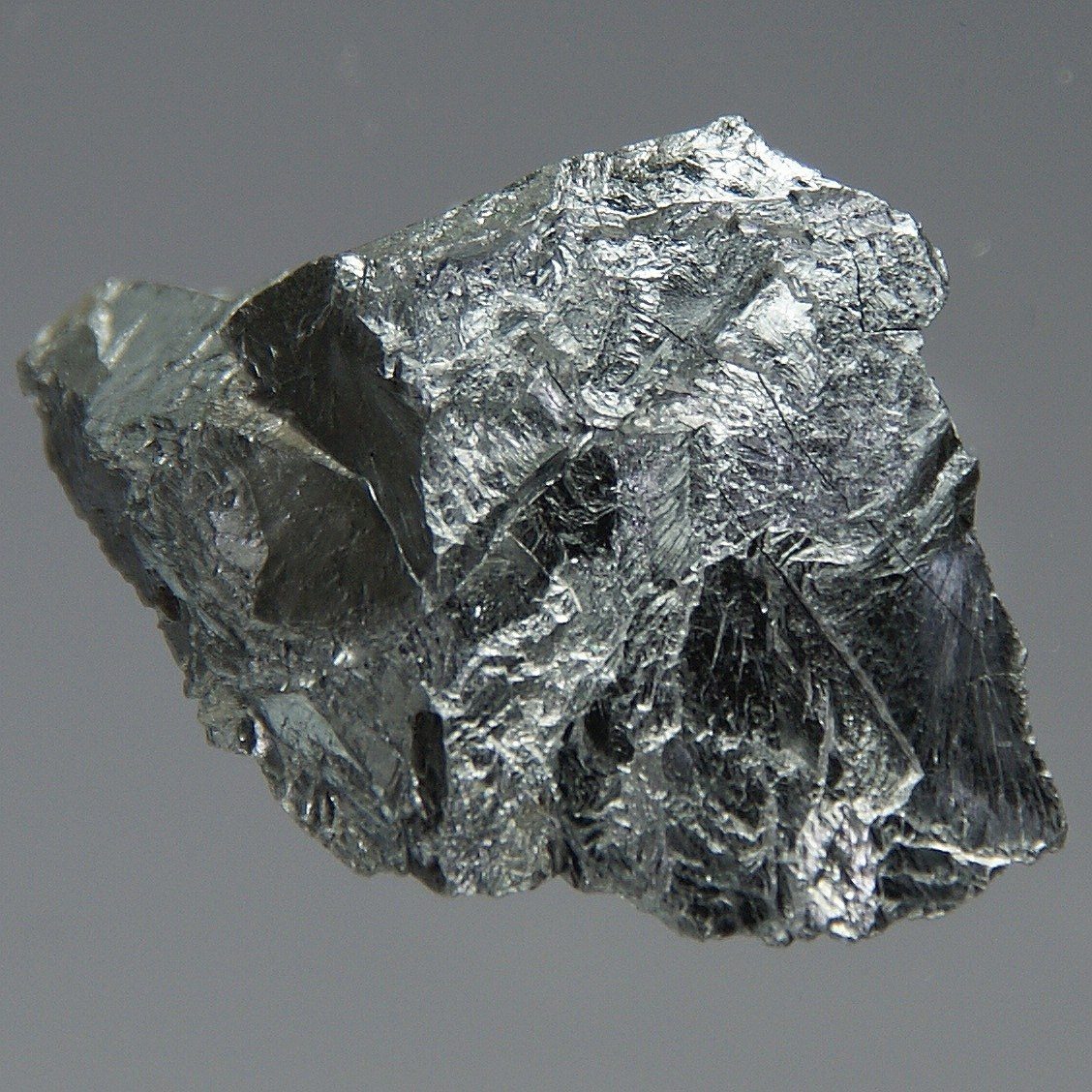
12.6The odd ones · chromium, Z = 24
Chromium jumps the queue.
The filling order says [Ar] 3d4 4s2. It is [Ar] 3d5 4s1: a half-filled d.
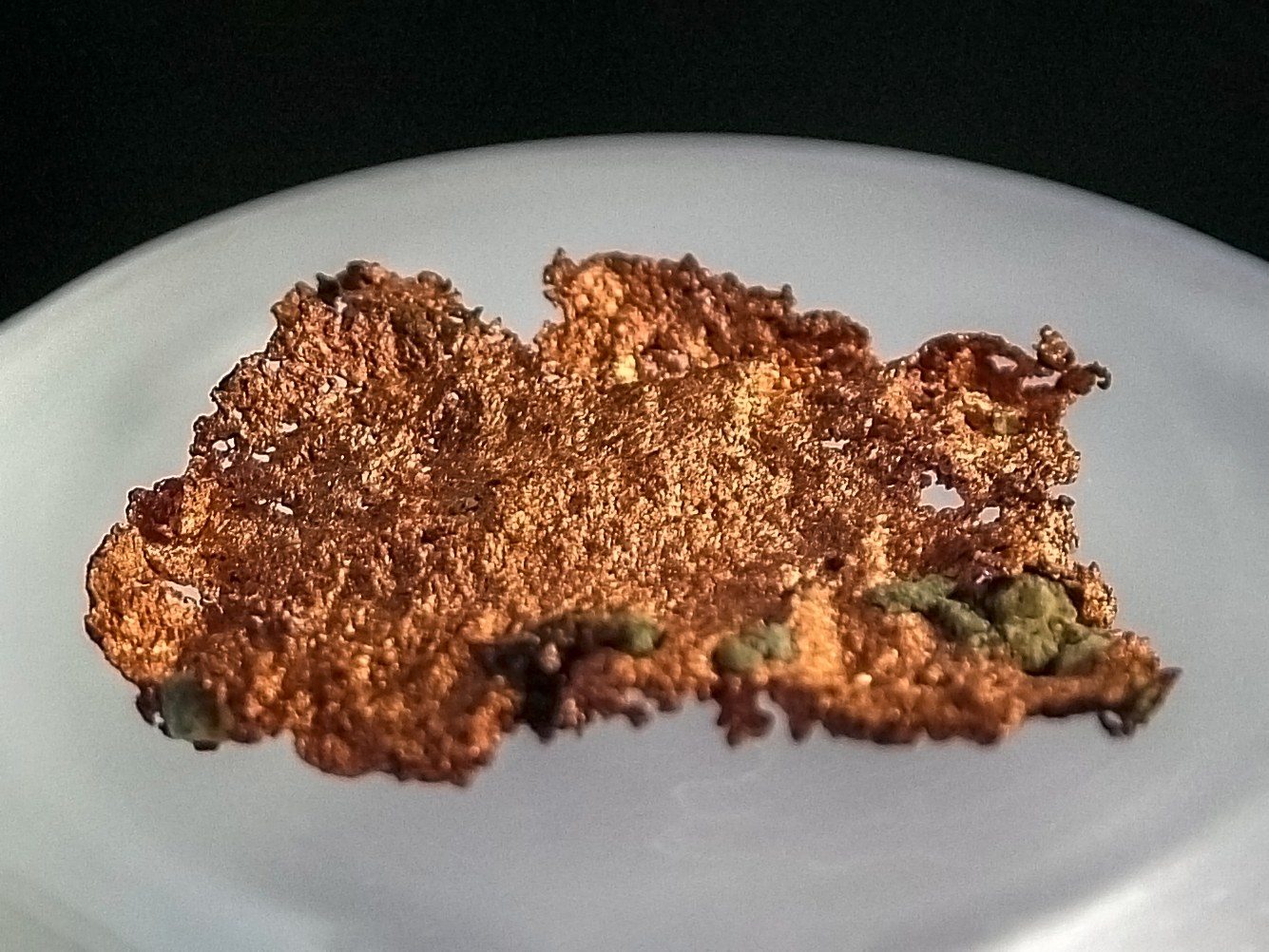
12.6Copper, Z = 29
Copper does it too
- Cu: [Ar] 3d10 4s1,a completely filled d.
- 4s and 3d are nearly level,so one electron moves up.
- Extra stable:p3, p6, d5, d10, f7, f14. The ground state is always the lowest total energy.
Full text
The odd ones: chromium and copper
By the filling order, Cr (Z = 24) should be [Ar] 3d4 4s2 and Cu (Z = 29) should be [Ar] 3d9 4s2. In fact:
Remember
- Cr: [Ar] 3d5 4s1 (half-filled d)
- Cu: [Ar] 3d10 4s1 (completely filled d)
4s and 3d are very close in energy, so one electron moves from 4s to 3d whenever that leaves the d sub-shell exactly half-filled or completely filled. Such arrangements, p3, p6, d5, d10, f7, f14, have extra stability (lower energy). The ground state is always the arrangement of lowest total energy. Other exceptions exist too.
Each arc: two same-spin electrons that can swap places.
12.7Why half-filled and full are extra stable
More swaps, lower energy
- Symmetry: same energy, different places: little shielding, held tighter.
- Exchange energy: each same-spin swap releases energy. Most swaps at half-filled or full.
- Also behind Hund's rule.Less shielding, less Coulomb repulsion, more exchange.
Full text
Why half-filled and filled sub-shells are extra stable
- Symmetrical distribution: symmetry brings stability. Electrons in one sub-shell have equal energy but different places in space, so they shield one another little and are held more strongly by the nucleus.
- Exchange energy: electrons with the same spin in degenerate orbitals can swap places, and each possible swap releases energy, the exchange energy. The number of swaps is greatest for a half-filled or full sub-shell. A d5 set of five parallel electrons allows 10 exchanges; d4 allows only 6. Exchange energy is also the reason behind Hund's rule.
So the extra stability comes from (i) relatively small shielding, (ii) smaller Coulomb repulsion and (iii) larger exchange energy.
Answer
Why it matters. Configuration explains why atoms bond, why some elements are metals, and why argon is inert while the halogens are reactive. Dalton's model could answer none of these.
Don't mix these up
- Pauli limits how many electrons go in one orbital (two, opposite spins). Hund decides how they spread over orbitals of equal energy (singly first, parallel spins).
- 4s fills before 3d, but in the written configuration of Cr and Cu remember 4s1, not 4s2.
- N's 2p is [↑][↑][↑], never [↑↓][↑][ ] or [↑][↑][↓].
Try itZinc, Z = 30 · manganese, Z = 25
How many unpaired?
Answer
12.8Don't mix these up
Pauli counts, Hund spreads
Myth
Cr and Cu keep 4s2, like the rest
Fact
Both are 4s1
4s fills before 3d, but chromium and copper move one electron up.
Don't mix these up
- Pauli limits how many electrons go in one orbital (two, opposite spins). Hund decides how they spread over orbitals of equal energy (singly first, parallel spins).
- 4s fills before 3d, but in the written configuration of Cr and Cu remember 4s1, not 4s2.
- N's 2p is [↑][↑][↑], never [↑↓][↑][ ] or [↑][↑][↓].
Why it mattersThe address list of an atom
Argon sleeps. The halogens bite.
Configuration explains why atoms bond and why some elements are metals. Dalton's model could answer none of it.
KeepJust remember
Exceptions, cores, names
Tap a card for its hook.
WordsTo know
Six words
- Aufbau principle
- Fill orbitals in order of increasing energy.
- Pauli exclusion principle
- No two electrons in an atom share all four quantum numbers.
- Hund's rule
- In one sub-shell, fill singly with parallel spins before pairing.
- Electronic configuration
- How an atom's electrons are spread among its orbitals.
- Core / valence electrons
- Inner filled-shell electrons / outermost-shell electrons.
- Exchange energy
- Energy released when same-spin electrons in degenerate orbitals swap places.
NEETAsked in the exam
The real thing
RootsAn atom does not read the list
+4pairs
- Lowest total energy wins,repulsion included.
- At chromium, 4s and 3d are almost level:small effects decide.
- Pairing costs:two in one orbital repel. Same spins are kept apart: exchange energy.
- Cr: 6 → 10 pairs. Cu: 16 → 20.Four more each, for the price of the gap.
Full text
The roots: an atom does not read the list
- Why is chromium not 3d4 4s2, as the filling order says?Because an atom does not follow a list. It settles into whichever arrangement of all its electrons has the lowest total energy. The filling order is a very good guide to the energies of single orbitals, but the total also includes how much the electrons repel one another.
- Why can repulsion change the answer at chromium?Because there 4s and 3d are almost equal in energy. When two choices are nearly level, small effects decide which one wins.
- What small effects?Two of them. First, two electrons squeezed into one orbital (like 4s2) share the same space and repel strongly: pairing costs energy. Second, electrons with the same spin in different orbitals of one sub-shell are kept apart (Pauli forbids them to be in the same place at once), so they repel less. The textbook counts this as exchange energy, one share for every pair of same-spin electrons.
- Why is d5 so much better than d4?Count the pairs. Four parallel electrons make 6 pairs; five make 10. Moving one electron up from 4s gains 4 pairs and breaks up the crowded 4s pair, for the small price of the 4s to 3d gap. At copper the same move turns d9 (16 pairs) into d10 (20 pairs): again 4 more.
- The bedrockLike charges repel, every system settles at its lowest energy, and two electrons with the same spin cannot share one orbital.
So the exceptions are not broken rules. They are the same rule, "lowest total energy", in a place where the shortcut (fill orbitals one by one in order) is too rough. Look at the whole row: vanadium could also gain pairs by moving up (3 more), but that is not enough to pay the gap; manganese has nothing to gain (d5 is already half full, and a sixth electron would only pair up). Only at d4 and d9 is the reward big enough, which is exactly where chromium and copper sit.
The pattern is not a law of nature. Below chromium, molybdenum is also [Kr] 4d5 5s1, and below copper, silver and gold are d10 s1. But tungsten, below molybdenum, is plain 5d4 6s2, niobium is 4d4 5s1, and palladium is 4d10 with no 5s electron at all. In the second and third transition rows the gaps are different, and the balance tips in other places. Only chromium and copper are on your syllabus.
Textbook check
- The textbook says half-filled and filled sub-shells are extra stable because of symmetry and exchange energy, and that exchange energy is the reason behind Hund's rule.
- Now we know more: accurate calculations since the 1970s show that the main reason for Hund's first rule is a little different. Electrons in singly occupied orbitals are less screened from the nucleus, so the nucleus holds them more tightly. The exchange count is still a fine way to keep score of which arrangement wins.
- In the exam write the textbook's reasons: symmetry, exchange energy, less shielding.
RootsThe whole row, and the row below
Only where it pays
V
Vanadium
- Moving up gains
- 3 pairs: not enough
Mn
Manganese
- Moving up gains
- Nothing: d5 is half full
Mo · Ag · Au
Below Cr and Cu
- Mo
- [Kr] 4d5 5s1
- Ag, Au
- d10 s1
W · Nb · Pd
Where it tips elsewhere
- W
- 5d4 6s2
- Nb
- 4d4 5s1
- Pd
- 4d10, no 5s
Same rule, lowest total energy, where the shortcut is too rough. Only Cr and Cu are on your syllabus.
Textbook checkWhat we know now
Why Hund's rule really works
The textbook says
Symmetry and exchange energy
Since the 1970s
Singly filled orbitals are less screened
Accurate calculations: the nucleus holds them tighter. The exchange count still keeps score.
Textbook check
- The textbook says half-filled and filled sub-shells are extra stable because of symmetry and exchange energy, and that exchange energy is the reason behind Hund's rule.
- Now we know more: accurate calculations since the 1970s show that the main reason for Hund's first rule is a little different. Electrons in singly occupied orbitals are less screened from the nucleus, so the nucleus holds them more tightly. The exchange count is still a fine way to keep score of which arrangement wins.
- In the exam write the textbook's reasons: symmetry, exchange energy, less shielding.
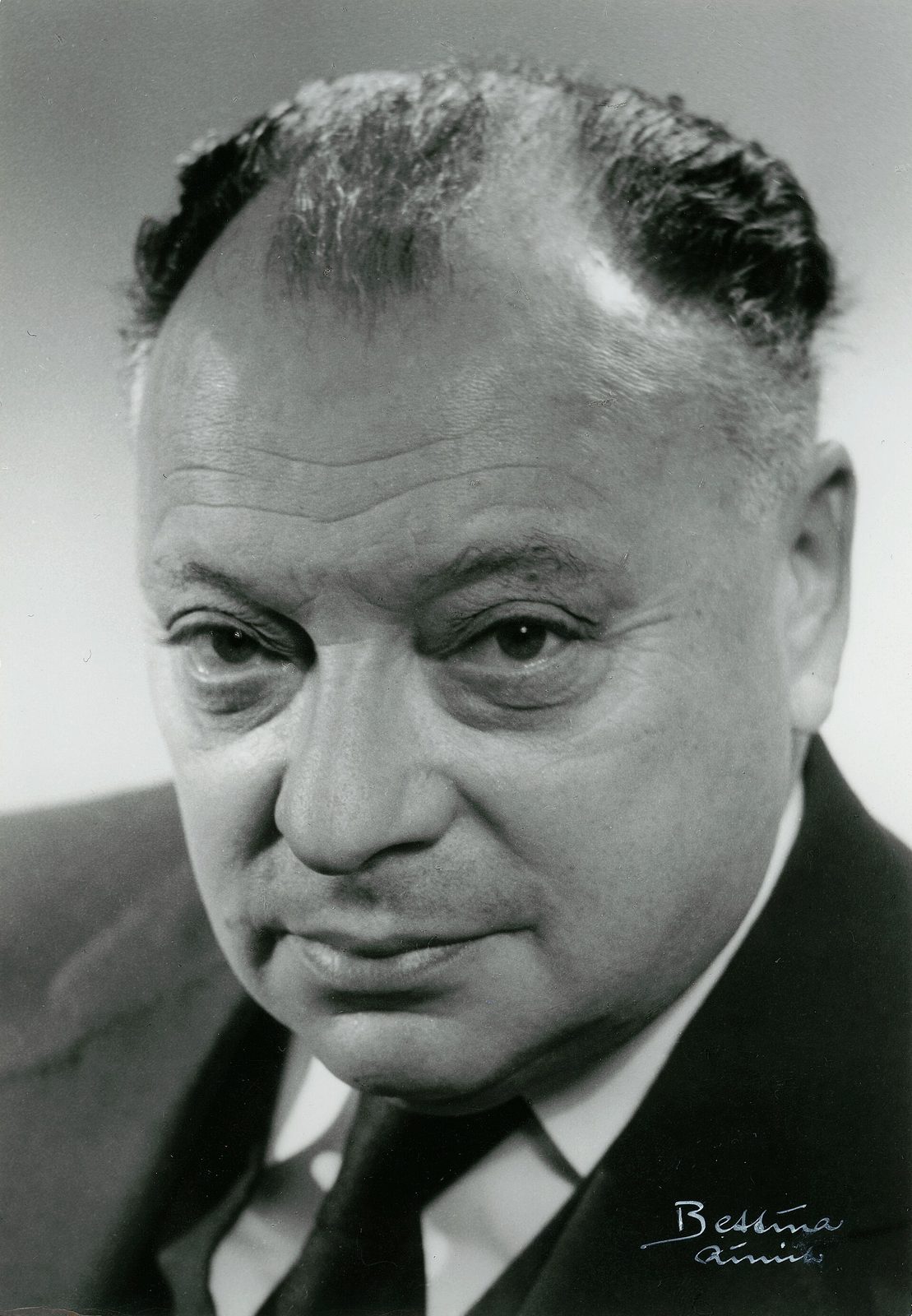
StoryWolfgang Pauli · 1925
One electron per set of four numbers.
The shell sizes fell out at once. Nobel Prize, 1945.
Story1924 to 1926
Why shells close at 2, 8, 18
- 1924Edmund StonerNiels Bohr had only guessed the numbers. Stoner: line splittings match the next closed shell.
- 1925PauliFour numbers, one "two-valued", soon called spin. One electron per set.
- 1926Friedrich HundMax Born's assistant in Göttingen. Rules read from spectra; quantum tunnelling too.
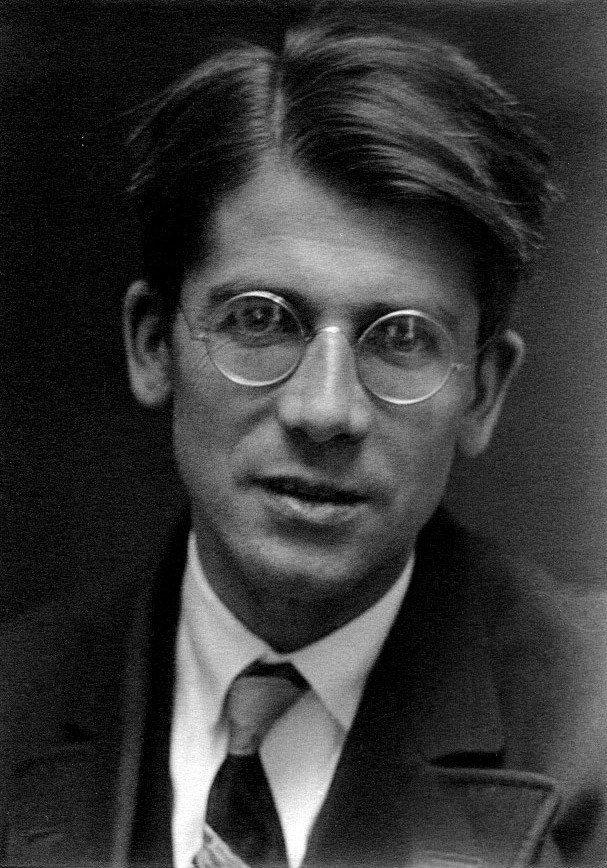
StoryGöttingen, the 1920s
Friedrich Hund, who lived to 101
Chemists use his first rule, maximum multiplicity.
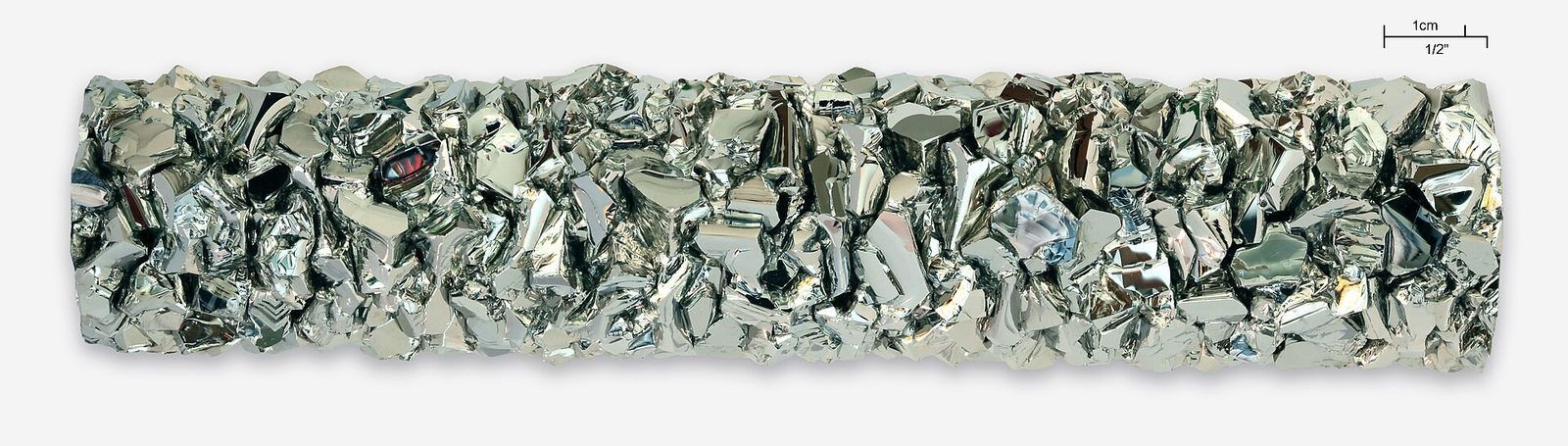 Hf: [Xe] 4f¹⁴ 5d² 6s²
Story1921 to 1923, Copenhagen
Element 72, found by its electrons
- Georges Urbain, French:"celtium", among the rare earths. Rejected.
- Charles Bury, then Bohr:72 should copy zirconium's 4d2 5s2.
- Dirk Coster, George de Hevesy:found in zirconium minerals by X-ray spectra.
- Hafnium:Hafnia, Latin for Copenhagen, Bohr's home town.
See itKeep score yourself
Which atoms move up?
Each arc is one exchange pair. Change the element, the gap and the pairing cost; then press Every element.
Solve itFour problems
Your turn
Solve it: predict, then check
Molybdenum (Z = 42) sits right below chromium, with [Kr] as its core. Predict its configuration. Then do the same for tungsten (Z = 74, core [Xe] 4f14), right below molybdenum.
Answer
Solve it
A magnet can count unpaired electrons, because each one acts like a tiny magnet. How many unpaired electrons would a chromium atom have if it followed the filling order, and how many does it really have?
Answer
Solve it: keep score
Count the same-spin pairs in nitrogen's 2p3 when it follows Hund's rule, [↑][↑][↑], and when it does not, [↑↓][↑][ ]. Which has more, and by how much?
Answer
Solve it: use the model
In the widget's counting model, moving an electron up in vanadium (3d3 4s2 to 3d4 4s1) changes the energy by \( \Delta E = \text{gap} - 3K - P \). In chromium it is \( \text{gap} - 4K - P \), and in copper \( \text{gap} - 4K \). For what range of gaps would chromium and copper move up but vanadium not? Take \( P = 0.5K \).
Answer
ConnectAnd still confused?
Where this goes next
Connect it
- The periodic table, next chapter. Rows are shells being filled, and the s, p, d and f blocks are the sub-shell being filled. See Electronic configuration and periods and s, p, d and f blocks.
- Transition metals, Class 12. Unpaired d electrons give colour and magnetism; the magnetic moment \( \sqrt{n(n+2)} \) counts them. See d-block configurations and magnetism and colour.
- Bonding, Chapter 4. Valence electrons are the ones that take part in bonds; the octet is a filled s2p6. See Kossel, Lewis and the octet.
- Orbital energies, the page before. Why 4s comes before 3d at all: penetration and shielding. See shapes and energies of orbitals.
- Around you. The shine on a bicycle handlebar or a bathroom tap is a thin layer of chromium; a copper lota or the wiring in your walls is copper. Both are metals whose atoms have just one electron in their outer s orbital.
If 4s fills before 3d, why does iron lose its 4s electrons first when it forms Fe2+?
Because "fills first" is about the lowest total energy of the neutral atom, not a fixed order of orbitals. Once 3d holds electrons, the 3d orbitals sit lower than 4s, and 4s is also farther out. So when an atom loses electrons, the 4s ones go first: Fe is [Ar] 3d6 4s2, Fe2+ is [Ar] 3d6.
Then why isn't nickel 3d9 4s1?
Its reward is smaller. Going from d8 to d9 adds only 3 same-spin pairs (13 to 16), not 4. The measured ground state of nickel is 3d8 4s2, though the two arrangements are close in energy.
Is "half-filled is stable" a separate law?
No. It is shorthand for the counting above: a half-filled sub-shell has the most same-spin electrons with no forced pairing. Use it as a quick check, not as a reason on its own.
Sources
- Electron configurations of the elements (data page), from NIST atomic spectroscopy data
- Pauli exclusion principle: history (Stoner 1924, Pauli 1925, two-valuedness)
- The Nobel Prize in Physics 1945: Wolfgang Pauli
- Hund's rules: formulation around 1925, and the screening explanation of the first rule
- Friedrich Hund: life, Göttingen, tunnelling (1926)
- Hafnium: history (Bury 1921, Bohr, Coster and de Hevesy 1923, celtium)