Classification of Elements and Periodicity in PropertiesFull experience
- 1. Why sort the elements?
- 2. Mendeleev's periodic table
- 3. The modern periodic table
- 4. How do you name element 120?
- 5. Why the table has the shape it has
- 6. The s, p, d and f blocks
- 7. Metals, non-metals and metalloids
- 8. How big is an atom?
- 9. How hard is it to pull an electron off?
- 10. Which atoms want extra electrons?
- 11. Valence, and the odd ones at the top
- 12. Where are the most reactive elements?
- Review
12 of 12·NCERT §3.7.3·pp. 94–95·4 min
Where are the most reactive elements?
The big ideaReactivity is highest at the two ends of a period, metals on the left that lose electrons easily and non-metals on the right that grab them, and lowest in the middle; the same pattern shows up in whether an element's oxide is basic, amphoteric or acidic.
In simple words
At the left end of each row are building blocks that are desperate to give a bit away. At the right end (before the quiet ones) are blocks desperate to take one. Both kinds rush into reactions. The ones in the middle are calmer. When they join with the stuff in air, the left ones make things that feel soapy in water, and the right ones make things that are sour.
Everything comes from the electrons
All the properties in this chapter, radius, ionization enthalpy, electron gain enthalpy, valence, are results of the electronic configuration. Put them together and they explain reactivity.
Across a period, atoms shrink. So ionization enthalpy rises (with the small exceptions already seen) and electron gain enthalpy becomes more negative.
- The element at the far left has the lowest ionization enthalpy. It reacts by losing an electron to form a cation. The alkali metals are the most reactive metals.
- The element at the far right (excluding noble gases, which have positive electron gain enthalpies) has the most negative electron gain enthalpy. It reacts by gaining an electron to form an anion. The halogens are the most reactive non-metals.
- So reactivity is high at both ends and lowest in the centre.
This links to reducing behaviour (giving electrons, on the left) and oxidising behaviour (taking electrons, on the right), which you will study later. It also matches the metallic character, highest at the far left, falling as non-metallic character rises across the period.
Reactivity shown by oxides
The best way to see chemical reactivity is in reactions with oxygen (or halogens). Elements at both ends of a period combine with oxygen easily. The kind of oxide changes across the period:
| Position | Type of oxide | Examples | Behaviour |
|---|---|---|---|
| Far left | Basic | \(\ce{Na2O}\), MgO, CaO, BaO | Forms a base (alkali) with water |
| Centre | Amphoteric | \(\ce{Al2O3}\), \(\ce{As2O3}\) | Acts as an acid with bases and as a base with acids |
| Centre | Neutral | CO, NO, \(\ce{N2O}\) | Neither acidic nor basic |
| Far right | Acidic | \(\ce{SO3}\), \(\ce{Cl2O7}\) | Forms an acid with water |
The oxide of the element at the extreme left is the most basic; that of the extreme right, the most acidic. A basic oxide turns red litmus blue in water; an acidic oxide turns blue litmus red.
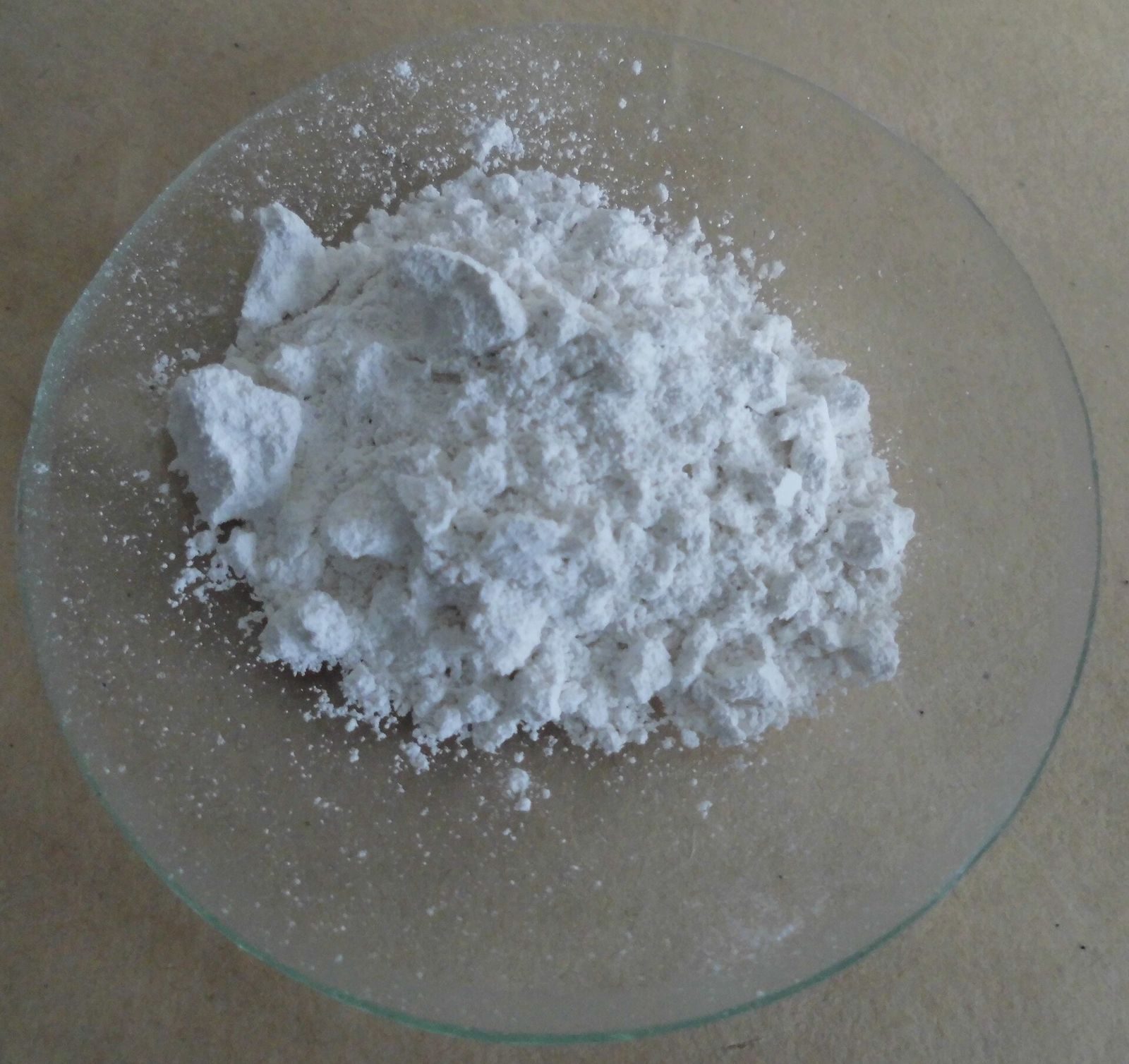 CaO: basic oxide
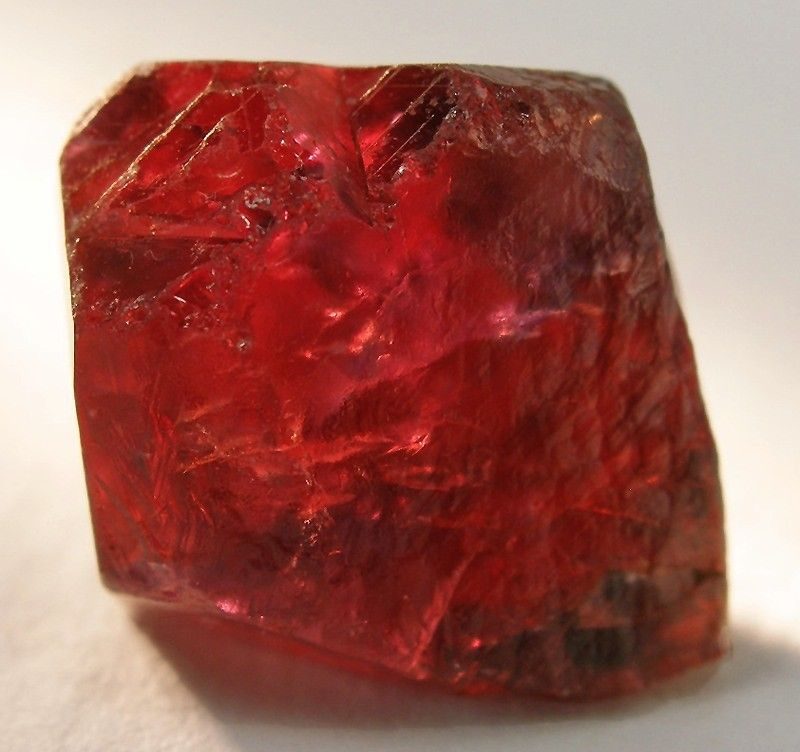 Al₂O₃: amphoteric oxide
Try it: drop each period 3 oxide into indicator water.
Worked example: proving the type of an oxide
Basic: quicklime (calcium oxide) and water give slaked lime, the white choona used for whitewash and with paan. It is a base.
\[ \ce{CaO + H2O -> Ca(OH)2} \]Acidic: sulphur trioxide and water give sulphuric acid.
\[ \ce{SO3 + H2O -> H2SO4} \]Amphoteric: aluminium oxide dissolves in an acid and in a base.
\[ \ce{Al2O3 + 6HCl -> 2AlCl3 + 3H2O} \] \[ \ce{Al2O3 + 2NaOH + 3H2O -> 2Na[Al(OH)4]} \]Try it. Write the reaction that shows \(\ce{Na2O}\) is basic, and the one that shows \(\ce{Cl2O7}\) is acidic.
Answer
Transition and inner transition metals
- Across the 3d series, atomic radius changes much less than across the main group elements. Across the 4f series it changes even less.
- Their ionization enthalpies are between those of the s- and p-blocks, so they are less electropositive (less eager to lose electrons) than group 1 and 2 metals.
Down a group
For main group elements, going down a group, atomic and ionic radii grow. So ionization enthalpy falls steadily, and electron gain enthalpy becomes less negative (with the period 3 exception seen before: Cl beats F, S beats O). Hence:
Try it: drag down group 1 and watch the atom grow and its outer electron come loose.
- Metallic character increases and non-metallic character decreases down a group.
- That is why alkali metals become more reactive down the group (Cs is far more violent than Li), while halogens become less reactive (F is fiercer than I).
Try it: drop lithium, sodium and potassium into water.
And the real thing, sodium then potassium:
In the transition elements, the trend down a group is reversed; this is explained by atomic size and ionization enthalpy, and you will meet it in the d-block chapter.
Very reactive elements, at either end, are never found free in nature; they occur only in compounds.
Don't mix these up
- Amphoteric (Al2O3) reacts with both acids and bases. Neutral (CO, NO, N2O) reacts with neither.
- Reactivity increases down group 1 but decreases down group 17. Both follow from atoms getting larger.
- BaO and Na2O are basic; Cl2O7 and SO3 are acidic.
Just remember
The trend (basic on the left, acidic on the right) has a reason, explained above and in the deep dive. The individual examples and the odd "neutral" ones are simply to be known.
- Period 3 oxides: Na2O, MgO basic · Al2O3 amphoteric · SiO2, P4O10, SO3, Cl2O7 acidic
- "2 B, 1 A, 4 A": two basic, one amphoteric, four acidic, in order across the row. Aluminium sits exactly at the turn, like the middle of a see-saw.
- Amphoteric: Al2O3, As2O3
- "Al-As" sounds like "alas": alas, they cannot choose a side, so they react with both acids and bases.
- Neutral: CO, NO, N2O
- "NO means no": NO, N2O and CO say no to both acids and bases. Every other common non-metal oxide (CO2, NO2, SO2, SO3) is acidic.
- Basic oxide
- An oxide that gives a base with water, from a metal on the left.
- Acidic oxide
- An oxide that gives an acid with water, from a non-metal on the right.
- Amphoteric oxide
- An oxide that reacts as an acid with bases and as a base with acids.
- Neutral oxide
- An oxide with neither acidic nor basic properties.
- Electropositive
- Tending to lose electrons and form positive ions.
Words to know
Which oxide is amphoteric?
- BaO
- \(\ce{Al2O3}\)
- \(\ce{SO3}\)
- CO
Why are elements in the middle of period 3 less reactive than those at either end?
- They have more shells
- They neither lose nor gain electrons as easily as the end elements
- Their valence shells are full
Deep dive · optional
Why does reactivity rise down group 1 but fall down group 17?
An energy story in three steps that explains both ends of the table at once, why lithium gives out the most energy yet reacts the slowest, why fluorine beats chlorine, and why a dropped crumb of caesium bursts. Not needed for the exam, but it ties together everything this chapter has measured.
The roots: a hill to climb, then a valley
- Why does caesium attack water so much faster than lithium?Before a metal atom can end up as an ion in water, it must first be pulled out of its solid (atomisation) and then lose its outer electron (ionisation). Those first steps cost energy: a hill to climb before anything is given back. For lithium the hill is 680 kJ mol−1; for caesium only 455. A lower hill is climbed faster, so the reaction runs faster.
- Why is the hill lower for caesium?Each step down group 1 adds a shell. The outer electron sits further out, behind more inner electrons that shield it, so it comes off more easily (ionisation enthalpy falls from 519 to 376 kJ mol−1). The single shared electron also holds the bigger atoms together less tightly, so the metal comes apart more easily too (161 down to 79).
- Then does caesium give out the most energy?No, and that is the surprise. After the hill comes a valley: water molecules crowd round the new ion and release energy (hydration). The tiny Li+ ion lets water come very close, so it releases 519 kJ mol−1, almost exactly paying for lithium's ionisation. Caesium's big ion releases only 276. Counting everything, lithium releases the most energy of all the alkali metals and has the most negative E° (−3.04 V). How much energy a reaction gives out and how fast it goes are different questions.
- Why does group 17 go the other way?Halogens react by taking an electron. A small atom, with its outer shell close to the nucleus, pulls an incoming electron hard, and its small ion is hydrated strongly. Down the group the atoms grow, the pull weakens and the ion is hydrated less, so reactivity falls. Fluorine wins overall (−755 kJ mol−1 from ½F2 to F− in water, against −592 for chlorine) even though chlorine gains a lone electron more eagerly: the F–F bond is unusually weak and the tiny F− ion is hydrated very strongly.
- The bedrockOpposite charges attract more strongly when they are closer (Coulomb's law), and the energy change from start to finish does not depend on the route (Hess's law). Big atom, loose electron: easy to lose, hard to gain. Small atom, tight grip: hard to lose, eager to gain.
The same tug of war decides the oxides. In an oxide or its hydroxide, each element E sits in a chain E–O–H. If E holds electrons weakly (low electronegativity, like sodium), the E–O link is ionic and breaks first, releasing OH−: a base. If E pulls electrons strongly (like chlorine), E–O is a firm covalent bond that also drags electrons away from the O–H bond, so O–H breaks and releases H+: an acid. Aluminium is in the middle, so either link can break depending on what it meets: amphoteric. That is why oxides turn from basic to acidic across a period, exactly as electronegativity rises.
The story
See it
Walk each element through the three steps. Guess first, then switch to group 17 and press Whole group to see which numbers follow the trend and which do not.
A crumb of caesium, the bottom of group 1, meeting water:
Solve it
Solve it: spot the error
A student writes: "Chlorine has the most negative electron gain enthalpy of all the elements (−349 kJ mol−1, against −328 for fluorine), so chlorine is the strongest oxidising agent." What is wrong, and which numbers prove it?
Hint
Answer
Solve it: how much versus how fast
Per mole of metal, the reaction with water releases about 222 kJ for lithium and 203 kJ for caesium. Yet lithium fizzes quietly while caesium bursts. Using the energy steps, explain how both facts can be true.
Answer
Solve it: predict
Without looking anything up, put these in order from most basic to most acidic, and write what happens when the most acidic one meets sodium hydroxide: Al2O3, Cl2O7, MgO, P4O10, Na2O.
Answer
Connect it
Connect it
- Electron configuration, Chapter 2. The one loose ns1 electron of group 1 and the one-short ns2np5 shell of group 17 come straight from electronic configuration; the shielding that loosens caesium's electron is the same idea.
- This chapter. The uphill step is the ionisation enthalpy; the halogen puzzle is why chlorine beats fluorine at gaining a lone electron but loses in water; the oxide rule follows metallic character.
- Thermodynamics, Chapter 5. Adding the three steps is Hess's law; hydration enthalpy returns in lattice, solution and dilution enthalpies.
- Redox, Chapter 7. "Gives electrons easily" is a reducing agent, "grabs electrons" an oxidising agent: see competitive electron transfer.
- Electrochemistry, Class 12. E° values such as lithium's −3.04 V are measured against the standard hydrogen electrode. Lithium's record-negative E° (and tiny mass) is why the battery in your phone is a lithium-ion battery.
- At a paan shop. The choona spread on a betel leaf is slaked lime, Ca(OH)2, made from quicklime and water: a basic oxide doing exactly what the table says.
Still confused?
Lithium has the most negative E°. Isn't that the same as "most reactive"?
E° measures how much energy is released when the metal ends up as ions in water (how far "downhill" the reaction goes). Reactivity in everyday speech means how fast and how violently it happens, which depends on the energy that must be put in first. For lithium these point different ways: the most energy overall, but the biggest first hill. In exam answers, "strongest reducing agent in water: Li" and "reacts most vigorously with water: Cs" are both right.
Isn't the bang just hydrogen catching fire?
Burning hydrogen is part of it, and it is what makes the flame you see with potassium. But the 2015 high-speed films showed the first burst happens in under a millisecond, before the hydrogen ignites: the metal loses electrons to the water, becomes positively charged and tears itself apart. Without that, a crust of hydroxide and a cushion of steam would slow the reaction down.
The noble gases are at the far right. Why aren't they the most reactive?
The "far right" rule means the last element that can still gain an electron into its outer shell. Noble gases already have a full shell; an extra electron would have to go into a new, outer shell, far from the nucleus and well shielded, so their electron gain enthalpies are positive. They neither lose nor gain electrons easily, which is why they are the least reactive of all.
Sources
- Jim Clark, chemguide: Reactions of the Group 1 elements with water (atomisation, ionisation and hydration energies; reaction enthalpies; why lithium is slow)
- Jim Clark, chemguide: The halogens as oxidising agents (atomisation, electron affinity, hydration; fluorine against chlorine)
- Alkali metal (Wikipedia): lithium's anomalous reduction potential from its high hydration energy; standard electrode potentials
- P.E. Mason et al., "Coulomb explosion during the early stages of the reaction of alkali metals with water", Nature Chemistry 7, 250 (2015)
- Brainiac: Science Abuse (Wikipedia): the faked rubidium and caesium explosions
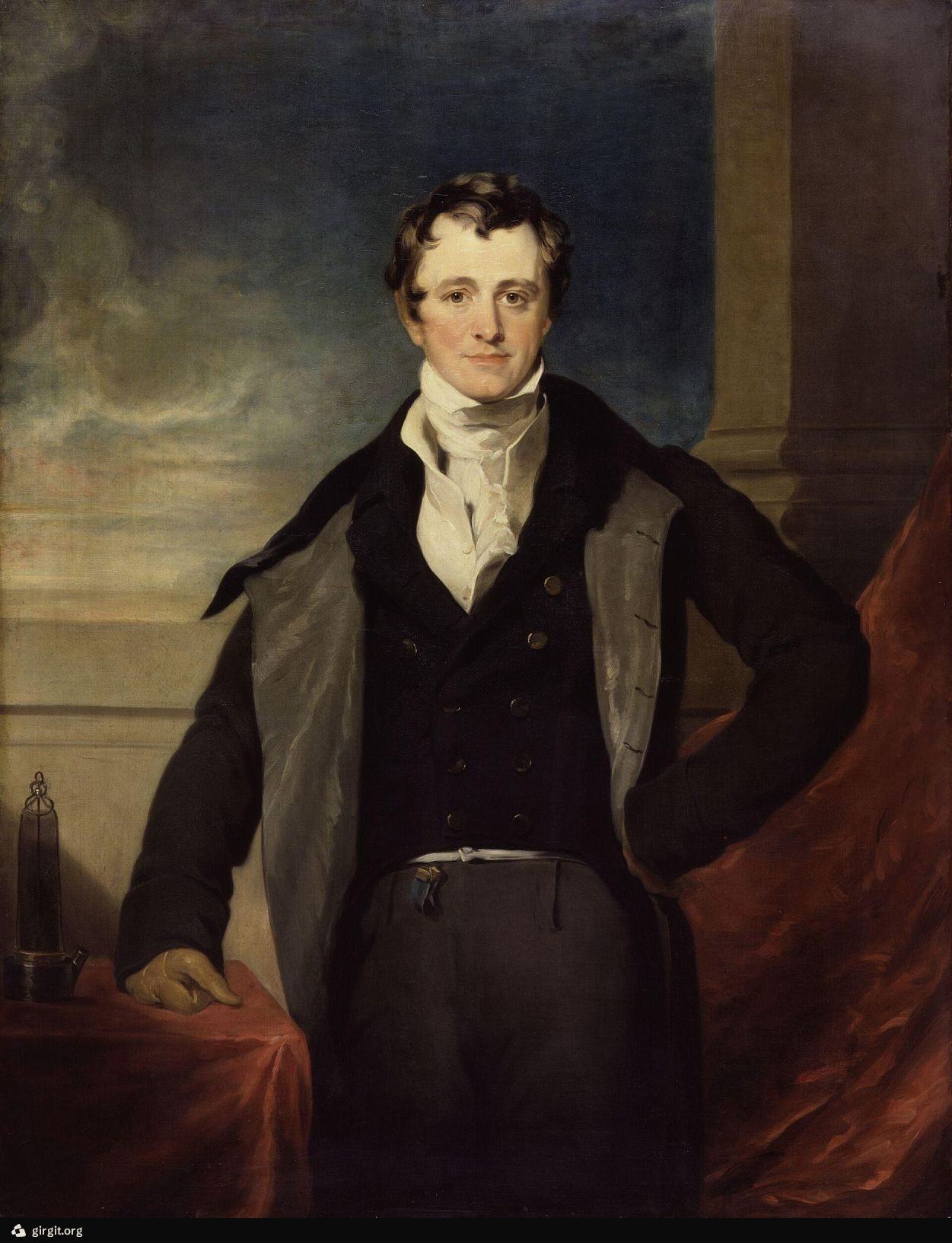
- Humphry Davy (Wikipedia): potassium and sodium by electrolysis, 1807; calcium, strontium, barium, magnesium, boron the next year
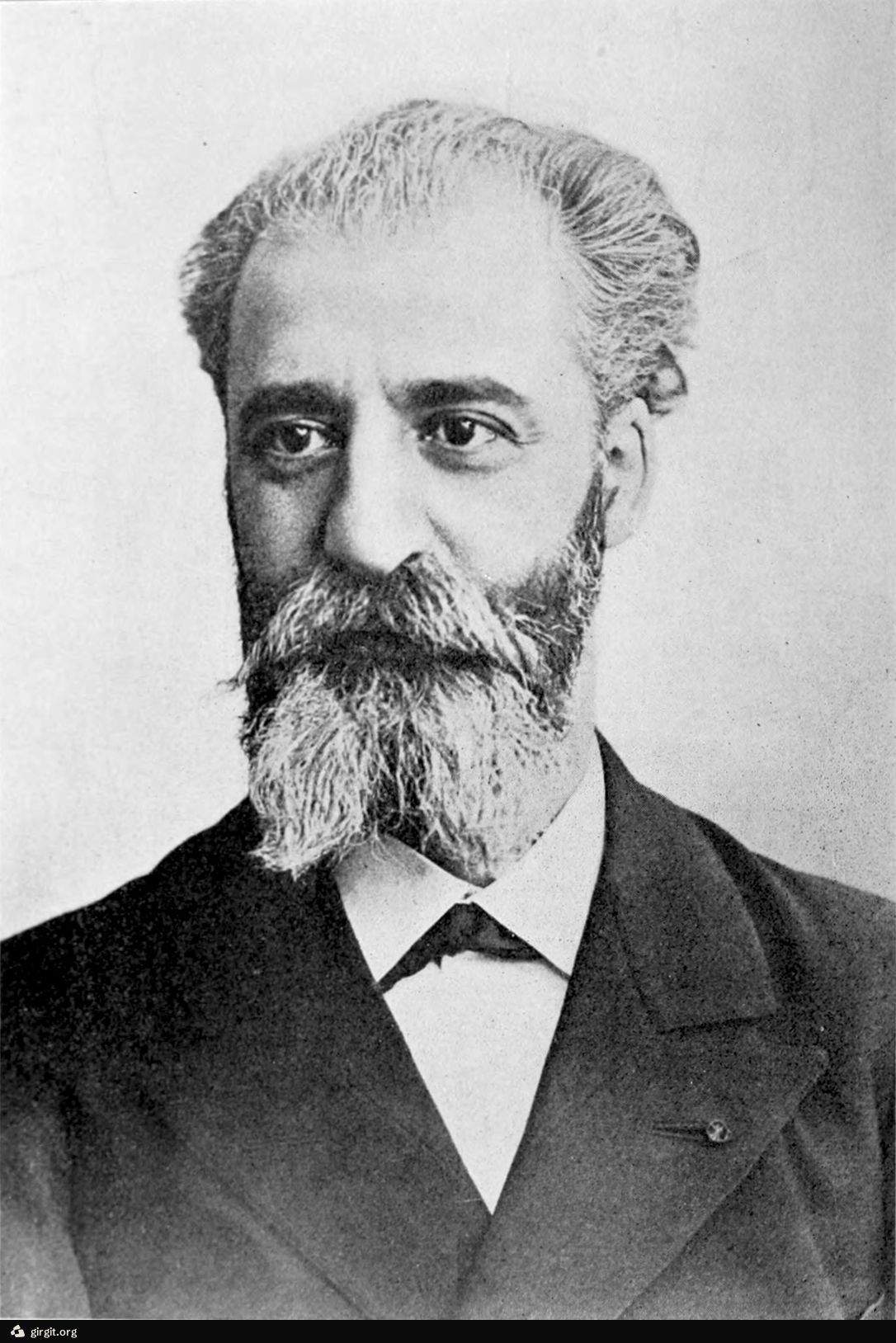
- History of fluorine (Wikipedia): the fluorine martyrs; Moissan's 1886 isolation and his words to the Academy and Nobel Prize in Chemistry 1906 (nobelprize.org)
- Acidic oxide (Wikipedia): less electronegative elements give basic oxides, more electronegative ones acidic oxides
- Caesium (Wikipedia): melting point 28.5 °C
Picture and video credits
Show 5 picture and video credits
- calcium-oxide-quicklime-powder.jpg: Leiem, CC BY-SA 4.0
- ruby-corundum-crystal.jpg: Robert M. Lavinsky, CC BY-SA 3.0
- sodium-in-water-with-indicator.mp4: W. Oelen, CC BY-SA 3.0
- potassium-in-water-lilac-flame.mp4: Maxim Bilovitskiy, CC BY-SA 4.0
- caesium-in-water-burst.mp4: Philip Evans, CC BY-SA 3.0

