Classification of Elements and Periodicity in PropertiesFull experience
- 1. Why sort the elements?
- 2. Mendeleev's periodic table
- 3. The modern periodic table
- 4. How do you name element 120?
- 5. Why the table has the shape it has
- 6. The s, p, d and f blocks
- 7. Metals, non-metals and metalloids
- 8. How big is an atom?
- 9. How hard is it to pull an electron off?
- 10. Which atoms want extra electrons?
- 11. Valence, and the odd ones at the top
- 12. Where are the most reactive elements?
- Review
1 of 12·NCERT §3.1 · §3.2·pp. 74–78·4 min
Why sort the elements?
The big ideaThere are too many elements to learn one by one, so chemists looked for a pattern that groups similar elements together, and the first patterns were found in sets of three and sets of eight.
In simple words
Think of a huge pile of shoes. You cannot find anything until you put them in pairs and on shelves. The building blocks of all stuff were like that pile. People kept finding new ones, and soon there were too many to remember. So clever people tried to put them on shelves, so that ones that act alike sit together. Their first shelves were not quite right, but each try taught them something.
Why classify at all?
All matter is built from elements. Chemists in 1800 knew of 31 of them; by 1865 the list had grown past double, to 63. Today 118 are known, and the newest ones were made in laboratories, not found in nature.
Textbook check · §3.1114 or 118 elements?
- The textbook says
- "At present 114 elements are known" (§3.1). A few pages later (§3.4) the same chapter names elements up to 118.
- What we know now
- 118 elements are known and named. The last four, nihonium (113), moscovium (115), tennessine (117) and oganesson (118), received their names from IUPAC on 28 November 2016, which completed the seventh row.Source: IUPAC: names of elements 113, 115, 117 and 118 (2016)
- In the exam
- Write 118 if asked how many elements are known today. The 114 is an older figure the book forgot to update.
Each element has its own chemistry, and each forms many compounds. Studying every one separately would be endless. So scientists wanted to classify the elements: put them into groups by their properties. A good classification does two jobs:
- It organises facts we already know, so that one rule covers many elements.
- It predicts facts we do not know yet, so it tells us what to look for next.
Dobereiner's triads (1829)
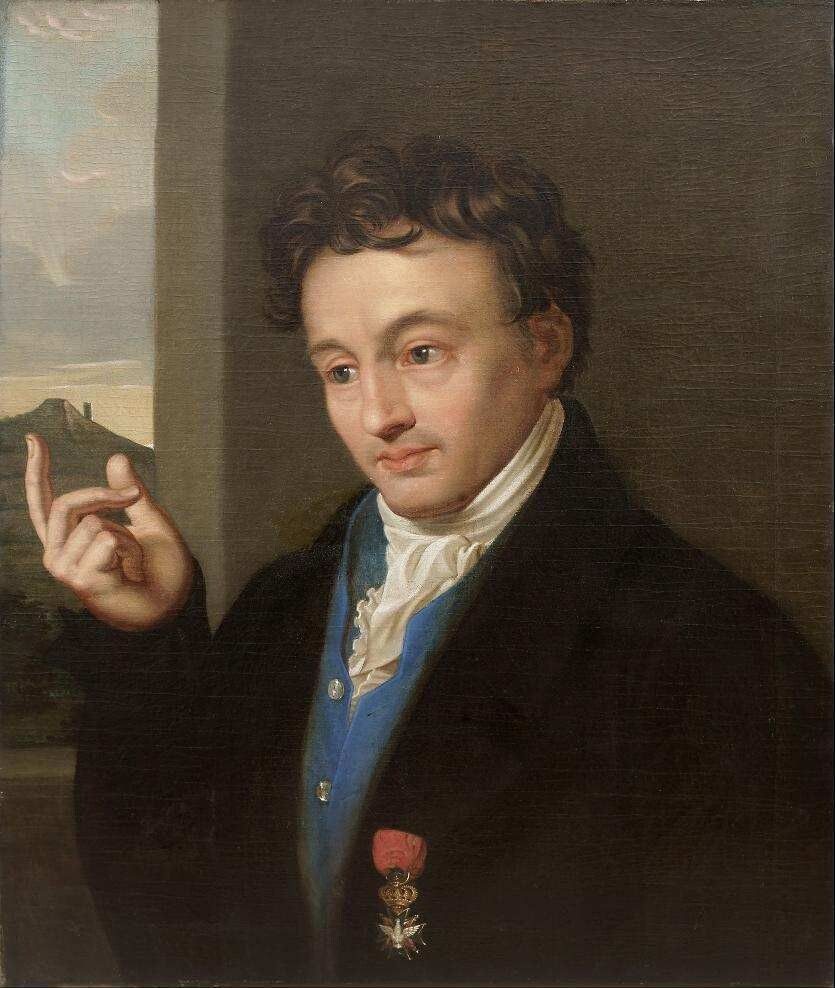
The German chemist Johann Dobereiner was the first to notice trends in the properties of elements. By 1829 he had found groups of three similar elements, which he called triads. In each triad the middle element's atomic weight is roughly the average of the other two, and its properties also lie between theirs.
| Triad | Atomic weights | Average of first and last |
|---|---|---|
| Li, Na, K | 7, 23, 39 | (7 + 39) ÷ 2 = 23 |
| Ca, Sr, Ba | 40, 88, 137 | (40 + 137) ÷ 2 = 88.5 |
| Cl, Br, I | 35.5, 80, 127 | (35.5 + 127) ÷ 2 = 81.25 |
Look at the last triad with your own eyes. The middle one is in the middle in more than weight: chlorine is a gas, bromine a liquid, iodine a solid, and the colour deepens from pale green to red-brown to violet-black.
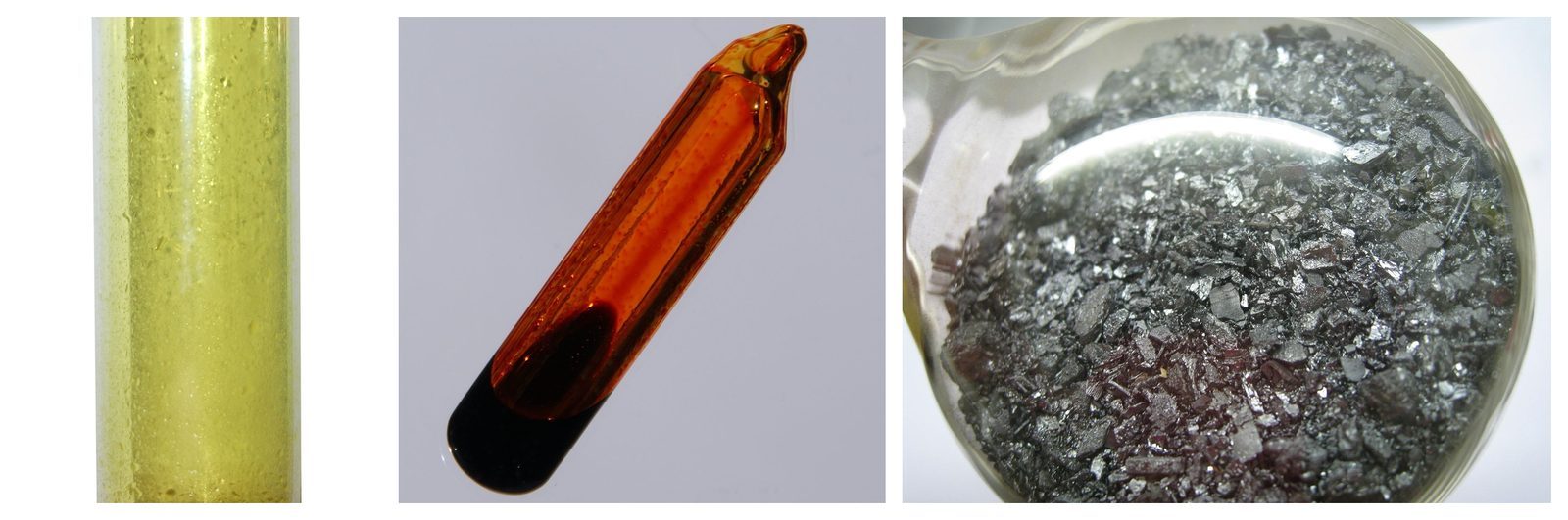 Cl 35.5 · gasBr 80 · liquidI 127 · solid


This was called the Law of Triads. It worked for only a few elements, so people dismissed it as a coincidence.
Try it. Dobereiner noticed sulphur (32), selenium (79) and tellurium (128) behave alike. Does this set fit the triad rule?
Answer
Try it: guess first, then put the classic triads, and two look-alike sets that fail, on the scale.
De Chancourtois's cylinder (1862)
A French geologist, A.E.B. de Chancourtois, lined up the elements known to him by rising atomic weight and wrote them on a cylinder, winding round it like a spiral, so that similar elements fell one above the other. It showed that properties come back again and again. Very few people paid attention.
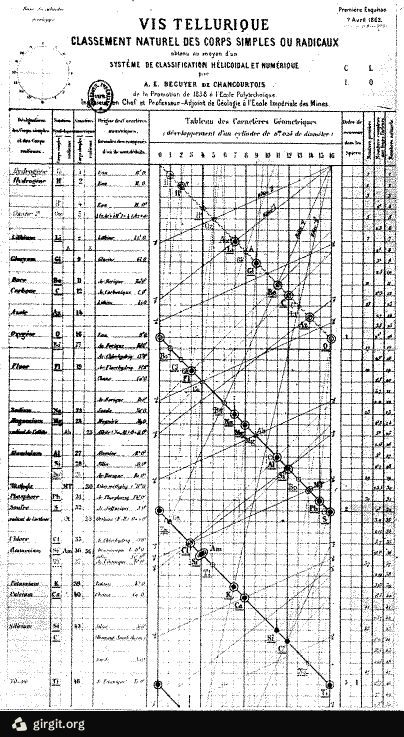 Li 7Na 23K 39
Newlands' law of octaves (1865)
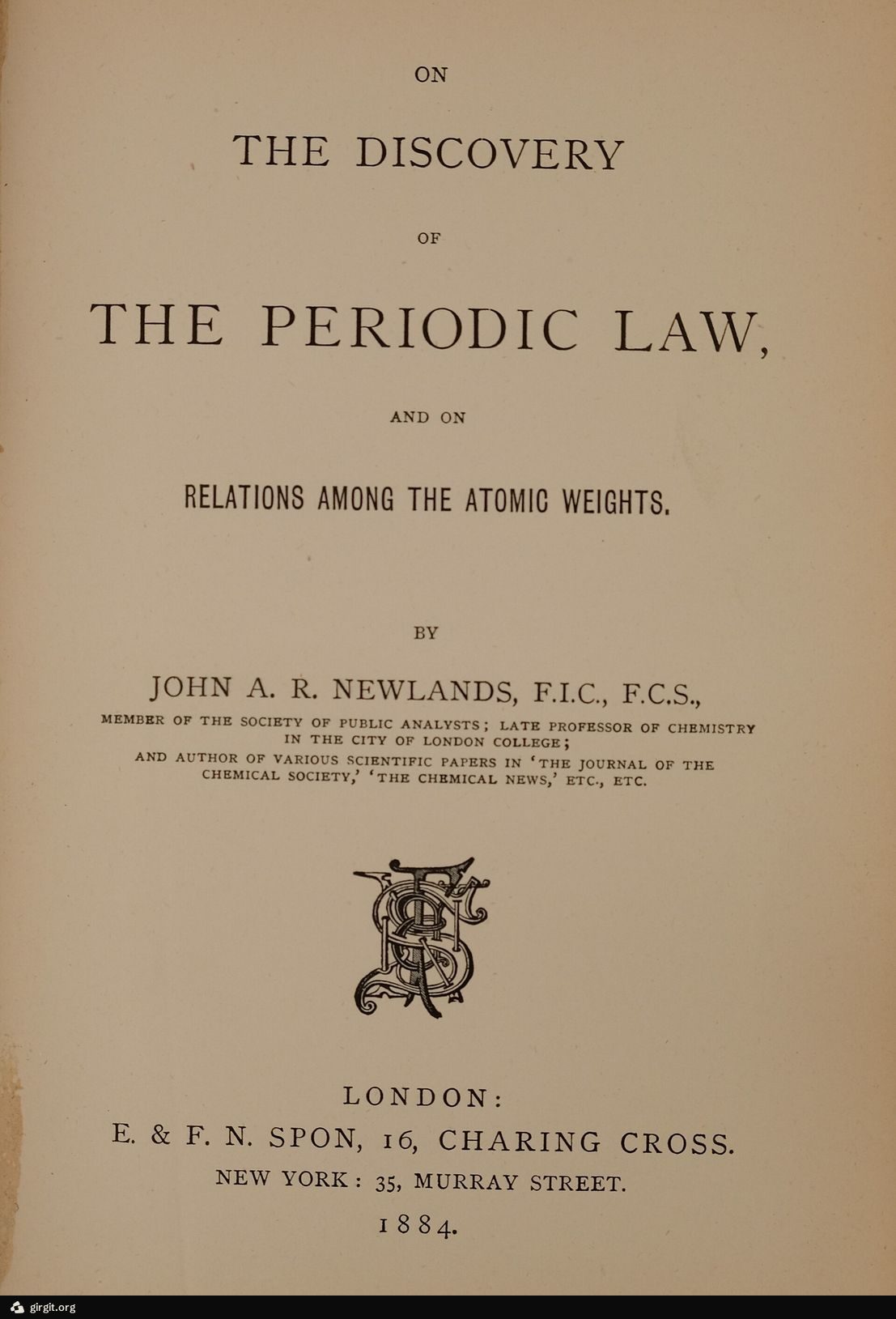
The English chemist John Alexander Newlands also lined up elements by increasing atomic weight. He saw that every eighth element had properties like the first one. He called this the Law of Octaves, after music: in "sa re ga ma pa dha ni", the eighth note, the next "sa", sounds like the first.
| 1 | 2 | 3 | 4 | 5 | 6 | 7 |
|---|---|---|---|---|---|---|
| Li 7 | Be 9 | B 11 | C 12 | N 14 | O 16 | F 19 |
| Na 23 | Mg 24 | Al 27 | Si 29 | P 31 | S 32 | Cl 35.5 |
| K 39 | Ca 40 |
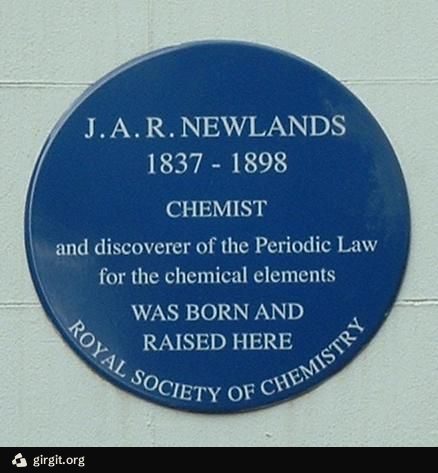
Count from lithium: Li, Be, B, C, N, O, F, and the eighth is Na, which behaves like Li. The pattern holds only up to calcium; beyond that it breaks down. His idea was not accepted then, but the Royal Society, London later gave him the Davy Medal in 1887.
Try it: guess first, then tap any element and see whether the eighth one along really matches.
Don't mix these up
- Dobereiner: triads, groups of three, 1829. Newlands: octaves, every eighth, 1865.
- Newlands' rule works only up to calcium. Dobereiner's works for only a few elements.
- All of these early tries used atomic weight, not atomic number.
Just remember
Names, dates and members of sets: no deeper reason for any of these (the deep dive explains why the sets work). Use the hooks.
- The order: Dobereiner 1829, de Chancourtois 1862, Newlands 1865, Mendeleev 1869
- "Do Chemists Need Mendeleev?" gives the order. Dobereiner stands alone, 40 years early. The other three crowd into the 1860s: 62, 65, 69, the cylinder, the octave, the table.
- Triads: Li, Na, K · Ca, Sr, Ba · Cl, Br, I (and S, Se, Te)
- Li, Na, K are the three soft metals you saw fizz in water in Class 10. Ca, Sr, Ba: lime, then the red and the green of Diwali fireworks. Cl, Br, I: gas, liquid, solid, in that order.
- Newlands' octaves work only up to calcium
- "Calcium = Cancelled": after Ca the octave cracks. Octave as in "sa re ga ma pa dha ni sa": the eighth note repeats the first.
- Newlands got the Davy Medal in 1887
- Five years after Mendeleev and Meyer got the same medal (1882). "Late, but not never."
- Classification
- Putting things into groups by what they have in common.
- Triad
- Dobereiner's set of three similar elements; the middle one's atomic weight is about the average of the other two.
- Law of Octaves
- Newlands' rule that every eighth element resembles the first.
- Atomic weight
- The old name for the relative mass of an atom; early tables were ordered by it.
- Periodic
- Repeating at regular intervals, like the days of the week.
Words to know
Li (7), Na (23) and K (39) form a triad. What makes it a triad?
- They have nearly equal atomic weights
- They are alike, and the middle weight is the average of the other two
- They come one after another in order of atomic weight
Why was Newlands' law of octaves not accepted at first?
- He ordered the elements by atomic number
- It worked well only for elements up to calcium
- It covered only three elements
Deep dive · optional
Why did threes and eights work, and then stop working?
The triads and the octaves were not lucky accidents. They were the first blurry glimpses of something real: the lengths of the rows of the periodic table. This goes into why, and into the people who saw it first. The exam does not need it; it makes the first attempts make sense.
The roots: a triad is two equal steps
- Why is sodium's weight the average of lithium's and potassium's?Because sodium is the same number of places after lithium as potassium is after sodium. In today's table lithium is element 3, sodium 11 and potassium 19: two equal jumps of 8. If weight climbs evenly with each place, two equal jumps in place give two equal jumps in weight, and the middle one lands on the average.
- Why does weight climb fairly evenly with each place?Each next element has one more proton in its nucleus, and the nucleus also holds neutrons: about one per proton in light atoms, a little more in heavy ones. So atomic weight is roughly twice the atomic number for light elements (sodium: 11 protons, weight 23), and a bit more than twice for heavy ones (iodine: 53 protons, weight 127).
- Then why do nitrogen, phosphorus and arsenic fail?Their jumps are not equal. Nitrogen is element 7, phosphorus 15, arsenic 33: jumps of 8 and then 18. Phosphorus sits much nearer nitrogen than arsenic, so it cannot be the average. Every set of three neighbours in a group with equal jumps (8 and 8, or 18 and 18) is a good triad; every set with unequal jumps fails.
- Why are the jumps 8 in some places and 18 in others?Elements in one group have the same outer arrangement of electrons. To get from one member to the next, you must add enough electrons to fill one whole new row of the table. The second and third rows fill only s and p orbitals: 2 + 6 = 8 electrons. The fourth and fifth rows also fill a set of five d orbitals: 2 + 10 + 6 = 18.
- And why did Newlands' octaves break after calcium?The same reason. An octave is a jump of 8, and it holds only while the rows are 8 long. Potassium and calcium start the fourth row, which is 18 long, so the element "eight on" from potassium is no longer like it. The next alkali metal after potassium, rubidium, comes 18 places later.
- The bedrockThe rows of the periodic table are 2, 8, 8, 18, 18 and 32 long because of how many electrons each set of orbitals can hold (see the electron configuration page of Chapter 2). Triads and octaves are those row lengths, seen through atomic weight.
This is why the first attempts were half right. Dobereiner happened to pick the sets that straddle two rows of equal length. Newlands' octaves are exactly the first two rows of 8, and they break exactly where the first row of 18 begins. Even de Chancourtois's cylinder fits: one turn was 16 weight units, which is about 8 light elements at roughly 2 units each, so it lined up lithium, sodium and potassium and then drifted. None of them could know the reason. Electrons were discovered in 1897 and atomic numbers in 1913, long after all three.
The story
See it
Here is the root as a picture. Each group is drawn twice: by atomic number on the left, by atomic weight on the right. Pick the middle of three. When the two jumps on the left are equal, the middle lands on the average on the right. Then press Every triad to see all twenty sets at once.
Solve it
Solve it: predict, then check
Carbon (12.01), silicon (28.09), germanium (72.63) and tin (118.71) are four neighbours in group 14 (atomic numbers 6, 14, 32 and 50). Which three of them make a good triad, and which three do not? Decide from the atomic numbers first, then check with the weights.
Hint
Answer
Solve it
In today's numbering, Newlands' octave is a jump of 8: lithium 3 to sodium 11, sodium 11 to potassium 19. (The noble gases were unknown in 1865, so he counted it as "the eighth".) Jump 8 on from potassium: which element do you reach? Which element really is like potassium, and how far on is it? What does that tell you about the length of the fourth row?
Answer
Solve it: spot the error
A student writes: "Sodium's weight is the average of lithium's and potassium's, so sodium must be a kind of mixture of lithium and potassium." What is wrong?
Answer
Connect it
Connect it
- Electron configuration, Chapter 2. The row lengths 2, 8, 8, 18 come from how many electrons s, p and d orbitals hold. See Filling the orbitals, and in this chapter Why the table has the shape it has.
- Atomic number, Chapter 2. Weight is roughly twice the atomic number because the nucleus holds neutrons as well as protons: Atomic number, isotopes and isobars. Moseley's X-rays, next but one page, finally gave each element its number.
- Atomic weights, Chapter 1. What an atomic weight is, and why it is an average over isotopes: Atomic and molecular mass. Before the Karlsruhe meeting of 1860 many weights in use were wrong by a factor of two, which hid patterns from everyone.
- Mendeleev, next page. He did what Newlands did not: he left gaps, and let row lengths change. See Mendeleev's periodic table.
- Music. The octave in sargam is not just a name: the upper "sa" vibrates exactly twice as fast as the lower one, which is why they sound alike. Newlands borrowed a word; the chemistry turned out to have rows of different lengths, so the musical picture could only take him so far.
Still confused?
If the triads and octaves were right for some elements, why are they called failures?
Because a law has to work everywhere it claims to, and these worked only in patches. Nobody could say in advance which sets would fit. Now we can: the good triads are the ones with equal jumps in atomic number, and the octaves are the two rows of 8. They were true descriptions of part of the pattern, without the reason.
Did Newlands deserve the credit more than Mendeleev?
He saw the repeat earlier, and he was treated unfairly. But his table forced every row to be 8 long, put two elements in one slot, and left no room for undiscovered elements, so it could not grow. Mendeleev let the rows differ, left gaps and predicted what would fill them. Historians generally credit several people with seeing periodicity, and Mendeleev with turning it into a working system.
Why were the old atomic weights good enough to see a pattern, if they were not atomic numbers?
Because weight rises with atomic number almost everywhere, so ordering by weight gives nearly the right order. The few places where it does not (tellurium and iodine, cobalt and nickel, argon and potassium) were exactly where the early tables got stuck.
Sources
- Johann Wolfgang Döbereiner (Wikipedia): his life, the 1829 triads, the lamp, Goethe
- Döbereiner's lamp (Wikipedia): hydrogen lit by platinum
- History of the periodic table (Wikipedia): triads, Karlsruhe 1860, de Chancourtois, Newlands and the Chemical Society, Davy Medal 1882
- John Alexander Reina Newlands (Dictionary of Scientific Biography, via Encyclopedia.com): 1 March 1866, G. C. Foster's question and objection, the Society's refusal, Davy Medal 1887
- John R. Newlands (Linda Hall Library, Scientist of the Day)
- John Newlands (Wikipedia): Garibaldi, the sugar refinery, the 1884 book, the plaque at West Square
- Alexandre-Émile Béguyer de Chancourtois (Wikipedia): the telluric helix, 16 units per turn, the diagram left out of Comptes rendus
- IUPAC (2016): names of elements 113, 115, 117 and 118
- Atomic numbers and standard atomic weights: IUPAC Commission on Isotopic Abundances and Atomic Weights, standard atomic weights
Picture and video credits
Show 2 picture and video credits
- doebereiner-portrait-1825.jpg: Georg Philipp Schmidt (1825), CC BY-SA 4.0
- halogen-triad-chlorine-bromine-iodine.jpg: Benjah-bmm27, Jurii, Dnn87, CC BY 3.0
